Continuous manufacturing of pharmaceuticals offers such benefits as production flexibility, reduced drug product costs, and improved product quality. Moving toward continuous manufacturing requires suitable small-scale equipment, either by development of new equipment or optimization of existing equipment. In primary manufacturing, particle properties are often altered during crystallization and have to be restored during subsequent processing. Drying a crystallized product is one of the most challenging steps, especially since attrition and agglomeration can occur. To that end, we investigated the drying behavior of a crystalline model compound with moisture levels of up to 10 wt % in a corotating twin-screw extruder. The feed mass flows on a piece of small-scale equipment used for pharmaceutical production varied between 0.5 and 2.0 kg/h. Experiments were conducted to evaluate the drying performance in various process settings. Because of a very narrow and consistent residence time distribution, extrusion drying has the potential for pharmaceutical compound drying. In our study, we successfully accomplished drying of a crystalline product with very little agglomeration and/or attrition in some process settings while preserving a crystal size similar to that of the raw material. The reduction in particle size occurred as a result of long residence times (low extruder screw speed) and a decrease in the residual moisture of the product. The aim of our work was to show the potential of extruder drying as a novel continuous manufacturing process for pharmaceuticals and to enable further process development.
We have previously reported that the fluidization of nanoparticle agglomerates can be enhanced by the addition of external force fields such as vibration, acoustic waves, centrifugal force, and magnetic particles. The criteria usually used to evaluate the enhancement in fluidization quality are the fluidized bed expansion, pressure drop, and visual appearance of the fluidized bed to determine the presence of bubbles, large heavy agglomerates and/or channeling and spouting. Here we introduce a different approach based on measuring the rate of absorption/desorption of moisture (humidification/drying) of hydrophilic fluidized nanopowders. The fluidizing gas was humidified in a controlled manner, and the amount of moisture in the gas phase was measured before and after the fluidized bed by humidity sensors. The experiments show that the amount of moisture adsorbed or desorbed by the bed of powder is larger when the fluidized bed was assisted by vibration or moving magnetic particles than when the bed was conventionally fluidized. In addition, the effect of high temperature gas on the fluidization of nanopowders was studied by using neon as a fluidizing gas at room temperature. It is shown that due to the increase in gas viscosity, the minimum bubbling velocity is increased, bubbling is reduced and a smoother fluidization is obtained.
How We Teach: Transport Phenomena and Related CoursesAbstractIn 2014, the AIChE Education Division’s Course Survey Committee supervised a survey on howTransport Phenomena and related courses are taught by different institutions. Faculty membersfrom chemical engineering departments who have taught these courses during the 2013-2014academic provided the responses. The survey, which was conducted online using the softwareQualtrics, was disseminated to the faculty members by department administrators who weresolicited via email. The survey covered topics ranging from course content, student learningobjectives, and textbook preferences. In this paper, statistical results from the survey areprovided, as well as a comparison with results obtained from related surveys previouslyconducted in 1977, 1978, and 1987.
Mixing of nanopowders in an environmentally benign magnetically assisted fluidized bed (MAFB) system was studied. Examination of fluidization behavior of agglomerate particulate fluidization (APF; silica R974 or R972) and agglomerate bubbling fluidization (ABF; alumina or titania) nanopowders in un-assisted and MAFB systems confirmed previous results on decreased minimum fluidization velocity and increased bed expansion of APF and ABF powders due to magnetic assistance. APF and ABF powder mixtures behaved like APF powders with the bed expansions in between those of individual constituents. Unlike previous MAFB studies, fluidization as a function of time was studied to examine its influence on nano-mixing. With time, the bed expansion reduced, and reduction was faster as magnet-to-powder ratio increased from 0: 1 to 5: 1, although fluidization was sustained, confirmed via the pressure drop measurements. Reduction in bed expansion was attributed to change in the nature of nanoagglomerates, which showed increased density as a function of processing time, ruling out electrostatics or elutriation as major factors. Mixtures of silica (APF) and alumina (ABF), processed at various magnet-to-powder ratios, were characterized via statistical analysis from energy dispersive x-ray spectroscopy using field emission scanning electron microscope to compute homogeneity of mixing (HoM). Magnetic assistance improved the HoM as a function of time, and was strongly related to the product of number of magnets and time, similar to previous results in magnetically assisted impaction mixing (MAIM). The best achievable HoM was significantly better than unassisted fluidization and comparable to previous results for rapid expansion of high-pressure suspensions and MAIM.
The design, development, and engineering of drugs provide chemical engineers with many opportunities and challenges in the pharmaceutical industry. In an effort to engage the surrounding communities, New York City public and private high school students were introduced to the field of pharmaceutical engineering over the course of six weeks. Through the use of lectures, teamwork activities, and laboratory experiments, students learned about the fundamentals of oral solid dosage forms, drug dissolution, and experimental design. Examples of experiments performed include building their own "in-house" drug dissolution devices, studying the effect of impeller geometry and velocity on dissolution rates, and obtaining drug dissolution profiles for various oral solid dosage forms containing Ibuprofen using UV-Vis spectroscopy. Students were also trained in communication skills, such as writing a technical report and giving an oral presentation.In this paper, an overview of the program, suggested laboratory exercises, and in-class teamwork activities are provided for those who might consider developing a similar K-12 outreach program focused on pharmaceutical engineering. In addition, examples of perceived enhanced learning by the high school students are provided.
We show experimental results on a proposed technique to enhance the fluidization of nanoparticle beds. This technique consists of the application of an alternating electric field to the nanofluidized bed. Three different field configurations have been tested: co-flow field, cross-flow field, and variable field configurations. Nanoparticle agglomerates are naturally charged by contact and tribo charging mechanisms and therefore are agitated by the action of the externally applied field, which enhance fluidization. According to our observations, the best results are obtained for the variable field configuration. In this configuration, the electric field strength is higher at the bottom of the bed, whereas it is almost negligible at the free surface. Thus, the larger agglomerates, which tend to sink at the bottom of the bed due to stratification, and usually impede uniform fluidization, are strongly agitated. It is thought that the strong agitation of the bigger agglomerates that usually sink to the bottom of the bed contributes to further homogenize the distribution of the gas flow within the bed by destabilizing the development of gas channels close to the gas distributor. On the other hand, the smaller agglomerates at the vicinity of the free surface are just weakly excited. Consequently, fluidization is greatly enhanced, whereas at the same time excessive elutriation is avoided. It is demonstrated that this technique is even suitable to achieve highly expanded fluidization of unsieved nanopowder samples even though the fluidization state returns to be heterogeneous upon the electric field being turned off. (C) 2009 American Institute of Chemical Engineers AIChE J, 56: 54-65, 2010
When fluidized by a gas, some agglomerated fine and ultrafine particles display a regime of uniform, nonbubbling fluidization known as agglomerate particulate fluidization (APF). The agglomeration of micrometric sized particles, or simple pre-existing agglomerates in the case of nanoparticles, is governed by the balance between hydrodynamic shear forces and interparticle attractive forces. Front this balance the theoretical scaling law Bog similar to k(D+2) has been derived, where Bo(g), the granular Bond number, is the ratio of the interparticle attractive force to particle weight, k is the ratio of agglomerate to particle Size, and D is the fractal dimension. In the experimental program the behavior of gas-fluidized beds of fine and ultrafine particles as affected by the use of neon and nitrogen as fluidizing gas is studied. The experimental results indicate that there is no relevant distinction between the sizes of agglomerates fluidized with the different gases as theoretically predicted. However, it is seen that the relatively small increment of gas viscosity opens up a new window of highly expanded agglomerate particulate fluidization (APF) behavior with a delayed onset of bubbling. For a sufficiently high-gas viscosity, and/or smaller particle size, full suppression of the bubbling regime is observed. For nanoparticles exhibiting agglomerate bubbling fluidization (ABF) behavior, where bed expansion is small, and bubbling occurs soon after minimum fluidization, we also observe a delayed onset of bubbling when fluidizing with a gas of higher viscosity. (C) 2007 American Institute of Chemical Engineers.
Note: This abstract is being submitted to the CHED for a proposed panel session jointlysponsored by the CHED and the Materials Division. The panel session proposal wassubmitted separately. A Virtual Community of Practice to Introduce Evidence-based Pedagogy in Chemical Engineering and Materials CoursesThis paper describes a model for a virtual community of practice (VCP) tosupport faculty efforts to adopt research-based instructional strategies inChemical and Materials Engineering courses. The VCP was built on publishedrecommendations for successful faculty development programs. The VCPprogram began with a 10 week virtual training period for five pairs of VCPleaders, during which they acquired the skills and knowledge needed to lead thefaculty VCP. The faculty VCPs focused on one of five technical disciplines andwere led by a pair of leaders having expertise in a specific technical focus areaas well as in engineering pedagogy. The participants were were full-time facultymembers with a range of teaching experience and pedagogical expertise,ranging from novice to expert. Workshops were held using Internet conferencingsoftware: the first 8 weekly workshops provided training in research-basedpedagogy, and the second 8 biweekly workshops supported faculty efforts toimplement chosen strategies in their courses. Significant improvement wasmeasured via pre/post survey in the areas of familiarity and use of research-based pedagogy, as well as in perceived student motivation.The second part of the paper focuses on the experiences and perspectives of thefaculty participants as they implemented a variety of instructional methods in theircourses during the VCP. We describe their approaches and results usingdifferent methods such as flipping the classroom, using game-based pedagogy inclass, promoting positive interdependence in cooperative-learning teams, peerinstruction, small group discussion, Process Oriented Guided Inquiry Learning,and using Bloom’s Taxonomy to structure a course.
In 2013, University College London was awarded an EPSRC (United Kingdom’s Engineering and Physical Sciences Research Council) “Frontier Engineering” Grant to form a multidisciplinary Centre for Nature Inspired Engineering. The overarching vision of the center is to use nature as a guiding platform to seek potentially transformative solutions to engineering grand challenges, such as sustainable energy and clean water. Beyond biomimicry, this natureinspired approach seeks to reveal fundamental mechanisms in the natural world that underlie desirable properties such as scalability, efficiency or robustness, and can be applied in a broader context to solve similar problems in engineering. To complement the new research center, a new senior undergraduate and Master’s level elective course on Nature Inspired Chemical Engineering was designed, developed, and taught by Professor Marc-Olivier Coppens of University College London and Professor Daniel Lepek of The Cooper Union. One of the main learning objectives of the course was to stimulate creative thought in leveraging natural phenomena to solve chemical engineering problems. This was achieved by using a variety of active learning and pedagogical techniques such as, annotated textbook readings of current journal publications, oral presentations highlighting the balance between nature and technology, laboratory demonstrations, and a semester-long group project motivated by student interest in nature and chemical engineering. In this paper, the opportunities and challenges associated with developing a new course in an emerging multidisciplinary research area will be addressed. In addition, suggestions for best practices in course development will be provided for instructors who seek to develop similar new research-based elective courses.
The ASEE/AIChE Chemical Engineering Summer School (ChESS) is a week-long, roughly quinquennial over the past nearly 100 years, faculty development event bringing together early-career and seasoned faculty for workshops and community building [1]. The most recent ChESS took place July 25-29, 2022 at the Colorado School of Mines in Golden, CO, with around 160 participants and 80 presenters. The two core outcomes for the Summer School are 1) to build the Chemical Engineering education community and 2) to provide useful knowledge and tools for teaching, scholarship, and service for those early in their careers. A typical day at ChESS starts with breakfast and a plenary session, followed by one to two sessions with 5-6 parallel workshops, lunch, then two more parallel workshop sessions. These are complemented by thematic networking sessions, evening poster presentation receptions and a host of social events including a scavenger hunt. One afternoon of the week, local sightseeing and similar activities are available to all participants and presenters. Most workshops are delivered by volunteer presenters from the chemical engineering education community and about 20 are offered by industry and funding agency partners. Changes in programming for the most recent offering included specific identification of pedagogical, Diversity Equity and Inclusion (DEI), and content tracks for the parallel workshop sessions. To support this structure, plenary speakers were invited to present on pedagogical practices and DEI, in addition to the long-standing Teaching Institute and industry plenary. Workshops were either 90 or 150 minutes in length and typically hosted between 20-50 participants. While the core audience is newer faculty, the more experienced faculty who attend as workshop presenters are welcome to attend other workshops, space and time permitting, and about 90% of them did so. A survey conducted immediately after the close of ChESS 2022 showed respondents found it to be successful at meeting its two goals. 96% of respondents somewhat agreed or strongly agreed that the Summer School was conducive for meeting other Chemical Engineering faculty, while the same fraction somewhat agreed or strongly agreed that the workshops were useful. 93% of respondents strongly agreed that they would recommend the Summer School to a colleague, with a further 3% expressing some agreement. This paper shares details on the program, funding, and overall design of the Summer School as well as some reflections and recommendations from the steering committee. It also summarizes the results of the immediate post- Summer School survey.
 Rajesh Dave合作论文数Department of Chemical and Materials Engineering, New Jersey Institute of Technology5
 Robert Pfeffer合作论文数Arizona State University4
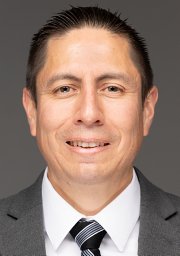 Jose A. Quevedo合作论文数Department of Chemical Engineering, New Jersey Institute of Technology3
 José Manuel Valverde Millán合作论文数Department of Electronica y Electromagnetismo, University of Seville2
 Margot Vigeant合作论文数Department of Chemical Engineering, Bucknell University2
 Lindsay Corneal合作论文数1Manuel Kreimer合作论文数1Tracy Gardner合作论文数1Daniel Anastasio合作论文数Rose-Hulman Institute of Technology1Isabella Aigner合作论文数1
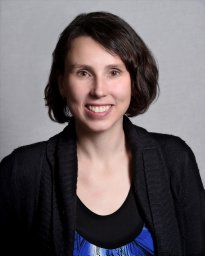 Cheryl Bodnar合作论文数Experiential Engineering Education Department, Rowan University1
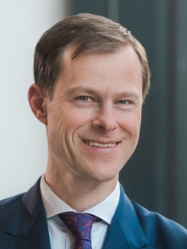 Marc-Olivier Coppens合作论文数Department of Chemical Engineering, University College London;Faculty of Engineering Sciences, University College London1
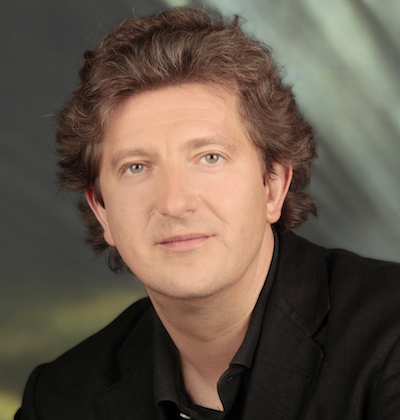 Johannes Khinast合作论文数Institute for Process and Particle Engineering, Graz University of Technology;Research Center Pharmaceutical Engineering GmbH1Wu Charmian合作论文数1
 Joseph D. Shih合作论文数Nelson Biological Laboratories, Rutgers University1
 N. Ruzycki合作论文数Department of Physics, Tulane University1
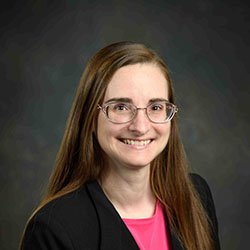 Laura P. Ford合作论文数University of Tulsa1
 Daniel D. Burkey合作论文数1
 Jason M. Keith合作论文数Department of Chemical Engineering;Michigan Technological University;Department of Chemical Engineering, Michigan Technological University1
 Amber Genau合作论文数German Aerospace Centre, DLR Institute for Materials Physics1
 Michael D. Barankin合作论文数1
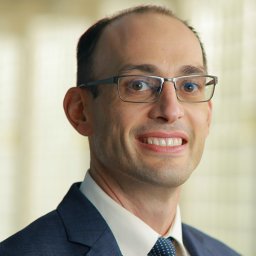 Matthew W. Liberatore合作论文数Department of Chemical Engineering, Colorado School of Mines1
 Milo D. Koretsky合作论文数Department of Chemical Engineering;Oregon State University;Department of Chemical Engineering, Oregon State University1Stephanie Farrell合作论文数1Jürgen Flesch合作论文数1
 Brittany B. Nelsoncheeseman合作论文数1
 Richard E. Eitel合作论文数Materials Research Laboratory, Pennsylvania State University1
 James V. Scicolone合作论文数Center for the Study of Polymer–Solvent Systems, The Pennsylvania State University1
 David L. Silverstein合作论文数University of Kentucky1M. A. S. Quintanilla合作论文数1
 Stephen James Krause合作论文数Dept of Chemical & Materials Engineering;Arizona State University;Dept of Chemical & Materials Engineering, Arizona State University1




