Universally robust dynamical decoupling (URn) sequences were proposed to compensate pulse imperfections arising from arbitrary experimental parameters while achieving high-order error suppression with only a linear increase in the number of pulses. Although their performance was supported by analytical arguments, numerical simulations, and experiments, a complete mathematical proof of the claimed order of error compensation has been absent. In this work, we present a rigorous proof for URn DD sequences with even n. Using a series expansion of a quantity whose modulus is the fidelity F, we derive necessary and sufficient conditions for the cancellation of its coefficients up to, but not including, order n. The URn phase prescription satisfies these conditions, and therefore 1-F=O(ε^n). Our results establish the URn construction on firm analytical grounds and clarify the structure responsible for its high-order robustness.
Estimating many local expectation values over time is a central measurement bottleneck in quantum simulation and device characterization. We study the task of reconstructing the Pauli-signal matrix S_ij=Tr(O_i ρ(t_j)) for a collection of M low-weight Pauli observables {O_i}_i=1^M over N timesteps {t_j}_j=1^N, while minimizing the total number of device shots. We propose a Compressed Sensing Shadow Tomography (CSST) protocol that combines two complementary reductions. First, local classical shadows reduce the observable dimension by enabling many Pauli expectation values to be estimated from the same randomized snapshots at a fixed time. Second, compressed sensing reduces the time dimension by exploiting the fact that many expectation-value traces are spectrally sparse or compressible in a unitary (e.g., Fourier) transform basis. Operationally, CSST samples m≪ N timesteps uniformly at random, collects shadows only at those times, and then reconstructs each length-N signal via standard ℓ_1-based recovery in the unitary transform domain. We provide end-to-end guarantees that explicitly combine shadow estimation error with compressed sensing recovery bounds. For exactly s-sparse signals in a unitary transform basis, we show that m=O (slog^2 s log N) random timesteps suffice (with high probability), leading to total-shot savings scaling as (N/s) (i.e., up to polylogarithmic factors) relative to collecting shadows at all N timesteps. For approximately sparse signals, the reconstruction error decomposes into a compressibility (tail) term plus a noise term. We present numerical experiments on noisy many-qubit dynamics that support strong Fourier compressibility of Pauli traces and demonstrate substantial shot reductions with accurate reconstruction.
Quantum error correction (QEC) codes are necessary to fault-tolerantly operate quantum computers. However, every such code is inherently limited by its inability to detect logical errors. Here, we propose and implement a method that leverages dynamical decoupling (DD) to drastically suppress logical errors. The key to achieving this is to use the logical operators of the QEC code as DD pulses, which we refer to as logical dynamical decoupling (LDD). The resulting hybrid QEC-LDD strategy is in principle capable of handling arbitrary weight errors. We test QEC-LDD using IBM transmon devices and the [[4,2,2]] code, demonstrating performance that significantly exceeds the capabilities of using either this code or DD in isolation. We present a method that allows for the detection of logical errors affecting logically encoded Bell states, which, in this case, arise primarily from crosstalk among physical qubits. Building on this, we experimentally demonstrate high-fidelity entangled logical qubits.
We present a real-time quantum Monte Carlo algorithm that simulates the dynamics of open quantum systems by stochastically compressing and evolving the density matrix under both Markovian and non-Markovian master equations. Our algorithm uses population dynamics to continuously suppress the sign problem, preventing its accumulation throughout the evolution. We apply it to a variety of quantum circuits and demonstrate significant speedups over state-of-art quantum trajectory methods and convergence to exact solutions even in non-Markovian regimes where trajectory methods fail. Our approach improves the efficiency of classical simulation of gate-based quantum computing, quantum annealing, and general open system dynamics.
Non-Hermitian (NH) quantum systems demonstrate striking differences from their Hermitian counterparts, leading to claims of NH advantage in areas ranging from metrology to entanglement generation. We show that in the context of quantum computation, any such NH advantage is unlikely to be scalable as an efficient computational resource: If coherent nonunitary evolution with renormalization could be realized with only polynomial overhead, then the resulting model could implement postselection, implying implausibly strong complexity-theoretic power under standard assumptions. We define NHBQP(U) as the computational power of polynomial-size quantum circuits that, in addition to a standard universal unitary gate set, may apply a fixed gate U on O(1) qubits that is not proportional to a unitary, with the state renormalized after each use of U. We prove that this model is powerful enough to decide every language in PostBQP (equivalently PP). Moreover, in the standard uniform circuit-family model, this characterization is tight: For any fixed such nonunitary gate U, NHBQP(U)=PostBQP=PP. PostBQP is believed intractable, so this suggests that any scalable NH computational advantage must come with a compensating cost limiting its efficiency. Additionally, we study simulation complexity of restricted classes of nonunitary systems by purifying them to postselected unitary evolution in a form preserving system locality. Using this framework, we show that unitary gates with postselection can simulate not only evolution under NH Hamiltonians but arbitrary quantum trajectories. Any NH model whose purification lies in a strongly simulable unitary family (e.g., Clifford, matchgate, or low-bond-dimension tensor-network circuits) remains efficiently classically simulable, provided the relevant postselected events occur with probability Ω(2^{−poly(n)}). Thus, adding non-Hermiticity to a universal unitary system makes it infeasibly computationally powerful, while adding it to a strongly simulable system adds no computational power in this setting.
Demonstrating subthreshold scaling of a surface-code quantum memory on hardware whose native connectivity does not match the code remains a central challenge. We address this on IBM heavy-hex superconducting processors by co-designing the code embedding and control: a depth-minimizing SWAP-based "fold-unfold" embedding that uses bridge ancillas, together with robust, gap-aware dynamical decoupling (DD). We show that anisotropic scaling from distance 3 to (dx = 3, dz = 5) and (dx = 5, dz = 3) improves protection of Z- and X-basis logical states, respectively, and a calibrated ~ 30% noise reduction would enable isotropic (5, 5)-versus-(3, 3) scaling on this heavy-hex layout. We show that DD suppresses coherent ZZ crosstalk and non-Markovian dephasing during idle gaps, eliminating spurious subthreshold claims. To quantify performance, we derive an entanglement fidelity metric which reveals that widely used single-parameter suppression-factor fits can mischaracterize code performance. Our results provide a path to robust subthreshold surface-code scaling through optimized DD on non-native architectures.
Quantum supremacy has been explored extensively in gate-model settings. Here, we introduce a quantum-supremacy framework for a hybrid digital-analog-digital quantum computing (DADQC) model. We consider a device that applies an initial layer of single-qubit gates, a single transverse-field Ising analog block, and a final single-qubit layer before Z-basis readout. The analog block approximates Z-diagonal Ising evolution, and we prove that the resulting output distribution is within constant total-variation (TV) distance of an Instantaneous Quantum Polynomial-time (IQP) circuit. Our bounds and constructions are established for fully connected as well as bounded-degree hardware graphs, matching a variety of architectures, including trapped-ion, neutral atom, and superconducting platforms. Assuming anticoncentration (which we prove for all-to-all hardware graphs and conjecture for bounded-degree hardware graphs) and an average-case hardness conjecture for the associated complex-temperature Ising partition functions, standard reductions imply that any efficient classical sampler achieving constant TV error collapses the polynomial hierarchy. Our results imply that quantum-supremacy tests are possible on today's quantum annealers, as well as other devices capable of hybrid digital-analog quantum evolution.
We present a detailed study of the coherence of a tunable capacitively-shunted flux qubit, designed for coherent quantum annealing applications. The measured relaxation at the qubit symmetry point is mainly due to intrinsic flux noise in the main qubit loop for qubit frequencies below $\sim3~\text{GHz}$. At higher frequencies, thermal noise in the bias line makes a significant contribution to the relaxation, arising from the design choice to experimentally explore both fast annealing and high-frequency control. The measured dephasing rate is primarily due to intrinsic low-frequency flux noise in the two qubit loops, with additional contribution from the low-frequency noise of control electronics used for fast annealing. The flux-bias dependence of the dephasing time also reveals apparent noise correlation between the two qubit loops, possibly due to non-local sources of flux noise or junction critical-current noise. Our results are relevant for ongoing efforts toward building superconducting quantum annealers with increased coherence.
The virtual-Z (vz) gate has been established as an important tool for performing quantum gates on various platforms, including but not limited to superconducting systems. Many such platforms offer a limited set of calibrated gates and compile all other gates using combinations of X-type and vz gates. Here, we show that the method of compilation has important consequences in an open quantum system setting. Specifically, we experimentally demonstrate that it is crucial to choose a compilation that is symmetric with respect to vz rotations. An important example is dynamical-decoupling (DD) sequences, where improper gate decomposition can result in unintended effects such as the implementation of the wrong sequence. Our findings indicate that in many cases the performance of DD is adversely affected by the incorrect use of vz gates, compounding other coherent pulse errors. This holds even for DD sequences designed to be robust against systematic control errors. In addition, we identify another source of coherent errors: interference between consecutive pulses that follow each other too closely. This work provides insights into improving general quantum gate performance and optimizing DD sequences in particular.
Accurate noise characterization in quantum gates and circuits is vital for the development of reliable quantum simulations for chemically relevant systems and fault-tolerant quantum computing. This paper reviews a variety of key benchmarking techniques, including Randomized Benchmarking, Quantum Process Tomography, Gate Set Tomography, Process Fidelity Estimation, Direct Fidelity Estimation, and Cross-Entropy Benchmarking. We evaluate each method's complexities, the resources they require, and their effectiveness in addressing coherent, incoherent, and state preparation and measurement (SPAM) errors. Furthermore, we introduce deterministic benchmarking (DB), a novel protocol that minimizes the number of experimental runs, exhibits resilience to SPAM errors, and effectively characterizes both coherent and incoherent errors. The implementation of DB is experimentally validated using a superconducting transmon qubit, and the results are substantiated with a simple analytical model and master equation simulations. With the addition of DB to the toolkit of available benchmarking methods, this article serves as a practical guide for choosing and applying benchmarking protocols to advance quantum computing technologies.
The performance of quantum computers is hindered by decoherence and crosstalk, which cause errors and limit the ability to perform long computations. Dynamical decoupling is a technique that alleviates these issues by applying carefully timed pulses to individual qubits, effectively suppressing unwanted interactions. However, as quantum devices grow in size, it becomes increasingly important to minimize the time required to implement dynamical decoupling across the entire system. Here, we present “chromatic Hadamard dynamical decoupling” (CHaDD), an approach that efficiently schedules dynamical decoupling pulses for quantum devices with arbitrary qubit connectivity. By leveraging Hadamard matrices, CHaDD achieves a circuit depth that scales linearly with the chromatic number of the connectivity graph for general two-qubit interactions, assuming instantaneous pulses. This includes ZZ crosstalk, which is prevalent in superconducting quantum processing units (QPUs). The scaling of CHaDD represents an exponential improvement over all previous multiqubit decoupling schemes for devices with connectivity graphs the chromatic number of which grows at most polylogarithmically with the number of qubits. For graphs with a constant chromatic number, the scaling of CHaDD is independent of the number of qubits. We report on experiments we have conducted using IBM QPUs that confirm the advantage conferred by CHaDD. Our results suggest that CHaDD can become a useful tool for enhancing the performance and scalability of quantum computers by efficiently suppressing decoherence and crosstalk across large qubit arrays.
Quantum hardware rarely suffers equal amounts of bit-flip (X) and phase-flip (Z) errors; one type is often much more common than the other. A code that is “bias-tailored” can exploit this imbalance, lowering the fault-tolerance overhead. A complementary idea, called "single-shot" error correction, aims to recover from data errors and noisy measurements in a single round of stabilizer readout, avoiding slow repetition cycles. In this work, we combine these two ideas and build a hierarchy of new quantum codes. The full construction starts from the syndrome-encoded hypergraph product code and then tailors it to the dominant error type. The resulting code keeps the single-shot guarantee for every noise model while boosting the threshold whenever X and Z errors are asymmetric. By removing carefully chosen blocks of stabilizers we obtain two trimmed variants. The first, called the simplified code, cuts the physical-qubit count by 1/6 and halves the number of stabilizer measurements, yet its minimum distance grows quadratically compared to the standard design and its biased noise threshold is unchanged. The second, called the reduced code, achieves the same hardware savings but trades away single-shot protection for purely X or purely Z noise; instead it remains single-shot under balanced, or depolarizing, noise. In settings where strongly biased noise is likely, either trimmed code offers a less resource-intensive alternative to the full construction. As a concrete illustration, we lift the two-dimensional XZZX surface code to a three-dimensional cubic lattice and show that this “3D XZZX” code is an explicit member of the simplified family. Taken together, these bias-tailored single-shot codes provide an adjustable set of code design alternatives, allowing tradeoffs between hardware overhead and noise types.
In the absence of fault tolerant quantum error correction for analog, Hamiltonian quantum computation, error suppression via energy penalties is an effective alternative. We construct families of distance-$2$ stabilizer subsystem codes we call “trapezoid codes'', that are tailored for energy-penalty schemes. We identify a family of codes achieving the maximum code rate, and by slightly relaxing this constraint, uncover a broader range of codes with enhanced physical locality, thus increasing their practical applicability. Additionally, we provide an algorithm to map the required qubit connectivity graph into graphs compatible with the locality constraints of quantum hardware. Finally, we provide a systematic framework to evaluate the performance of these codes in terms of code rate, physical locality, graph properties, and penalty gap, enabling an informed selection of error-suppression codes for specific quantum computing applications. We identify the $[[4k+2,2k,g,2]]$ family of subsystem codes as optimal in terms of code rate and penalty gap scaling.
Landau-Zener tunneling, which describes the transition in a two-level system during a sweep through an anti-crossing, is a model applicable to a wide range of physical phenomena. Realistic quantum systems are affected by dissipation due to coupling to their environments. An important aspect of understanding such open quantum systems is the relative energy scales of the system itself and the system-environment coupling, which distinguishes the weak- and strong-coupling regimes. Using a tunable superconducting flux qubit, we observe the crossover from weak to strong coupling to the environment in Landau-Zener tunneling. Our results confirm previous theoretical studies of dissipative Landau-Zener tunneling in the weak and strong coupling limits. We devise a spin bath model that effectively captures the crossover regime. This work is relevant for understanding the role of dissipation in quantum annealing, where the system is expected to go through a cascade of Landau-Zener transitions before reaching the target state.
Simon’s problem is to find a hidden period (a bitstring) encoded into an unknown 2-to-1 function. It is one of the earliest problems for which an exponential quantum speedup was proven for ideal, noiseless quantum computers, albeit in the oracle model. Here, using two different 127-qubit IBM Quantum superconducting processors, we demonstrate an algorithmic quantum speedup for a variant of Simon’s problem where the hidden period has a restricted Hamming weight w. For sufficiently small values of w and for circuits involving up to 58 qubits, we demonstrate an exponential speedup, albeit of a lower quality than the speedup predicted for the noiseless algorithm. The speedup exponent and the range of w values for which an exponential speedup exists are significantly enhanced when the computation is protected by dynamical decoupling. Further enhancement is achieved with measurement error mitigation. This case constitutes a demonstration of a bona fide quantum advantage for an Abelian hidden subgroup problem.
We derive a universal performance limit for coherent quantum control in the presence of modeled and unmodeled uncertainties. For any target unitary W that is implementable in the absence of error, we prove that the worst-case (and hence the average) gate fidelity obeys the lower bound F ≥(), where is the gate duration and is a single frequency-like measure that aggregates all bounded uncertainty sources, e.g., coherent control imperfections, unknown couplings, and residual environment interactions, without assuming an initially factorizable system-bath state or a completely positive map. The bound is obtained by combining an interaction-picture averaging method with a Bellman-Gronwall inequality and holds for any finite-norm Hamiltonian decomposition. Hence it applies equally to qubits, multi-level qudits, and ancilla-assisted operations. Because depends only on the dimensionless product , it yields a device-independent metric that certifies whether a given hardware platform can, in principle, reach a specified fault-tolerance threshold, and also sets a quantitative target for robust-control synthesis and system identification.
Quantum property preservation (QPP) is the problem of maintaining a target property of a quantum system for as long as possible. This problem arises naturally in the context of open quantum systems subject to decoherence. Here, we develop a general theory to formalize and analyze QPP. We characterize properties encoded as scalar functions of the system state that can be preserved time-locally via continuous control using smoothly varying, time-dependent control Hamiltonians. The theory offers an intuitive geometric interpretation involving the level sets of the target property and the stable and unstable points related to the noise channel. We present solutions for various noise channels and target properties, which are classified as trivially controllable, uncontrollable, or controllable. In the controllable scenario, we demonstrate the existence of control Hamiltonian singularities and breakdown times, beyond which property preservation fails. QPP via Hamiltonian control is complementary to quantum error correction, as it does not require ancilla qubits or rely on measurement and feedback. It is also complementary to dynamical decoupling, since it uses only smooth Hamiltonians without pulsing and works in the regime of Markovian open-system dynamics. From the perspective of control theory, this work addresses the challenge of tracking control for open quantum systems.
Accurate noise characterization is essential for scaling quantum processors toward fault-tolerant operation. Although reduced qubit dynamics are often modeled with Markovian master equations, present-day devices can exhibit memory effects generated by residual qubit-qubit couplings, structured environments, and finite bath correlation times. Here we develop a channel-resolved, Post-Markovian Master Equation model for non-Markovian noise and test it in superconducting qubits. Using idle-evolution tomography on IBM Quantum processors, we identify complementary operational signatures of non-Markovianity, including violations of CP-divisibility and revivals of distinguishability-based information-backflow measures. We further derive a closed-form spectator-ZZ model with local dissipation and show that it captures the observed transverse Bloch-vector revivals while leaving the longitudinal relaxation mode Markovian within the model. The fitted closed-form dynamics enable an analytical reconstruction of the transverse memory kernel, whose damped oscillatory structure captures the non-Markovian correction beyond the fitted Markovian baseline. Two-qubit tomography shows buildup and revivals of quantum mutual information on comparable timescales, supporting spectator-induced crosstalk as an important contributor to the observed memory effects. Our results connect operational non-Markovianity diagnostics, microscopic crosstalk modeling, and reduced memory-kernel reconstruction in a single experimental framework for superconducting quantum hardware.
Quantum annealing is a heuristic optimization algorithm that exploits quantum evolution to find low-energy states. Quantum annealers have scaled up in recent years to tackle increasingly larger and more highly connected discrete optimization and quantum simulation problems. Nevertheless, a computational quantum advantage in exact optimization using quantum annealing hardware has so far remained elusive. Here, we present evidence for a quantum annealing scaling advantage in approximate optimization. The advantage is relative to the top classical heuristic algorithm: parallel tempering with isoenergetic cluster moves (PT-ICM). The setting is a family of 2D spin-glass problems with high-precision spin-spin interactions. To achieve this advantage, we implement quantum annealing correction (QAC): an embedding of a bit-flip error-correcting code with energy penalties that leverages the properties of the D-Wave Advantage quantum annealer to yield over 1,300 error-suppressed logical qubits on a degree-5 interaction graph. We generate random spin-glass instances on this graph and benchmark their time-to-epsilon, a generalization of the time-to-solution metric for low-energy states. We demonstrate that, with QAC, quantum annealing exhibits a scaling advantage over PT-ICM at sampling low-energy states with an optimality gap of at least 1.0%. This amounts to the first demonstration of an algorithmic quantum speedup in approximate optimization.
 Tameem Albash合作论文数Department of Physics and Astronomy;University of Southern California;Department of Physics and Astronomy, University of Southern California50LA Wu合作论文数17
 Paolo Zanardi合作论文数Dana and David Dornsife College of Letters, Arts and Sciences, University of Southern California17
 James Ian Basham合作论文数Department of Physics, Applied Physics, and Astronomy, Rensselaer Polytechnic Institute17Huo Chen合作论文数Dept Elect & Comp Engn, Univ Southern Calif16Jonilyn Yoder合作论文数15
 Jeffrey Grover合作论文数Dept. of Phys., Univ. of Maryland;c;Dept. of Phys., Univ. of Maryland15
 Joshua Job合作论文数Center for Quantum Information Science and Technology, University of Southern California;Department of Physics, University of Southern California14Mark S. Byrd合作论文数Physics Department;Southern Illinois University;Physics Department, Southern Illinois University14
 Kaveh Khodjasteh合作论文数Department of Physics and Astronomy;Dartmouth College;Wilder Laboratory;Wilder Laboratory, Dartmouth College14
 Vinay Tripathi合作论文数Ctr Quantum Informat Sci & Technol, Univ Southern Calif13
 David K. Kim合作论文数MIT Lincoln Laboratory13
 Evgeny Mozgunov合作论文数13
 Itay Hen合作论文数School of Physics and Astronomy, Tel-Aviv University13Ka Wa Yip合作论文数Dept Phys & Astron, Univ Southern Calif12
 K. Birgitta Whaley合作论文数Department of Chemistry, College of Chemistry, University of California, Berkeley;Lawrence Berkeley National Laboratory12
 Robert Kosut合作论文数SC Solutions12
 Sergey Novikov合作论文数12
 Hidetoshi Nishimori (西森秀稔)合作论文数Institute of Innovative Research, Tokyo Institute of Technology12
 Walter Vinci合作论文数HP SCD12
 Marcelo S. Sarandy合作论文数Institute of Physics, Fluminense Federal University12
 Steven Disseler合作论文数Northrop Grumman Corp11
 Mostafa Khezri合作论文数Ctr Quantum Informat Sci & Technol, Univ Southern Calif11
 Ofer Biham合作论文数Racah Institute of Physics;Hebrew University;Racah Institute of Physics, Hebrew University11
 Sergio Boixo合作论文数Google11
 Gregory Quiroz合作论文数Department of Physics;University of California;Department of Physics, University of California11
 Adrian Lupascu合作论文数Quantum Transport Group;Kavli Institute of NanoScience;Delft University of Technology;Kavli Institute of NanoScience, Delft University of Technology11Bethany M. Niedzielski合作论文数10Bibek Pokharel合作论文数Ctr Quantum Informat Sci & Technol, Univ Southern Calif10
 Xi Dai合作论文数10
 Steven Weber合作论文数Lincoln Laboratory, Massachusetts Institute of Technology10
 Zhi-Hui Wang合作论文数Quantum Artificial Intelligence Lab, Ames Res Ctr10
 Rabindra Das合作论文数Lincoln Laboratory, Massachusetts Institute of Technology10
 Todd A. Brun合作论文数Ming Hsieh Department of Electrical and Computer Engineering - Systems, University of Southern California;Thomas Lord Department of Computer Science, University of Southern California;Institute for Quantum Information and Matter, California Institute of Technology10
 Matthias Troyer合作论文数Swiss Joint Research Center, Microsoft;Stellenbosch University10L.-A. Wu合作论文数9Alexander Melville合作论文数Onsemi9
 Alioscia Hamma合作论文数Dipartimento di Fisica, Università degli Studi di Napoli Federico II9
 Lian-Ao Wu合作论文数9
 Daniel Tennant合作论文数Inst Quantum Comp, Univ Waterloo8
 Milad Marvian合作论文数Univ Southern Calif, Dept Elect Engn, Los Angeles, CA 90089 USA8
 David Ferguson合作论文数Northrop Grumman Corp8
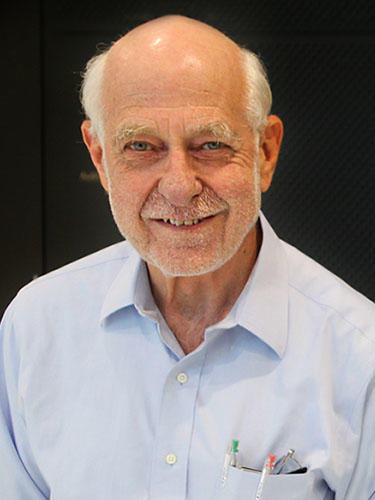 Herschel A. Rabitz合作论文数Princeton Materials Institute, Princeton University8
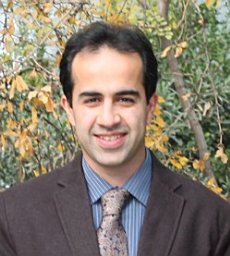 Alireza Shabani合作论文数Department of Electrical Engineering;University of Southern California;Department of Electrical Engineering, University of Southern California8Troels F. Ronnow合作论文数Theoret Phys, ETH8Ali T. Rezakhani合作论文数Department of Physics;Sharif University of Technology;Department of Physics, Sharif University of Technology8
 Matthew D. Grace合作论文数Sandia National Laboratories, Sandia National Laboratories8
 Anurag Mishra合作论文数7
 Ian Walmsley合作论文数Oxford Quantum Institute, University of Oxford;Department of Physics, University of Oxford;Faculty of Natural Sciences, Imperial College London7




