When attempting to understand the behavior of an executable, a binary analyst can make use of many different techniques. These include program slicing, dynamic instrumentation, binary-level rewriting, symbolic execution, and formal verification, all of which can uncover insights into how a piece of machine code behaves. As a result, there is no one-size-fits-all binary analysis tool, so a binary analysis researcher will often combine several different tools. Sometimes, a researcher will even need to design new tools to study problems that existing frameworks are not well equipped to handle. Designing such tools from complete scratch is rarely time- or cost-effective, however, given the scale and complexity of modern instruction set architectures. We present Macaw, a modular framework that makes it possible to rapidly build reliable binary analysis tools across a range of use cases. Over a decade of development, we have used Macaw to support an industrial research team in building tools for machine code-related tasks. As such, the name "Macaw" refers not just to the framework itself, but also a suite of tools that are built on top of the framework. We describe Macaw in depth and describe the different static and dynamic analyses that it performs, many of which are powered by an SMT-based symbolic execution engine. We put a particular focus on interoperability between machine code and higher-level languages, including binary lifting from x86 to LLVM, as well verifying the correctness of mixed C and assembly code.
350 words maximum: Formal proofs, interactively developed and machine-checked, are a means to achieve the highest level of assurance in the correctness of software. In larger verification projects, with multi-year timelines and hundreds of thousands of lines of proof text, the emerging discipline of proof engineering plays a critical role in minimizing both the cost and effort of developing formal proofs. The work presented in this thesis targets the scalability challenges present in such projects. In a systematic analysis of several large software verification projects in the interactive proof assistant Isabelle, we demonstrate that in these projects, as the size of a formal specification increases, the required effort for its corresponding proof grows quadratically. Proof engineering encompasses both authoring proofs, and developing the necessary infrastructure to make those proofs tractable, scalable and robust against specification changes. Proof automation plays a key role here. However, in the context of Isabelle, many advanced features, such as developing custom automated reasoning procedures, are outside the standard repertoire of the majority of proof authors. To address this problem, we present Eisbach: an extension to Isabelle's formal proof document language Isar. Eisbach allows proof authors to write automated reasoning procedures, known as proof methods, at the familiar level of abstraction provided by Isar. Additionally, Eisbach is extensible through specialized methods that act as general language constructs, providing high-level access to advanced features of Isabelle, such as subgoal matching. We show how Eisbach provides a framework for extending Isar with more automation than was previously possible, by allowing proof methods to be treated as first-class language elements. Today, Eisbach is already used in many Isabelle proof developments. We further demonstrate its effectiveness by implementing several language extensions, together with a collection of proof methods for performing program refinement proofs. By applying these to proofs from the L4.verified project, the one of the largest formal proof projects in history, we show that effective use of Eisbach results in a reduction in the overall proof size and required effort for a given specification. Declaration relating to disposition of project thesis/dissertation I hereby grant to the University of New South Wales or its agents the right to archive and to make available my thesis or dissertation in whole or in part in the University libraries in all forms of media, now or here after known, subject to the provisions of the Copyright Act 1968. I retain all property rights, such as patent rights. I also retain the right to use in future works (such as articles or books) all or part of this thesis or dissertation. I also authorise University Microfilms to use the 350 word abstract of my thesis in Dissertation Abstracts International (this is applicable to doctoral theses only). ..................................................................... Signature .............................................................. Witness Signature ............................................... Date The University recognises that there may be exceptional circumstances requiring restrictions on copying or conditions on use. Requests for restriction for a period of up to 2 years must be made in writing. Requests for a longer period of restriction may be considered in exceptional circumstances and require the approval of the Dean of Graduate Research. FOR OFFICE USE ONLY Date of completion of requirements for Award: ORIGINALITY STATEMENT ‘I hereby declare that this submission is my own work and to the best of my knowledge it contains no materials previously published or written by another person, or substantial proportions of material which have been accepted for the award of any other degree or diploma at UNSW or any other educational institution, except where due acknowledgement is made in the thesis. Any contribution made to the research by others, with whom I have worked at UNSW or elsewhere, is explicitly acknowledged in the thesis. I also declare that the intellectual content of this thesis is the product of my own work, except to the extent that assistance from others in the project's design and conception or in style, presentation and linguistic expression is acknowledged.’ Signed ................................................................. Date .................................................................
We present recent work on building and scaling trustworthy systems with formal, machine-checkable proof from the ground up, including the operating system kernel, at the level of binary machine code. We first give a brief overview of the seL4 microkernel verification and how it can be used to build verified systems. We then show two complementary techniques for scaling these methods to larger systems: proof engineering, to estimate verification effort; and code/proof co-generation, for scalable development of provably trustworthy applications. This article is part of the themed issue ‘Verified trustworthy software systems’.
Machine-checked proofs are becoming ever-larger, presenting an increasing maintenance challenge. Isabelle’s most popular language interface, Isar, is attractive for new users, and powerful in the hands of experts, but has previously lacked a means to write automated proof procedures. This can lead to undesirable duplication in large proofs. In this paper we present Eisbach, a proof method language for Isabelle, which aims to fill this gap by incorporating Isar language elements, thus making it accessible to end-users. We describe the language and the design principles on which it was developed. We evaluate its effectiveness by implementing the most-widely used proof tools in the seL4 verification stack, and consider its strengths and limitations.
This entry contains an extension to the Isabelle library for fixedwidth machine words. In particular, the entry adds quickcheck setup for words, printing as hexadecimals, additional operations, reasoning about alignment, signed words, enumerations of words, normalisation of word numerals, and an extensive library of properties about generic fixed-width words, as well as an instantiation of many of these to the commonly used 32 and 64-bit bases. In addition to the listed authors, the entry contains contributions by Nelson Billing, Andrew Boyton, Matthew Brecknell, Cornelius Diekmann,Peter Gammie, Gianpaolo Gioiosa, David Greenaway, Lars Noschinski, Sean Seefried, and Simon Winwood.
We present a simple yet scalable framework for formal reasoning and machine-assisted proof of interrupt-driven concurrency in operating-system code, and use it to prove the principal scheduling property of the embedded, real-time eChronos OS: that the running task is always the highest-priority runnable task. The key differentiator of this verification is that the OS code itself runs with interrupts on, even within the scheduler, to minimise latency. Our reasoning includes context switching, interleaving with interrupt handlers and nested interrupts; and it is formalised in Isabelle/HOL, building on the Owicki-Gries method for fine-grained concurrency. We add support for explicit concurrency control and the composition of multiple independently-proven invariants. Finally, we discuss how scalability issues are addressed with proof engineering techniques, in order to handle thousands of proof obligations.
Formal verification can provide the highest degree of software assurance. Demand for it is growing, but there are still few projects that have successfully applied it to sizeable, real-world systems. This lack of experience makes it hard to predict the size, effort and duration of verification projects. In this paper, we aim to better understand possible leading indicators of proof size. We present an empirical analysis of proofs from the landmark formal verification of the seL4 microkernel and the two largest software verification proof developments in the Archive of Formal Proofs. Together, these comprise 15,018 individual lemmas and approximately 215,000 lines of proof script. We find a consistent quadratic relationship between the size of the formal statement of a property, and the final size of its formal proof in the interactive theorem prover Isabelle. Combined with our prior work, which has indicated that there is a strong linear relationship between proof effort and proof size, these results pave the way for effort estimation models to support the management of large-scale formal verification projects.
The Archive of Formal Proofs is a vast collection of computer-checked proofs developed using the proof assistant Isabelle. We perform an in-depth analysis of the archive, looking at various properties of the proof developments, including size, dependencies, and proof style. This gives some insights into the nature of formal proofs.
In contrast to testing, mathematical reasoning and formal verification can show the absence of whole classes of security vulnerabilities. We present the, to our knowledge, first complete, formal, machine-checked verification of information flow security for the implementation of a general-purpose microkernel; namely seL4. Unlike previous proofs of information flow security for operating system kernels, ours applies to the actual 8,830 lines of C code that implement seL4, and so rules out the possibility of invalidation by implementation errors in this code. We assume correctness of compiler, assembly code, hardware, and boot code. We prove everything else. This proof is strong evidence of seL4's utility as a separation kernel, and describes precisely how the general purpose kernel should be configured to enforce isolation and mandatory information flow control. We describe the information flow security statement we proved (a variant of intransitive noninterference), including the assumptions on which it rests, as well as the modifications that had to be made to seL4 to ensure it was enforced. We discuss the practical limitations and implications of this result, including covert channels not covered by the formal proof.
While intransitive noninterference is a natural property for any secure OS kernel to enforce, proving that the implementation of any particular general-purpose kernel enforces this property is yet to be achieved. In this paper we take a significant step towards this vision by presenting a machine-checked formulation of intransitive noninterference for OS kernels, and its associated sound and complete unwinding conditions, as well as a scalable proof calculus over nondeterministic state monads for discharging these unwinding conditions across a kernel's implementation. Our ongoing experience applying this noninterference framework and proof calculus to the seL4 microkernel validates their utility and real-world applicability.
In systems verification we are often concerned with multiple, inter-dependent properties that a program must satisfy. To prove that a program satisfies a given property, the correctness of intermediate states of the program must be characterized. However, this intermediate reasoning is not always phrased such that it can be easily re-used in the proofs of subsequent properties. We introduce a function annotation logic that extends Hoare logic in two important ways: (1) when proving that a function satisfies a Hoare triple, intermediate reasoning is automatically stored as function annotations, and (2) these function annotations can be exploited in future Hoare logic proofs. This reduces duplication of reasoning between the proofs of different properties, whilst serving as a drop-in replacement for traditional Hoare logic to avoid the costly process of proof refactoring. We explain how this was implemented in Isabelle/HOL and applied to an experimental branch of the seL4 microkernel to significantly reduce the size and complexity of existing proofs.
One way to reduce the cost of formally verifying a large program is to perform proofs over a specification of its behaviour, which its implementation refines. However, interesting programs must often satisfy multiple properties. Ideally, each property should be proved against the most abstract specification for which it holds. This simplifies reasoning and increases the property’s robustness against later tweaks to the program’s implementation. We introduce extensible specifications, a lightweight technique for constructing a specification that can be instantiated and reasoned about at multiple levels of abstraction. This avoids having to write and maintain a different specification for each property being proved whilst still allowing properties to be proved at the highest levels of abstraction. Importantly, properties proved of an extensible specification hold automatically for all instantiations of it, avoiding unnecessary proof duplication. We explain how we applied this idea in the context of verifying confidentiality enforcement for the seL4 microkernel, saving us significant proof and code duplication.
 Toby Murray合作论文数School of Computing and Information Systems, University of Melbourne;Trustworthy Systems Group, Data617
 Gerwin Klein合作论文数School of Computer Science and Engineering, University of New South Wales;Proofcraft Pty Ltd6
 Corey Lewis合作论文数4Xin Gao合作论文数3Peter Gammie合作论文数College of Engineering and Computer Science, The Australian National University3
 June Andronick合作论文数Proofcraft;University of New South Wales3Brassil, M.合作论文数2
 Thomas Sewell合作论文数Chalmers University of Technology;NICTA2Timothy Bourke合作论文数INRIA/IRISA2Tristan Ravitch合作论文数1Kevin Quick合作论文数1Japheth Lim合作论文数1Joel Beeren合作论文数1
 Valentin Robert合作论文数Galois1Brett Boston合作论文数Galois Inc1
 Liam O'Connor合作论文数Data61 and UNSW, Sydney, Australia1Ryan Scott合作论文数School of Computer Science, University of Windsor1
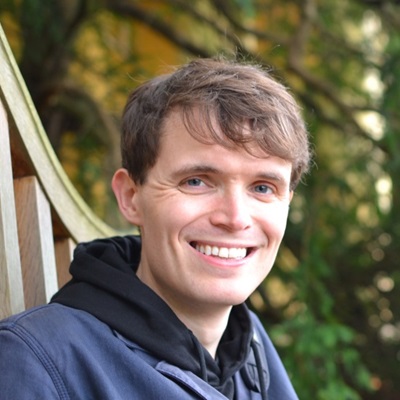 Mike Dodds合作论文数University of York1Benjamin Selfridge合作论文数1
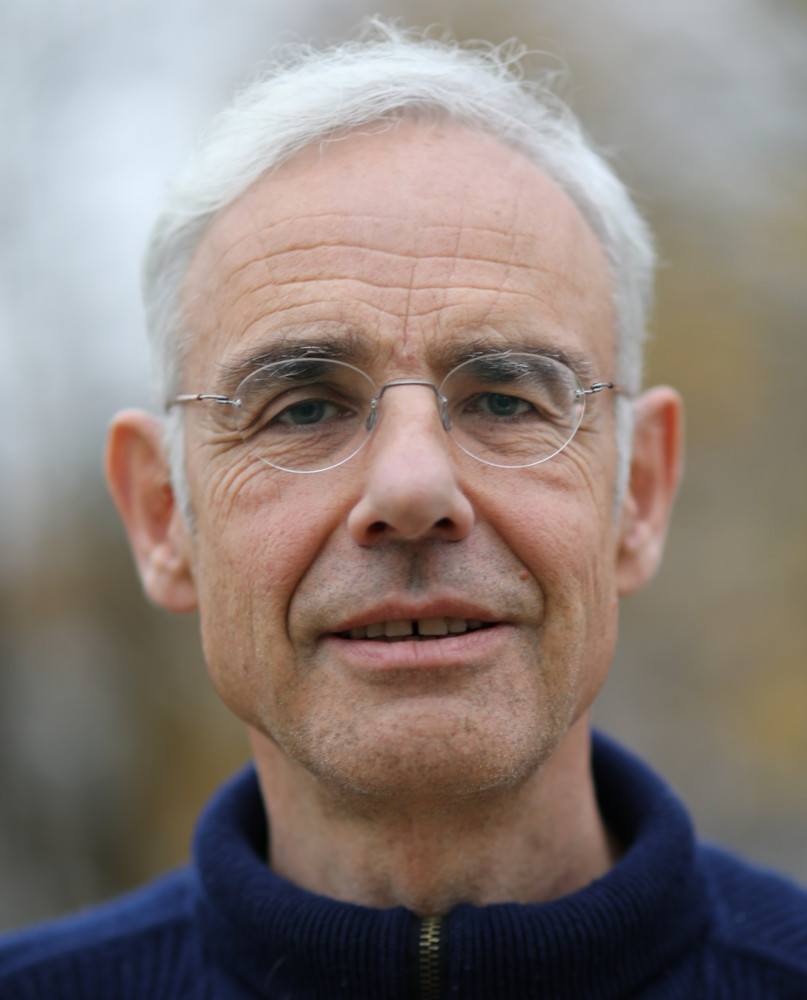 Tobias Nipkow合作论文数Theorem Proving Group, Fakultat fur Informatik, Technische Universitat Munchen;School of Computation, Information and Technology, Technical University of Munich;Department of Informatics, Technical University of Munich1
 Maximilian Haslbeck合作论文数1Matthew Fernandez合作论文数NICTA, the University of New South Wales1Joe Hendrix合作论文数University of Illinois at Urbana-Champaign1
 Charles Carroll Morgan合作论文数School of Computer Science & Engineering, Faculty of Engineering, The University of New South Wales1
 G.K. (Gabriele) Keller合作论文数Utrecht University1D. Ross Jeffery合作论文数School of Computer Science and Engineering, University of New South Wales1
 Magnus Myreen合作论文数Department of Computer Science and Engineering, Chalmers University of Technology1
 Andrei Stefanescu合作论文数University of Illinois at Urbana-Champaign1
 Rafal Kolanski合作论文数NICTA Sydney Research Lab1
 Sean Seefried合作论文数PLC Research Group, The University of New South Wales1Iavor S. Diatchki合作论文数1Makarius Wenzel合作论文数1
 K. Rustan M. Leino合作论文数Amazon Web Services Inc1
 Mark Staples合作论文数Australia’s Research ICT Centre of Excellence1
 Christine Rizkallah合作论文数School of Computing and Information Systems, The University of Melbourne1
 Jasmin Blanchette合作论文数Institut für Informatik, Ludwig Maximilian University of Munich1




