The mechanical properties of thin foils (similar to 25 mu m), to be used as a target's window in a high intensity accelerator, require non-standard characterization techniques. In the current research, the innovative small punch test technique (SPT) had been used to map and determine the mechanical properties of SS 316L foil irradiated by high intensity of proton beams. The SPT results and the energy to fracture are presented and the fracture modes were determined by scanning electron microscopy (SEM) observations and electron backscatter diffraction (EBSD) analysis. The irradiated samples were exposed to 3.6 MeV proton bombardment at 250 mu A and 290 mu A, for 42 and 5 h, respectively. The major damage, as was reflected by significant ductility and energy to fracture losses, was associated with the irradiated zones which experienced the highest temperature and protons flux. Based on the observed evidence of deformation twins and dense dislocation bands, as well as the EBSD analysis, it was revealed that the limited deformation in the irradiated samples is related mainly to radiation damage and probably a minor effect of hydrogen embrittlement phenomenon. The limited ductility was explained by the accumulation of radiation damage that most probably hinder dislocations mobility through crystallographic glide. Nevertheless, these alternative deformation mechanisms involve nucleation and propagation of dislocation slip bands (DSBs) and intra-grain fragmentation. The DSBs intersections were proposed as the source for stress localization, which initiates crack formation which was followed by crack propagation through slip bands. This cracking mechanism was exhibited by a unique "saw tooth" fracture mode. (C) 2020 Elsevier B.V. All rights reserved.
In this research we investigated the influence of hydrogen on the dynamic strength and phase transition in SAE 1020 steel. Exposure of carbon steel to hydrogen creates gaseous methane in the sample according to the reaction Fe3C + 4H -> CH4+ 3Fe. Plate impact experiments were carried out in gas gun or powder gun to shock compress the samples to pressures below and above the bcc-hcp (alpha-epsilon) phase transition, respectively. The Hugoniot elastic limit, phase transition pressure and spall strength were obtained from free surface velocity measured by VISAR. It seems evident from our experiments that the spall strength increases at pressures above the phase transition. The hydrogen treatment did not find to influence the material HEL, alpha-epsilon phase transition or the spall strength.
The influence of hydrogen on austenitic-ferritic (duplex) stainless steels is studied by dynamic experiments supported by lattice defects' energy with hydrogen. The susceptibility of steels to hydrogen fracture mechanism is directly related to the interaction between traps (defects) and hydrogen; therefore, it is being affected the most by the deformation process. The purpose of this paper is to study and analyze the applicability of hydrogen embrittlement in lean duplex stainless steel (LDS) at high strain rate (similar to 10(5) s(-1)) and high dynamic pressure (above 8 GPa). This article reviews hydrogen defects' energy to activate hydrogen fracture mechanisms, in LDS alloys, in response to deformation at strain rates of 10(-7) s(-1), and compares these results to new experiments at high strain rates of 10(5) s(-1). We support these results by post-microstructural observations, after dynamic experiments, and measurements of trapping energy levels using thermal desorption measurements (TDS) analyzed by Lee and Lee's model. Simulations for dynamic experiments were applied. From these results, we refer for the first time to the invalidity of the hydrogen fracture mechanism at high strain rate (10(5) s(-1)) and high dynamic pressures (P >= 8 GPa). (C) 2017 Elsevier B.V. All rights reserved.
The mechanical properties characterization of thin foils to be used as target in high intensity accelerator requires non standards techniques. Previous studies, focused on foils after annealed, cold rolled and heat treatment after rolled, in addition to foils at different thickness, have been carried out to estimate the sensitivity of the small punch test (SPT) technique in foils. In this research we studied the degradation of the mechanical properties of foils due to irradiation damage by high intensity proton beams. For this new study, two samples of SS316L foils have 25 μm thickness were exposed to proton bombardment at 3.6 MeV, and approximately 300 μA of current for a period of 3 hours and 40 hours, separately. The SPT technique revealed that the un-irradiated specimens exhibited the largest load and deformation before failure, rather than the irradiated foils. The electron microscopy observations (SEM) revealed high cross slips and pseudo-cleavage density combined with multiple deformation twinning after irradiation to high energy. The mechanical behavior can be explained by the microstructure. The crack propagation path is in a zigzag fracture mode when multiple deformation twinning occurs close to the stretched zone of the foil and failure. Changes of the SPT measurements were found and the degradation from ductile to brittle crack mode is attributed to radiation damage effects.
In this research we investigate different metallurgical effects, such as: inclusions and hydrogen (H) on the dynamic strength of different metals. We also investigate the deformation mechanism evolved from inclusions by metallurgical analysis. The dynamic loading was produced by accelerating Al or steel impactors in a gas gun into different targets (uniaxial plate impact experiments) at a velocity range of 330 to 430 m/s. After impact, the hydrogen-lean duplex stainless steel (H-LDS) system represents the same failure mechanism as in the lower strain rates; increasing strength and decreasing ductility. The Al-Ta and Al-B systems indicate different failure mechanisms compared with the ultra-pure (UP) Al. In addition, the failure mechanism was different when the Ta amount in the Al matrix was higher. Our results show that small amount of inclusions have the same effect on the Al matrix. However, differences can be seen when Ta amount is higher, as opposed to previously published work in the literature.
Prediction of the mechanical behavior of thin foils (~25 µm) requires special characterization techniques. The current work is focused on the mechanical and microstructural characterization of 25 µm HAVAR alloy foils following annealing, cold rolling, and subsequent heat treatments, using small punch testing (SPT), X-ray diffraction (XRD), and transmission-scanning electron microscopy (TEM). The SPT technique revealed that the annealed specimens exhibited the largest maximal load to failure and deformation (more than two-fold), compared to the cold rolled and heat treated conditions. The microscopy observations revealed high dislocation density following cold rolling and subsequent heat treatments. Following annealing, a cubic crystallographic structure (FCC) with equiaxed grains and a limited dislocation population was observed. Following cold rolling and subsequent thermal treatment, a preferred orientation texture (i.e., 'deformation texture') was observed with a very high dislocation density. The correlation between the mechanical behavior and the microstructural observations is discussed in detail.
Hydrogen trapping behavior in a lean duplex stainless steel (LDS) is studied by means of thermal desorption spectrometry (TDS). The susceptibility of a metal to hydrogen embrittlement is directly related to the trap characteristics: source or sink (reversible or irreversible, respectively). Since trapping affects the metal's diffusivity, it has a major influence on the hydrogen assisted cracking (HAC) phenomenon. It is known from previously published works that the susceptibility will depend on the competition between reversible and irreversible traps; meaning a direct relation to the hydrogen's initial state in the steel. In this research the trapping mechanism of LDS, exposed to different hydrogen charging environments, is analyzed by means of TDS. The TDS analysis was supported and confirmed by means of X-ray diffraction (XRD), hydrogen quantitative measurements and microstructural observations. It was found that gaseous charging (which produces lower hydrogen fugacity) creates similar to 22% higher activation energy for hydrogen trapping compared with cathodic charging (which produces higher hydrogen fugacity). These results are due to the different effects on the hydrogen behavior in LDS which causes a major difference in the hydrogen contents and different hydrogen assisted phase transitions. The highest activation energy value in the cathodic charged sample was ascribed to the dominant phase transformation of gamma -> gamma*, whereas in the gaseous charged sample it was ascribed to the dominant formation of intermetallic compound, sigma (sigma). The relation between hydrogen distribution in LDS and hydrogen trapping mechanism is discussed in details. (C) 2015 Elsevier B.V. All rights reserved.
In this research dynamic strength is analyzed for the first time in a lean duplex stainless steel (LDS) uncharged and charged with hydrogen. In particular, the dynamic yield stress (Hugoniot elastic limit, HEL) and the dynamic tensile strength (spall strength) of LDS are studied. We also investigate the deformation mechanism of the LDS using metallurgical analysis. LDS was chosen since it has a mixed structure of ferrite (BCC, α) and austenite (FCC, γ), which allows an attractive combination of high strength and ductility. The dynamic loading was produced by accelerating an LDS impactor in a gas gun into an LDS target (uniaxial plate impact experiments). Data collection was performed by optical diagnostics through the velocity interferometer for any reflector device. The impact produces conditions of high pressure and high strain rate (~105 s−1), which can be comparable to explosions during extreme conditions of failure. In addition, investigations of hydrogen interaction with both crystal lattices were performed by means of X-ray diffraction (XRD) measurements. Several assessments can be made based on the results of this study. Using XRD analysis, it will be shown that even after hydrogen desorption some hydrogen remained trapped in the austenitic phase causing a small lattice expansion. After impact, a brittle spall was seen, which occurred through cavitation of cracks along both phases’ grain boundaries. Hydrogen increases the dynamic yield strength and when hydrogen content is sufficiently high it will also lead to higher spall strength. The relation between microstructure and dynamic strength of the LDS in the presence of hydrogen is discussed in detail.
Thin foils having thickness values of 200 pm and less are commonly applied in the food industries, medical applications and more. Small punch technique (SPT) is a promising mechanical testing method for specimens thicker than 250 pm, in which a formulation correlating the measured parameters to standard tensile properties was previously reported. The current research is focused, for the first time, on the correlation between SPT and tensile mechanical properties of SS-316L thinner specimens in the range of 100-200 mu m. It is demonstrated by finite-element-analysis, that the mechanical response of thin foils having thicknesses in the range of 25-500 mu m can be divided into three categories. For specimens thicker than 300 mu m, thin plate bending equations that were applied previously for thick specimens, are still valid, while for thinner specimens this theory fails to provide adequate correlation between SPT and tensile yield stress. For specimens thinner than 50 mu m it was identified that equations derived from membrane solution should be employed rather than classical plate theory. For intermediate thickness values in the 50-300 mu m range, a "transition-zone" was identified between plate and membrane-like mechanical responses. For the lower region, 50-100 mu m, an analytical expression correlating the measured SPT parameters and the tensile yield stress is currently proposed. (C) 2015 Elsevier Ltd. All rights reserved.
The influence of helium bubbles or boron inclusions in aluminum targets is studied by plane impact experiments with a gas gun. The experiments were done for targets with initial temperatures of 25 degrees C and near melting at 600 degrees C. The free surface velocity was measured with velocity interferometer for any reflector (VISAR) diagnostic. From these measurements the elastic yield strength and the spall strength were calculated.The experiments are analyzed by using a one dimensional (1D) hydrodynamic simulation coupled to a spall model. This model describes the time development of ensemble of growing voids or helium bubbles. The simulations of the VISAR free surface velocity are in a good agreement with the experiments. The impact experiments and the appropriate simulations are done for three distinct targets: pure Al, Al + 0.15%wt.B-10 and Al + 0.15%wt.B-10 with helium. The Hugoniot Elastic strength limit (y(HEL)) for the target with helium at room temperature is smaller than the appropriate target without helium. The y(HEL) for all targets becomes substantially higher at 600 degrees C preheating temperature. Furthermore, the preheated (600 degrees C) pure Al has y(HEL) significantly larger than all other targets. For the preheated Al-B-10 with helium, the shape of the velocity trace does not show a well defined Hugoniot elastic limit. The spall strength for all targets becomes substantially lower at 600 degrees C. The preheated pure aluminum has significantly higher spall strength in comparison to all other preheated targets. However, at 600 degrees C the spall strength of Al-B-10 with helium bubbles is significantly reduced in comparison to Al-B-10 without helium, while at 25 degrees C the spall strength is the same for both cases. The simulation revealed that this effect might be explained by a reduction of the viscosity in the aluminum with helium at the pre-heating conditions. (C) 2013 Elsevier Ltd. All rights reserved.
The influence of helium bubbles or boron inclusions in an aluminum target is studied by plane impact experiments with a gas gun and VISAR diagnostic. The experiments were carried out on targets with initial temperatures of 25 °C and near melting at 600 °C. The Hugoniot elastic limit yHEL for all targets becomes substantially higher at 600 °C, related to the phonon drag mechanism at high strain rates and high temperatures. The spall strength for all targets becomes substantially lower at 600 °C. The spall strength of Al-10B with helium bubbles is significantly reduced in comparison to Al-10B without helium, while at 25 °C the spall strength is the same for both cases. This effect might be explained by a local strength reduction of the aluminium at pre-heating conditions, allowing the helium bubbles to be more dominant in the spallation process
HAVAR foils are used in the medical industry as a window material for the production of 18FDG for PET scans. First comparative measurements of HAVAR foils, 25μm thick, are presented. Three samples were measured: cold rolled (CR), annealed (AN), and proton irradiated (IR). These HAVAR foils were studied by means of Slow Positron Implantation Spectroscopy (SPIS), Positron Annihilation Lifetime spectroscopy (PAL), Transmission Electron Microscopy (TEM) and X-Ray Diffraction (XRD). TEM and XRD results show that HAVAR has a fcc structure with a small amount of dislocations in the AN sample and a high density of dislocation nets in the CR sample. The positron diffusion lengths, extracted from the SPIS measurements, are ∼8nm and ∼66nm in the CR and AN samples, respectively, in agreement with TEM observations. The results of PAL measurements show significant differences between positron mean lifetimes in the three samples. Differences of ∼50 ps and ∼70 ps were measured between the mean lifetime in the AN sample and these in the CR and IR samples, respectively. GEANT4 simulations were used for the first time in PAL analysis. The simulation method and its benchmarking against previous measurements are described. Lifetime results obtained using conventional PAL analysis and GEANT4 based analysis are consistent within uncertainties for both the HAVAR and a Si reference sample.
A study of irradiation-induced damage in HAVAR ® foils was initiated in order to extract the highest proton dose the foils can sustain. The lattice structure of HAVAR ® foils in different metallurgic conditions is presented, as well as visible internal structure, measured by Transmission Electron Microscopy (TEM). Positron Annihilation Spectroscopy (PAS) techniques were used to investigate these foils, and another foil that had been irradiated to the maximal proton dose limit, set by the manufacturer to a total charge of 1 mAh (= 3.6 C). PAS techniques included Doppler broadening (DB) measurement in the SPONSOR beam and lifetime (LT) measurements, both carried at Helmholtz-Zentrum Dresden-Rossendorf (HZDR). Both positron spectroscopy methods show clear differences between the investigated foils, with distinguished characteristics for annealed, cold-rolled and irradiated foils. The advantages of using a slow positron beam to study thin foils and defect profiles, over a table-top LT spectrometer, are discussed and demonstrated by the HAVAR ® measurements.
The micro-structure of the spall plane of pure aluminum (99.9999%) was investigated in symmetric plate impact experiments. The aluminum targets were first heated at 450°C for 22 h for grain growth. The impacted targets were softly caught and collected for metallurgical analysis. It was found that at weak impacts with partial spall, voids with average size of 50±10 im were developed along the grain boundaries. The grain sizes in the vicinity of the voids are 50-250 μm, in comparison with grain sizes of 400-1000 μm in other areas of the specimen, revealing grains splitting under dynamic tension. Transmission Electron Microscopy (TEM) and electron diffraction show parallel dislocation walls, that create a sub-grain micro-structure inside grains with (011) orientation to the beam. In grains with other orientations no dislocation walls or sub-grain structure were found. We also found out pile up of the dislocations by glide mechanism along directions during the spall process.
Investigation of the dynamic properties of aluminum targets with helium bubbles is presented. The targets were obtained by melting pure aluminum with 0.15% wt.10B powder. The solid targets were neutron irradiated to get homogeneous helium atoms inside the aluminum boron 10 matrix according to the reaction 10B + n → 7Li+4He. Helium atoms further accumulated into bubbles by diffusion in the bulk aluminum. Shock wave experiments were performed by accelerating the aluminum impactor into different targets: (1) pure aluminum, (2) Al-10B, and (3)Al-10B with different radii and concentrations of helium bubbles. The spall strength was calculated and analyzed from the free surface velocity measurements. It was found that the addition of 10B in pure aluminum reduces the spall strength of the material by 25–32%. However, irradiated sample with helium bubbles was found to have higher spall strength compared to samples without bubbles. This finding was reconstructed by numerical simulations. The impacted targets were collected after the impact experiments and examined by TEM. These targets were compared to TEM pictures before the impact. The number of helium atoms in the bubbles was calculated from the electron energy loss spectrum (EELS). TEM comparison between the pre-impacted and the impacted targets shows bubbles coalescence and EELS measurements demonstrate a reduction of the helium atoms concentration in the bubbles from ~1028 m−3 before the impact to ~1027 m−3 after the impact.
Experimental and analytical investigation of helium bubble formation and growth in aluminum is presented. A pure aluminum with 0.15wt% of 10B was neutron-irradiated in the Soreq nuclear reactor to get homogeneous helium atoms in the metal according to the reaction 10B+n→7Li+4He. Formation and growth of helium bubbles was observed in situ by heating the post-irradiated metal to 470°C in TEM with a hot stage holder. It was found that above 400°C the change in the bubble shape takes less than a second. In other experiments the Al–10B was first heated in its bulk shape and then observed in TEM at room temperature. In this case the helium bubble formation takes hours. Analytical evaluation of the diffusion processes in both cases was done to explain the experimental results. The number of helium atoms in a bubble was calculated from the electron energy loss spectrum (EELS) measurements. These measurements confirmed the hard sphere equation of state (EOS) for inert gases that was used in the analytical diffusion calculations.
Influence of number of laser shots on laser induced microstructures on Ag and Cu targets 137 Experimental studies of generation of ~100 MeV Au-ions from the laser-produced plasma 149 Layers from initial Rayleigh density profiles by directed nonlinear force driven plasma blocks for alternative fast ignition 157 Effect of laser beam filamentation on second harmonic spectrum in laser plasma interaction 171 Repetitive outbursts of fast carbon and fluorine ions from sub-nanosecond laser-produced plasma 179 Phase stabilization of the amplitude dividing four-beam combined laser system using stimulated Brillouin scattering phase conjugate mirrors 185 Investigation of stimulated Raman scattering using a short-pulse diffraction limited laser beam near the instability threshold
The dynamic behavior of aluminum targets with helium bubbles was investigated in plane impact experiments. From the free surface velocity measurements the spall strength was calculated and analyzed. Theoretical comparison between spall creation due to voids growth and bubbles growth was made. The impacted targets were collected after the impact experiments and examined by TEM. These targets were compared to TEM pictures before the impact. The number of helium atoms in the bubbles was calculated from the electron energy lose spectrum (EELS). Comparison of bubble radiuses and concentration before and after the impact demonstrated bubbles coalescence and EELS measurements showed a reduction of the helium atoms concentration in the bubbles from similar to 10(28) m(-3) before the impact to similar to 10(27) m(-3) after the impact.
The dynamic behavior of aluminum containing helium bubbles was investigated in shock wave experiments. The targets were obtained by mixing melted pure aluminum with 1800 appm 10 B powder. After solidification, the targets were neutron irradiated to obtain helium atoms in the bulk from the reaction 10 B+ np 7 Li+ 4 He. Helium atoms further accumulated into bubbles by diffusion in the aluminum bulk. Shock wave experiments were performed by accelerating aluminum impactor into three types of samples: (1) pure aluminum, (2) Al- 10 B and (3) Al- 10 B with different concentra- tions of helium bubbles and different radii. The bubbles radii and concentration were determined experimentally using Transmission Electron Microscopy (TEM). The number of helium atoms in a bubble was calculated from the Electron Energy Loss Spectrum (EELS). The following results were obtained in the experiments: The maximum free surface velocity of shocked samples made Al- 10 B and Al- 10 B with different concentrations of helium bubbles and different radii was similar, implying that the pressure on the Hugoniot was the same. Moreover, it was found that the spall strength of these samples was the same. However, it was measured that the spall strength of pure aluminum samples was by 47% higher than that of Al- 10 B and Al- 10 B with bubbles samples. An equation of state (EOS) model was developed for describing aluminum with helium bubbles. The bubbles radii and con- centrations were used as input parameters in the model. The calculated Hugoniot curve for alumi- num with bubbles was not sensitive to the existence of helium, for mass ratio of 10 x5 between helium and aluminum, typical for the experiments. This finding is in agreement with the experimental results.
An overview of the equations of state (EOS) with a short summary of shock wave experiments with laser induced impact flyer, relevant to EOS Study, is presented. The "old-new" ellipsometry is suggested and described for the EOS research. The detection of phase transition,, of the first kind (solid-solid) as well as phase transition of the second kind (Curie point as,in example) is demonstrated. Furthermore, the temperature measurements are not possible without the knowledge of the emissivity, a parameter that can be measured by using ellipsometry techniques.
 Dan Eliezer合作论文数Department of Materials Engineering, Ben-Gurion University of the Negev22
 Shalom Eliezer合作论文数Soreq Nuclear Research Center18
 Benny Glam合作论文数14Lior Bakshi合作论文数6S. Haroush合作论文数5Elena Abramov合作论文数5
 R. Silverstein合作论文数Dept Mat Sci & Engn, Ben Gurion Univ Negev4Lior Perelmutter合作论文数4
 Noaz Nissim合作论文数Propulsion Physics Laboratory4I. Silverman合作论文数4Zohar Henis合作论文数4M. Sudai合作论文数4Asher Turgeman合作论文数3
 Yaniv Gelbstein合作论文数Department of Materials Engineering, Ben-Gurion University of the Negev3Y. Eisen合作论文数3Shimon Zalkind合作论文数3A. Wagner合作论文数2M. Mond合作论文数2sharon pecker合作论文数2
 Michael Strauss合作论文数Department of Astrophysical Sciences, Princeton University2Arie Beck合作论文数IAEC2Wolfgang Anwand合作论文数2
 Or Hen合作论文数Department of Physics, Massachusetts Institute of Technology;Laboratory for Nuclear Science, Massachusetts Institute of Technology2
 J. David Embury合作论文数McMaster University2Roni Z. Shneck合作论文数Department of Materials Engineering, Ben-Gurion University of the Negev2Erez Raicher合作论文数Soreq Research Center2Arie Venkert合作论文数Nuclear Research Center-Negev2S. May-Tal Beck合作论文数2A. Ocherashvili合作论文数2T. Desai合作论文数1Rashida Jafer合作论文数1J. Garrett合作论文数1Y. Snir合作论文数1
 Oren Golan合作论文数Dept Leadership & Policy Educ, Univ Haifa1
 Gregory Rozenberg合作论文数1
 Leonid Weingarten合作论文数1Vincenzo Conte合作论文数1Hao Liu合作论文数Institute of High Energy Physics, Chinese Academy of Science1D. Batani合作论文数1Moshe H. Mintz合作论文数1D. Halperin合作论文数1
 Xun Liu (刘勋)合作论文数Institute of Psychology, Chinese Academy of Sciences1Noam Shamir合作论文数1
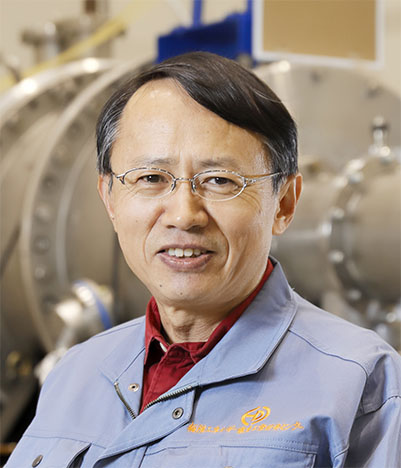 Weihua Jiang (江伟华)合作论文数Department of Nuclear System Safety Engineering, Nagaoka University of Technology;Extreme Energy-Density Research Institute, Nagaoka University of Technology1Gerhard Brauer合作论文数1G. Solovioff合作论文数1S. Harush合作论文数1
 Milan Trtica合作论文数Vinča Institute of Nuclear Sciences1




