We present a novel linear-time acyclic join algorithm, TreeTracker Join (TTJ). The algorithm can be understood as the pipelined binary hash join with a simple twist: upon a hash lookup failure, TTJ resets execution to the binding of the tuple causing the failure, and removes the offending tuple from its relation. Compared to the best known linear-time acyclic join algorithm, Yannakakis's algorithm, TTJ shares the same asymptotic complexity while imposing lower overhead. Further, we prove that when measuring query performance by counting the number of hash probes, TTJ will match or outperform binary hash join on the same plan. This property holds independently of the plan and independently of acyclicity. We are able to extend our theoretical results to cyclic queries by introducing a new hypergraph decomposition method called tree convolution. Tree convolution iteratively identifies and contracts acyclic subgraphs of the query hypergraph. The method avoids redundant calculations associated with tree decomposition and may be of independent interest. Empirical results on TPC-H, the Join Order Benchmark, and the Star Schema Benchmark demonstrate favorable results.
Many important query processing methods proactively use semijoins or semijoin-like filters to delete dangling tuples, i.e., tuples that do not appear in the final query result. Semijoin methods can achieve formal optimality but have high upfront cost in practice. Filter methods reduce the cost but lose the optimality guarantee. We propose a new join algorithm, TreeTracker Join ($\mathsf{TTJ}$), that achieves the data complexity optimality for acyclic conjunctive queries (ACQs) without semijoins or semijoin-like filters. $\mathsf{TTJ}$ leverages join failure events, where a tuple from one of the relations of a binary join operator fails to match any tuples from the other relation. $\mathsf{TTJ}$ starts join evaluation immediately and when join fails, $\mathsf{TTJ}$ identifies the tuple as dangling and prevents it from further consideration in the execution of the query. The design of $\mathsf{TTJ}$ exploits the connection between query evaluation and constraint satisfaction problem (CSP) by treating a join tree of an ACQ as a constraint network and the query evaluation as a CSP search problem. $\mathsf{TTJ}$ is a direct extension of a CSP algorithm, TreeTracker, that embodies two search techniques backjumping and no-good. We establish that join tree and plan can be constructed from each other in order to incorporate the search techniques into physical operators in the iterator form. We compare $\mathsf{TTJ}$ with hash-join, a classic semijoin method: Yannakakis's algorithm, and two contemporary filter methods: Predicate Transfer and Lookahead Information Passing. Favorable empirical results are developed using standard query benchmarks: JOB, TPC-H, and SSB.
Business users must answer business questions quickly to address Business Intelligence (BI) needs. The bottleneck is to understand the complex databases schemas. Only few people in the IT department truly understand them. A holy grail is to empower business users to ask and answer their own questions with minimal IT support. Semantic technologies, now dubbed as Knowledge Graphs, become useful here. Even though the research and industry community has provided evidence that semantic technologies works in the real world, our experience is that there continues to be a major challenge: the engineering of ontologies and mappings covering enterprise databases containing thousands of tables with tens of thousands of attributes. In this paper, we present a novel and unique pay-as-you-go methodology that addresses the aforementioned difficulties. We provide a case study with a large scale e-commerce company where Capsenta’s Ultrawrap has been deployed in production for over 3 years.
A successfully repeated use case for Semantic Web technologies is Ontology-Based Data Access for data integration. In this approach, an ontology serves as a uniform conceptual federating model, which is accessible to both IT developers and business users. Here, two challenges for developing an OBDA system are considered: ontology and mapping engineering, along with a pay-as-you-go methodology that addresses these challenges and enables agility.
Cross-domain knowledge bases such as DBpedia, Freebase and YAGO have emerged as encyclopedic hubs in the Web of Linked Data. Despite enabling several practical applications in the Semantic Web, the large-scale, schema-free nature of such graphs often precludes research groups from employing them widely as evaluation test cases for entity resolution and instance-based ontology alignment applications. Although the ground-truth linkages between the three knowledge bases above are available, they are not amenable to resource-limited applications. One reason is that the ground-truth files are not self-contained, meaning that a researcher must usually perform a series of expensive joins (typically in MapReduce) to obtain usable information sets. In this paper, we upload several publicly licensed data resources to the public cloud and use simple Hadoop clusters to compile, and make accessible, three cross-domain self-contained test cases involving linked instances from DBpedia, Freebase and YAGO. Self-containment is enabled by virtue of a simple NoSQL JSON-like serialization format. Potential applications for these resources, particularly related to testing transfer learning research hypotheses, are also briefly described.
Linked Open Data exhibits growth in both volume and variety of published data. Due to this variety, instances of many different types (e.g. Person) can be found in published datasets. Type alignment is the problem of automatically matching types (in a possibly many-many fashion) between two such datasets. Type alignment is an important preprocessing step in instance matching. Instance matching concerns identifying pairs of instances referring to the same underlying entity. By performing type alignment a priori, only instances conforming to aligned types are processed together, leading to significant savings. This article describes a type alignment experience with two large-scale cross-domain RDF knowledge graphs, DBpedia and Freebase, that contain hundreds, or even thousands, of unique types. Specifically, we present a MapReduce-based type alignment algorithm and show that there are at least three reasonable ways of evaluating type alignment within the larger context of instance matching. We comment on the consistency of those results, and note some general observations for researchers evaluating similar algorithms on cross-domain graphs.
Instance matching concerns identifying pairs of instances that refer to the same underlying entity. Current state-of-the-art instance matchers use machine learning methods. Supervised learning systems achieve good performance by training on significant amounts of manually labeled samples. To alleviate the labeling effort, this poster (The work presented herein is also being published as a full conference paper at ESWC 2015. This poster provides a more high-level overview and discusses supplemental experimental findings beyond the scope of the material in the full paper.) presents a minimally supervised instance matching approach that is able to deliver competitive performance using only 2% training data. As a first step, a committee of base classifiers is trained in an ensemble setting using boosting. Iterative semi-supervised learning is used to improve the performance of the ensemble classifier even further, by self-training it on the most confident samples labeled in the current iteration. Empirical evaluations on real-world data show that, using a multilayer perceptron as base classifier, the system is able to achieve an average F-Measure that is within 2.5% of that of state-of-the-art supervised systems.
Entity Resolution (ER) concerns identifying pairs of entities that refer to the same underlying entity. To avoid O(n(2)) pairwise comparison of n entities, blocking methods are used. Sorted Neighborhood is an established blocking method for Relational Databases. It has not been applied to schema-free Resource Description Framework (RDF) data sources widely prevalent in the Linked Data ecosystem. This paper presents a Sorted Neighborhood workflow that may be applied to schema-free RDF data. The workflow is modular and makes minimal assumptions about its inputs. Empirical evaluations of the proposed algorithm on five real-world benchmarks demonstrate its utility compared to two state-of-the-art blocking baselines.
The recently concluded Financial Entity Identification and Information Integration (FEIII) competition is an example of a domain-specific entity linking challenge. Given a variety of datasets describing financial institutions, the goal of the competition was to interlink entities referring to the same underlying entity in a minimally supervised manner. In this paper, we present our solution to the challenge. Using local, domain-independent heuristics, namely thresholded block purging and a simple Jaccard matcher, we devised a solution that has execution times of less than a minute on the alloted tasks. Although the method did not achieve competitive precision, it was recall-friendly, suggesting that it is useful both as an easily implemented baseline, as well as a generic preprocessing step for more expensive, precision-friendly algorithms that are fine-tuned for specific domains.
Entity Resolution (ER) concerns identifying logically equivalent entity pairs across databases. To avoid quadratic pairwise comparisons of entities, blocking methods are used. Sorted Neighborhood is an established blocking method for relational databases. It has not been applied on graph-based data models such as the Resource Description Framework (RDF). This poster presents a modular workflow for applying Sorted Neighborhood to RDF. Real-world evaluations demonstrate the workflow's utility against a popular baseline.
Entity Resolution concerns identifying co-referent entity pairs across datasets. A typical workflow comprises two steps. In the first step, a blocking method uses a one-many function called a blocking scheme to map entities to blocks. In the second step, entities sharing a block are paired and compared. Current DNF blocking scheme learners (DNF-BSLs) apply only to structurally homogeneous tables. We present an unsupervised algorithmic pipeline for learning DNF blocking schemes on RDF graph datasets, as well as structurally heterogeneous tables. Previous DNF-BSLs are admitted as special cases. We evaluate the pipeline on six real-world dataset pairs. Unsupervised results are shown to be competitive with supervised and semi-supervised baselines. To the best of our knowledge, this is the first unsupervised DNF-BSL that admits RDF graphs and structurally heterogeneous tables as inputs.
Instance matching has emerged as an important problem in the Semantic Web, with machine learning methods proving especially effective. To enhance performance, task-specific knowledge is typically used to introduce bias in the model selection problem. Such biases tend to be exploited by practitioners in a piecemeal fashion. This paper introduces a framework where the model selection design process is represented as a factor graph. Nodes in this bipartite graphical model represent opportunities for explicitly introducing bias. The graph is first used to unify and visualize common biases in the design of existing instance matchers. As a direct application, we then use the graph to hypothesize about potential unexploited biases. The hypotheses are evaluated by training 1032 neural networks on three instance matching tasks on Microsoft Azure's cloud-based platform. An analysis over 25 GB of experimental data indicates that the proposed biases can improve efficiency by over 65% over a baseline configuration, with effectiveness improving by a smaller margin. The findings lead to a promising set of four recommendations that can be integrated into existing supervised instance matchers.
In this demo, we will show the operation of Ultrawrap Mapper, a semi-automatic software for creating mappings from Relational Databases to RDF in the R2RML language. In 2012, the W3C ratified two related standards for mapping relational database contents to RDF: the Direct Mapping [1] and R2RML [2]. The Direct Mapping is a default mapping of relational data to RDF. The organization and content of the resulting RDF triples is based on the schema and content of the database. Programs that implement the Direct Mapping do not need user input. R2RML is a language where users can express the mapping of relational data elements to RDF. A user must detail the mapping of relational data and metadata, (table and column names) to each field of a triple. Components of the language include, TripleMap, SubjectMap and PredicateObjectMap, etc. Depending on the size of the database, the R2RML mapping files can be very large. Recent R2RML editors have been developed which provide users a GUI to create the mappings [3,4,5]. These tools are a first step to eliminating the burden of learning the R2RML syntax. However, we observe that these tools are still R2RML and RDF driven: the user needs to understand how R2RML conceptually works.
Record linkage concerns identifying semantically equivalent records in databases. Blocking methods are employed to avoid the cost of full pairwise similarity comparisons on $n$ records. In a seminal work, Hernandez and Stolfo proposed the Sorted Neighborhood blocking method. Several empirical variants have been proposed in recent years. In this paper, we investigate the complexity of the Sorted Neighborhood procedure on which the variants are built. We show that achieving maximum performance on the Sorted Neighborhood procedure entails solving a sub-problem, which is shown to be NP-complete by reducing from the Travelling Salesman Problem. We also show that the sub-problem can occur in the traditional blocking method. Finally, we draw on recent developments concerning approximate Travelling Salesman solutions to define and analyze three approximation algorithms.
This article presents an unsupervised system that performs instance matching between entities in schema-free Resource Description Framework (RDF) files. Rather than relying on domain expertise or manually labeled samples, the system automatically generates its own heuristic training set. The training sets are first used by the system to align the properties in the input graphs. The property alignment and training sets are used together to simultaneously learn two functions, one for the blocking step of instance matching and the other for the classification step. Finally, the learned functions are used to perform instance matching. The full system is implemented as a sequence of components that can be iteratively executed to boost performance. Evaluations on a suite of ten test cases show individual components to be competitive with state-of-the-art baselines. The system as a whole is shown to compete effectively with adaptive supervised approaches.
Instance matching concerns identifying pairs of instances that refer to the same underlying entity. Current state-of-the-art instance matchers use machine learning methods. Supervised learning systems achieve good performance by training on significant amounts of manually labeled samples. To alleviate the labeling effort, this paper presents a minimally supervised instance matching approach that is able to deliver competitive performance using only 2
This paper introduces an indexing method for searching diverse data types that is easily parallelizable for use with large data sets. This method, the Adaptive Projection Forest (APF) is a partition-based metric-space indexing method, which provides generic retrieval solutions for data sets for which similarity is defined by a metric-distance function. The APF is uniquely suited to alleviate problems typically encountered in metric-space indexing because it adaptively incorporates exclusion, a method that removes data near a partition boundary and creates multiple trees for use in parallel computing. The use of exclusion allows the index to be more effective when data falls near partition boundaries, where traditional pruning is not always possible. The APF's use of exclusion also allows it to have greater success in parallel environments, meaning that the APF algorithm can be more effectively used on large data sets with diverse data types. In the APF index, the proportion of excluded data is adjusted dynamically at each index node by locally determining the dimension, k, of the projection of the metric space onto the real numbers. The algorithm, which provides asymptotic algorithmic guarantees for nearest neighbor search, is presented along with a parallel implementation of the APF. Across a suite of real-world and synthetic benchmarks the APF demonstrates favorable empirical results, measured in number of calculations, when compared with the emVP, MVP, and SA indexes. Experiments also reveal that number of calculations can be minimized when a critical parameter, the width of the exclusion region, is set much smaller than the value suggested by asymptotic algorithmic analysis.
Link discovery is the problem of linking entities between two or more datasets, based on some (possibly unknown) specification. A blocking scheme is a one-to-many mapping from entities to blocks. Blocking methods avoid O(n2) comparisons by clustering entities into blocks, and limiting the evaluation of link specifications to entity pairs within blocks. Current link-discovery blocking methods explicitly assume that two RDF datasets are provided as input, and need to be linked. In this paper, we assume instead that two heterogeneous dataset collections, comprising arbitrary numbers of RDF and tabular datasets, are provided as input. We show that data model heterogeneity can be addressed by representing RDF datasets as property tables. We also propose an unsupervised technique called dataset mapping that maps datasets from one collection to the other, and is shown to be compatible with existing clustering methods. Dataset mapping is empirically evaluated on three real-world test collections ranging over government and constitutional domains, and shown to improve two established baselines.
This invention is a system for integrating relational databases into a semantic web framework utilizing a simple mapping process and the SQL query optimizer present in the SQL database engine.
 Rui Mao (毛睿)合作论文数College of Computer Science and Software Engineering, Shenzhen University;National Engineering Laboratory for Big Data System Computing Technology, Shenzhen University;Shenzhen Institute of Computing Science26
 Juan Sequeda合作论文数Data.World26
 Weijia Xu合作论文数Visa23
 Mayank Kejriwal合作论文数Information Sciences Institute , University of Southern California16
 Salvatore J. Stolfo合作论文数Department of Computer Science, Columbia University;Glasswing Ventures;Red Balloon Security, Inc13
 Lance Obermeyer合作论文数12
 Smriti Ramakrishnan合作论文数University of Texas at Austin12
 Wenguo Liu合作论文数Department of Electrical Engineering, University of California9Syed Hamid Tirmizi合作论文数9Lane B. Warshaw合作论文数9
 James Browne合作论文数CODE
POEMS8
James Browne合作论文数CODE
POEMS8 Edward Marcotte合作论文数Department of Molecular Biosciences, College of Natural Sciences, The University of Texas at Austin;Erisyon, Inc.7
 Samoladas Vasilis合作论文数Software Technology and Network Applications Laboratory, School of Electrical and Computer Engineering, Technical University of Crete7Willard J. Briggs合作论文数6Roberto Bayardo合作论文数Coinbase6
 Christine Vogel合作论文数Department of Biology, College of Arts & Science, New York University5
 Marcelo Arenas合作论文数Department of Computer Science, School of engineering, Pontificia Universidad Católica de Chile;Institute for Mathematical and Computational Engineering, Pontificia Universidad Católica de Chile5
 Francois Barbancon合作论文数5Lee Parnell Thompson合作论文数5
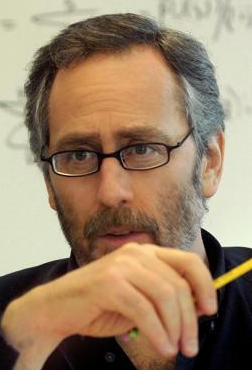 David E. Shaw合作论文数D. E. Shaw Research;Center for Computational Biology and Bioinformatics, Columbia University;Department of Biochemistry and Molecular Biophysics, Columbia University Irving Medical Center4Shu Wang合作论文数4
 Robin R. Gutell合作论文数Institute for Cellular and Molecular Biology, University of Texas4
 John T. Prince合作论文数Institute for Cellular and Molecular Biology, The University of Texas at Austin Austin4Aibo T.合作论文数Tinder4Qasim Iqbal合作论文数4David Gadbois合作论文数4DA BRANT合作论文数3Zhihua Li合作论文数3
 Luiz Penalva合作论文数Department of Cell and Structural Biology, University of Texas Health Science Center at San Antonio3Shulin Ni合作论文数3
 Shiow-Yang Wu (吳秀陽)合作论文数Department of Computer Science and Information Engineering, College of Science and Engineering, National Dong Hwa University3
 Aloysius K. Mok合作论文数Department of Computer Science, University of Texas at Austin3B. Lofaso合作论文数3
 Glen Nuckolls合作论文数OpportunitySpace;Tolemi3
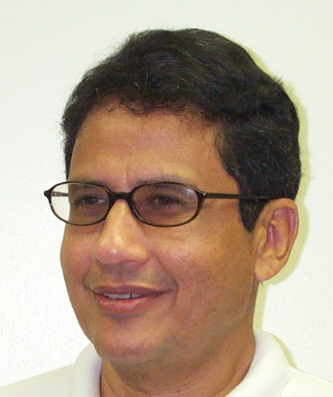 Mohamed G. Gouda合作论文数Department of Computer Sciences, College of Natural Sciences, University of Texas at Austin2Sarah E. Chodrow合作论文数2David P Gardner合作论文数2
 Stuart Aitken合作论文数2
 Chris Mungall合作论文数Biosystems Data Science Department, Environmental Genomics and Systems Biology Division, Lawrence Berkeley National Laboratory;Berkeley Institute for Data Science2
 Oscar Corcho合作论文数Ontology Engineering Group, Departamento de Inteligencia Artificial, Universidad Politécnica de Madrid;LibrAIry_eu;DIH - AIR4S;LocaliData2tao wang合作论文数2
 E. Allen Emerson (艾伦·爱默生)合作论文数Department of Computer Science,University of Texas, Austin, TX2
 Willard L. Miranker合作论文数2David Brant合作论文数2
 Robert Schrag合作论文数2
 Paul A. Navrátil合作论文数The University of Texas at Austin2
 David A. Brant合作论文数Department of Chemistry, School of Physical Sciences, University of California, Irvine2Shiow Wu合作论文数2Willard S. Willard合作论文数2