In this paper, we propose a decentralized learning algorithm to restore communication connectivity during multi-agent formation control. The time-varying connectivity profile of a mobile multi-agent system represents the dynamic information exchange capabilities among agents. While connected to the neighbors, each mobile agent in the proposed scheme learns to raise the team connectivity. When the inter-agent communication is lost, the associated trained neural network generates appropriate control actions to restore connectivity. The proposed learning technique leverages an adaptive control formalism, wherein a neural network tries to mimic the negative gradient of a value that relies on the agent-to-neighbor distances. All agents use the conventional consensus protocol during the connected multi-agent dynamics, and under communication loss, only the lost agent executes the neural network predicted actions to come back to the fleet. Simulation results demonstrate the effectiveness of our proposed approach for single/multiple agent loss even in the presence of velocity disturbances.
This paper addresses the problem of anchor-free multi-agent collaborative localization. We discuss three different coarse localization schemes: 1) Intuitive Coarse Localization (ICL), 2) Multidimensional Scaling (MDS) and 3) Semidefinite Programming (SDP). Then, a unified set of sequential and parallel LS techniques are applied to modify these coarse estimates. An outlier detection procedure is also introduced for localization with the presence of outliers. The numerical comparisons yield important insights to practitioners.
NOTE: The first page of text has been automatically extracted and included below in lieu of an abstract Session 3232 Undergraduate Research: How can it be made effective? Bryon Formwalt, Matthew Hayes, David Pittner, and Daniel Pack Department of Electrical Engineering United States Air Force Academy Abstract This paper discusses the cost and the benefit involved in undergraduate research observed by three undergraduate students and one professor in the Department of Electrical Engineering at the United States Air Force Academy. The three students are seniors who are participating in a year long independent research study course with projects related to robotics: design and gait control of a six legged robot, design and navigational control for a mobile robot, and autonomous helicopter control. The students agree that an undergraduate research project is a valuable ‘bridge’ between their undergraduate academic careers and the next stages of their lives, working as Air Force engineers or continuing the academic path to graduate school. The paper presents the three different student perspectives on the subject of undergraduate research regarding the value, the drawback, and the type of research which can be performed given the constraints of time and advanced knowledge. The paper will also include the opinions of the faculty mentor concerning the observations made by students. In addition, the paper will present their experiences on how an undergraduate research project can be ‘successful’ by addressing the following issues: scope of research, necessary amount of time/effort for the research project, required skills, and degree of required guidance. I. Introduction Over the years, it is believed that most, if not all, significant scientific research activities are conducted in the graduate schools. This view is natural since institutions with graduate schools have resources, experiences, and personnel to carry out in-depth studies on specialized subjects. Recently, there has been new interest in undergraduate research in the context of enhancing student learning. Numerous undergraduate institutions do conduct research with the help of their students and some have reported moderate success1. What is lacking in the literature, in our opinion, is clear guidance to initiate an undergraduate research program. To remedy this lack of knowledge, we make a small contribution toward achieving this objective by sharing our undergraduate research experiences. Three separate undergraduate projects are underway. For each project a single student is responsible for the entire associated task. The three students are among the top
NOTE: The first page of text has been automatically extracted and included below in lieu of an abstract Effective Practices in Robotics Education David J. Ahlgren, Igor M. Verner, Daniel Pack, Steve Richards Department of Engineering, Trinity College, Hartford, CT 06106 USA/ Department of Education in Technology and Science, Technion, Haifa, Israel, 32000/Department of Electrical Engineering, United States Air Force Academy/Acroname, Inc., Boulder, CO Abstract Linked to the authors' 2004 ASEE Annual Conference CoEd workshop on Educational Robotics, this paper evaluates educational strategies and activities from the perspective of four engineering educators who have extensive first-hand experience in integrating robotics in the curriculum— from first year courses through senior design projects—and in assessing the educational impact of robotics projects and competitions. We show that one particular assignment, the development of autonomous mobile robots, ties together interdisciplinary design, experiential learning, teamwork assessment and other topical educational subjects in powerful and unique ways. We identify best practices taken from our experiences, focusing on (a) undergraduate experiences in fire-fighting robotics and in the AUVSI Intelligent Ground Vehicle Competition; (b) integrating robotics into the first year engineering design courses, advanced research project teams, and senior design projects; (c) robot design as a medium to promote teamwork; (d) methods of evaluation and assessment of robotics curricula and projects; and (e) recent trends in robot hardware and software for education. Introduction A robot is a mechatronic system that can be programmed to perform a range of mechanical and electrical functions and that responds to sensory input under automatic control. Robots can perform tasks normally ascribed to humans or animals, to imitate them and interact with them, or to act autonomously in various physical environments. Robotics is an interdisciplinary area that draws from such fields as engineering, physiology, and behavioral science. Robotic systems can be related to many physical processes and human practices in their interactions with the environment. The potential for using robots as educational tools for teaching and learning various subjects in technology, science, and humanities is unlimited. Robotics is an especially effective medium for engineering education for many reasons, including the following: • Engineering students acquire a holistic "mechatronic" view of electrical, mechanical and computer engineering, which enhances personal inclinations in these professional areas. • Students acquire knowledge and experience that is important for their success in more advanced engineering courses and professional jobs after graduation. • Students become involved in self-directed learning, interdisciplinary design, teamwork, professional communication, technical invention, and research. Proceedings of the 2004 American Society for Engineering Education Annual Conference & Exposition Copyright © 2004, American Society for Engineering Education
NOTE: The first page of text has been automatically extracted and included below in lieu of an abstract Session 1532 Incorporating Mobile Robots in a Microcomputer Programming Course D.J. Pack, A.R. Klayton, A.L. Clark, and J.P. Trudeau Department of Electrical Engineering United States Air Force Academy USAFA, CO 80840-6236 ABSTRACT Most Electrical Engineering undergraduate programs require an assembly language programming course for graduation. Such a course is usually taught using a particular microcomputer or microcontroller. At the Air Force Academy, the Motorola 68HC11 microcontroller is used to teach assembly language programming and to introduce the use of embedded microcontrollers in system design. One of the most common challenges for educators who teach this type of course is covering all desirable hardware and software concepts in a single semester. To help remedy this situation, we recently redesigned the course so each student must complete a single mobile robot project with multiple “subsystem labs” replacing the previously unrelated lab sequence. We believe this more integrated approach improves the course for both educators and students while facilitating the development of a systems design methodology. INTRODUCTION Typically, a microcomputer assembly language programming course is a required course in most electrical engineering (EE) curricula. Such a course, however, has often been dreaded by many students, mainly due to the numerous details needed to learn a new programming language. These courses usually use a microprocessor or a microcontroller as a test-bed to program and execute assembly language programs. To increase student understanding, labs are designed to help students practice specific assembly language skills while learning specific functions of the microcontroller or microprocessor. An alternative lab approach to such a course provides students with a single large project which is carefully divided into multiple labs and administered throughout the semester. As we will discuss, such a project can provide students with an integrated overview of the hardware along with opportunities to practice desired programming skills. In this paper we present a case study of integrating a “large” project with an EE microcomputer programming course, which is required for all EE majors at the United States Air Force Academy. The objectives of the course are to teach: 1) assembly language skills; 2) microcontroller hardware; and 3) microcontroller input/output interfacing skills, i.e., interfacing external devices such as a LCD unit, switches, and sensors.
Recently, several global navigation satellite systems (GNSS) emerged following the transformative technology impact of the first GNSS-U.S. global positioning system (GPS). The power level of GNSS signals as measured at earth's surface is below the noise floor and is consequently vulnerable against interference. Spoofers are smart GNSS-like interferers, which mislead the receivers into generating false position and time information. While many spoofing mitigation techniques exist, spoofers are continually evolving, producing a cycle of new spoofing attacks and counter-measures against them. Thus, upgradability of receivers becomes an important advantage for maintaining their immunity against spoofing. Software-defined radio implementations of a GPS receiver address such flexibility but are challenged by demanding computational requirements of both GNSS signal processing and spoofing mitigation. Therefore, this paper reviews reported SDRs in the context of instrumentation capabilities for both conventional and spoofing mitigation modes. This separation is necessitated by significantly increased computational loads when in spoofing domain. This is demonstrated by a case study budget analysis.
This book provides a thorough introduction to the Texas Instruments MSP430™ microcontroller. The MSP430 is a 16-bit reduced instruction set (RISC) processor that features ultra-low power consumption and integrated digital and analog hardware. Variants of the MSP430 microcontroller have been in production since 1993. This provides for a host of MSP430 products including evaluation boards, compilers, software examples, and documentation. A thorough introduction to the MSP430 line of microcontrollers, programming techniques, and interface concepts are provided along with considerable tutorial information with many illustrated examples. Each chapter provides laboratory exercises to apply what has been presented in the chapter. The book is intended for an upper level undergraduate course in microcontrollers or mechatronics but may also be used as a reference for capstone design projects. Also, practicing engineers already familiar with another microcontroller, who require a quick tutorial on the microcontroller, will find this book very useful. This second edition introduces the MSP–EXP430FR5994 and the MSP430–EXP430FR2433 LaunchPads. Both LaunchPads are equipped with a variety of peripherals and Ferroelectric Random Access Memory (FRAM). FRAM is a nonvolatile, low-power memory with functionality similar to flash memory.
Objectives: After reading this chapter, the reader should be able to:
Objectives: After reading this chapter, the reader should be able to
Algebraic connectivity is the second-smallest eigenvalue of the Laplacian matrix and can be used as a metric for the robustness and efficiency of a network. This connectivity concept applies to teams of multiple unmanned aerial vehicles (UAVs) performing cooperative tasks, such as arriving at a consensus. As a UAV team completes its mission, it often needs to control the network connectivity. The algebraic connectivity can be controlled by altering edge weights through movement of individual UAVs in the team, or by adding and deleting edges. The addition and deletion problem for algebraic connectivity, however, is NP-hard and caused multiple heuristic methods to be developed. A leading method, the greedy perturbation heuristic, is efficient but not always effective. An alternative method, the bisection method, is highly effective but less efficient. The primary contributions of this paper are identification of a set of features and a classifier for predicting when the greedy perturbation heuristic is successful, and presentation of a hybrid algorithm which combines these two methods to provide both effectiveness and efficiency.
This textbook provides practicing scientists and engineers a primer on the Microchip AVR® microcontroller. The revised title of this book reflects the 2016 Microchip Technology acquisition of Atmel Co
The communication links shared among a team of Unmanned Aerial Vehicles (UAVs) can be represented as a Laplacian matrix. The second smallest eigenvalue of the matrix, known as algebraic connectivity, is a metric typically used to measure the connectivity of UAVs. Algebraic connectivity represents the robustness of the communication network. For an increasing number of UAV applications, varying levels of connectivity at different points throughout the duration of a mission are needed to meet operational requirements. Thus, the ability to track and obtain a desired connectivity profile over the course of a mission is critical. This work compares four different methods for increasing or decreasing the connectivity for a team of UAVs by adding or removing communication links between UAVs. A connectivity tracking algorithm was developed using these methods to track a profile of varying connectivity over time and an analysis of the results is provided.
Algebraic connectivity is the second-smallest eigen-value of the Laplacian matrix and can be used as a metric for the communication robustness of a network of agents. This connectivity concept applies to teams of multiple unmanned aerial vehicles (UAVs) performing cooperative tasks, such as arriving at a consensus while sharing sensor information through communication. The algebraic connectivity can be controlled by altering edge weights through movement of individual UAVs in a team, or by adding and deleting edges. The addition and deletion of edges to achieve a desired algebraic connectivity, however, is an NP -hard problem, leading to the development of multiple heuristic methods. A primary method, the greedy perturbation heuristic, relies on global knowledge of the system to determine the eigenvector associated with the algebraic connectivity. Using an existing method for determining algebraic connectivity distributively, the primary contributions of this paper are 1) the introduction of a decentralized estimation of the Fiedler vector and 2) a decentralized Fiedler vector-based connectivity tracking algorithm.
It is well known that in a Kalman filtering framework, all sensor observations or measurements contribute toward improving the accuracy of state estimation, but, as observations become older, their impact toward improving estimations becomes smaller to the point that they offer no practical benefit. In this paper, we provide an practical technique for determining the merit of an old observation using system parameters. We demonstrate that the benefit provided by an old observation decreases exponentially with the number of observations captured and processed after it. To quantify the merit of an old observation, we use the filter gain for the delayed observation, found by re-processing all past measurements between the delayed observation and the current time estimate, a high cost task. We demonstrate the value of the proposed technique to system designers using both nearly-constant position (random walk) and nearly-constant velocity (discrete white-noise acceleration, DWNA) cases. In these cases, the merit (that is, gain) of an old observation can be computed in closed-form without iteration. The analysis technique incorporates the state transition function, the observation function, the state transition noise, and the observation noise to quantify the merit of an old observation. Numerical simulations demonstrate the accuracy of these predictions even when measurements arrive randomly according to a Poisson distribution. Simulations confirm that our approach correctly predicts which observations increase estimation accuracy based on their delay by comparing a single-step out-of-sequence Kalman filter with a selective version that drops out-of-sequence observations. This approach may be used in system design to evaluate feasibility of a multi-agent target tracking system, and when selecting system parameters including sensor rates and network latencies.
The ubiquitousness of location-based services has proven effective for many applications such as commercial, military, and emergency responders. Software-defined radio (SDR) has emerged as an adequate framework for the development and testing of global navigational satellite systems such as the global position system (GPS). SDR receivers are constantly developing in terms of acceleration factors and accurate algorithms for precise user navigation. However, many SDR options for GPS receivers currently lack real-time operation or could be costly. This paper presents a LabVIEW (LV) and C/C++-based GPS L1 receiver platform with real-time capabilities. The system relies on LV acceleration factors as well as other C/C++ techniques such as dynamic link library integration into LV and parallelizable loop structures, and single instruction, multiple data methods, which leverage host PC multipurpose processors. A hardware testbed is presented for compactness and mobility, as well as software functionality and data flow handling inherent in LV environment. Benchmarks and other real-time results are presented as well as compared with the other state-of-the-art open-source GPS receivers.
 Steven F. Barrett合作论文数1. Embedded Systems: Design and Applications with the 68HC12 and HCS1243
 George York合作论文数16
 Hyukseong Kwon合作论文数USAF Academy, US Air Force Academy16
 Liang Sun合作论文数Department of Electrical and Computer Engineering, Brigham Young University14
 Rajnikant Sharma合作论文数9
 Pedro Delima合作论文数9
 Josiah Yoder合作论文数8
 Dung Dang合作论文数7
 Zachary Ruble合作论文数7
 David Akopian合作论文数Department of Electrical and Computer Engineering, College of Engineering, The University of Texas at San Antonio7dimitri zarzhitsky合作论文数6
 Rajdeep Dutta合作论文数6Scott Gruber合作论文数6
 Gregory J Toussaint合作论文数5
 Stanley S. Baek合作论文数Department of Electrical Engineering and Computer Sciences, University of California5
 Barry E. Mullins合作论文数Air Force Institute of Technology5
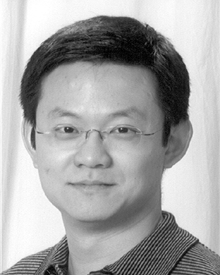 Yufei Huang合作论文数Univ Texas San Antonio, Dept Elect & Comp Engn, San Antonio, TX 78249 USA4
 Tapsya Nayak合作论文数University of Texas Health San Antonio4
 Farmani, N.合作论文数Dept. of Electr. & Comput. Eng., Univ. of Texas at San Antonio;c;Dept. of Electr. & Comput. Eng., Univ. of Texas at San Antonio4Alan R. Klayton合作论文数3
 Erick Schmidt合作论文数The University of Texas at San Antonio3
 James Trimble合作论文数University of Glasgow3Hager, C.合作论文数3
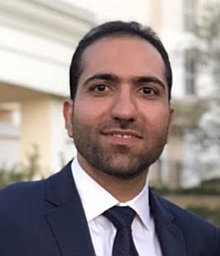 Ali Khalajmehrabadi合作论文数Radio Commun. Eng. Dept., Univ. Teknol. Malaysia;c;Radio Commun. Eng. Dept., Univ. Teknol. Malaysia3
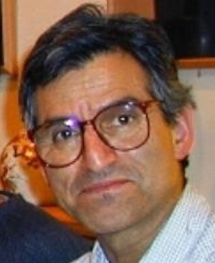 Avi Kak合作论文数Elmore Family School of Electrical and Computer Engineering, College of Engineering, Purdue University3
 Randy L. Haupt合作论文数Department of Electrical Engineering and Computer Science, Colorado School of Mines3
 Zijing Mao合作论文数3
 Randy Beard合作论文数Department of Electrical and Computer Engineering Department, Ira A. Fulton College of Engineering, Brigham Young University3Austin Griffith合作论文数2
 Nikolaos Gatsis合作论文数2Tinghe Zhang合作论文数2
 Garrett Hall合作论文数2
 Jonathan Lwowski合作论文数Univ Texas San Antonio, Dept Elect & Comp Engn, San Antonio, TX 78249 USA2
 Xiaojing Xu (许小静)合作论文数2
 C J Qian合作论文数Department of Electrical and Computer Engineering, University of Texas at San Antonio2
 Bing Dong合作论文数Syracuse University2
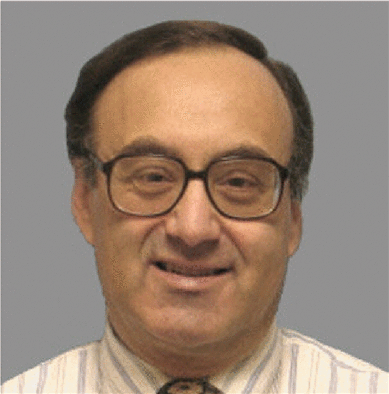 Clifford Weinstein合作论文数2
 Rafael Fierro合作论文数Department of Electrical and Computer Engineering, University of New Mexico2
 Gregory L. Plett合作论文数Department of Electrical and Computer Engineering, College of Engineering and Applied Science, University of Colorado at Colorado Springs2
 Igor M. Verner合作论文数Technion - Israel Institute of Technology2
 Lenis Mauricio Merino合作论文数2John C. Sciortino合作论文数2
 Mangal Kothari合作论文数School of Computing, Engineering and Information Sciences, Northumbria University2
 Ricky Sward合作论文数2
 Cameron H. G. Wright合作论文数University of Wyoming2Jeffrey P. Ridder合作论文数1
 Johnny Park合作论文数1stephen d cooper合作论文数1
 Chad Aeschliman合作论文数1




