At the first international Visualization Summit, more than 100 international researchers and practitioners defined and assessed nine original and important research goals in the context of Visualization Science, and proposed methods for achieving these goals by 2010. The synthesis of the whole event is presented in the 10th research goal. This article contributes a building block for systemizing visualization research by proposing mutually elaborated research goals with defined milestones. Such a consensus on where to go together is only one step toward establishing visualization science in the long-term perspective as a discipline with comparable relevance to chemistry, mathematics, language, or history. First, this article introduces the conference setting. Second, it describes the research goals and findings from the nine workshops. Third, a survey among 62 participants about the originality and importance of each research goal is presented and discussed. Finally, the article presents a synthesis of the nine research goals in the form of a 10th research goal, namely 'Visualizing Future Cities'. The article is relevant for visualization researchers, trend scouts, research programme directors who define the topics that get funds.
Children and young people are increasingly performing a variety of writing tasks using computers, with word processing programs thus becoming their natural writing environment. The development of keystroke logging programs enables us to track the process of writing, without changing the writing environment for the writers. In the myMoment schools project, children in primary school grades one to five were provided with a web-based interactive writing environment, which they could use to read and write stories and comments. The parallel study on myMoment suggests that interviews and analyses of writing processes can provide detailed information about the effect that writing environment and instructions have on writing. An individual case study illustrates the potential that triangulating product and process analyses can offer in the teaching of literacy skills at elementary school level.
At the first international Visualization Summit, more than 100 international researchers and practitioners defined and assessed nine original and important research goals in the context of Visualization Science, and proposed methods for achieving these goals by 2010. The synthesis of the whole event is presented in the 10th research goal. This article contributes a building block for systemizing visualization research by proposing mutually elaborated research goals with defined milestones. Such a consensus on where to go together is only one step toward establishing visualization science in the long-term perspective as a discipline with comparable relevance to chemistry, mathematics, language, or history. First, this article introduces the conference setting. Second, it describes the research goals and findings from the nine workshops. Third, a survey among 62 participants about the originality and importance of each research goal is presented and discussed. Finally, the article presents a synthesis of the nine research goals in the form of a 10th research goal, namely ‘Visualizing Future Cities’. The article is relevant for visualization researchers, trend scouts, research programme directors who define the topics that get funds.
At the first international Visualization Summit, more than 100 international researchers and practitioners defined and assessed nine original and important research goals in the context of Visualization Science, and proposed methods for achieving these goals by 2010. The synthesis of the whole event is presented in the 10th research goal. This article contributes a building block for systemizing visualization research by proposing mutually elaborated research goals with defined milestones. Such a consensus on where to go together is only one step toward establishing visualization science in the long-term perspective as a discipline with comparable relevance to chemistry, mathematics, language, or history. First, this article introduces the conference setting. Second, it describes the research goals and findings from the nine workshops. Third, a survey among 62 participants about the originality and importance of each research goal is presented and discussed. Finally, the article presents a synthesis of the nine research goals in the form of a 10th research goal, namely 'Visualizing Future Cities'. The article is relevant for visualization researchers, trend scouts, research programme directors who define the topics that get funds.
Angehende Kulturjournalistinnen und -kommunikatoren produzieren im Masterstudium ein Dossier für eine mul- timodale Architekturzeitschrift. An diesem Beispiel untersucht der vorliegende Beitrag die didaktische Komple- xität kollaborativer Schreibprojekte in realitätsnahen Arbeitsumgebungen. Er umreisst zuerst das professionelle Handlungsfeld public storytelling in convergent media (siehe Teil 1), bestimmt dann die Erfolgsfaktoren in die- sem Handlungsfeld (2), beschreibt die Entwicklung einer didaktisch angemessenen Textproduktionswerkstatt (3), zeigt die Umsetzung mit Fokus auf Kooperation, Prozessreflexion und Selbsteinschätzung (4) und zieht den Schluss, dass die Überprüfung komplexen Schreibhandelns ein Katalysator für die Integration von Wissen, Me- thoden und Haltungen des professionellen medienkonvergenten Journalismus sein kann (5).
 Wibke Weber合作论文数Hochschule der Medien Informationsdesign Stuttgart Deutschland4
 Robert Phaal合作论文数3
 Bruce Herr合作论文数3
 Jochen Martin Eppler合作论文数Institute for Media and Communication Management, University of St. Gallen3
 Andrew Vande Moere合作论文数KU3
 Jean-Daniel Fekete (傅可青)合作论文数INRIA Saclay-Île-de-France;Computer Science Department, Université Paris-Saclay3
 Natalia Andrienko合作论文数Department of Computer Science, School of Science & Technology, City, University of London;Fraunhofer Institute IAIS3
 Gennady Andrienko合作论文数Department of Computer Science, School of Science & Technology, City St George's, University of London;Fraunhofer Institute for Intelligent Analysis and Information Systems3Silke Lang合作论文数3
 Mark Meagher合作论文数IDCollaborative3
 Remo Aslak Burkhard合作论文数Universität St. Gallen Kompetenzzentrum »Knowledge Visualization«3
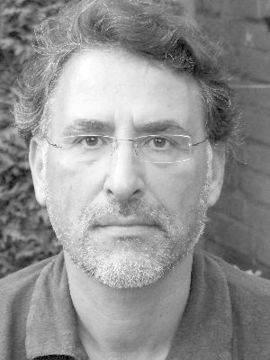 Alexander Koutamanis合作论文数Department of Management in the Built Environment, Faculty of Architecture and the Built Environment, Delft University of Technology3
 Wolfgang Kienreich合作论文数Know Center3
 Dominique Brodbeck合作论文数IBM Research Division, Almaden Research Center3
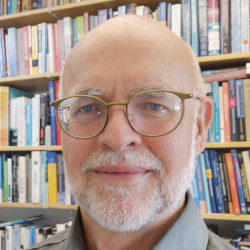 Alan Blackwell合作论文数Computer Laboratory, Department of Computer Science and Technology, University of Cambridge;Darwin College, University of Cambridge3Katy Börner合作论文数2
 Jeffrey Huang合作论文数School of Computer and Communication Sciences, École Polytechnique Fédérale de Lausanne2
 Jason Dykes合作论文数Department of Computer Science, School of Science and Technology, City University London2
 Andrea Bertschi-Kaufmann合作论文数1Armin Grün合作论文数1
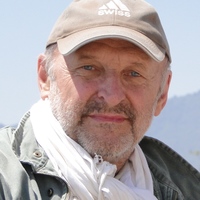 Armin Gruen合作论文数Department of Civil, Environmental and Geomatic Engineering, Eidgenössische Technische Hochschule Zürich;Department of Architecture, Eidgenössische Technische Hochschule Zürich;Institute of Geodesy and Photogrammetry, Eidgenössische Technische Hochschule Zürich1Guido Keel合作论文数1
 J. A. Dykes合作论文数Geographic Information in the Department of Information Science1
 Christine Albrecht合作论文数1
 Aleksandra Gnach合作论文数1
 Jeff Huang合作论文数Department of Computer Science, Brown University1Esther Wiesner合作论文数1
 Katy Borner合作论文数Department of Information and Library Science, School of Informatics and Computing, Indiana University1




