A tree t-spanner of a graph G is a spanning tree T of G in which any two adjacent vertices of G have distance at most t in T. We say that G is t-admissible if it has a tree t-spanner. Hence, the t-ADMISSIBILITY problem aims to decide whether G is t-admissible. The line graph L(G) of a graph G is the intersection graph of the edges of G. We define the edge tree t-spanner-and the corresponding edge t-ADMISSIBILITY PROBLEM-of a graph G as a spanning tree T of L(G) in which any two edges that share an endpoint in G have distance at most t in T. We prove that edge t-ADMISSIBILITY is NP-complete for any t >= 8. Furthermore, although determining if G has a tree 3-spanner is an open problem for more than 25 years, we settle that deciding if a graph G has an edge tree 3-spanner is polynomial-time solvable. As a consequence, we present polynomial time algorithms for edge t-ADMISSIBILITY for several graph classes such as trees, join of graphs, split graphs, P4-tidy, and (1,2)-graphs. (c) 2026 Elsevier B.V. All rights are reserved, including those for text and data mining, AI training, and similar technologies.
In 2003, the frequency assignment problem in a cellular network motivated Even et al. to introduce a new coloring problem: Conflict-Free coloring. Inspired by this problem and by the Gardner-Bodlaender's coloring game, in 2020, Chimelli and Dantas introduced the Conflict-Free Closed Neighborhood \(k\)-coloring game (CFCN \(k\)-coloring game). The game starts with an uncolored graph \(G\), \(k\geq 2\) different colors, and two players, Alice and Bob, who alternately color the vertices of \(G\). Both players can start the game and respect the following legal coloring rule: for every vertex \(v\), if the closed neighborhood \(N[v]\) of \(v\) is fully colored then there exists a color that was used only once in \(N[v]\). Alice wins if she ends up with a Conflict-Free Closed Neighborhood \(k\)-coloring of \(G\), otherwise, Bob wins if he prevents it from happening. In this paper, we introduce the game for open neighborhoods, the Conflict-Free Open Neighborhood \(k\)-coloring game (CFON \(k\)-coloring game), and study both games on graph classes determining the least number of colors needed for Alice to win the game.
A tree t-spanner of a graph G is a spanning tree T of G in which any two adjacent vertices of G have distance at most t in T. We say that G is t-admissible if it admits a tree t-spanner, and σ is the smallest t for which G is t-admissible. It is well-known that deciding whether G has a tree t-spanner (the t-admissibility problem) is in P for t≤2, it is NP-complete for t≥4, and it is a long open problem to decide 3-admissibility. Edget-admissibility is a variation of the former problem, where the goal is decide whether the line graph of G contains a tree t-spanner T, indicating that adjacent edges of G have distance at most t in T. It is known that edget-admissibility is in P for t≤3, while it is NP-complete for t≥8. We investigate the complexity of dealing with minimizing distances at same time vertices and edges. This is the Total admissibility problem. We prove that totalt-admissibility is NP-complete, even for bipartite or planar graphs. Besides, total graphs include middle-graphs and almost-total graphs as subgraphs, which satisfy the operation we define as clique-augmenting of graphs G, denoted as CA(G). We prove that deciding treet-admissibility for clique-augmenting graphs is NP-complete. We also prove that graphs CA(G) can be classified into two types (σ(CA(G))=σ(G) or σ(CA(G))=σ(G)+1) and it is NP-complete to decide whether σ(CA(G))=σ(G). Moreover, by showing special properties, we present several tractable cases to obtain σ(CA(G)).
The tessellation cover number on graphs is an -hard optimization problem important to model staggered walks in quantum computation. A tessellation is a partition of the vertices of a graph into vertex disjoint cliques. The tessellation cover problem aims to determine the minimum number t of tessellations that covers all edges of a given graph G. We denote by t-tessellability the decision version where it is asked if G admits a tessellation cover number of size t. Tessellations on graphs also have an interesting value for graph theory, since the tessellation cover number parameter T(G) is related to several others in the literature such as chromatic number, chromatic index, and maximum clique. In this study, we develop QUBO formulations for the following -hard problems: the determination of the maximum induced star on G, which yields a lower bound on T(G); the determination of the chromatic number of the clique graph of G and the chromatic index of G, which yield upper bounds on T(G); the determination of T(G), by transforming t-tessellability to integer programming and then to QUBO. In order to demonstrate the order-based formulation presented, we implement and analyze these formulations.
The quantum walk dynamics obey the laws of quantum mechanics with an extra locality constraint, which demands that the evolution operator is local in the sense that the walker must visit the neighboring locations before endeavoring to distant places. Usually, the Hamiltonian is obtained from either the adjacency or the Laplacian matrix of the graph and the walker hops from vertices to neighboring vertices. In this work, we define a version of the continuous-time quantum walk that allows the walker to hop from vertices to edges and vice versa. As an application, we analyze the spatial search algorithm on the complete bipartite graph by modifying the new version of the Hamiltonian with an extra term that depends on the location of the marked vertex or marked edge, similar to what is done in the standard continuous-time quantum walk model. We show that the optimal running time to find either a vertex or an edge is O(√(N_e)) with success probability 1-o(1) , where N_e is the number of edges of the complete bipartite graph.
A biclique q-coloring is an assignment of q-colors to the vertices of a graph G, so that no biclique (maximal set of vertices that induces a complete bipartite subgraph of G with at least one edge) is monochromatic. Inspired by the coloring game, we introduce the biclique q-coloring game played on a graph G defined as follows. Two players, Alice and Bob, alternately color the vertices of a graph G using q colors. Alice's goal is to color the vertices of G so that no biclique is monochromatic, and Bob tries to prevent this. Both players play optimally and respect the following rule: if a biclique is fully colored, then there exist at least two vertices in the biclique with different colors. In this paper, we prove that the biclique q-coloring game is PSPACE-complete and study the game in powers of paths Pkn.
A biclique q-coloring is an assignment of q-colors to the vertices of a graph G, so that no biclique (maximal set of vertices that induces a complete bipartite subgraph of G with at least one edge) is monochromatic. Inspired by the coloring game, we introduce the biclique q-coloring game played on a graph G defined as follows. Two players, Alice and Bob, alternately color the vertices of a graph G using q colors. Alice's goal is to color the vertices of G so that no biclique is monochromatic, and Bob tries to prevent this. Both players play optimally and respect the following rule: if a biclique is fully colored, then there exist at least two vertices in the biclique with different colors. In this paper, we prove that the biclique q-coloring game is PSPACE-complete and study the game in powers of paths P-n(k). (C) 2023 The Authors. Published by Elsevier B.V. This is an open access article under the CC BY-NC-ND license (https://creativecommons.org/licenses/by-nc-nd/4.0)
The concept of graph tessellation cover was defined in the context of quantum walk models, and is a current research area in graph theory. In this work, we propose a generalization called total tessellation cover. A tessellation of a graph G is a partition of its vertex set V(G) into vertex disjoint cliques. A tessellation cover of G is a set of tessellations that covers its edge set E(G). A total tessellation cover of G consists of a tessellation cover together with a compatible vertex coloring, such that the color of each vertex is different from the tessellation labels of the edges incident to the vertex. The total tessellation cover number Tt(G) is the size of a minimum total tessellation cover of G. We present lower bounds Tt(G)≥ω(G) and Tt(G)≥s(G)+1, where ω(G) is the size of a maximum clique, and s(G) is the number of edges of a maximum induced star subgraph. A graph G is called a good total tessellable if Tt(G)=ω(G) or Tt(G)=s(G)+1. We study the complexity of the k-total tessellability problem, which aims to decide whether a given graph G has Tt(G)≤k. We prove that k-total tessellability is in P for good total tessellable graphs. We establish the NP-completeness of the k-total tessellability when restricted to the following graph classes: bipartite graphs, line graphs of triangle-free graphs, universal graphs, (2,1)-chordal graphs and planar graphs.
A tessellation of a graph is a partition of its vertices into cliques. A tessellation cover of a graph is a set of tessellations that covers all of its edges, and the tessellation cover number, denoted by T(G), is the size of a smallest tessellation cover. The t-tessellability problem aims to decide whether a graph G has T(G)≤t. The number of edges of a maximum induced star of G, denoted by s(G), is a lower bound on T(G). In this work we define good tessellable graphs as the graphs G with T(G)=s(G), and we introduce the corresponding good tessellable recognition (gtr) problem, which aims to decide whether G is a good tessellable graph. We show that gtr is NP-complete not only if T(G) can be obtained in polynomial time or s(G) is fixed, but also when the gap between T(G) and s(G) is large. We establish graph classes that present distinct computational complexities considering problems related to the parameters T(G) and s(G), and we perform a comparative study of the gtr, t-tessellability, and star size problems, where the star size problem aims to decide whether the number of edges a maximum induced star of a graph is at least a given number.
A tree t-spanner of a graph G is a spanning tree T of G in which any two adjacent vertices of G have distance at most t in T. The line graph L(G) of a graph G is the intersection graph of the edges of G. We define the edge tree t-spanner of a graph G as a spanning tree T of L(G) in which any two edges that share an endpoint in G have distance at most t in T. Although determining if G has a tree 3-spanner is an open problem for more than 20 years, we settle that deciding if a graph G has an edge tree 3-spanner is polynomial-time solvable. As a consequence, we present polynomial time algorithms for the edge tree t-spanner problem for several graph classes such as trees, join of graphs, split graphs, P 4-tidy, and (1, 2)-graphs. Moreover, we establish that deciding whether a graph G has an edge tree 8-spanner is NP-complete, even if G is bipartite.
Given a graph G, the P3-convex hull (resp. P3⁎-convex hull) of a set C ⊆ V (G) is obtained by iteratively adding to C vertices with at least two neighbors inside C (resp. at least two non-adjacent neighbors inside C). A P3-Helly-independent (resp. P3⁎-Helly-independent) of a graph G is a set S ⊆ V (G) such that the intersection of the P3-convex hulls (P3⁎-convex hulls) of S \ {v} (∀v ∈ S) is empty. We denote by P3-Helly number (resp. P3⁎-Helly number) the size of a maximum P3-Helly-independent (resp. P3⁎-Helly-independent). The edge counterparts of these two P3-Helly-independents follow the same restrictions applied to its edges. The vp3hi (resp. vsp3hi, ep3hi, and esp3hi) problem aims to determine the P3-Helly number (resp. P3⁎-Helly number, edge P3-Helly number, and edge P3⁎-Helly number) of a graph. We establish the computational complexities of vp3hi, vsp3hi, ep3hi, and esp3hi for a collection of graph classes, including bipartite graphs, split graphs, and join of graphs.
A tessellation of a graph is a partition of its vertices into vertex disjoint cliques. A tessellation cover of a graph is a set of tessellations that covers all of its edges, and the tessellation cover number, denoted by $T(G)$, is the size of a smallest tessellation cover. The \textsc{$t$-tessellability} problem aims to decide whether a graph $G$ has $T(G)\leq t$ and is $\mathcal{NP}$-complete for $t\geq 3$. Since the number of edges of a maximum induced star of $G$, denoted by $is(G)$, is a lower bound on $T(G)$, we define good tessellable graphs as the graphs~$G$ such that $T(G)=is(G)$. The \textsc{good tessellable recognition (gtr)} problem aims to decide whether $G$ is a good tessellable graph. We show that \textsc{gtr} is $\mathcal{NP}$-complete not only if $T(G)$ is known or $is(G)$ is fixed, but also when the gap between $T(G)$ and $is(G)$ is large. As a byproduct, we obtain graph classes that obey the corresponding computational complexity behaviors.
A graph tessellation is a partition of the vertices of the graph into cliques and a graph tessellation cover is a set of graph tessellations that covers the edges of the graph. A graph is 3-tessellable if it has a tessellation cover with three tessellations. The study of graph tessellations is important in quantum computation because the evolution operator of the staggered quantum walk model is obtained from a graph tessellation cover. In this work we establish a characterization on the smallest tessellation cover of a graph G using the chromatic number of its clique graph χ(K(G)) by showing that a diamond free graph G is 3-tessellable if and only if χ(K(G)) ≤ 4 and there is a vertex coloring assignment of K(G) with a special property. As a consequence of such characterization, we obtain a hardness proof for determining if a line graph of a triangle-free graph is 3-tessellable. Moreover, we introduce a special type of edge coloring of a triangle-free graph G which corresponds to a tessellation cover of its line graph. This hardness proof allows us to establish the N P -completeness of this new coloring problem for triangle-free graphs.
The staggered model is a discrete-time quantum walk model, whose evolution operator is obtained from a set of graph tessellations. We use this model to analyze the standard deviation of the probability distribution on a line of diamonds. The results help to understand the dynamics of quantum walks and it can be used as tools for building quantum algorithms.
Quantum walks have received a great deal of attention recently because they can be used to develop new quantum algorithms and to simulate interesting quantum systems. In this work, we focus on a model called staggered quantum walk, which employs advanced ideas of graph theory and has the advantage of including the most important instances of other discrete-time models. The evolution operator of the staggered model is obtained from a tessellation cover, which is defined in terms of a set of partitions of the graph into cliques. It is important to establish the minimum number of tessellations required in a tessellation cover, and what classes of graphs admit a small number of tessellations. We describe two main results: (1) infinite classes of graphs where we relate the chromatic number of the clique graph to the minimum number of tessellations required in a tessellation cover, and (2) the problem of deciding whether a graph is k-tessellable for k≥ 3 is NP-complete.
Given a graph Γ = (V, E), a tessellation T is a partition of V into cliques so that the union of the cliques covers the vertex set V but not necessarily the edge set E. A graph Γ is t-tessellable if we can cover the edge set E with t tessellations.The staggered model yields a discrete-time quantum walk on a graph without using a coin operator.From the tessellations of the graph, the staggered model defines orthogonal reflexive operators which are then composed in order to obtain the evolution operator.We relate the tessellation problem to the clique operator, by showing that the chromatic number of the clique graph is a tight upper bound for the tessellation number.We show that the tessellation problem is also related to the edge-coloring problem, a hard complexity problem.
Given a simple graph G, an L(2,1)-labelling (or λ-labelling) of G is a function c:V(G)→N such that |c(x)−c(y)|≥2, if x and y are neighbors and |c(x)−c(y)|≥1 if x and y have a common neighbor. The span of a labelling is the difference of the smallest and largest labels used. An L(2,1)-span of a graph G, denoted by λ(G), is a minimum span over all L(2,1)-labellings of G. The problem of determining if λ(G)≤k is NP-Complete for any k≥4. In this paper, we obtain a linear time algorithm to compute λ(G) for any (q,q−4)-graph with q fixed. Another important topic regarding the λ-labelling is to bound the λ-chromatic number of a graph by some function of it. Griggs and Yeh conjectured that λ(G)≤Δ2 for any graph G with maximum degree Δ≥2. They also proved that the greedy algorithm for the problem uses at most Δ2+Δ. Furthermore we prove that the Griggs–Yeh conjecture is true for P4-sparse graphs, P4-laden graphs and all (q,q−4)-graphs with at least 3q/2 vertices.
Uma L (2 , 1) -coloracao de um grafo G = ( V , E ) e uma atribuicao f de inteiros n˜ao- negativos em V tal que, se uv ∈ E , entao | f ( u ) − f ( v ) | ≥ 2 ; al´em disso, se uv ∈ E , vw ∈ E e u / = w , entao f ( u ) / = f ( w ) . O span de f ´e o maior inteiro utilizado, e λ ´ e o menor span dentre os de todas as L (2 , 1) -coloracoes de G. Neste trabalho, melhoramos a cota superior conhecida para λ em k-´arvores e fornecemos uma cota superior alternativa para λ em grafos com treewidth limitado. Nossos resultados restringem possi contraexemplos para a conjectura de Griggs e Y eh, a qual afirma que λ ≤ ∆2 p ar a to do grafo com ∆ ≥ 2 .
 Luis Cunha合作论文数8
 Renato Portugal合作论文数National Laboratory of Scientific Computing, Ministry of Science, Technology, and Innovation7
 Franklin L. Marquezino合作论文数Centro Brasileiro de Pesquisas;Coordenacao de Campos e Part;Coordenacao de Campos e Part, Centro Brasileiro de Pesquisas6
 Celina Miraglia Herrera de Figueiredo合作论文数Institute for Graduate Studies and Research in Engineering, Universidade Federal do Rio de Janeiro5
 Alexandre Abreu合作论文数School of Oriental and African Studies, University of London5
 Marcia R. Cerioli合作论文数Universidade Federal do Rio de Janeiro, Universidade Fe ...5
 Luis Kowada合作论文数Universidade Federal Fluminense4
 Simone Dantas合作论文数4Cauê F. Teixeira da Silva合作论文数3
 Tharso Fernandes合作论文数Lab Nacl Computacao Cient3
 Fernanda Couto合作论文数3Moisés T. Carvalho合作论文数1
 Alexandre Santiago de Abreu合作论文数Federal University of Rio de Janeiro1
 Nicolas Martins合作论文数1
 Mitre Costa Dourado合作论文数Instituto de Matemática, Universidade Federal do Rio de Janeiro;Departamento de Ciência da Computação, Universidade Federal do Rio de Janeiro1
 Rudini Menezes Sampaio合作论文数Centro de Ciências, UFC-Campus do Pici1
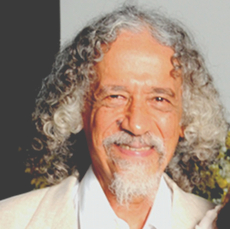 Jayme Luiz Szwarcfiter合作论文数Universidade Federal do Rio de Janeiro;Instituto Nacional de Metrologia, Qualidade Tecnologia1




