We show that the type TZ of Z-torsors has the dependent universal property of the circle, which characterizes it up to a unique homotopy equivalence. The construction uses Voevodsky's Univalence Axiom and propositional truncation, yielding a stand-alone construction of the circle not using higher inductive types.
For any elliptic curve $E$ over $k\subset \Bbb R$ with $E({\Bbb C})={\Bbb C}^\times/q^{\Bbb Z}$, $q=e^{2\pi iz}, \Im(z)>0$, we study the $q$-average $D_{0,q}$, defined on $E({\Bbb C})$, of the function $D_0(z) = \Im(z/(1-z))$. Let $\Omega^+(E)$ denote the real period of $E$. We show that there is a rational function $R \in {\Bbb Q}(X_1(N))$ such that for any non-cuspidal real point $s\in X_1(N)$ (which defines an elliptic curve $E(s)$ over $\Bbb R$ together with a point $P(s)$ of order $N$), $\pi D_{0,q}(P(s))$ equals $\Omega^+(E(s))R(s)$. In particular, if $s$ is $\Bbb Q$-rational point of $X_1(N)$, a rare occurrence according to Mazur, $R(s)$ is a rational number.
We offer an introduction for mathematicians to the univalent foundations of Vladimir Voevodsky, aiming to explain how he chose to encode mathematics in type theory and how the encoding reveals a potentially viable foundation for all of modern mathematics that can serve as an alternative to set theory.
Mathematician who revolutionized algebraic geometry and computer proof. Mathematician who revolutionized algebraic geometry and computer proof.
In a previous paper I gave a presentation for the Quillen higher algebraic K-groups of an exact category in terms of "acyclic binary multicomplexes". In this paper I take that presentation as a definition of the higher K-groups, generalize it to the relative K-groups of an exact functor between exact categories, and produce the corresponding long exact sequence by elementary means, without homotopy theory.
We survey the genesis and development of higher algebraic K-theory by Daniel Quillen.
Motivated by work of Nenashev on K 1 K_1 , we introduce acyclic binary multicomplexes and use them to provide generators and relations for the Quillen K K -groups of an arbitrary exact category.
Intersection rings of flag varieties and of isotropic flag varieties are generated by Chern classes of the tautological bundles modulo the relations coming from multiplicativity of total Chern classes. In this paper we describe the Groebner bases of the ideals of relations and give applications to computation of intersections, as implemented in Macaulay2.
The additivity theorem in algebraic K-theory, due to Quillen and Waldhausen, is a basic tool. In this paper we present a new proof, which proceeds by constructing an explicit homotopy combinatorially.
This chapter summarizes a six-lecture course on “Algebraic K-Theory” that I gave at the conference and summer school on “Cohomology of Groups and Algebraic K-Theory”, held at the Center of Mathematical Sciences of Zhejiang University, in Hangzhou, China, July 2 to 12, 2007. I am grateful to the Center of Mathematical Sciences and to the Higher Education Press for the support that allowed me to visit China for the summer school. I am also grateful to Marco Varisco for taking notes of the lectures, in TEX, upon which this chapter is based. Other useful surveys of (or textbooks about) algebraic K-theory include [3, 30, 22, 5, 40, 16, 1, 38, 28, 17, 36, 20, 10, 19, 23, 59]. This chapter is copyright by Daniel R. Grayson, 2008.
proof followed the same general lines as Quillen's, making use of his technique of constructing a quasibration cell by cell. The problem with the proof in the paper is a cavalier application of the method of proof used in the lemma on page 90 of (3); we ignored the degenerate cells in the skeletal ltration of the base space, or more precisely, the cells in the total space lying over them. Lemma 1.50 below is a weakened form of Lemma 1.5 of (1) that provides a homo- topy cartesian square rather than a quasibration. This is enough for the proof of Theorem B0, in which Lemma 1.6 of (1) is no longer needed. The proof of Lemma 1.50 given here is completely combinatorial. We take this opportunity also to provide a completely combinatorial and shorter proof of Theorem B0. A counterexample to the statement of Lemma 1.5 is provided by letting Y be the constant simplicial set with one point, and letting Z be some bisimplicial set such that all the face (and degeneracy) maps Z(A; )! Z(A0; ) arising from maps A0 ! A in are homotopy equivalences, and the map jZ((0); )j ! jZj is not a homeomorphism. Taking 2 Y ((0)) we see thatjZ j =jZ((0); )j and F 1( ) =jZj, and these two spaces are not homeomorphic, contrary to the claim in Lemma 1.5. 1. The new lemma Denition 1. Suppose X and Y are simplicial sets. We let X Y denote the bisimplicial set dene d by (X Y )(A; B) = X(A) Y (B) for A; B2 . In the notation of the paper, Y L = Y , and Y R = Y. Lemma 1.50:. Suppose Z is a bisimplicial set, Y is a simplicial set, and F : Z! Y is a map. For A2 and 2 Y (A) dene a simplicial set Z by
We show how to use elementary methods to compute the volume of Sl k R/ Sl k Z.We compute the volumes of certain unbounded regions in Euclidean space by counting lattice points and then appeal to the machinery of Dirichlet series to get estimates of the growth rate of the number of lattice points appearing in the region as the lattice spacing decreases.We also present a proof of the closely related result that the Tamagawa number is 1.
We give an overview of the search for a motivic spectral sequence: a spectral sequence connecting algebraic K-theory to motivic cohomology that is analogous to the Atiyah–Hirzebruch spectral sequence that connects topological K-theory to singular cohomology.
We present a method for converting Theorem B style proofs in algebraic K-theory to Theorem A style proofs and apply it to the additivity theorem.
We correct an error in [1], and provide a new shorter proof of Theorem B'.
. The paper contains a new proof and new applications of a theorem ofShamash and Eisenbud, providing a construction of projective resolutions of modulesover a complete intersection. The duals of these innite projective resolutionsare nitely generated dierential graded modules over a graded polynomial ring, sothey can be represented in the computer, and can be used to compute Ext modulessimultaneously in all homological degrees. It is shown how to write Macaulay 2 codeto implement the...
 Michael Stillman合作论文数Cornell University ,Mathematics Department7
 Henri Gillet合作论文数Department of Mathematics, Statistics and Computer Science Box, University of Illinois at Chicago5
 David Eisenbud合作论文数Department of Mathematics, University of California, Berkeley3AH Mhoon合作论文数1
 Ulrik Buchholtz合作论文数Tech Univ Darmstadt, Darmstadt, Germany1
 Bernd Sturmfels合作论文数Department of Electrical Engineering and Computer Science, University of California, Berkeley1
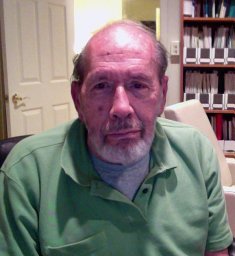 Wolmer V. Vasconcelos合作论文数Department of Mathematics, Rutgers University1
 Jürgen Reinhard Gerhard Herzog合作论文数Fakultät für Mathematik, Universität Duisburg-Essen1Youngsoo Kim合作论文数1Avner Ash合作论文数1
 Herbert Edelsbrunner合作论文数Institute of Science and Technology Austria1Luchezar L. Avramov合作论文数Deapartment of Mathematics, University of Nebraska, Lincoln1
 Marc Bezem合作论文数University of Bergen1Eric M. Friedlander合作论文数1Sung Myung合作论文数1
 Alexandra Seceleanu合作论文数Department of Mathematics, University of Illinois at Urbana-Champaign1Barry J. Walker合作论文数1Rekha Santhanam合作论文数University of Illinois at Urbana-Champaign1
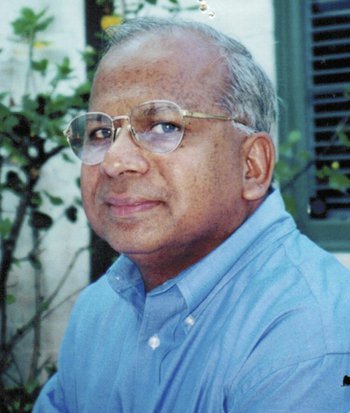 Dinakar Ramakrishnan合作论文数Mathematics, The Division of Physics, Mathematics and Astronomy, California Institute of Technology1James F Glazebrook合作论文数1Michael A. Shulman合作论文数Department of Mathematics, University of Chicago1P. R. Hewitt合作论文数1




