An entry from the Cambridge Structural Database, the world’s repository for small molecule crystal structures. The entry contains experimental data from a crystal diffraction study. The deposited dataset for this entry is freely available from the CCDC and typically includes 3D coordinates, cell parameters, space group, experimental conditions and quality measures.
An alternative to the conventional approach to synthesis of polyimides involves the use of single monomers that are amenable to photopolymerization. Heretofore, the synthesis of polyimides has involved multiple-monomer formulations and heating to temperatures that often exceed 250 C. The present alternative approach enables synthesis under relatively mild conditions that can include room temperature. The main disadvantages of the conventional approach are the following: Elevated production temperatures can lead to high production costs and can impart thermal stresses to the final products. If the proportions of the multiple monomeric ingredients in a given batch are not exactly correct, the molecular weight and other physical properties of the final material could be reduced from their optimum or desired values. To be useful in the alternative approach, a monomer must have a molecular structure tailored to exploit Diels-Alder trapping of a photochemically generated ortho-quinodimethane. (In a Diels-Alder reaction, a diene combines with a dienophile to form molecules that contain six-membered rings.) In particular, a suitable monomer (see figure) contains ortho-methylbenzophenone connected to a dienophile (in this case, a maleimide) through a generic spacer group. Irradiation with ultraviolet light gives rise to a photochemical intermediate the aforementioned ortho-quinodimethane from the ortho-methylbenzophenone. This group may react with the dienophile on another such monomer molecule to produce an oligomer that, in turn may react in a stepgrowth manner to produce a polyimide. This approach offers several advantages in addition to those mentioned above: The monomer can be stored for a long time because it remains unreactive until exposed to light. Because the monomer is the only active starting ingredient, there is no need for mixing, no concern for ensuring correct proportions of monomers, and the purity of the final product material is inherently high. The use of solvents is optional: The synthesis can be performed using the neat monomer or the monomer mixed with one or more solvent(s) in dilute or concentrated solution. The solubility of the monomer and the physical and chemical properties of the final polymer can be tailored through selection of the spacer group.
New aromatic diimide fluorescent dyes have been prepared with potential for use as chemical sensors and in chromogenic polymers. These dyes have been designed to utilize excited state electron transfer reactions as the means for sensing chemical species. For example, an aniline en-dcapped anthryl diimides functions effectively as an on-off sensor for pH and the detection of phosphoryl halide based chemical warfare agents, such as Sarin. In the absence of analytes, fluorescence from this dye is completely quenched by excited state electron transfer from the terminal amines. Reaction of these amines inhibits electron transfer and activates the fluorescence of the dye. Another substituted anthryl diimide is presented with the capability to detect pH and nitroaromatic compounds, such as TNT. Films prepared by doping small amounts (less than 0.1 weight percent) of several of these dyes in polymers such as linear low density polyethylene exhibit thermochromism. At room temperature, these films fluoresce reddish-orange. Upon heating, the fluorescence turns green. This process is reversible cooling the films to room temperature restores the orange emission.
Triaryl amine end-capped anthryl diimide, 1b, has been prepared with potential use as a chemical sensor (pH and nitroaromatics) and as a dye in thermochromic polymers. Fluorescence from linear low density polyethylene films doped with 1b shifts from red (excimer) at room temperature to green (single molecule) at higher temperatures.
Radiation curable polymers are needed for use in space rigidizable inflatable structures (antenna supports, habitats, rovers) for future NASA missions. One approach developed at NASA Glenn utilizes the Diels-Alder trapping of bisdienes (o-xylylenols) generated by the photolysis of o-methylphenyl ketones with bisdienophiles (bismaleimides and bisacrylates). A variety of polyimides and polyesters have been prepared with this chemistry and their properties evaluated. The glass transition temperatures of these resins varied from –27 to over 300°C depending upon monomer structures. Onsets of decomposition, measured by thermogravimetric analysis in air, were in the neighborhood of 300°C and did not vary much with monomer structure. Some monomer systems are liquids at room temperature and have the potential for use in solvent-free UV-cured coatings.
The synthesis of bisimide derivatives of the phenanthrene and benzo[e]pyrene ring systems is described. Enol intermediates, generated by photoisomerization of ortho-substituted aryl ketones, participate efficiently in Diels-Alder cycloadditions with maleimide derivatives to furnish the polycyclic backbone. Dehydration and dehydrogenation steps complete the synthesis of the target compounds, which are obtained in good yields (see scheme).
AbstractChemInform is a weekly Abstracting Service, delivering concise information at a glance that was extracted from about 200 leading journals. To access a ChemInform Abstract, please click on HTML or PDF.
We describe the synthesis, electrochemistry, and photophysical properties of several Ru(II) complexes bearing different numbers of pyrenylethynylene substituents in either the 5- or 5,5'-positions of 2,2'-bipyridine, along with the appropriate Ru(II) model complexes bearing either bromo- or ethynyltoluene functionalities. In addition, we prepared and studied the photophysical behavior of the diimine ligands 5-pyrenylethynylene-2,2'-bipyridine and 5,5'-dipyrenylethynylene-2,2'-bipyridine. Static and dynamic absorption and luminescence measurements reveal the nature of the lowest excited states in each molecule. All model Ru(II) complexes are photoluminescent at room temperature and exhibit excited-state behavior consistent with metal-to-ligand charge transfer (MLCT) characteristics. In the three Ru(II) molecules bearing multiple pyrenylethynylene substituents, there is clear evidence that the lowest excited state is triplet intraligand (3IL)-based, yielding long-lived room temperature phosphorescence in the red and near IR. This phosphorescence emanates from either 5-pyrenylethynylene-2,2'-bipyridine or 5,5'-dipyrenylethynylene-2,2'-bipyridine, depending upon the composition of the coordination compound. In the former case, the excited-state absorption difference spectra that were measured for the free ligand are easily superimposed with those obtained for the metal complexes coordinated to either one or two of these species. The latter instance is slightly complicated since coordination of the 5,5'-ligand to the Ru(II) center planarizes the diimine structure, leading to an extended conjugation on the long axis with a concomitant red shift of the singlet pi-pi absorption transitions and the observed room temperature phosphorescence. As a result, transient absorption measurements obtained using free 5,5'-dipyrenylethynylene-2,2'-bipyridine show a marked blue shift relative to its Ru(II) complex, and this extended pi-conjugation effect was confirmed by coordinating this ligand to Zn(II) at room temperature. In essence, all three pyrenylethynylene-containing Ru(II) complexes are unique in this genre of chromophores since the lowest excited state is 3IL-based at room temperature and at 77 K, and there is no compelling evidence of interacting or equilibrated excited states.
Optical recording and luminescence readout of novel covalently linked photochrome/luminophore supramolecular complexes has been demonstrated by near-field scanning optical microscopy (NSOM). Localized UV irradiation of these complexes dispersed in polymeric matrices resulted in photoinduced state switching and a concomitant increase in emission intensity. Subsequent luminescence imaging showed well-resolved luminescent data bit arrays with good signal-to-noise ratios. Spatially resolved emission spectra of the luminescent data bits confirmed the switching mechanism.
We have utilized the photoenolization reaction of a dibenzoyl-p-xylene derivative to synthesize two new, highly substituted anthracene-based molecules. ABI-NO2 and ABI-NH2 maintained photostability with longer wavelength absorption and emission spectra as compared to unsubstituted anthracene. Conversion of the periphery nitro groups to amines created an internal photoinduced electron transfer scenario that quenched the luminescence of ABI-NH2. Reversible or irreversible reaction of the attached amines resulted in fluorescence recovery. Sensitivity, of ABI-NH2 and other potential derivatives, to toxic chemicals may prove useful for early detection systems.
 Michael Meador合作论文数Meador Aerospace Materials Group, LLC19
 Phil Castellano合作论文数Department of Chemistry, College of Sciences, North Carolina State University17
 Faysal Ilhan合作论文数12Ashley D. Carbaugh合作论文数5Cr Luman合作论文数3Denis V. Kozlov合作论文数3
 Mary Ann Meador合作论文数School of Polymer Science and Polymer Engineering, The University of Akron;Meador Aerospace Materials Group, LLC;ACS Applied Materials and Interfaces;ACS Materials AU3Raymond Ziessel合作论文数2Xiaoli Zhou合作论文数2
 Ignacy Gryczynski合作论文数Department of Physics and Astronomy, Texas Christian University2Christine Goze合作论文数Laboratoire de Chimie Moléculaire, ECPM2Jason B. Bialecki合作论文数2K Jursikova合作论文数1
 Javier Santos-Perez合作论文数Polymeric Materials Branch, NASA Glenn Research Center1
 Wojtecki Rudy J合作论文数Department of Macromolecular Science &Engineering, Case Western Reserve University;Department of Macromolecular Science & Engineering, Case Western Reserve University1
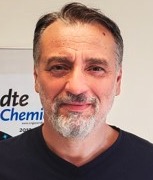 Pavel Jr. Anzenbacher合作论文数Chemistry Department, College of Arts and Sciences, Bowling Green State University;Center for Photochemical Sciences, Bowling Green State University1
 Radek Pohl合作论文数NMR laboratory, Institute of Organic Chemistry and Biochemistry, Czech Academy of Sciences1
 Gareth Redmond合作论文数Nanotechnology Group;Department of Structural Biology;Instituto de Biologia Molecular de Barcelona;Nanotechnology Group, Instituto de Biologia Molecular de Barcelona1
 Hugh Doyle合作论文数Department of Chemistry, University College Dublin1James D. Kinder合作论文数1Daniel A. Scheiman合作论文数Dynacs Eng . , Inc;Glenn Research Center1Violetta Ferri合作论文数1
 Marco Scoponi合作论文数1Kevin Henbest合作论文数1Carlo Alberto Bignozzi合作论文数Department of Chemical and Pharmaceutical Sciences, University of Ferrara1




