We present Bloom Library, a linguistically diverse set of multimodal and multilingual datasets for language modeling, image captioning, visual storytelling, and speech synthesis/recognition. These datasets represent either the most, or among the most, multilingual datasets for each of the included downstream tasks. In total, the initial release of the Bloom Library datasets covers 363 languages across 32 language families. We train downstream task models for various languages represented in the data, showing the viability of the data for future work in low-resource, multimodal NLP and establishing the first known baselines for these downstream tasks in certain languages (e.g., Bisu [bzi], with an estimated population of 700 users). Some of these first-of-their-kind baselines are comparable to state-of-the-art performance for higher-resourced languages. The Bloom Library datasets are released under Creative Commons licenses on the Hugging Face datasets hub to catalyze more linguistically diverse research in the included downstream tasks.
Multi-modal techniques offer significant untapped potential to unlock improved NLP technology for local languages.However, many advances in language model pre-training are focused on text, a fact that only increases systematic inequalities in the performance of NLP tasks across the world's languages.In this work, we propose a multi-modal approach to train language models using whatever text and/or audio data might be available in a language.Initial experiments using Swahili and Kinyarwanda data suggest the viability of the approach for downstream Named Entity Recognition (NER) tasks, with models pre-trained on phone data showing an improvement of up to 6% F1-score above models that are trained from scratch.Preprocessing and training code will be uploaded to https://github.com/sil-ai/phone-it-in.
BibleTTS is a large, high-quality, open speech dataset for ten languages spoken in Sub-Saharan Africa. The corpus contains up to 86 hours of aligned, studio quality 48kHz single speaker recordings per language, enabling the development of high-quality text-to-speech models. The ten languages represented are: Akuapem Twi, Asante Twi, Chichewa, Ewe, Hausa, Kikuyu, Lingala, Luganda, Luo, and Yoruba. This corpus is a derivative work of Bible recordings made and released by the Open.Bible project from Biblica. We have aligned, cleaned, and filtered the original recordings, and additionally hand-checked a subset of the alignments for each language. We present results for text-to-speech models with Coqui TTS. The data is released under a commercial-friendly CC-BY-SA license.
Running automatic speech recognition (ASR) on edge devices is non-trivial due to resource constraints, especially in scenarios that require supporting multiple languages. We propose a new approach to enable multilingual speech recognition on edge devices. This approach uses both language identification and accent identification to select one of multiple monolingual ASR models on-the-fly, each fine-tuned for a particular accent. Initial results for both recognition performance and resource usage are promising with our approach using less than 1/12th of the memory consumed by other solutions.
Research in NLP lacks geographic diversity, and the question of how NLP can be scaled to low-resourced languages has not yet been adequately solved. "Low-resourced"-ness is a complex problem going beyond data availability and reflects systemic problems in society. In this paper, we focus on the task of Machine Translation (MT), that plays a crucial role for information accessibility and communication worldwide. Despite immense improvements in MT over the past decade, MT is centered around a few high-resourced languages. As MT researchers cannot solve the problem of low-resourcedness alone, we propose participatory research as a means to involve all necessary agents required in the MT development process. We demonstrate the feasibility and scalability of participatory research with a case study on MT for African languages. Its implementation leads to a collection of novel translation datasets, MT benchmarks for over 30 languages, with human evaluations for a third of them, and enables participants without formal training to make a unique scientific contribution. Benchmarks, models, data, code, and evaluation results are released under https://github.com/masakhane-io/masakhane-mt.
Africa has over 2000 languages. Despite this, African languages account for a small portion of available resources and publications in Natural Language Processing (NLP). This is due to multiple factors, including: a lack of focus from government and funding, discoverability, a lack of community, sheer language complexity, difficulty in reproducing papers and no benchmarks to compare techniques. To begin to address the identified problems, MASAKHANE, an open-source, continent-wide, distributed, online research effort for machine translation for African languages, was founded. In this paper, we discuss our methodology for building the community and spurring research from the African continent, as well as outline the success of the community in terms of addressing the identified problems affecting African NLP.
We introduce a modular system that can be deployed on any Kubernetes cluster for question answering via REST API. This system, called Katecheo, includes three configurable modules that collectively enable identification of questions, classification of those questions into topics, document search, and reading comprehension. We demonstrate the system using publicly available knowledge base articles extracted from Stack Exchange sites. However, users can extend the system to any number of topics, or domains, without the need to modify any of the model serving code or train their own models. All components of the system are open source and available under a permissive Apache 2 License.
Motivation: Computational biologists face many challenges related to data size, and they need to manage complicated analyses often including multiple stages and multiple tools, all of which must be deployed to modern infrastructures. To address these challenges and maintain reproducibility of results, researchers need (i) a reliable way to run processing stages in any computational environment, (ii) a well-defined way to orchestrate those processing stages and (iii) a data management layer that tracks data as it moves through the processing pipeline. Results: Pachyderm is an open-source workflow system and data management framework that fulfils these needs by creating a data pipelining and data versioning layer on top of projects from the container ecosystem, having Kubernetes as the backbone for container orchestration. We adapted Pachyderm and demonstrated its attractive properties in bioinformatics. A Helm Chart was created so that researchers can use Pachyderm in multiple scenarios. The Pachyderm File System was extended to support block storage. A wrapper for initiating Pachyderm on cloud-agnostic virtual infrastructures was created. The benefits of Pachyderm are illustrated via a large metabolomics workflow, demonstrating that Pachyderm enables efficient and sustainable data science workflows while maintaining reproducibility and scalability. Availability and implementation: Pachyderm is available from https://github.com/pachyderm/ pachyderm. The Pachyderm Helm Chart is available from https://github.com/kubernetes/charts/ tree/master/stable/pachyderm. Pachyderm is available out-of-the-box from the PhenoMeNal VRE (https://github.com/phnmnl/KubeNow-plugin) and general Kubernetes environments instantiated via KubeNow. The code of the workflow used for the analysis is available on GitHub (https://github. com/pharmbio/LC-MS-Pachyderm). Contact: jon.novella@farmbio.uu.se Supplementary information: Supplementary data are available at Bioinformatics online.
MOTIVATION:Computational biologists face many challenges related to data size, and they need to manage complicated analyses often including multiple stages and multiple tools, all of which must be deployed to modern infrastructures. To address these challenges and maintain reproducibility of results, researchers need (i) a reliable way to run processing stages in any computational environment, (ii) a well-defined way to orchestrate those processing stages and (iii) a data management layer that tracks data as it moves through the processing pipeline.RESULTS:Pachyderm is an open-source workflow system and data management framework that fulfils these needs by creating a data pipelining and data versioning layer on top of projects from the container ecosystem, having Kubernetes as the backbone for container orchestration. We adapted Pachyderm and demonstrated its attractive properties in bioinformatics. A Helm Chart was created so that researchers can use Pachyderm in multiple scenarios. The Pachyderm File System was extended to support block storage. A wrapper for initiating Pachyderm on cloud-agnostic virtual infrastructures was created. The benefits of Pachyderm are illustrated via a large metabolomics workflow, demonstrating that Pachyderm enables efficient and sustainable data science workflows while maintaining reproducibility and scalability.AVAILABILITY AND IMPLEMENTATION:Pachyderm is available from https://github.com/pachyderm/pachyderm. The Pachyderm Helm Chart is available from https://github.com/kubernetes/charts/tree/master/stable/pachyderm. Pachyderm is available out-of-the-box from the PhenoMeNal VRE (https://github.com/phnmnl/KubeNow-plugin) and general Kubernetes environments instantiated via KubeNow. The code of the workflow used for the analysis is available on GitHub (https://github.com/pharmbio/LC-MS-Pachyderm).SUPPLEMENTARY INFORMATION:Supplementary data are available at Bioinformatics online.
Build simple, maintainable, and easy to deploy machine learning applications. About This Book Build simple, but powerful, machine learning applications that leverage Go's standard library along with popular Go packages. Learn the statistics, algorithms, and techniques needed to successfully implement machine learning in Go Understand when and how to integrate certain types of machine learning model in Go applications. Who This Book Is For This book is for Go developers who are familiar with the Go syntax and can develop, build, and run basic Go programs. If you want to explore the field of machine learning and you love Go, then this book is for you! Machine Learning with Go will give readers the practical skills to perform the most common machine learning tasks with Go. Familiarity with some statistics and math topics is necessary. What You Will Learn Learn about data gathering, organization, parsing, and cleaning. Explore matrices, linear algebra, statistics, and probability. See how to evaluate and validate models. Look at regression, classification, clustering. Learn about neural networks and deep learning Utilize times series models and anomaly detection. Get to grip with techniques for deploying and distributing analyses and models. Optimize machine learning workflow techniques In Detail The mission of this book is to turn readers into productive, innovative data analysts who leverage Go to build robust and valuable applications. To this end, the book clearly introduces the technical aspects of building predictive models in Go, but it also helps the reader understand how machine learning workflows are being applied in real-world …
We show that the energetics and lifetimes of resonances of finite systems under an external electric field can be captured by Kohn--Sham density functional theory (DFT) within the formalism of uniform complex scaling. Properties of resonances are calculated self-consistently in terms of complex densities, potentials and wavefunctions using adapted versions of the known algorithms from DFT. We illustrate this new formalism by calculating ionization rates using the complex-scaled local density approximation and exact exchange. We consider a variety of atoms (H, He, Li and Be) as well as the hydrogen molecule. Extensions are briefly discussed.
The s-wave interaction is usually the dominant form of interactions in atomic Bose-Einstein condensates (BECs). Recently, Feshbach resonances have been employed to reduce the strength of the s-wave interaction in many atomic species. This opens the possibilities to study magnetic dipole-dipole interactions (MDDIs) in BECs, where the novel physics resulting from long-range and anisotropic dipolar interactions can be explored. Using a variational method, we study the effect of MDDIs on the statics and dynamics of atomic BECs with tunable s-wave interactions for a variety of species, including both nonalkali metals with large magnetic dipole moments (Cr-52, Dy-164, Er-168) and alkali metals (with much smaller magnetic dipole moments). A parameter of magnetic Feshbach resonances, epsilon(dd,max), is used to quantitatively indicate the feasibility of experimentally observing MDDI effects in different atomic species. We find that strong MDDI effects should be observable in both in-trap and time-of-flight behaviors, not only for the strongly magnetic dipolar species but also for the alkali-metal BECs of Li-7, K-39, and Cs-133. In addition, we predict several effects which should be experimentally observable. Our results provide a helpful guide for experimentalists to realize and study atomic dipolar quantum gases.
This paper has been withdrawn by the authors; the main conclusion is incorrect, as some of the crucial calculations were not properly converged.
For every electronic manybody Hamiltonian with a onebody potential that goes to zero at infinity, there is a maximum number of bound electrons (J(max)) that can be sustained in the system with an infinite lifetime. At this integer J(max), the derivative discontinuity in the exact energy of ensemble density functional theory (DFT) is ill defined. However, we investigate the derivative discontinuity of the energy within the framework of density functional resonance theory [D. L. Whitenack and A. Wasserman, Phys. Rev. Lett. 107, 163002 (2011)], which reduces to groundstate DFT as a coordinate scaling parameter is taken to zero, and find that the exact exchangecorrelation potential experiences discontinuous jumps at integer particle numbers, including J(max). For integers below J(max) the jump is purely real because of the real shift in the chemical potential. At J(max), the jump has a nonzero imaginary component reflecting the metastability of the system upon addition of one more electron. In addition, the magnitude of the derivative discontinuity at J(max) is larger than would have been expected by simply setting the affinity to zero.
Aspects of density functional resonance theory (DFRT) [D. L. Whitenack and A. Wasserman, Phys. Rev. Lett. 107, 163002 (2011)], a recently developed complex-scaled version of ground-state density functional theory (DFT), are studied in detail. The asymptotic behavior of the complex density function is related to the complex resonance energy and system's threshold energy, and the function's local oscillatory behavior is connected with preferential directions of electron decay. Practical considerations for implementation of the theory are addressed including sensitivity to the complex-scaling parameter, θ. In Kohn-Sham DFRT, it is shown that almost all θ-dependence in the calculated energies and lifetimes can be extinguished via use of a proper basis set or fine grid. The highest occupied Kohn-Sham orbital energy and lifetime are related to physical affinity and width, and the threshold energy of the Kohn-Sham system is shown to be equal to the threshold energy of the interacting system shifted by a well-defined functional. Finally, various complex-scaling conditions are derived which relate the functionals of ground-state DFT to those of DFRT via proper scaling factors and a non-Hermitian coupling-constant system.
Linear response functions for a uniformly complex-scaled many-body system are derived. Differences between these functions and their Hermitian analogs are emphasized including additional poles at metastable excitations. Energy absorption is investigated and it is shown how a complex-scaled external perturbation and its complex-conjugate couples to the system's energy and lifetime.
Density functional resonance theory (DFRT) is a complex-scaled version of ground-state density functional theory (DFT) that allows one to calculate the in-principle exact resonance energies and lifetimes of metastable anions. In this formalism, the energy and lifetime of the lowest-energy resonance of unbound systems is encoded into a complex "density" that can be obtained via complex-coordinate scaling. This complex density is used as the primary variable in a DFRT calculation, just as the ground-state density would be used as the primary variable in DFT. As in DFT, there exists a mapping of the N-electron interacting system to a Kohn-Sham system of N noninteracting particles. This mapping facilitates self-consistent calculations with an initial guess for the complex density, as illustrated with an exactly solvable model system.
 Adam Wasserman合作论文数James Tarpo Jr. and Margaret Tarpo Department of Chemistry, College of Science, Purdue University11
 Joshua Nemecek合作论文数3
 Salomon Kabongo合作论文数3
 Iroro Orife合作论文数3
 Chris Emezue合作论文数Lanfrica;Masakhane3
 Alp Oktem合作论文数3
 Colin Leong合作论文数Vision Lab, School of Engineering, University of Dayton;Research Institute, University of Dayton3
 Orevaoghene Ahia合作论文数Paul G. Allen School of Computer Science & Engineering, University of Washington;Masakhane2
 Shamsuddeen Hassan Muhammad合作论文数Imperial College London2Kelechi Ogueji合作论文数2
 Michael Mack合作论文数Univ Washington2Espoir Murhabazi合作论文数2Ghollah Kioko合作论文数2Jamiil Toure Ali合作论文数2
 Musie Meressa合作论文数2
 Laura Martinus合作论文数Human Language Technology Research Group, CSIR Meraka Institute2
 Payam Emami Khoonsari合作论文数Uppsala Univ, Dept Med Sci, Clin Chem, Uppsala, Sweden2Arshath Ramkilowan合作论文数2
 Bonaventure F. P. Dossou合作论文数2Blessing Sibanda合作论文数2
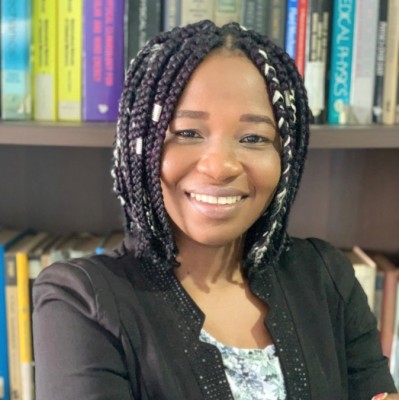 Salomey Osei合作论文数Research Unit DeustoTech Mobility, University of Deusto2
 Abdallah Bashir合作论文数2
 Adewale Akinfaderin合作论文数2Kevin Degila合作论文数2Jon Ander Novella合作论文数2
 Perez Ogayo合作论文数2
 Jade Abbott合作论文数Lelapa AI;Masakhane2
 Stephanie Herman合作论文数Uppsala Univ, Dept Med Sci, Clin Chem, Uppsala, Sweden2
 Kathleen Siminyu合作论文数2
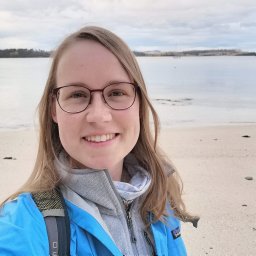 Julia Kreutzer合作论文数Heidelberg Univ, Computat Linguist, Heidelberg, Germany2
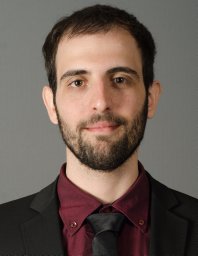 Marco Capuccini合作论文数Department of Pharmaceutical Biosciences, Uppsala University2
 Elan Van Biljon合作论文数Stellenbosch University2
 Joachim Burman合作论文数Department of Medical Sciences, Uppsala University;Department of Neurology, Uppsala University Hospital2
 Yu Zhang合作论文数2
 Vukosi Marivate合作论文数Department of Computer Science, Faculty of Engineering, Built Environment and Information Technology, University of Pretoria;Lelapa AI2
 Ola Spjuth合作论文数Dept Pharmaceut Biosci, Uppsala Univ2
 Herman Kamper合作论文数Department of Electrical and Electronic Engineering, Faculty of Engineering, Stellenbosch University2Kim Kultima合作论文数Department of Pharmaceutical Biosciences, Uppsala University2
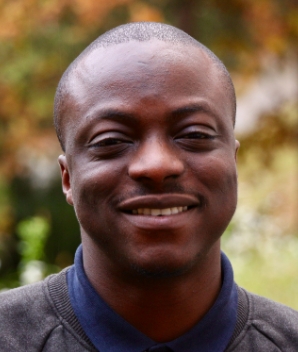 Jesujoba Oluwadara Alabi合作论文数Department of Language Science & Technology, Saarland University;Saarbrücken Graduate School of Computer Science, Saarland University1Olanrewaju Samuel合作论文数1Solomon Oluwole Akinola合作论文数1Daniel Alwin合作论文数1Apelete Agbolo合作论文数1Victor Akinode合作论文数1
 Bernard Opoku合作论文数1
 David Ifeoluwa Adelani合作论文数University College London;School of Computer Science, McGill University1
 Abraham Owodunni合作论文数1Jacob Mansdorfer合作论文数1Julian Weber合作论文数1




