We examine structural state dependence in social assistance in Sweden using register-based panel data from the 1990s, a period of severe economic stress, and document heterogeneity by partnership composition and migration background, with implications for contemporary integration policy and household economic mobility. Tracking a cohort of individuals who were single in 1990 and estimating dynamic discrete-choice models with unobserved heterogeneity and initial conditions, we find substantial persistence that varies systematically by gender, country of birth and partnership composition. A novel finding is that structural state dependence is highest among Swedish-born single individuals, particularly men. For both Swedish-born and foreign-born men, partnering with a Swedish-born woman is associated with lower structural state dependence, whereas partnering with a foreign-born woman is associated with higher structural state dependence only among foreign-born men. Because eligibility is assessed at the household level, these patterns should be interpreted as reduced-form persistence in household-level receipt that may combine behavioural state dependence with mechanical eligibility changes triggered by partnership formation and reassessment of joint resources.
This study analyzes how the willingness to pay (WTP) for a stated reduction in the risk of traffic accidents depends on the type of measure that delivers the reduction and on whether it is framed as a public or a private good. Building on previous studies, we designed and conducted a contingent valuation survey targeting a representative sample of the Swedish adult population. Our results suggest that WTP for risk reduction varies across measures, even when they are all of private good or all of a public good nature. Furthermore, for conventional safety measures, WTP for a stated risk reduction is higher in private-good settings. Still, for a measure based on a mobile app, the result is the opposite (in the full sample). These findings caution against uncritical use of a uniform unit value of risk reduction and suggest that some public hesitancy towards the use of digital instead of conventional safety-enhancing technologies remains.
In the pursuit of more sustainable and healthier diets, it is important to understand how the presentation and description of vegetarian meals can affect consumers' preferences and perceptions. This study investigated the influence of two tablewares (bowl and plate) and two labels ("vegan" and "plant-based") on liking, willingness to pay, and perceptions of healthiness and sustainability of a vegetarian meal in a restaurant located in the headquarters of a retail company in Stockholm, Sweden. It was found that participants perceived the meal as healthier when it was served in a bowl or labeled "vegan" than when it was served on a plate or labeled "plantbased", and no other significant association between tableware or label and other measured variables was found. These results can help researchers, restaurants, cafeterias, pastry shops, and industries understand and communicate better with consumers about healthier and more sustainable vegetarian meals. Further studies should include other food products and participants from other cultural backgrounds, as well as measure choice and intake.
Findings in the traffic safety literature suggest that people value traffic risk reductions less when framed as a public good (e.g. infrastructure improvements) compared to when framed as a private good (e.g. personal safety equipment). This study contributes to this literature by reporting empirical evidence for the importance of controlling for the attributes of the goods used in such valuations. We focus on risks faced by vulnerable road users such as cyclists and pedestrians and compare valuations across private and public goods that vary in their attributes. When the goods are of an identical nature, we find no significant difference in valuations, resolving the controversy in previous findings. We find significant effects on valuations from using private or public provision, from offering the good as voluntary or mandated in use, and from changing the framing of the good between the private and the public versions. This adds further weight to the importance of controlling for many attributes.
Introduction The COVID pandemic proves that a sustainable of healthcare system is dependent both on resources and a consensus about which values should guide the decision makers to appropriately set priorities for resource allocation. There is not clear how exactly the decision makers choose the priorities for spending, but there were differences between and within countries. For example, in Sweden, where healthcare system has a pronounced public character and a declared emphasis on equity and solidarity, there was a high variation between and within regions with respect to how resources were used for treatment, prevention, and vaccination. This article is an explorative analysis of the respondents' wellbeing and their preferences regarding priority-setting in healthcare in Sweden during December 2021, when the extremely high infection risk of the Omicron sparked significant concern among global experts and politicians. Methods Our web-survey was answered by1000 respondents from the web panel Userneeds. The sample is representative with respect age, gender, and geographical region for the adult population of Sweden. The respondents are invited to imagine that they are decision-makers in the health care system and decide for six hypothetical choice situations, where the resources are allocated to save the life of patients at risk of dying due to suicide, pancreatic cancer, breast cancer and acute heart attack. In addition to the choices, the survey also includes questions about the individual's demographic and socio-economic characteristics, their well-being, their risk for and experience (their own and/or someone near them) with suicide, pancreatic cancer, breast cancer and acute heart attack. Results Our preliminary results show that regardless of their age, people with a high value of life-satisfaction and with no experience related to suicide, pancreatic cancer, breast cancer and acute heart attack tend to allocate resources for relatively young patients suffering do to suicide and breast cancer.
The continuously dramatic rise of the number of people suffering from depression is attracting an increasing demand for effective ways of preventing depression. Besides the need for new interventions, there is also a continuous call for a more robust framework for economic evaluation of public interventions. Taking into account people’s preferences for public goods is not straightforward to quantify, and therefore, in addition to designing a new technique for valuing nonmarket goods and services, it is equally important to use valuation methods that are not yet established as traditional. One less commonly used method to assess the cost of depression in monetary terms is the well-being valuation method or the life satisfaction approach, which requires answers to only a few questions that are significantly less time demanding for the respondents than more traditional approaches. We added a well-being question to a contingent valuation web-survey that describes hypothetical interventions aimed to prevent depression in Sweden and estimated that the loss in life satisfaction for individuals who experienced depression varies between approximately 350 and 45,000 euros per year. The monetary compensation would be, on average, higher for individuals who experienced own depression than for those who know someone near, family or friend, who experienced depression, for men than for women, and for middle-aged than for younger and older individuals, respectively.
In this paper we aim to use a posteriori approach to estimate the monetary compensation that would keep the individual’s subjective well-being unchanged after experiencing a traffic accident. The coefficients of the life satisfaction equation, estimated with Swedish data collected in May 2020, indicated no statistically significant association between accident experience and life satisfaction. This result is in line with the extensive empirical research on hedonic adaptation that suggests individuals’ tendency to adapt relatively fast to new life circumstances and highlights the importance of knowing the time of the accident in order to draw conclusions about when and what monetary compensation might be needed to keep the individuals’ life satisfaction unchanged when experiencing, directly or indirectly, a traffic accident.
BACKGROUND & AIMS:The nutritional status is seldom defined in general, but is considered to be important throughout life span, especially in times of diseases and disabilities. We previously proposed a theoretical model of the nutritional status from a functional perspective [1], however without proposing a definition of the nutritional status. The model comprises four domains that might affect the nutritional and functional status in a bidirectional way. These four domains are: Food and nutrition; Health and somatic disorders; Physical function and capacity; and Cognitive, affective, and sensory function. This study contributes to the existing literature and knowledge by empirically analysing patterns and relationships of possible nutritional status indicators within and between the four domains. METHODS:This study is based on a sample of 69 men and women; older than 65 years, receiving home health care. They were followed up for three years. A broad set of nutritional status indicators in the participants were assessed in their home yearly. Given the small sample size and large number of variables, we used both correlation and factor analysis to explore patterns of nutritional status indicators within the four domains and relationships between the four domains suggested by the theoretical model of nutritional status which we proposed earlier. RESULTS:At baseline, between 4 and 18 components were extracted from the four domains, separately, using factor analysis. The first three components of each domain (called main components) were correlated (p < 0.05) with at least one of the main components of each of the other three domains (r = -0.34-0.79 at baseline, 0.38-0.74 at year 1, 0.40-0.77 at year 2 and 0.47-0.71 at year 3). At baseline, these main components explained, respectively, 31%, 52%, 57% and 63% of the sample variation in the four domains. This remained stable throughout all three years of follow up. In all four domains, there were statistically significant differences in prevalence of malnutrition, frailty, sarcopenia, and dehydration (all different inadequate nutritional status) between individuals' individual component scores. CONCLUSIONS:This study provides empirical evidence for the relationship between nutritional status indicators within and between the four domains suggested by our theoretical model of nutritional status. Components in all four domains were associated with inadequate nutritional status, highlighting that a wide perspective of the nutritional status assessment is necessary to be applied in clinical practice.
A frequent finding in the empirical literature on cost-benefit analysis of traffic safety measures is that valuations of public goods are lower than valuations of private goods, contrary to theory predictions. This study elicits the willingness to pay for publicly and privately provided safety improvement benefiting cyclists and pedestrians, a relatively neglected group in this literature. Our results suggest that there is no significant difference between valuations of a private good and three versions of a public good as long as the good itself is the same, in our case a mobile phone app. The public good versions differ in attributes such as mandatory or voluntary use and private or public provision institutions. . This finding is consistent with the simultaneous presence of both financial altruism and safety altruism, or neither. Public institutions are preferred to private ones in the provision of the public goods, and voluntary participation is preferred to mandated regulation. We also find evidence that attitudes that favor using taxes to fund traffic safety projects, and public responsibility for traffic safety are associated with a higher willingness to pay.
Online teaching and online learning have been studied for many years with focus on both the inputs and outputs, but seldom on outcomes such as the well-being of the students and/or teachers. Therefore, we already know that good outputs in forms of grades are strongly correlated with a clear and robust instructional design and planning, using a systematic model for design and development, but we still know very little about the well-being of the students and/or teachers. Our paper provides insights on the content and the functionalities of our sustainable educational approach (SEA) designed to both facilitate online learning and online collaboration and to motivate students to study and learn continuously, which proved to facilitate a smooth shift to online teaching and learning to stop the spreading of Coronavirus COVID-19 during Spring 2020. Using a sample of students registered for a course in elementary statistics during 2016-2020, we present empirical evidence for the positive short-term effects of using the SEA on the students’ grades and their individual well-being.
Our study is, to our knowledge, the first joint analysis of subjective and objective measures of well-being. Using a rich longitudinal data from the mothers pregnancy until adulthood for a birth cohort of children who attended school in Orebro during the 1960s, we analyse in a first step how subjective (self-assessed) and objective (cortisol-based) measures of well-being are related to each other. In a second step, life-course models for these two measures are estimated and compared with each other. Despite the fact that our analysis is largely exploratory, our results suggest interesting possibilities to use objective measures to measure well-being, even though this may imply a greater degree of complexity.
Dagens tillgang till (sociala) medier och datorspel har lett till en kraftig okning av prokrastinering (Steel, 2011). Typexemplet ar en students frivilliga fordrojande av studierelaterad verksamhet ...
In Kenya, educational enrollment rates increased significantly after 2003, when primary education became free of charge. Unfortunately, approximately one million school-aged children are still not enrolled in school. Earlier literature provides evidence that educational opportunities differ among children, due to poverty, gender and area of residence. Our paper provides new empirical evidence of the importance of children's ethnolinguistic background for their probability of being in school. Using data from the Kenya Integrated Household Budget Survey 2005/06, we found that Somali and Maasai children are least likely to be in school. Girls and boys from the Somali and Maasai groups, but also Mijikenda and Swahili girls, have a lower probability to be in school than their Kikuyu peers. This might indicate that gender norms are stronger in these groups.
 Thomas Ulf Andren合作论文数School of Life Sciences, Södertörn University21
 Elin Vimefall合作论文数Orebro Universitet Handelshogskolan5
 David Granlund合作论文数3Edward Palmer合作论文数3
 John S. Earle合作论文数Central European University3Dana Sapatoru合作论文数3
 Lars Hultkrantz合作论文数School of Business, Örebro University3Linda Andersson合作论文数2
 Elisabet Rutstrom合作论文数Andrew Young School of Policy Studies, Georgia State University2
 Sune Karlsson合作论文数Research Institute of Industrial Economics, Örebro University;Örebro University, Örebro University2
 Andrew Clark合作论文数Centre for Economic Performance2
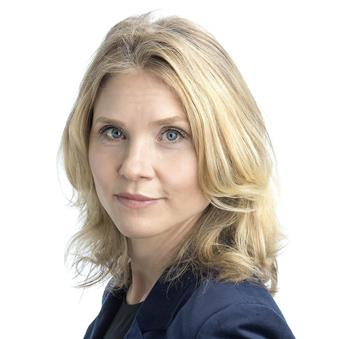 Maria Börjesson合作论文数Department of Management and Engineering, Linköping University;Swedish National Road and Transport Research Institute1
 Mikael Svensson合作论文数1Brummer Robert-Jan合作论文数1
 Stina Engelheart合作论文数1Forslund Heléne Bertéus合作论文数1
 Peter Huber合作论文数austrian institute of economic research1
 Monica Roman合作论文数Department of Automatic Control, University of Craiova1
 Jorgen Levin合作论文数1
 Jan Fidrmuc合作论文数ZEI ), Center for European Integration Studies;University of Bonn;Center for European Integration Studies ( ZEI ), University of Bonn1
 Gabor Kertesi合作论文数Inst Econ, Hungarian Acad Sci1
 Asa Ostrom合作论文数1
 Conchita D'Ambrosio合作论文数Università di Milano-Bicocca and DIW Berlin1
 Martin Kahanec合作论文数Doctoral School of Political Science, Public Policy, and International Relations, Central European University;Department of Public Policy, Central European University;Central European Labour Studies Institute;Harvard University;University of Economics in Bratislava;Institute for the Study of Labor1
 Dirk Repsilber合作论文数Department of Biology and Biochemistry/Bioinformatics, University of Potsdam1
 Herbert Brucker合作论文数IAB and IZA, University of Bamberg1
 János Köllő合作论文数Institute of Economics, Hungarian Academy of Sciences;Institute for the Study of Labour;William Davidson Institute, University of Michigan1Peter Martinsson合作论文数Department of Economics;Göteborg University;Department of Economics, Göteborg University1
 Parvati Trubswetter合作论文数1




