Rapidly changing abiotic conditions, particularly temperature variations, pose adaptation challenges to many animal communities across the globe. Lanice conchilega, a key polychaete in the ecosystem of the German Wadden Sea, faces an increasing threat hampered by its limited mobility. The microbiome can alleviate stress, alter local environmental conditions, and provide new metabolic capabilities, contributing to host adaptation. To understand the potential roles of the microbiome of L. conchilega, we analysed a broad sample set via 16 S rRNA gene amplicon sequencing. We compared the bacterial composition of the microbiome of L. conchilega with that of the surrounding sediment, and the effect of seasonality, zonation, tidal, and diurnal cycles. Our findings reveal a set of ASVs exclusive to the microbiome of L. conchilega. Community composition was mostly shaped by seasonality, slightly influenced by zonation, day/night cycles, and tides. Notably, Endozoicomonas ASVs were found only in the L. conchilega microbiome and were particularly abundant during summer. These bacteria, known for their symbiotic relationships, broad metabolic capabilities, and linked to heat resistance in corals, are predicted to contribute unique metabolic functions in L. conchilega. This work provides novel insights into the host-microbiome relationship of L. conchilega and highlights the potential role of symbionts in the environmental adaptation of these and similar animals.
Salt marshes are ecologically important ecosystems with dynamic nutrient exchange between land and sea. Their zonation along an elevation gradient supports specific communities exhibiting successional patterns. Previous studies have mainly focused on individual domains, with limited attempts to explore interdependencies of community assemblies across domains. Here, we investigated the co-occurrence of prokaryotes and microeukaryotes in natural salt marsh sediments and experimental islands placed in the adjacent tidal flat. The islands contained originally bare and transplanted plots at three different elevations, corresponding to the typical salt marsh zonation. After initial disturbance by the artificial setting, microbial metacommunities re-assembled along the elevation gradient, showing distinct community compositions comparable to those of the natural salt marsh zones. Interkingdom co-occurrence network analysis revealed sub-communities linked to the natural and artificial settings, with Woeseiaceae, Flavobacteriaceae, and Rhodobacteraceae playing important roles as keystone species. The community assembly was primarily driven by habitat filtering. In conclusion, this study provides insights into the assembly, co-occurrence patterns and recovery of microbial communities in salt marsh sediments. The research highlights the importance of elevation in shaping microbial communities. Understanding these ecological mechanisms is crucial for effective salt marsh protection and conservation facing potential threats like strong disturbances by enhanced storm surges.
Ecology aims to comprehend species distribution and its interaction with environmental factors, from global to local scales. While global environmental changes affect marine biodiversity, understanding the drivers at smaller scales remains crucial. Tidal flats can be found on most of the world's coastlines and are particularly vulnerable to anthropogenic disturbances. They are important transient ecosystems between terrestrial and marine ecosystems, and their biodiversity provides important ecosystem services. Owing to this unique, terrestrial-marine transition, strong environmental gradients of elevation, sediment composition and food availability prevail. Here, we investigated which regional and local environmental factors drive the spatio-temporal dynamics of macrozoobenthos communities on back-barrier tidal flats in the East Frisian Wadden Sea. On the regional level, we found that species composition changed significantly from west to east on the East Frisian islands and that total abundance and species richness decreased from west to east. On the local abiotic level, we found that macrozoobenthos biomass decreased with higher elevation towards the salt marsh and that the total abundance of organisms in the sediment significantly increased with increasing mud content, while biodiversity and biomass were not changing significantly. In contrast to expectations, increasing Chl a availability as a measure of primary productivity did not result in changes in abundance, biomass or biodiversity, but extremely high total organic carbon (TOC) content was associated with a decrease in biomass and biodiversity. In conclusion, we found regional and local relationships that are similar to those observed in previous studies on macrozoobenthos in the Wadden Sea. Macrozoobenthos biomass, abundance and biodiversity are interrelated in a complex way with the physical, abiotic and biotic processes in and above the sediment.
Salt marshes are located between the marine and terrestrial systems. Because they form as sediment accumulates, they comprise a gradient of shore height with differing inundation frequencies and associated abiotic soil conditions. Along this gradient, both autochthonous vascular plant resources and allochthonous marine algal or detrital resources are available, with the availability of both varying with season and salt marsh zone. However, little is known about the importance of either resource for the soil-animal food web. We investigated both spatial and temporal resource use of soil macro- and mesofauna in a salt marsh using neutral lipid fatty acid (NLFA) analysis. Generally, irrespective of season and zone, the soil-animal food web relied on carbon originating from autochthonous vascular plants and associated bacteria and fungi, with the role of bacteria generally exceeding that of fungi. However, the channelling of fungal resources consistently peaked in October, whereas seasonal changes in the channelling of plant and bacterial resources varied among salt marsh zones. Further, variations in the channelling of resources with season and zone varied among salt marsh animal species. Allochthonous resources of marine origin provided only a minor contribution to soil food web nutrition across salt marsh zones and seasons. The contribution of algae to soil food web nutrition depended on inundation frequency and season, i.e. algal productivity. Overall, the results demonstrate that the salt marsh soil fauna predominantly relies on autochthonous vascular plant resources, with the contribution of allochthonous marine resources being minor and restricted to a few taxa.
Coastal observatories are key to improve the understanding of processes within the coastal area and their interactions with regional and global environmental changes. The land-sea transition zone is an essential area that allows research on unique scientific questions under anthropogenic and natural influences. Amid the Wadden Sea UNESCO world natural heritage site – the largest tidal flat region worldwide – the barrier island Spiekeroog is an excellent location for an observatory studying land-sea interactions. The integrated Spiekeroog Coastal Observatory (SCO) operated by the Institute for Chemistry and Biology of the Marine Environment (ICBM, University of Oldenburg) is dedicated to interdisciplinary marine and terrestrial ecosystem research. Its position within the tidal area and the multitude of research-field addressed establishes the SCO as a unique coastal observatory with the potential to identify patterns in long-term variability and simultaneously understanding short-term changes. The establishment of the Time-Series Station (TSS) Spiekeroog in a tidal channel west of Spiekeroog back in 2002 laid the foundation of the SCO. Since then, the observatory is expanding continuously and is now representing a valuable asset supporting education, industry, government, and environmental conservation efforts in the area. Summing up the infrastructure and technical components, the importance of the SCO is evident, and individual projects greatly benefit from the collaboration with the partners in and the elements of the SCO. Harmonizing the infrastructure and competences of contributing partners will be a next step to further consolidate the SCO. A challenge poses the maintenance of the SCO based on projects, which is focused on the addition of new facilities, not maintaining, refurbishing, or (if necessary) deconstructing existing infrastructure. Therefore, structural support and funding opportunities not linked to projects but aiming to sustain observational capacities are required.
Microphytobenthos (MPBs) are the main primary producers in shallow marine ecosystems, such as the Wadden Sea. We investigated the spatial and temporal dynamics of MPB communities across the marine-terrestrial boundary over three seasons (spring, summer, and fall) on three East Frisian Islands (Norderney, Spiekeroog, and Wangerooge) in the German Wadden Sea. Natural transects were compared with 12 experimental islands (salt marsh vegetated vs. initially bare islands) established on the tidal flats of Spiekeroog for studying dispersal-mediated community assembly. Sediment cores were taken along triplicate transects and on three elevation levels of the experimental islands, corresponding to the pioneer (pio) zone, the lower salt (LS) marsh, and the upper salt (US) marsh. On both the natural transects and the experimental islands, the highest MPB biomass was observed in the pio zone, where vegetation-driven sediment stabilization and high-mud content could have promoted MPB biomass in this marine-terrestrial transition zone. On the experimental islands, MPB biomass and diversity significantly decreased with elevation regardless of the season, indicating that the rarely submerged upper salt marsh level supported minimal MPB growth. The MPB biomass was also higher on initially vegetated than on bare islands, which was the most pronounced on the US level. On the tidal flat transects, the MPB biomass significantly increased with elevation up to the pio zone before decreasing again in the LS marsh. Temperature, sediment water content, and grain size significantly affected transect MPB biomass. MPB diversity, on the other hand, was not related to elevation but was rather determined by temperature, mean grain size, and mud content. Our study suggests that extending MPB studies into the “terrestrial” domain of salt marshes enhances our understanding of the microalgae–plant interaction in this important boundary zone.
The research presented in this paper aims to accelerate the natural science research process by partially automating the execution of experiments using AI-assisted Concept-Change Detection (C-CD), e.g., for monitoring systems and studying biodiversity and ecosystem functions. The purpose of C-CD is to detect concept changes, also known as concept drift, that may be relevant to the study or ecosystem state. For example, in intertidal marine ecosystems, the event of sudden flooding can lead to dramatic changes in biodiversity. It could also be of scientific interest to take sensor samples more frequently in the period leading up to such events. The paper proposes an architecture for C-CD to customize AI-based analysis of sensor data streams. Furthermore, the paper implements portions of the architecture and is applied on sensor data from the Spiekeroog Coastal Observatory (SCO) as a feasibility study. The study demonstrates C-CD’s ability to detect anomalies that are either of scientific or technical interest to the operation and exploration activities of SCO.
 Kertu Lohmus合作论文数6
 Joanne Yong合作论文数3
 Bert Engelen合作论文数Institut für Chemie und Biologie des Meeres;Universität Oldenburg;Institut für Chemie und Biologie des Meeres, Universität Oldenburg3
 Jana Dewenter合作论文数2
 Lucie Kuczynski合作论文数ICBM, Carl von Ossietzky Univ Oldenburg2
 Ingrid Kröncke合作论文数Institut fur Chemie und Biologie des Meeres, Carl von Ossietzky Universitat Oldenburg2
 Sven Rohde合作论文数Institute for Chemistry and Biology of the Marine Environment (ICBM),, Carl-von-Ossietzky University2Oliver Zielinski合作论文数2
 Stefanie Moorthi合作论文数Institute for Marine Sciences2Carola Lehners合作论文数1Jana Stone合作论文数1Kai Schwalfenberg合作论文数1Holger Winkler合作论文数1Axel Braun合作论文数1Michelle Albinus合作论文数1Janina Schneider合作论文数1Daniel Lukats合作论文数1Maria Rinke合作论文数1
 Mobin M. Idrees合作论文数Dept Comp Sci, Univ Reading1
 Jens Meyerjurgens合作论文数Corresponding author.1Thomas Pollmann合作论文数1
 jochen wollschlager合作论文数1
 Jan Schulz合作论文数German Res Ctr Artificial Intelligence DFKI, Oldenburg, Germany1
 Frederic T. Stahl合作论文数university of reading1Feenders Christoph合作论文数1
 Anja Poehlein合作论文数Department of Genomic and Applied Microbiology, Institute of Microbiology and Genetics, Georg-August University of Göttingen1
 Hillebrand Helmut合作论文数Carl von Ossietzky Universitat Oldenburg1
 Stefan Scheu合作论文数J.F. Blumenbach Institute of Zoology and Anthropology, University of Goettingen;Centre of Biodiversity and Sustainable Land Use, University of Goettingen1
 Gabriele Gerlach合作论文数Department of Biology;Evolutionary Biology;University of Konstanz;Department of Biology, University of Konstanz1
 Thomas H. Badewien合作论文数Institute for Chemistry and Biology of the Marine Environment (ICBM),, Carl-von-Ossietzky University Oldenburg1
 Lars Nolle合作论文数Jade University of Applied Sciences1
 Gudrun Massmann合作论文数Institute of Geological Sciences, Freie Universität Berlin1
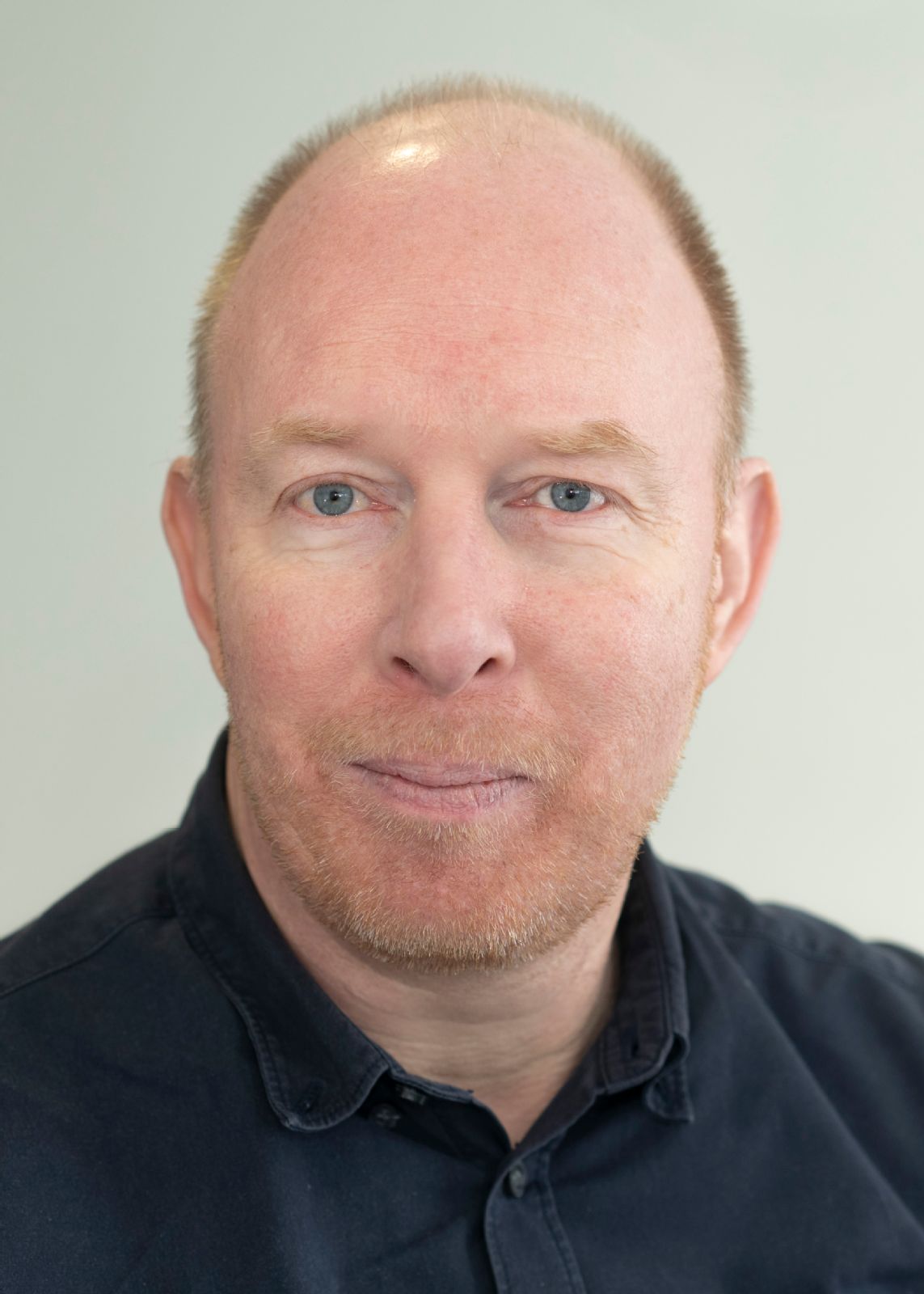 Hendrik Schäfer合作论文数School of Life Sciences, Faculty of Science, Engineering and Medicine, The University of Warwick1
 Mark Maraun合作论文数1
 Hannelore Waska合作论文数School of Earth and Environmental Sciences/RIO, Seoul National University1
 Peter J. Schupp合作论文数Marine Laboratory UOG Station- Mangilao, University of Guam1




