Performances of the deep-learning cell detection model in TCGA cohorts (oral cavity, uterine cervix and larynx SCC) and GR cohorts (oral cavity SCC)
Representative video of granulomas made of multiple MGC in oral cavity SCC from GR cohort
Psoriasis is a systemic inflammatory skin disorder with a prevalence of 2% in adults. Up to 30% of affected individuals further develop psoriatic arthritis (PsA), which is characterized by additional joint inflammation. Myeloperoxidase (MPO) is strongly expressed by neutrophils and, to a lesser extent, also by other myeloid cells. MPO converts hydrogen peroxide to secondary reactive oxygen species (ROS) and is thus primarily considered to induce tissue damage. However, recent studies suggest a protective role of MPO in psoriatic diseases. We aimed to investigate the role of MPO in PsA using the mouse model of mannan-induced PsA. MPO-deficient (Mpo-/-) mice showed exacerbated skin inflammation, joint swelling, and bone degradation associated with increased infiltration of neutrophils, classically activated macrophages, and T cells as well as increased inflammatory cytokine expression in the affected tissues. In the absence or blockade of MPO, in vitro neutrophil stimulation resulted in reduced NET formation and enhanced degranulation characterized by increased neutrophil elastase (NE) activity. In addition, in vitro differentiated macrophages from Mpo-/- mice showed increased interleukin (Il)-6 mRNA expression. Altogether, our findings suggest that MPO controls inflammatory responses in PsA, at least in part, by reducing neutrophil degranulation and serine protease release and, putatively, by reducing inflammatory cytokine production by macrophages.
[This corrects the article DOI: 10.3389/fimmu.2016.00557.].
Rheumatoid arthritis (RA) and other inflammatory arthritis are systemic diseases that primarily affect the joints, characterized by synovial inflammation and progressive cartilage and bone degradation. The temporomandibular joint (TMJ) is reported to be involved in over 50% of RA cases, often leading to severe jaw pain and compromised oral function. Despite its prevalence, TMJ involvement is often underestimated, and its cellular and molecular mechanisms remain poorly understood. Due to the unique biological and functional properties of the TMJ, inflammatory pathways observed in other joints such as the well-studied ankle joint may not directly apply to the TMJ. This study aimed to establish a reliable inflammatory arthritis model for investigating TMJ-specific pathomechanisms. The human TNF-α transgenic (hTNFtg) mouse model effectively replicated TMJ pathology seen in arthritic patients, including increased synovial inflammation (p=0.0024) and severe bone loss (p=0.009) as compared to control mice assessed by micro-computed tomography and histomorphometry. These changes were driven by increased osteoclast numbers (p=0.0331) and upregulation of genes associated with bone resorption such as Acp5 (p=0.0003) and Ctsk (p=0.0025). Notably, we observed that the TMJ displays a unique pattern of immune cell infiltration and pro-inflammatory cytokine expression compared to the ankle joint, particularly with respect to T cell recruitment. These findings were further supported by bulk RNA sequencing, which revealed overall increased inflammation in both the ankle joint and TMJ of hTNFtg mice compared to the control group. Interestingly, while the expression of immune cell and pro-inflammatory cytokine-related gene sets was higher in the ankle joint, the TMJ showed increased expression of genes associated with energy consumption and bone resorption-related enzymes. These findings highlight the TMJ as a distinct anatomical site with heightened susceptibility to arthritis-related damage and emphasize the need for greater awareness and targeted research to improve disease management for affected individuals.
Computed tomography (CT) is routinely used for three-dimensional non-invasive imaging. Numerous data-driven image denoising algorithms were proposed to restore image quality in low-dose acquisitions. However, considerably less research investigates methods already intervening in the raw detector data due to limited access to suitable projection data or correct reconstruction algorithms. In this work, we present an endto- end trainable CT reconstruction pipeline that contains denoising operators in both the projection and the image domain and that are optimized simultaneously without requiring ground-truth high-dose CT data [1]. In addition to experiments with shallow convolutional neural networks, we use trainable bilateral filter layers as known denoising operators [2]. These custom filter layers only require gradient-based optimization of four parameters, each with well-defined effect on the filtering operation. Our experiments reveal that including an additional projection denoising operator in the CT reconstruction pipeline improved the overall denoising performance by 82.4–94.1
 Georg Schett合作论文数Deutsches Zentrum Immuntherapie, Universitätsklinikum Erlangen;Department of Medicine 3 - Rheumatology and Immunology, Universitätsklinikum Erlangen;Friedrich-Alexander-Universität Erlangen-Nürnberg26
 Stefan Uderhardt合作论文数Dept Internal Med 3, Univ Erlangen Nurnberg24
 Nicolas Signolle合作论文数Plateforme Pathol Expt & Translat, UMS AMMICA17Camille Blériot合作论文数CNRS UMR S8253, Univ Paris Cite17Antoine Moya-Plana合作论文数Department of Otorhinolaryngology - Head and Neck Surgery, Gustave Roussy Cancer Center17
 Kevin P. Mulder合作论文数Centro de Investigação em Biodiversidade e Recursos Genéticos, Universidade do Porto17
 Marion Classe合作论文数Inst Gustave Roussy, Dept Anatomopathol, Villejuif, France17Breuskin Ingrid合作论文数17
 Philippe Gorphe合作论文数Département de Cancérologie Cervico-Faciale, Institut Gustave Roussy17
 Thomas Walter合作论文数Serv Gastroenterol & Oncol Med, Hosp Civils Lyon17Broutin Sophie合作论文数17
 Jean-Yves Scoazec合作论文数Département De Biologie Et Pathologie Médicales, Gustave Roussy;Université Paris-Sud;INSERM US23;CNRS UMS365517Odile Casiraghi合作论文数17Anne Auperin合作论文数Department of Statistics, Institut Gustave Roussy, Villejuif, France17
 Daniel Stockholm合作论文数17
 Antonin Marchais合作论文数17
 Pierre Busson合作论文数CNRS;Gustave Roussy;Université Paris-Saclay17
 Florent Ginhoux合作论文数Gustave Roussy;Agency for Science, Technology and Research, Singapore Immunology Network17Sumanth Reddy Nakkireddy合作论文数14Mathilde Bied合作论文数14Grégoire Gessain合作论文数14Quentin Blampey合作论文数14Joanne Guerlain合作论文数14Marvin Lerousseau合作论文数Gustave Roussy Cent Supelec, TheraPanacea Ctr Artificial Intelligence Radiat T, Gustave Roussy Canc Campus, Villejuif, France14
 Maria Eugenia Marques da Costa合作论文数14
 Charles-Antoine Dutertre合作论文数Gustave Roussy Institute;Institut Mondor de Recherche Biomédicale;Agency for Science Technology and Research;INSERM14
 Martin Herrmann合作论文数Friedrich-Alexander-Universität Erlangen-Nürnberg14Oliver Aust合作论文数10Sabrina Pechmann合作论文数9
 Mareike Thies合作论文数9
 Mingxuan Gu合作论文数Pattern Recognition Lab, Friedrich-Alexander-University Erlangen-Nuremberg, Erlangen, Germany9
 Fabian Wagner合作论文数Pattern Recognit Lab, Friedrich Alexander Univ Erlangen Nurnberg9
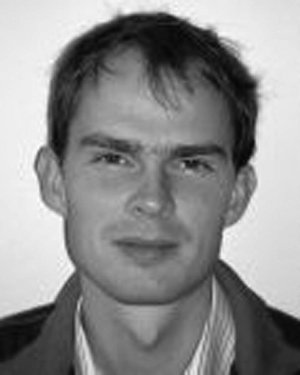 Silke Christiansen合作论文数8
 Luis Munoz合作论文数Friedrich-Alexander-University Erlangen-Nürnberg;Universitätsklinikum Erlangen8Christine Schauer合作论文数7
 Mona Biermann合作论文数7
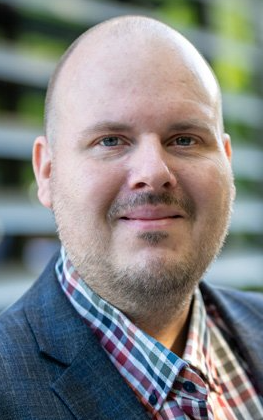 Markus Hoffmann合作论文数Infection Biology Unit, German Primate Center7
 Georgiana Neag合作论文数Inst Inflammat & Ageing, Univ Birmingham6Christiane Reinwald合作论文数6
 Gerhard Krönke合作论文数Department of Internal Medicine 3, University of Erlangen-Nuremberg6
 Andreas Maier合作论文数Pattern Recognition Lab, Department of Computer Science, University of Erlangen-Nuremberg6Markus H Hoffmann合作论文数5Ulrike Steffen合作论文数Friedrich Alexander Univ Erlangen Nurnberg FAU, Dept Internal Med Rheumatol & Immunol 3, Erlangen, Germany5
 Anika Gruneboom合作论文数5
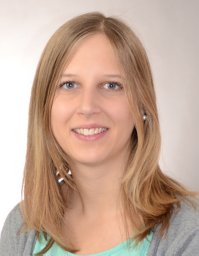 Jasmin Knopf合作论文数Dept Internal Med Rheumatol & Immunol 3, Friedrich Alexander Univ Erlangen Nurnberg FAU5
 Rostyslav Bilyy合作论文数Danylo Halytsky Lviv National Medical University;Institute of Cellular Biology and Pathology "Nicolae Simionescu";Lectinotest R&D5Jonas Utz合作论文数4Lasse Kling合作论文数Max Planck Inst Sci Light4Jonas Hahn合作论文数4




