Social Media has become an important marketing tool for destinations due to its easy access, ability to reach broad audiences and capacity to act as a form of eWOM. Instagram in particular is one of the most popular channels for the visual marketing of a destination as well as for influencer marketing. Through Instagram, DMOs can create travel inspiration, and enhance interest in a destination. This study seeks to understand the tourists' perceptions of Instagram influencers as well as official DMO accounts and looks on their influence on tourists' participation and engagement on social media. A quantitative survey was conducted to analyze users' perceptions of DMO and influencer accounts on Instagram, as well as their participation behavior online. The study found that DMOs are perceived as being more trustworthy and credible than travel influencers. In addition, results indicate that active Instagram users are more likely to have positive perceptions of travel influencers, but online participation does not influence perceptions of DMOs.
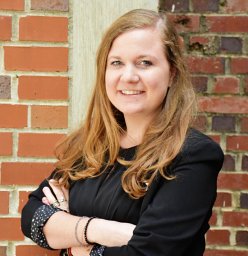
Dr. Danielle Barbe is a Lecturer in Digital Marketing in the Faculty of Business and Law, at Newcastle Business School, Northumbria University. Danielle earned her PhD in Tourism, Hospitality, and Event Management and a minor in Communications from the University of Florida in spring 2020. Danielle’s overarching research area is in tourism and digital communications, examining ways to enhance the communications efforts between tourists and tourism suppliers. Danielle’s research examines the capabilities of digital communication tools in the context of tourism, with the goal of developing theoretically driven and empirically tested strategies that incorporate web, social, and mobile technologies. Through this research, Danielle has studied concepts relating to crisis communication, technology acceptance and use, persuasion, credibility, misinformation, electronic word-of-mouth (eWOM), engagement, relationship marketing, and influencer marketing Danielle’s academic journey and passion for research began at Ryerson University in Toronto, Canada where she was a Research Assistant for Dr. Kelly MacKay at the Institute for Hospitality and Tourism Research. In this role, Danielle conducted research on social media use and engagement in festival and event settings. Danielle’s experience with research at this time was limited. However, the more she learned, the more she wanted to continue to learn and discover answers to what was still unknown about this area. Danielle continued her academic journey at the University of Florida where her background on social media research took on the new lens of crisis communication. Working with Dr. Lori Pennington-Gray and the Tourism Crisis Management Initiative (TCMI), Danielle began evaluating the current state of online crisis communication by the tourism industry. The goal was to understand what organisations are communicating to tourists on social media in times of crisis. She analysed social media content by Destination Management Organisations (DMOs), hotels, the media, and publics. Danielle also analysed social media communication during a variety of crises (terrorist attacks, hurricanes, disease outbreaks, organisational-level crises) in multiple countries, including USA, UK, France, Belgium, Spain, Germany, and Sri Lanka. These studies were conducted as a situational analysis, to grasp a better understanding of current crisis communication. However, in these studies, Danielle found that, overall, the tourism industry was inept at communicating to tourists on social media during these times. Many DMOs and hotels were not only actively avoid communicating on social media about the crisis, but used an ineffective messaging strategy, focused heavily on recovery rather than tourists’ safety. Using these insights, Danielle’s dissertation titled ‘Developing a crisis communication model for the tourism industry: The effects of source, media, and time’ adopted a communications-focused approach to create a research-driven strategy that informs the tourism industry on how to increase visitors’ safety in times of crisis. Danielle’s dissertation focused on a terrorism-related crisis and consisted of three studies addressing each critical element of effective communication: source, medium, message and time. The purpose was to understand who the most influential sources are during a terrorist attack, which media tourists are most likely to turn to, when crisis communication is most necessary, and how message type can impact perceptions of safety and security at the destination. Danielle’s dissertation research informs destination managers on how to optimise their social media strategy by understanding how tourists behave on a variety of platforms during a crisis and how the messages by the tourism organisation may elicit a different response by the tourist. Each study provides unique elements to understand the communications process during a crisis in a tourism destination. Using the results from this research, Danielle is currently developing a crisis communication template to support tourism destinations’ crisis communication strategies. While Danielle’s primary research specialism is social media and crisis communication, Danielle’s overall research covers a wider spectrum. Danielle’s broader research agenda focuses on the use of digital technologies for the marketing, management, and development of tourism. Under the umbrella of communications, Danielle focuses on the factors influencing the persuasive effects of communication, looking particularly at the effects of source, media, message, and time on the attitudes and behaviours of the receiver. Her research extends beyond communication as a marketing tool, evaluating a range of communication options in the management, practice, and policy of tourism. Danielle acknowledges that tourism is a complex system, and thus examines communications from both a supply and demand perspective, focusing on strategies by the communicator as well as its effects on the receiver of messages. A recent research interest has been on influencer marketing, specifically through visually-centred platforms, such as Instagram. Influencer marketing has seen tremendous growth in recent years, however the research on this lucrative area is scarce, particularly in tourism. Danielle is exploring this area in depth to understand (1) why tourists follow influencers, (2) how tourists perceive influencers, and (3) the effects and outcomes of influencer marketing. In addition, Danielle has recently published research on the perceived credibility of misinformation on visually-focused social media platforms. Danielle is a strong believer in interdisciplinary collaboration and is actively engaged in partnerships with colleagues from universities in Canada, USA, and throughout Europe. Danielle is also a member of the Travel and Tourism Research Association and International Communications Association. Now part of the digital marketing team at Northumbria University, Danielle is excited for opportunities to work with colleagues across a broad area of specialisations.
This research explores how social validation, measured through trusted endorsements and bandwagon heuristics, influence the credibility of misinformation on Instagram. Using experimental design, this study found that trusted endorsements (i.e., the liking of content by a trustworthy or reputable source) significantly impacted the credibility of misleading content on Instagram. Perceived message credibility was greater when a fabricated post was endorsed by a trustworthy personality. Findings provide insights into how message credibility is evaluated on a social media platform like Instagram in the context of misinformation.
Instagram has become a popular channel to create travel inspiration, arouse interest in a destination, and act as electronic word-of-mouth, leading to the growth of travel influencers on the platform, and adoption of influencer marketing by Destination Management Organizations (DMOs). The purpose of this study was a first effort to examine the motivational factors behind following travel-related accounts on Instagram and how follower motivations differ for travel influencers and DMOs. A quantitative survey found that usefulness, enjoyment and entertainment are the greatest motivational factors for following travel accounts on Instagram, and users prefer to follow DMO accounts for incentives and information. Theoretical and practical implications are discussed.
Purpose The purpose of this paper is to understand the online communication strategies used by destination management organizations (DMOs) during a terrorist attack. In particular, this study analyzes Twitter use during seven terrorism incidents in six European cities (Paris, Brussels, Nice, Berlin, London and Barcelona) between 2015 and 2017. Design/methodology/approach Twitter content was collected via NCapture, a web browser extension of NVivo, one week prior to the attacks, the day of, and two weeks following to determine the timeframe in which DMOs communicated about the crisis, the types of messages being communicated, and whether these messages are effective. This study uses Coombs' Situational Crisis Communication Theory as a guide to analyzing the effectiveness of the crisis communication strategies. Findings The findings of this paper indicate that DMOs are not effectively using Twitter during a terrorist attack. Few tweets relating to the attacks provided tourists with information regarding their safety, with the remaining only communicating as victims. Many DMOs went offline in the days immediately following the attacks and each DMO's crisis communication on Twitter only lasted up to one week following the attacks. Originality/value This study provides insight into the ways DMOs are using social media for crisis communication. These results inform DMOs on their responsibility in communicating information during a terrorist attack. Messages of support are useful in the recovery stage, but tourists need information on how to stay safe and Twitter is often the first source people go to for information (Simon et al., 2014).
Purpose The purpose of this paper is to assess the crisis communication strategies implemented by hotel and lodging organizations via social media. Specifically, this study analyzed Twitter content by hotels in Orlando, Florida during the summer of 2016 when several crises occurred that made global media coverage, including the alligator snatching on Disney property, the mass shooting at Pulse nightclub and growing concerns of Zika virus. Design/methodology/approach To understand crisis communication in the hotel industry, this study was guided by the technology-environment-organization framework and situational crisis communication theory (SCCT). Twitter content between June 1 and August 31, 2016 from Orlando hotels was collected and content analyzed to determine: was the message related to the crisis event, the SCCT strategy used and the influence of hotel organizational factors (ownership, size, classification) on the use of social media for crisis communication. Findings Results indicate that most hotels are not currently using Twitter as a form of crisis communication. Only the shooting at Pulse Nightclub was communicated and the SCCT bolster strategy was used throughout each of the crisis-related message, reminding stakeholders that they too are a victim. Originality/value This study provides insight into the ways hotels are using social media for crisis communication. Each crisis explored was different, and while the hotels were not responsible for creating the crises, they are responsible for the safety of guests. These results inform hoteliers that there is a responsibility to communicate during a crisis, particularly for informative purposes.
Purpose - This study explores the multi-phasic experience of festivals to understand the nature, purpose and degree of social media (SM) use before, during and after festival occurrence and how this may inform better engagement of attendees.Design/methodology/approach - Acensus of tweets and posts from four festivals' Twitter handles and Facebook accounts were coded and analyzed across three time points: one week prior, during and one week after the festival. They were coded on nature (e.g. conversational, promotional, informational), purpose (e.g. information-seeking, friendship/relationship) and presence of links, photos, etc. Tests for platform influences on usage were conducted.Findings - In total, 1,169 tweets and 483 posts were captured. Two-thirds of SM activity occurred during the festivals, one-third pre-festival and minimal activity post festival. Temporal analyses found that while the purpose and nature of the message content varied across festival time points, this was often dependent on SM platform.Research limitations/implications - Festivals are not taking advantage of the multi-phase experience model and the utility of SM to maintain contact and encourage visitors to continue processing their experience after the festival. This lost opportunity has implications for re-patronizing behaviour and sponsor relationships.Originality value - Leung et al. (2013a) call for sector specific research to elucidate SM use in tourism. Festivals provide a unique environment of co-created experience. Findings suggest differential usage of SM across festival time frames and platforms that can be used to guide festival organizations' SM communication to better engage its patrons.
Festivals are a popular way to make destinations come alive for residents and tourists alike. Advances in information technology driving social media are influencing the ways in which people interact with their environments. The purpose of this paper is to explore patterns of social media use in daily life and a festival setting, adding to understanding of social media use in everyday life domains and specific tourism sectors (festivals). Based on an intercept survey of 357 festival goers, findings point to higher use in daily life but different types of use in the festival setting. There is opportunity for festivals to increase their engagement of attendees through their mobile devices and social media. INTRODUCTION and BACKGROUND LITERATURE The ubiquitous use of information communication technology (ICT) and particularly mobile devices is permeating across life domains including every day and touristic experiences (Wang, Xiang, & Fesenmaier, 2016). This phenomenon has been characterized as spillover or reverse spillover in the case where use behaviours where first adopted in a travel setting and then employed in daily life (MacKay & Vogt, 2012). Additionally, Pearce and Gretzel (2012) refer to “digital elasticity” as ICT blurring the distinctiveness of life domains. This omnipresence of mobile ICT is also driving increased social media (SM) usage and consequently, sector specific research on SM use in tourism to elucidate context specific utilization (Leung et al., 2013). Festivals are one such burgeoning area of sector research as the number of festivals integrating SM into their marketing strategies is growing as well as the variety of platforms employed to engage and share information with attendees. Research is needed to guide festival and event management regarding the adoption and use of technology-mediated communication as the use of ICT in settings where people are not required to use technology (such as at festivals) is less apparent than for companies and organizations whose consumers use technology on a daily basis. Research is surfacing to advise event managers to keep abreast with changes in technology, use these changes creatively in the marketing of their events (Devine & Devine, 2012), and to foster social atmospheres through SM (Kruger, Rootenberg, & Ellis, 2013). Still, the tourism industry is struggling to facilitate interaction and engage consumers through the creation of online communities and many companies and organizations continue to employ SM more for promotional activities than engaging with consumers (Chan & Guillet, 2011). The purpose of this paper is to explore patterns of SM use and functions in daily life and at a festival setting, adding to understanding of SM use in everyday life domains and specific tourism sectors (festivals). The insights should assist festival organizers to capitalize on SM’s utility to engage patrons and promote the festival experience.
 Lori Pennington-Gray合作论文数University of Florida5
 Larissa Neuburger合作论文数Dept Tourism Hospitality & Event Management, Univ Florida3
 Elizabeth Halpenny合作论文数2
 Kelly J. Mackay合作论文数2
 Christine M. Van Winkle合作论文数2
 Giancarlo Fedeli合作论文数Dept Business, IMC Krems Univ Appl Sci1
 Ahmad Fitri Amir合作论文数University of Florida1
 Paul Mena合作论文数UCSB Writing Program, Univ Calif Santa Barbara1
 Ashley Schroeder合作论文数Tourism Crisis Management Initiat, Univ Florida1
 Sylvia M. Chan-Olmsted合作论文数University of Florida1
 Mohd Hafiz Hanafiah合作论文数1




