As public sector accounting stands at a momentous historical juncture, this editorial introduces a special issue of Financial Accountability and Management that reimagines public sector accounting in the wake of New Public Management's (NPM) limitations. Confronting crises of governance, legitimacy, and representation, we propose two generative analytical anchors—publicness and localized-led development—to challenge dominant managerial logics and reorient accounting toward more democratic, situated, and socially responsive practices. Publicness is reconceptualized as a dynamic, contested space shaped by accounting technologies, civic engagement, and political struggle. Localized-led development foregrounds the agency of place-based actors and vernacular knowledge in resisting technocratic reforms and enabling contextually grounded governance. The issue features five empirical studies spanning student unions in Australia, municipal services in Turkey, environmental activism in Malaysia, infrastructure failure in Latin America, and peacebuilding in Palestine. Together, they illuminate how accounting mediates between global reform discourses and local governance realities, functioning both as a disciplinary tool and a potential site of transformation. We argue that public sector accounting must move beyond critique and engage in reconstructive scholarship that values pluralism, participatory accountability, and care ethics. By foregrounding the political, cultural, and ethical dimensions of accounting, this issue offers a critical path forward for scholars and practitioners seeking to reclaim public sector accounting as a force for public value, justice, and sustainable development.
PurposeThis study examines how people involved in river-care initiatives understand and enact accountability when structural accountability systems are influenced by political control. Drawing on Archer's critical realism, it explores how identity and reflexive thinking enable actors to navigate the ethical limits of structural accountability in addressing river pollution and water scarcity.Design/methodology/approachA qualitative approach was adopted, combining reflexive life-history interviews with longitudinal fieldwork involving NGO officers and community members engaged in river-care programmes in Malaysia.FindingsRiver-care commitments are constrained by structural accountability shaped by political intervention and factionalism. Actors employ communicative, autonomous, and collaborative modes of reflexivity, often rooted in identity formation, to reinterpret, adapt, or circumvent imposed accountability demands. We term this reflexive accountability, manifested through human reflexivity grounded in moral judgement, identity, and lived experience, facilitating navigation of ethical limits.Originality/valueThis study introduces reflexive accountability, illustrating how reflexivity enables actors to navigate the ethical limits of NGO accountability and water governance in politicised settings. It is a nuanced form of subjective accountability that complements structural accountability systems in addressing complex environmental challenges.
Purpose-While climate change has caused catastrophic consequences for both human and non-human habitats in the Anthropocene era, its impacts are unevenly distributed across the globe. Existing global climate change policies, discourses and practices - promulgated and adopted worldwide - fail to account for the systemic structural, political, historical, cultural, social and economic inequalities between the Majority and Minority World. Inspired by the decolonization agenda, this paper aims to deconstruct the Western technocratic theorization of public sector climate accounting and accountability from a Majority World perspective. Design/methodology/approach-Theoretically, the paper draws from a critical "climate justice" lens and Latour's (2017) concept of "Down to Earth" to critique the limitations of dominant scientific and technocratic approaches of public sector climate accounting and accountability, which have perpetuated socio-environmental injustice. It also advocates for a new climatic regime - "Terrestrial" - that offers an alternative politics which leads towards the earth. Empirically, the paper draws from three empirical narratives to illustrate how climate injustices materialize in practice in the Majority World. Findings-The paper argues that meaningful climate accountability requires reimagining political orientations beyond Minority-Majority national frontiers and adopting a planetary ethic that restores humanity's relationship with the earth. It urges international agencies and Global South states to address climate injustice by implementing a practical climate accounting and accountability framework comprising: (1) prioritizing local resilience and adaptive capacity over mitigation-focused agendas; (2) resisting neo-colonial extractive practices and exploring commonwealth governance alternatives; (3) fostering communitarian, Indigenous-informed participation; (4) rejecting hierarchical, technocratic approaches; and (5) developing alternative contextually grounded practices sensitive to local socio-political, cultural and environmental realities. Research limitations/implications-Future research on public sector accounting and accountability for climate change must move beyond descriptive assessments towards transformative frameworks addressing climate injustice in the Majority World. This includes examining the empirical application of novel climate accounting models above, theorizing the potential and limitations of accounting tools for adaptation, advancing participatory accountability practices, exploring alternative accounting possibilities and extending inquiry into commonwealth governance. Latour's ideas - especially the "new climatic regime", the terrestrial approach and the empirical science of nature-as-process - also provide valuable avenues for reimagining how climate accounting can be theorized and enacted in practice. Practical implications-The paper develops a practical climate accounting and accountability framework in and for the Majority World, encapsulating five key features: (1) prioritizing local resilience and adaptive capacity over mitigation-focused agendas; (2) resisting neo-colonial extractive practices and exploring alternative models of commonwealth governance; (3) fostering communitarian, Indigenous-informed participatory initiatives; (4) rejecting hierarchical, technocratic approaches to accounting and accountability; and (5) advancing contextually grounded practices attuned to local socio-political, cultural and environmental realities, thereby addressing climate injustice in the Majority World. Originality/value-Little research theorizes public sector climate accounting and accountability from the Majority World perspectives.
PurposeThis study examines how, during the COVID-19 crisis, the Sri Lankan state embedded informality within formal welfare structures to produce accountability through ambiguity. It theorizes state-imposed informality as a postcolonial governance strategy that shifts responsibility downward while retaining top-down controls.Design/methodology/approachUsing a subaltern perspective and reflexive interpretive methodology, the study investigates a cash transfer program through 29 interviews with beneficiaries and state actors across local to national levels. It draws on theories of postcolonial accountability, strategic informality, and subaltern agency.FindingsThe study reveals how austerity, political interests, and institutional constraints produced an ambiguous governance regime. Formal mechanisms were selectively mobilised while informality was embedded to manage crisis demands. Public officers and beneficiaries, though marginalised, negotiated, adapted to, and resisted this regime through moral judgement and relationality.Originality/valueThe paper conceptualises state-imposed informality as an ethically charged mode of postcolonial crisis governance and reframes public accountability as relational, contested, and shaped from below. It contributes to critical accounting and postcolonial governance by highlighting how accountability is not only displaced but also reconstituted through subaltern practice.
Current agendas such as decolonising curriculum, incorporating sustainability, and navigating the neoliberal global political-economic order demand a broader perspective on management accounting education in universities than the prevailing techno-economic taxonomy. With a critical social science approach, this paper first explores why current management accounting thought limits the consideration of social and ecological justice issues. It then seeks to broaden management accounting teaching by integrating ecological and social justice concerns into the Strategic Management Accounting (SMA) curriculum. Drawing from Deleuze and Guattari's theoretical concepts of arborescent and rhizomatic assemblages, the paper provides a conceptual framework to contextualise, historicise, politicise, and theorise the techno-managerial particularities of SMA within a broader framework of strategising ecological and social justice. This approach encourages management accounting students to critically engage with professionally accredited techno-managerial elements of SMA while considering their sustainability implications.
This paper reveals the limitations of New Public Management (NPM) and introduces an alternative model for creating and sustaining public value through grassroots engagement in a non-Western context. Focusing on a river-care education project in Malaysia, it demonstrates how community-led initiatives, targeting public values like clean water (SDG 6) and partnerships for goals (SDG 17), interact with local management practices to foster sustainable outcomes. Drawing on Bozeman's public value theory and Dewey's public interest approach, we present a multi-layered framework incorporating political-ideological, institutional, techno-managerial, and individual layers. This model emphasizes culturally responsive, localized practices and reveals that NPM's market-driven focus does not fully address societal goals like equity, sustainability, and social justice. Through a qualitative case study approach and by proposing an adaptive, context-sensitive approach, this study contributes to public sector accounting and management research, providing a pathway to public value creation aligned with Sustainable Development Goals in diverse, non-Western settings.
We use the Theory of Orders of Worth (OW) espoused by Boltanski and his associates to understand how disputes emerge in situations and how such disputes themselves reach agreements in the context of community engagements by an NGO. Based on a nine-month period of fieldwork at an NGO river-care programme in Malaysia, we find that, in situations of disputes, coordinating acts are predicated upon moral justifications by social actors, making the programme accountable to multiple stakeholders. Moreover, these coordinating acts develop dialogic accounting and transform felt accountability forms into adaptive accountability forms. We conclude that NGO accountability in a developing country like Malaysia is a manifestation of the ability of moral justifications governed by multiple orders of worth and such adaptive accountability forms mediate to assimilate global development agendas into local policies and programmes.
Based on fieldwork in Bangladesh Rural Advancement Committee (BRAC), the world's largest Non-Governmental Organization in Bangladesh, focusing on a Gramscian perspective of hegemony and Gramsci's military metaphors, this paper examines whether and how BRAC's cultural and moral leadership helped build a counter-hegemony through a 'war of position' and extended its functional accountability into social accountability. We found that BRAC endeavored to disseminate an 'alternative' hegemony and develop a 'historic bloc' for waging a 'war of position'. Our approach informs the difficulty large hybrid NGOs such as BRAC face in effectively combining functional and social accountability and pursuing their financial and social goals simultaneously given the political, cultural, and ethical factors paradoxically confronting them. While functional accountability survives through changing regulations and directions of state apparatuses demanding to see NGO's accounts for legitimacy purposes and appearing to enact regulation within the dominant hegemony, BRAC has become large conglomerates, and their more effective delivery of social and economic welfare programs give them an appearance of an 'alterative state' and reinforces their advocacy. To this end, they involve beneficiaries through continuous social accountability practices, but due to their desire to be financially independent, they maintain a commercial orientation based on neoliberal ideals being propagated in LDCs.
This paper examines how management accounting has been embraced, experimented with, and changed in the former Soviet bloc (FSB), where it has evolved and been understood differently from the West. Considering a review of the literature on MA in the FSB as our ‘research site’, this paper provides insights into how the historical transition the FSB faced shaped MA and vice versa. To achieve our aim, we focused on one angle of neoliberalism, following Bockman and Eyal’s (2002) argument that neoliberalism has developed in the FSB through transnational networks comprising American and Eastern economists. Based on this epistemological strategy, we find that MA has been reconstituted along with socialist legacies in this region for neoliberal reasons. The interrelated struggles of neoliberalism are reflected in MA struggles in the FSB. Our analysis reveals that these struggles also point to an ontological reality about how MA knowledge is produced. We believe our review will also inform scholars of research gaps, methodologies followed, and theories used. This awareness will stimulate interest in the area and provide a space for the scholars interested in FSB to give their voices to be heard by critical accounting researchers in the West and beyond. Simultaneously, the review will be useful for managers/practitioners in FSB who are still struggling to understand how MA practices interact with the context in which they operate. This paper is a prelude to such an endeavour.
This chapter explains how UN Sustainable Development Goals (SDGs) are now remaking public sector planning and control systems in a less developed country. In this case study, we reveal that this occurs through a process of embracement, enforcement, and legitimation. First, SDGs are embraced as superior global wisdom and a fiscal conditionality of development. Second, there are interwoven processes of cultural, political, and administrative enforcements of SDGs downward through the public sector hierarchy, manifesting a politico-ideological and managerial shift towards reframing public accountability. Third, SDGs are now providing administrators and civil servants with a 'legitimate' basis for them to 'counter' undue politicisation in the public service. The chapter relies on evidence gathered from a Provincial Council - a regional government authority in Sri Lanka. Overall, this effort is important for researchers who are interested in SDGs and accounting in developing countries in that it offers an overarching template for studying similar initiatives in other developing countries.
While it is becoming pervasive and unavoidable in every organization, risk management (RM) interacts with control systems in public sector organizations (PSOs). This article presents a literature review showing that PSOs design and implement risk-based control systems arbitrarily. This leads to the issue of appropriate integration of RM in management accounting and control systems (MACS). Despite the importance of integrated RM, the existing literature shows that issues of RM are not well integrated at the MACS level, and that a radical cultural shift is still required in PSOs. Future RM studies must provide empirical data about integration in practice.
Purpose The purpose of this paper is to introduce the themes and aims of this Accounting, Auditing & Accountability ( AAAJ ) special issue and comments on the papers included in the issue. The paper provides a thematic outline along which the future researchers can undertake more empirical research examining how neoliberalism shapes, and shaped by, management accounting. Design/methodology/approach This entails a brief review of the previous critical accounting works that refer to liberalism and neoliberalism to identify and highlight the specific themes and trajectories of neoliberal implications of management accounting has been and can be explored. This is followed by a brief commentary on the papers the authors have included in this special issue; these commentaries explain how these papers capture various dimensions of enabling and enacting neoliberal governmentality. Findings The authors found that management accounting is now entering new territories beyond its conventional disciplinary enclosures of confinement, reconfiguring its functionalities to enable and enact a circulatory mode of neoliberal governmentality. These new functionalities then produce and reproduce entrepreneurial selves in myriad forms of social connections, networks and platforms within and beyond formal organizational settings, amid plethora of conducts, counter-conducts and resistances and new forms of identities and subjectivities. Research limitations/implications This review can be read in relation to the papers included in the special issue as the whole issue will inspire more ideas, frameworks and methodologies for further studies. Originality/value There is little research reviewing and commenting how management accounting now being enacted and enabled with new functionalities operating new territories and reconfiguring forms of governmentality. This paper inspires a new agenda on this project.
This chapter shows that outcome-based New Public Management (NPM) practices in a postcolonial context, which we call neoliberal postcolonialism, are different. Based on the evidence from a Malaysian government's river-care program, this difference is seen in a manner how prevailing local traditions are captured for running this program through a public–non-governmental organization (NGO) partnership. The prevailing traditions come from two communities, the Malay and the non-Malay, which hold non-capitalistic and capitalistic ideologies, respectively. These traditions complement NPM-led accounting practices and, in turn, produce a set of material and ideological outcomes in response to the United Nation's Sustainable Development Goal 6: Clean Water and Sanitation. The outcomes were possible as the traditions were valued allowing communities to engage and to be empowered. The chapter concludes that, when neoliberalism enters unchartered territories in postcolonial contexts such as this, practitioners exploit such prevailing material practices and ideologies to produce an agreeable outcome while deviating from tedious bureaucracies.
PurposeDrawing on the ideas of postcolonial hybridity and postcolonial feminism, the purpose of this paper is to explore a contextual variant of neoliberalism, which the authors call postcolonial neoliberalism. It unpacks the peculiarities of hybridised practices of management controls therein to reflect on its construction and consequences.Design/methodology/approachA seven-month ethnographic study was carried out in a Sri Lankan tea estate to understand both the nature and the practices of these controls.FindingsPostcolonial neoliberalism has been animated by a hybrid form of management controls encompassing colonial action controls, postcolonial cultural controls and neoliberal results controls. This created an emancipatory space for female workers to engage in some confrontations to attain some compromises.Originality/valueThe message is that the hybridised controls are central to the construction of this form of postcolonial neoliberalism and to its reproduction. However, as these controls accompany a gendered form, female workers find a condition of possibility for some emancipatory potentials within the neoliberal development policy.
Melioidosis is a potentially fatal infection caused by the soil-associated, Gram negative bacterium Burkholderia pseudomallei. It is still largely under recognized as a cause of community acquired, acute fulminant pneumonia. We identified 16 patients from a single rural village in the Eastern Province of Sri Lanka who were admitted with pulmonary melioidosis during a fourmonth period (October 2017 to February 2018). They presented with fever, cough, and shortness of breath for 3-5 days. Chest radiographs showed bilateral multiple pulmonary nodules with cavitation. Diagnosis was confirmed by positive blood cultures and/or rising antibody titers. The unique features of this cluster were the female predominance and asthma being the predominant risk factor. Epidemiological observations suggest that host behavior and prevailing weather conditions may have triggered this cluster of pulmonary melioidosis. Hence, melioidosis should be considered in the differential diagnosis of patients with severe community acquired pneumonia in the relevant epidemiological setting.
Mucormycosis is a fungal infection caused by omnipresent saprophytic fungi of the order Mucorales which occurs in humans and is life threatening. We present a patient in whom a prompt diagnosis followed by aggressive and appropriate treatment in a diabetic patient resulted in complete resolution of mucormycosis of the maxillary sinus.
PurposeThis paper draws on the concepts of biopolitics and neoliberal governmentality to provide a sociological analysis of the strategic turn in management accounting.Design/methodology/approachThis conceptual and review paper addresses four interrelated questions: How can the early history of management accounting be revisited from a biopolitical angle? How has strategising been linked to the neoliberal evolution of capitalism? How has this neoliberal connection transformed management accounting into its new form of strategising? What are the implications of this transformation for future research and pedagogical practices in management accounting?FindingsManagement accounting is strategised in four interrelated directions: by absorbing the jurisdictional and veridictional roles of the market into the calculative practices of management accounting; by transforming management accounting's centripetal hierarchical order of calculations to a centrifugal order the neoliberal governmentality demanded; by re-calculating the point of production as a site in which labour now takes the form of entrepreneurs of the self, performing not only material but also immaterial elements of managerial labour; and by rescoping management accounting to address issues the “fourth or the global age of security” brought, including the social and the environmental ones.Research limitations/implicationsThe research expands the existing frames of reference for exploring contemporary calculative practices in neoliberal governmentality.Social implicationsStrategic turn in management accounting implicates in issues of security, governance and ethics and offers “new opportunities” for expanding management accounting's relevance beyond economic enterprises to various civil society and political constituencies.Originality/valueThis paper makes a theoretical contribution to management accounting's contemporary developments by demonstrating how it moves into biopolitical circulation.
Purpose The purpose of this paper is to illustrate how big data analytics pushed the limits of individuals' accountability as South Korea tried to control and contain coronavirus disease 2019 (COVID-19). Design/methodology/approach The authors draw upon Deleuzo-Guattarian framework elaborating how a surveillant assemblage was rhizomatically created and operated to monitor a segment of the population holding them accountable. Publicly available secondary data, such as press release from the government and media coverage, were used. Findings A COVID-19 Smart Management System and a Self-Quarantine Safety Protection App constituted a surveillance assemblage operating in a “state-form”. This comprises the central government departments, local councils, policing systems, providers of telecommunication and financial services, and independent groups of people. This assemblage pushed the limits of accountability as individuals who tested positive or might bear possible future risks of the infection and transmission were held accountable for their locations and health conditions. Practical implications Policymakers may consider constructing this type of state-form for containing and controlling pandemics, such as COVID-19, while dealing with the issue of undermined privacy. Social implications The mass may consider to what extent individuals' personal information should be protected and how to hold the governments accountable for the legitimate use of such information. Originality/value While accountability studies have largely focussed on formal organisations, the authors illustrated how a broader context of a state-form, harnessing big data analytics, pushes the limits of accountability.
 Chandana Alawattage合作论文数30
 Trevor Hopper合作论文数Business School, University of Sussex/Business School, University of Essex17
 Shahzad Nasir Uddin合作论文数10
 Tsamenyi, Mathew Kwame (蔡慕修)合作论文数China Europe International Business School8Kelum Jayasinghe合作论文数5
 Zahir Uddin Ahmed合作论文数Dept Accounting, Auckland Univ Technol3
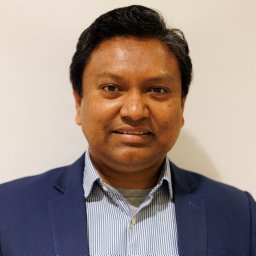 Tarek Rana合作论文数Sch Accounting, RMIT Univ3
 Enrico Bracci合作论文数Department of Economics, University of Ferrara3
 Seuwandhi Buddika Ranasinghe合作论文数Faculty of Management and Finance, University of Colombo3Vassili Joannidès de Lautour合作论文数2Soon Yong Ang合作论文数2
 Kashan Pirzada合作论文数Tunku Puteri Intan Safinaz Sch Accountancy, Univ Utara Malaysia2
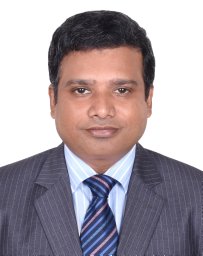 Mohammad Saiful Alam合作论文数Institute of Soil Sciences Chinese Academy of Sciences, Chinese Academy of Sciences2
 Mahbub Zaman合作论文数School of Accounting;University of Manchester;School of Accounting, University of Manchester2
 Nor Zalina Mohamad Yusof合作论文数College of Business, Universiti Utara Malaysia2M. W. Indrani合作论文数2
 Siriyama Herath合作论文数School of Business, Clark Atlanta University2Chandana Rathnasiri合作论文数2
 Primali Jayasekera合作论文数1danture wickramasinghe合作论文数1
 Shamithra Sigera合作论文数1
 R L P R Liyanage合作论文数Oral Pathology Unit, National Dental Hospital (Teaching),1
 Ahmad Nasseri合作论文数Univ Sistan & Baluchestan1Chaminda Wijethilake合作论文数1
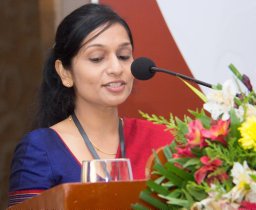 Tharusha Gooneratne合作论文数Dept Accounting, Univ Colombo1Paul D. Ahn合作论文数1
 Petr Petera合作论文数Prague Univ Econ & Business1
 Mouhcine Tallaki合作论文数Department of Economics & Management, University of Ferrara1
 Jaroslav Wagner合作论文数Prague Univ Econ & Business1
 Junaid Ashraf合作论文数Suleman Dawood Sch Business, Lahore Univ Management Sci1Mohd Zulkhairi Mustapha合作论文数1
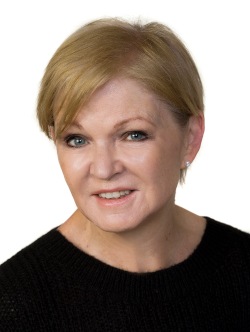 Christine Cooper合作论文数Accounting and Finance, Business School, University of Edinburgh1J. A. S. K. Jayakody合作论文数1
 Corea Enoka M合作论文数1
 Cameron Graham合作论文数1
 Suriana Ismail合作论文数UniKL), Universiti Kuala Lumpur1
 Ileana Steccolini合作论文数Bocconi Univ1
 Hassan Yazdifar合作论文数Sheffield University1
 Boris Popesko合作论文数Department of Enterprise Economics, Tomas Bata University in Zlín1Dennis Thomas合作论文数1
 Davood Askarany合作论文数Department of Accounting and Finance, Business School, The University of Auckland1
 Gabriel Moens合作论文数1
 Pawan Adhikari合作论文数1
 Nicolas Berland合作论文数DRM, Université Paris-Dauphine1
 Zahirul Hoque合作论文数Department of Accounting, College of Business Administration, Prince Sultan University;Department of Accounting and Data Analytics, La Trobe University1




