Let G be a one-dimensional ℓ-subgroup of the group ℱ(X,ℤ) of integer-valued functions on a set X. We show that G is free under some hypothesis on the spectrum of G and on its quotient groups at the prime ideals. We translate this result in the context of the study of freeness of the group Inv(D) of invertible ideals of a Prüfer domain D: in particular, we introduce the class of dd-domains as the class of Prüfer domains having a set X that is dense in Spec(D) (with respect to the inverse topology) and whose localizations are DVRs. This class is exactly the class of Prüfer domains for which Inv(D) is isomorphic (as an ℓ-group) to a subgroup of ℱ(X,ℤ).
We define a residual function on a topological space X as a function f:X⟶ℤ such that f^-1(0) contains an open dense set, and we use this notion to study the freeness of the group of divisorial ideals on a Prüfer domain.
Given a valuation v with quotient field K and a sequence 𝒦 :K_0⊆ K_1⊆⋯ of finite extensions of K, we construct a weighted tree 𝒯(v,𝒦) encoding information about the ramification of v in the extensions K_i; conversely, we show that a weighted tree 𝒯 can be expressed as 𝒯(v,𝒦) under some mild hypothesis on v or on 𝒯. We use this construction to construct, for every countable successor ordinal number α, an almost Dedekind domain D, integral over V (the valuation domain of v) whose SP-rank is α. Subsequently, we extend this result to countable limit ordinal numbers by considering integral extensions of Dedekind domains with countably many maximal ideals.
We study the freeness of the group Inv(D) of invertible ideals of an integral domain D, and the freeness of some related groups of (fractional) ideals. We study the relation between Inv(D) and Inv(D_P) , in particular in the locally finite case, and we analyze in more detail the case where D is Noetherian (obtaining a characterization of when Inv(D) is free for one-dimensional analytically unramified Noetherian domains) and where D is Prüfer.
An integral domain D is called an SP-domain if every ideal is a product of radical ideals. Such domains are always almost Dedekind domains, but not every almost Dedekind domain is an SP-domain. The SP-rank of D provides a natural measure of the deviation of D from being an SP-domain. In the present paper we show that every ordinal number alpha can be realized as the SP-rank of an almost Dedekind domain.
We study different form of boundness for ideals of almost Dedekind domains, generalizing the notions of critical ideals, radical factorization, and SP-domains. We show that every almost Dedekind domain has at least one noncritical maximal ideals and, indeed, the set of noncritical maximal ideals is dense in the maximal space, with respect to the constructible topology; as a consequence, we show that every almost Dedekind domain is SP-scattered, and in particular that the group $\mathrm{Inv}(D)$ of invertible ideals of an almost Dedekind domain $D$ is always free. If $D$ is an almost Dedekind domain with nonzero Jacobson radical, we also show that there is at least one element whose ideal function is bounded.
We generalize the theory of radical factorization from almost Dedekind domain to strongly discrete Pr & uuml;fer domains; we show that, for a fixed subset X of maximal ideals, the finitely generated ideals with V(I) subset of X have radical factorization if and only if X contains no critical maximal ideals with respect to X. We use these notions to prove that the group Inv(D) of the invertible ideals of a strongly discrete Pr & uuml;fer domain is often free: in particular, we show it is free when the spectrum of D is Noetherian or when D is a ring of integer-valued polynomials on a subset over a Dedekind domain. (c) 2025 The Author(s). Published by Elsevier B.V. This is an open access article under the CC BY-NC-ND license (http:// creativecommons.org/licenses/by-nc-nd/4.0/).
We show that the prime spectrum of the complete integral closure D^* of a Prüfer domain D is completely determined by the Zariski topology on the spectrum Spec (D) of D.
We study polynomial closure of ideals from the point of view of star operations. We show that, if D is an integrally closed domain or a domain of residue characteristic 0, the polynomial closure of an ideal coincides with the divisorial closure. We also analyze what happens in characteristic p.
We study properties of the Golomb topology on polynomial rings over fields, in particular trying to determine conditions under which two such spaces are not homeomorphic. We show that if K is an algebraic extension of a finite field and K' is a field of the same characteristic, then the Golomb spaces of K[X] and K'[X] are homeomorphic if and only if K and K' are isomorphic.
Given an integral domain D and a D-algebra R, we introduce the local Picard group LPic(R,D) as the quotient between the Picard group Pic(R) and the canonical image of Pic(D) in Pic(R) , and its subgroup LPic_u(R,D) generated by the the integral ideals of R that are unitary with respect to D. We show that, when D⊆ R is a ring extension that satisfies certain properties (for example, when R is the ring of polynomial D[X] or the ring of integer-valued polynomials Int(D) ), it is possible to decompose LPic(R,D) as the direct sum ⊕LPic(RT,T) , where T ranges in a Jaffard family of D. We also study under what hypothesis this isomorphism holds for pre-Jaffard families of D.
Let $V$ be a valuation domain of rank one with quotient field $K$. We study the set of extensions of $V$ to the field of rational functions $K(X)$ induced by pseudo-convergent sequences of $K$ from a topological point of view, endowing this set either with the Zariski or with the constructible topology. In particular, we consider the two subspaces induced by sequences with a prescribed breadth or with a prescribed pseudo-limit. We give some necessary conditions for the Zariski space to be metrizable (under the constructible topology) in terms of the value group and the residue field of $V$.
We study almost Dedekind domains with respect to the failure of ideals to have radical factorization, that is, we study how to measure how far an almost Dedekind domain is from being an SP-domain. To do so, we consider the maximal space M = Max(R) of an almost Dedekind domain R, interpreting its (fractional) ideals as maps from M to Z, and looking at the continuity of these maps when M is endowed with the inverse topology and Z with the discrete topology. We generalize the concept of critical ideals by introducing a well-ordered chain of closed subsets of M (of which the set of critical ideals is the first step) and use it to define the class of SP-scattered domains, which includes the almost Dedekind domains such that M is scattered and, in particular, the almost Dedekind domains such that M is countable. We show that for this class of rings the group Inv(R) is free by expressing it as a direct sum of groups of continuous maps, and that, for every length function l on R and every ideal I of R, the length of R/I is equal to the length of R/rad(I).
We consider the set of all the ideals of a ring, endowed with the coarse lower topology. The aim of this paper is to study topological properties of distinguished subspaces of this space and detect the spectrality of some of them.
We prove a necessary and sufficient criterion for the ring of integer-valued polynomials to behave well under localization. Then, we study how the Picard group of Int(D) and the quotient group P(D):=Pic(Int(D))/Pic(D)$\mathcal {P}(D):=\mathrm{Pic}(\mathrm{Int}(D))/\mathrm{Pic}(D)$ behave in relation to Jaffard, weak Jaffard, and pre-Jaffard families; in particular, we show that P(D)& SIME;⨁P(T)$\mathcal {P}(D)\simeq \bigoplus \mathcal {P}(T)$ when T ranges in a Jaffard family of D, and study when similar isomorphisms hold when T ranges in a pre-Jaffard family. In particular, we show that the previous isomorphism holds when D is an almost Dedekind domain such that the ring integer-valued polynomials behave well under localization and such that the maximal space of D is scattered with respect to the inverse topology.
We introduce and study the set of radical stable operations of an integral domain $D$. We show that their set is a complete lattice that is the join-completion of the set of spectral semistar operations, and we characterize when every radical operation is spectral (under the hypothesis that $D$ is rad-colon coherent). When $D$ is a Pr\"ufer domain such that every set of minimal prime ideals is scattered, we completely classify stable semistar operations.
We characterize the polynomial closure of a pseudo-convergent sequence in a valuation domain $V$ of arbitrary rank, and then we use this result to show that the polynomial closure is never topological when $V$ has rank at least $2$.
Let $D$ be an integral domain and $L$ be a field containing $D$. We study the isolated points of the Zariski space $\mathrm{Zar}(L|D)$, with respect to the constructible topology. In particular, we completely characterize when $L$ (as a point) is isolated and, under the hypothesis that $L$ is the quotient field of $D$, when a valuation domain of dimension $1$ is isolated; as a consequence, we find all isolated points of $\mathrm{Zar}(D)$ when $D$ is a Noetherian domain. We also show that if $V$ is a valuation domain and $L$ is transcendental over $V$ then the set of extensions of $V$ to $L$ has no isolated points.
We introduce the concept of pre-Jaffard family , a generalization of Jaffard families obtained by substituting the locally finite hypothesis with a much weaker compactness hypothesis. From any such family, we construct a sequence of overrings of the starting domain that allows to decompose stable semistar operations and singular length functions in more cases than what is allowed by Jaffard families. We also apply the concept to one-dimensional domains, unifying the treatment of sharp and dull degree of a Prüfer domain.
For a Dedekind domain $D$, let $\mathcal{P}(D)$ be the set of ideals of $D$ that are radical of a principal ideal. We show that, if $D,D'$ are Dedekind domains and there is an order isomorphism between $\mathcal{P}(D)$ and $\mathcal{P}(D')$, then the rank of the class groups of $D$ and $D'$ is the same.
 Carmelo Antonio Finocchiaro合作论文数9
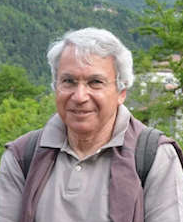 Marco Fontana合作论文数Dipartimento di Matematica e Fisica, Università degli Studi Roma Tre6
 Giulio Peruginelli合作论文数Italian National Research Council4Francesca Tartarone合作论文数2
 A. Goswami合作论文数School of Mathematical Sciences, University of KwaZulu-Natal1
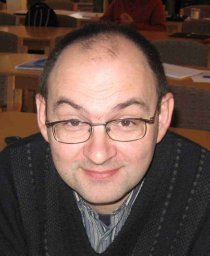 Taras Banakh合作论文数Department of Mathematics, Lviv University1
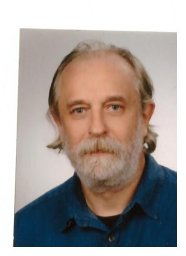 Slawomir Turek合作论文数1
 Alan Loper合作论文数1




