Memory management is fundamental to the performance of all applications. On modern server architectures, an application's memory allocator needs to balance memory utilization against the ability to use 2MB huge pages, which are crucial for achieving high performance. This paper shows that prior C++ memory allocators are fundamentally limited because optimizing this trade-off depends on the knowledge of object lifetimes, which is information allocators lack. We introduce a two-step approach to attain high memory utilization in huge pages. We first introduce a novel machine-learning approach that predicts the lifetime of freshly allocated objects using the stack trace at the time of allocation and treats stack traces as natural language. We then present a fundamentally new type of memory allocator that exploits (potentially incorrect) object lifetime predictions to achieve high memory utilization at full huge page usage. In contrast to prior memory allocators that organize their heap around size classes and free lists, our allocator organizes the heap based on predicted lifetime classes and adjusts to mispredictions on the fly. We demonstrate experimentally that this learned lifetime-aware memory allocator (LLAMA) reduces fragmentation with huge pages by up to 78%. Our approach gives rise to a new methodology for applying ML in computer systems. In addition, similar space-time bin packing problems abound in computer science and we discuss how this approach has applications beyond memory allocation to a wide range of problems.
Zoned Namespace (ZNS) SSDs are the latest evolution of host-managed flash storage, enabling improved performance at a lower cost-per-byte than traditional block interface (conventional) SSDs. To date, there is no support for arranging these new devices in arrays that offer increased throughput and reliability (RAID). We identify key challenges in designing redundant ZNS SSD arrays, such as managing metadata updates and persisting partial stripe writes in the absence of overwrite support from the device. We present RAIZN, a logical volume manager that exposes a ZNS interface and stripes data and parity across ZNS SSDs. RAIZN provides more stable throughput and lower tail latencies than an mdraid array of conventional SSDs based on the same hardware platform. RAIZN achieves superior performance because device-level garbage collection slows down conventional SSDs. We confirm that the benefits of RAIZN translate to higher layers by adapting the F2FS file system, RocksDB key-value store, and MySQL database to work with ZNS and leverage its benefits by closely controlling garbage collection. Compared to arrays of conventional SSDs experiencing on-device garbage collection, RAIZN leverages the ZNS interface to maintain consistent performance with up to 14× higher throughput and lower tail latency.
We present the Succinct Range Filter (SuRF), a fast and compact data structure for approximate membership tests. Unlike traditional Bloom filters, SuRF supports both single-key lookups and common range queries, such as range counts. SuRF is based on a new data structure called the Fast Succinct Trie (FST) that matches the performance of state-of-the-art order-preserving indexes, while consuming only 10 bits per trie node---a space close to the minimum required by information theory. Our experiments show that SuRF speeds up range queries in a widely used database storage engine by up to 5×.
The high packet rates handled by network appliances and similar software-based packet processing applications place a challenging load on caches such as flow caches. In these environments, both hit rate and cache hit latency are critical to throughput. Much recent work, however, has focused exclusively on one of these two desiderata, missing opportunities to further improve overall system throughput. This paper introduces Bounded Linear Probing (BLP), a new cache design optimized for network appliances. BLP works well across different workloads and cache sizes by balancing between hit rate and lookup latency. To accompany BLP, we also present a new, lightweight cache eviction policy called Probabilistic Bubble LRU that achieves near-optimal cache hit rate (assuming the algorithm is offline) without using any extra space. We make three main contributions: a theoretical analysis of BLP, a comparison between existing and proposed cache designs using microbenchmarks, and an end-to-end evaluation of BLP in the popular Open vSwitch (OvS) system. Our end-to-end experiments show that BLP is effective in practice: replacing the microflow cache in OvS with BLP improves throughput by up to 15%.
Lamenting the lack of a natural userland abstraction for preemptive interruption and asynchronous cancellation, we propose lightweight preemptible functions, a mechanism for synchronously performing a function call with a precise timeout that is lightweight, efficient, and composable, all while being portable between programming languages. We present the design of libinger, a library that provides this abstraction, on top of which we build libturquoise, arguably the first generalpurpose and backwards-compatible preemptive thread library implemented entirely in userland. Finally, we demonstrate this software stack's applicability to and performance on the problems of combatting head-ofline blocking and time-based DoS attacks.
Memory-based storage currently offers the highest-performance distributed storage, keeping the primary copy of all data in DRAM. Recent advances in non-volatile main memory (NVMM) technologies promise latency similar to DRAM at reduced cost and energy, but will make providing high availability more challenging. Previous approaches to failure recovery involve maintaining multiple identical replicas or relying on fast offline restoration of data from backup replicas stored on SSD. Unfortunately, NVMM's combination of lower write throughput and increased storage density means that offline restoration can no longer provide sufficiently fast recovery, and maintaining multiple identical replicas is generally cost prohibitive. CANDStore is a strongly consistent, distributed, replicated key-value store that uses a new fast crash recovery protocol. As a result, CANDStore can use NVMM and NVMe SSD technology to provide low-latency distributed storage that is cheaper and higher-availability than existing main memory-based distributed storage. Our evaluation shows that CANDStore's recovery protocol enables the system to restore performance and meet SLOs after the failure of a primary node 4.5--10.5x faster than offline recovery.
In modern data warehousing, data skipping is essential for high query performance. While index structures such as B-trees or hash tables allow for precise pruning, their large storage requirements make them impractical for indexing secondary columns. Therefore, many systems rely on approximate indexes such as min/max sketches (ZoneMaps) or Bloom filters for cost-effective data pruning. For example, Google PowerDrill skips more than 90% of data on average using such indexes. In this paper, we introduce Cuckoo Index (CI), an approximate secondary index structure that represents the many-to-many relationship between keys and data partitions in a highly space-efficient way. At its core, CI associates variable-sized fingerprints in a Cuckoo filter with compressed bitmaps indicating qualifying partitions. With our approach, we target equality predicates in a read-only (immutable) setting and optimize for space efficiency under the premise of practical build and lookup performance. In contrast to per-partition (Bloom) filters, CI produces correct results for lookups with keys that occur in the data. CI allows to control the ratio of false positive partitions for lookups with non-occurring keys. Our experiments with real-world and synthetic data show that CI consumes significantly less space than per-partition filters for the same pruning power for low-to-medium cardinality columns. For high cardinality columns, CI is on par with its baselines.
Non-volatile main memory DIMMs (NVMMs), such as Intel's Optane DC Persistent Memory modules, provide data durability with orders of magnitude higher performance than prior durable technologies. This paper explores the unique challenges that arise when building high-performance networked systems for NVMM. Compared to DRAM, we find that NVMMs have distinctive fundamental properties that pose unique challenges for networked access to NVMM, both from the NIC and the CPU. We show that much of the challenges in efficient access to remote NVMM arises from the fact that CPU caches are not optimized for NVMM. To address these challenges, we propose a menu of solutions for current hardware and evaluate their benefits.
Modern C++ servers have memory footprints that vary widely over time, causing persistent heap fragmentation of up to 2x from long-lived objects allocated during peak memory usage. This fragmentation is exacerbated by the use of huge (2MB) pages, a requirement for high performance on large heap sizes. Reducing fragmentation automatically is challenging because C++ memory managers cannot move objects. This paper presents a new approach to huge page fragmentation. It combines modern machine learning techniques with a novel memory manager (LLAMA) that manages the heap based on object lifetimes and huge pages (divided into blocks and lines). A neural network-based language model predicts lifetime classes using symbolized calling contexts. The model learns context-sensitive per-allocation site lifetimes from previous runs, generalizes over different binary versions, and extrapolates from samples to unobserved calling contexts. Instead of size classes, LLAMA's heap is organized by lifetime classes that are dynamically adjusted based on observed behavior at a block granularity. LLAMA reduces memory fragmentation by up to 78% while only using huge pages on several production servers. We address ML-specific questions such as tolerating mispredictions and amortizing expensive predictions across application execution. Although our results focus on memory allocation, the questions we identify apply to other system-level problems with strict latency and resource requirements where machine learning could be applied.
We present the High-speed Order-Preserving Encoder (HOPE) for in-memory search trees. HOPE is a fast dictionary-based compressor that encodes arbitrary keys while preserving their order. HOPE's approach is to identify common key patterns at a fine granularity and exploit the entropy to achieve high compression rates with a small dictionary. we first develop a theoretical model to reason about order-preserving dictionary designs. We then select six representative compression schemes using this model and implement them in HOPE. These schemes make different trade-offs between compression rate and encoding speed. We evaluate HOPE on five data structures used in databases: SuRF, ART, HOT, B+tree, and Prefix B+tree. Our experiments show that using HOPE allows the search trees to achieve lower query latency (up to 40% lower) and better memory efficiency (up to 30% smaller) simultaneously for most string key workloads.
In applications ranging from image search to recommendation systems, the problem of identifying a set of "similar" real-valued vectors to a query vector plays a critical role. However, retrieving these vectors and computing the corresponding similarity scores from a large database is computationally challenging. Approximate nearest neighbor (ANN) search relaxes the guarantee of exactness for efficiency by vector compression and/or by only searching a subset of database vectors for each query. Searching a larger subset increases both accuracy and latency. State-of-the-art ANN approaches use fixed configurations that apply the same termination condition (the size of subset to search) for all queries, which leads to undesirably high latency when trying to achieve the last few percents of accuracy. We find that due to the index structures and the vector distributions, the number of database vectors that must be searched to find the ground-truth nearest neighbor varies widely among queries. Critically, we further identify that the intermediate search result after a certain amount of search is an important runtime feature that indicates how much more search should be performed. To achieve a better tradeoff between latency and accuracy, we propose a novel approach that adaptively determines search termination conditions for individual queries. To do so, we build and train gradient boosting decision tree models to learn and predict when to stop searching for a certain query. These models enable us to achieve the same accuracy with less total amount of search compared to the fixed configurations. We apply the learned adaptive early termination to state-of-the-art ANN approaches, and evaluate the end-to-end performance on three million to billion-scale datasets. Compared with fixed configurations, our approach consistently improves the average end-to-end latency by up to 7.1 times faster under the same high accuracy targets. Our approach is open source at github.com/efficient/faiss-learned-termination.
This paper introduces Selective-Backprop, a technique that accelerates the training of deep neural networks (DNNs) by prioritizing examples with high loss at each iteration. Selective-Backprop uses the output of a training example's forward pass to decide whether to use that example to compute gradients and update parameters, or to skip immediately to the next example. By reducing the number of computationally-expensive backpropagation steps performed, Selective-Backprop accelerates training. Evaluation on CIFAR10, CIFAR100, and SVHN, across a variety of modern image models, shows that Selective-Backprop converges to target error rates up to 3.5x faster than with standard SGD and between 1.02--1.8x faster than a state-of-the-art importance sampling approach. Further acceleration of 26% can be achieved by using stale forward pass results for selection, thus also skipping forward passes of low priority examples.
As video camera deployments continue to grow, the need to process large volumes of real-time data strains wide area network infrastructure. When per-camera bandwidth is limited, it is infeasible for applications such as traffic monitoring and pedestrian tracking to offload high-quality video streams to a datacenter. This paper presents FilterForward, a new edge-to-cloud system that enables datacenter-based applications to process content from thousands of cameras by installing lightweight edge filters that backhaul only relevant video frames. FilterForward introduces fast and expressive per-application microclassifiers that share computation to simultaneously detect dozens of events on computationally constrained edge nodes. Only matching events are transmitted to the cloud. Evaluation on two real-world camera feed datasets shows that FilterForward reduces bandwidth use by an order of magnitude while improving computational efficiency and event detection accuracy for challenging video content.
The performance and efficiency of distributed machine learning (ML) depends significantly on how long it takes for nodes to exchange state changes. Overly-aggressive attempts to reduce communication often sacrifice final model accuracy and necessitate additional ML techniques to compensate for this loss, limiting their generality. Some attempts to reduce communication incur high computation overhead, which makes their performance benefits visible only over slow networks. We present 3LC, a lossy compression scheme for state change traffic that strikes balance between multiple goals: traffic reduction, accuracy, computation overhead, and generality. It combines three new techniques---3-value quantization with sparsity multiplication, quartic encoding, and zero-run encoding---to leverage strengths of quantization and sparsification techniques and avoid their drawbacks. It achieves a data compression ratio of up to 39--107X, almost the same test accuracy of trained models, and high compression speed. Distributed ML frameworks can employ 3LC without modifications to existing ML algorithms. Our experiments show that 3LC reduces wall-clock training time of ResNet-110--based image classifiers for CIFAR-10 on a 10-GPU cluster by up to 16--23X compared to TensorFlow's baseline design.
It is commonly believed that datacenter networking software must sacrifice generality to attain high performance. The popularity of specialized distributed systems designed specifically for niche technologies such as RDMA, lossless networks, FPGAs, and programmable switches testifies to this belief. In this paper, we show that such specialization is not necessary. eRPC is a new general-purpose remote procedure call (RPC) library that offers performance comparable to specialized systems, while running on commodity CPUs in traditional datacenter networks based on either lossy Ethernet or lossless fabrics. eRPC performs well in three key metrics: message rate for small messages; bandwidth for large messages; and scalability to a large number of nodes and CPU cores. It handles packet loss, congestion, and background request execution. In microbenchmarks, one CPU core can handle up to 10 million small RPCs per second, or send large messages at 75 Gbps. We port a production-grade implementation of Raft state machine replication to eRPC without modifying the core Raft source code. We achieve 5.5 µs of replication latency on lossy Ethernet, which is faster than or comparable to specialized replication systems that use programmable switches, FPGAs, or RDMA.
metric and its derivatives can enable similar approaches in the DNN context. I often tell students, when first starting to learn about research, that they should keep an eye out for the papers in an area that everyone else claims to have beaten: Those are the papers that stimulated other researchers. DeepXplore will be such a paper. Its specific metrics and constraints on example generation are unlikely to be the final word in DNN testing, but the work that follows will exist because of researchers seeing these ideas and trying to improve upon them. The core framework from DeepXplore will likely endure: Establish an effective coverage metric based upon the numerical values obtained by the activations of the neural network and use a constrained search procedure to maximize coverage with respect to that metric.
We present the Succinct Range Filter (SuRF), a fast and compact data structure for approximate membership tests. Unlike traditional Bloom filters, SuRF supports both single-key lookups and common range queries: open-range queries, closed-range queries, and range counts. SuRF is based on a new data structure called the Fast Succinct Trie (FST) that matches the point and range query performance of state-of-the-art order-preserving indexes, while consuming only 10 bits per trie node. The false positive rates in SuRF for both point and range queries are tunable to satisfy different application needs. We evaluate SuRF in RocksDB as a replacement for its Bloom filters to reduce I/O by filtering requests before they access on-disk data structures. Our experiments on a 100 GB dataset show that replacing RocksDB's Bloom filters with SuRFs speeds up open-seek (without upper-bound) and closed-seek (with upper-bound) queries by up to 1.5× and 5× with a modest cost on the worst-case (all-missing) point query throughput due to slightly higher false positive rate.
Machine learning models are notoriously difficult to interpret and debug. This is particularly true of neural networks. In this work, we introduce automated software testing techniques for neural networks that are well-suited to discovering errors which occur only for rare inputs. Specifically, we develop coverage-guided fuzzing (CGF) methods for neural networks. In CGF, random mutations of inputs to a neural network are guided by a coverage metric toward the goal of satisfying user-specified constraints. We describe how fast approximate nearest neighbor algorithms can provide this coverage metric. We then discuss the application of CGF to the following goals: finding numerical errors in trained neural networks, generating disagreements between neural networks and quantized versions of those networks, and surfacing undesirable behavior in character level language models. Finally, we release an open source library called TensorFuzz that implements the described techniques.
 Michael Kaminsky合作论文数Enriched Ag;Computer Science Department, Carnegie Mellon University85Hyeontaek Lim合作论文数Google Brain24
 Vijay Vasudevan合作论文数Lutra AI22
 Gregory R. Ganger合作论文数Computer Science Department, Carnegie Mellon University;Electrical and Computer Engineering, College of Engineering, Carnegie Mellon University16
 Amar Phanishayee合作论文数Microsoft Research16
 Srinivasan Seshan合作论文数Computer Science Department, Carnegie Mellon University13
 Hari Balakrishnan合作论文数Computer Science & Artificial Intelligence Laboratory, College of Computing, Massachusetts Institute of Technology;EECS Department, College of Computing, Massachusetts Institute of Technology13
 Iulian Moraru合作论文数Google12
 Garth Gibson合作论文数Department of Computer Science, Carnegie Mellon University;Department of Electrical and Computer Engineering, Carnegie Mellon University;School of Computer Science, Carnegie Mellon University11
 Michael A. Kozuch合作论文数Department of Electrical and Computer Engineering, College of Engineering, Carnegie Mellon University;Intel11
 Anuj Kalia合作论文数OpenAI10Lawrence Tan合作论文数9Elie Krevat合作论文数9
 Dongsu Han合作论文数School of Electrical Engineering, Korea Advanced Institute of Science and Technology;Graduate School of Artificial Intelligence, Korea Advanced Institute of Science and Technology9
 Bin Fan (樊彬)合作论文数Institute of Artificial Intelligence, School of Intelligence Science and Technology, University of Science and Technology Beijing8
 Adrian Perrig (安卓培瑞)合作论文数Computer Science Department, ETH Zurich8
 Alex C. Snoeren合作论文数Department of Computer Science and Engineering, Jacobs School of Engineering, University of California, San Diego8
 Conglong Li合作论文数Microsoft DeepSpeed Team8
 Konstantina Papagiannaki合作论文数Microsoft8
 Alex Smola合作论文数Boson AI8
 Niraj Tolia合作论文数HP Labs8
 Dong Zhou合作论文数Tsinghua University8
 Jason Franklin合作论文数WV Ventures8
 M. Frans Kaashoek合作论文数Computer Science and Artificial Intelligence Laboratory, Massachusetts Institute of Technology;Department of Electrical Engineering and Computer Science, Massachusetts Institute of Technology7Giulio Zhou合作论文数Carnegie Mellon Univ6
 Kim Thomas合作论文数School of Business Administration, University of California Riverside6
 Nick Feamster合作论文数Department of Computer Science, The University of Chicago;Data Science Institute, The University of Chicago;NetMicroscope;Broadband Internet Technical Advisory Group, Inc.6
 Padmanabhan Pillai合作论文数Intel Labs;Intel Science and Technology Center on Visual Cloud Systems, Carnegie Mellon University6Hiral Shah合作论文数Department of Emergency Medicine, North Shore University Hospital6
 Michael J. Freedman合作论文数Department of Computer Science, School of Engineering and Applied Science, Princeton University;Timescale6
 Mu Li (李沐)合作论文数Boson AI5Himabindu Pucha合作论文数Google5
 Andy Pavlo合作论文数Computer Science Department, Carnegie Mellon University5Dan Wendlandt合作论文数5
 Huanchen Zhang (张焕晨)合作论文数Institute for Interdisciplinary Information Sciences, Tsinghua University5
 Christopher Canel合作论文数Carnegie Mellon University4Subramanya Dulloor合作论文数4
 Robert Morris合作论文数Computer Science and Artificial Intelligence Laboratory, Massachusetts Institute of Technology;Department of Electrical Engineering and Computer Science, Massachusetts Institute of Technology4
 Aditya Akella合作论文数Department of Computer Science, The University of Texas at Austin4
 T. S. Eugene Ng合作论文数Department of Computer Science, George R. Brown School of Engineering and Computing, Rice University4
 Madeleine Glick合作论文数Qficaf NeMrkr Group;Efechicul Engineering;Universiv College London;Qficaf NeMrkr Group, Universiv College London4
 Jay Lepreau合作论文数School of Computing,University of Utah4
 Wyatt Lloyd合作论文数Department of Computer Science, School of Engineering and Applied Science, Princeton University4Brian Mueller合作论文数3Christos Faloutsos合作论文数3S Boucher合作论文数3
 Viktor Leis合作论文数School of Computation, Information and Technology, Technische Universität München3
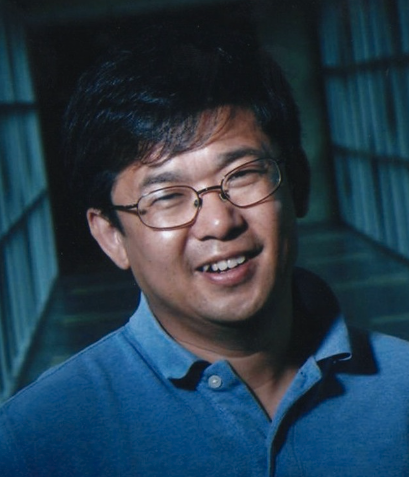 Hui Zhang合作论文数Department of Computer Science, School of Computer Science, Carnegie Mellon University;Parallel Data Lab, Carnegie Mellon University;Conviva Inc.3
 Amin M. Vahdat合作论文数Google;Department of Computer Science and Engineering, University of California San Diego3