Single-phase samples of Ba{sub 1-x}K{sub x}BiO{sub 3}(00.35 with {Tc} gradually decreasing as x increases. At 10K, with decreasing potassium content, the symmetry reduces to tetragonal at x=0.35, orthorhombic at x=0.2 and finally to monoclinic at x=0.1. Normal state resistivity displays metallic behavior for 0.40
An irreversibility line has been identified in bulk Ba{sub 0.625}K{sub 0.375}BiO{sub 3}, which follows the relation 1{minus}{ital T}/{ital T}{sub {ital c}}{similar to}{ital H}{sup 2/3}. According to the flux-creep model, the magnetic irreversibility is caused by thermally activated flux creep and is closely connected with the field-induced resistive broadening. However, previous resistivity measurements showed that the Ba{sub 0.625}K{sub 0.375}BiO{sub 3} system did not exhibit resistive transition broadening. Thus, an alternative explanation based on the Josephson-coupling model is suggested to interpret the irreversibility observed in Ba{sub 0.625}K{sub 0.375}BiO{sub 3}.
Observation of similar behavior in three different superconducting oxides suggests that the maximum {Tc} is limited by phase instability. These conclusions are based on previously published neutron powder diffraction data for La{sub 2}CuO{sub 4+x} and Nd{sub 2-x}Ce{sub x}CuO{sub 4} and new data for La{sub 2-x}Sr{sub x}CuO{sub 4} which show a phase separated region for compositions adjacent to that which produces the highest {Tc}. 13 refs., 7 figs.
Tunneling spectroscopy measurements have been performed on bulk samples of Ba{sub 1-x}K{sub x}BiO{sub 3} for the compositions, x=0.375, 0.4 and 0.5, using the natural, surface oxide as the tunnel barrier. The data show structures which are characteristic of phonon effects as seen in conventional superconductors and suggest that {alpha}{sup 2}F({omega}) is strongest for the high frequency optical modes. These results are consistent with other experiments and with recent microscopic calculations which indicate that phonon-mediated pairing is responsible for the superconductivity in this compound. 21 refs., 6 figs., 1 tab.
Superconducting Ba 1−x K x BiO 3 , with a T c of 30K, shows a large 18 O isotope effect which indicates that phonons are involved in the pairing mechanism. Superconducting energy gap measurements from IR reflectivity and tunneling are consistent with moderate coupling (2Δ/kT c = 3.5 ± 0.5). A characteristic phonon energy of about 40 meV would be required to obtain the high T c . Neuron scattering measurements show a large density of phonons in the range 40 to 80 meV and strong coupling of electrons to these modes is indicated in tunneling spectroscopy. Additional results are reported, including the structural phase diagram, which suggest that superconductivity is phonon mediated.
 Dg Hinks合作论文数14
 Bogdan Dabrowski合作论文数Department of Physics, College of Liberal Arts and Sciences, Northern Illinois University12
 Shiyou Pei (裴世铀)合作论文数合肥威迪智能玻璃有限公司8a w mitchell合作论文数7J. D. Jorgensen合作论文数6yuan f zheng合作论文数4
 Donglu Shi合作论文数College of Engineering and Applied Science, University of Cincinnati2
 Philip Lightfoot合作论文数School of Chemistry, University of St Andrews2
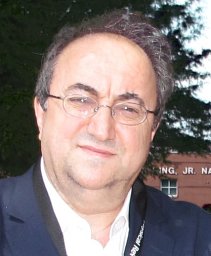 E. E. Alp合作论文数Argonne National Laboratory Advanced Photon Source Argon2S. M. Mini合作论文数2
 John F. Zasadzinski合作论文数Department of Physics, Lewis College of Science and Letters, Illinois Institute of Technology;Robert A. Pritzker Science Center, Illinois Institute of Technology;SQMS Center, Fermi National Accelerator Laboratory2X. S. Ling合作论文数1J. I. Budnick合作论文数1
 G. Jennings合作论文数1yunxiu shen合作论文数1mingcan xu合作论文数1T. Wagener合作论文数1ming fang合作论文数1
 John Newsam合作论文数Windhover Ventures LLC;Chemistry & Biochemistry Department, University of California, San Diego;Bio4Front, Inc.1Dm Hill合作论文数1
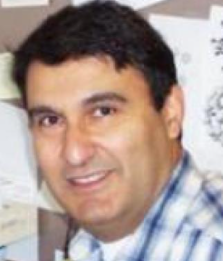 David Vaknin合作论文数Ames National Laboratory, Iowa State University;Department of Physics and Astronomy, College of Liberal Arts and Sciences, Iowa State University1M. Fang合作论文数1
 Joseph Budnick合作论文数Department of Physics, College of Liberal Arts and Sciences, University of Connecticut1Ming Xu合作论文数1
 Allan Jacobson合作论文数William A. Brookshire Department of Chemical and Biomolecular Engineering, Cullen College of Engineering, University of Houston;Texas Center for Superconductivity, University of Houston;Department of Chemistry, University of Houston1
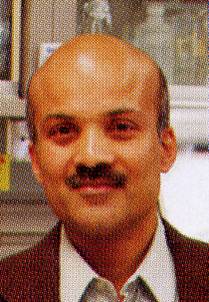 Murali Ramanathan合作论文数Department of Pharmaceutical Sciences, State University of New York1
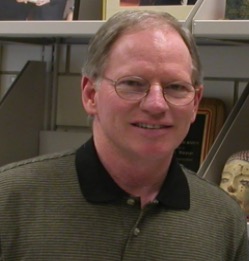 John H. Weaver合作论文数Department of Materials Science and Engineering, University of Illinois at Urbana-Champaign1
 Harry M Meyer III合作论文数The Chemical Sciences Division, Oak Ridge National Laboratory1Nilesh Tralshawala合作论文数1Sheng Luo (罗胜)合作论文数1Mohamed Faiz合作论文数Physics Department, KFUPM1Saion Sinha合作论文数University of New Haven Department of Physics1
 Juan Carlos Campuzano合作论文数Department of Physics, College of Liberal Arts and Sciences, University of Illinois at Chicago1Ying Zheng合作论文数1S. Salem-Sugui合作论文数1
 Xinsheng Sean Ling (凌新生)合作论文数Department of Physics, Brown University1
 Yongjun Jeff Hu合作论文数1MB JOST合作论文数1M Ramanathan合作论文数1




