Time spent in nature benefits human mental and physical well-being. However, much of the variance in outcomes of nature contact remains unexplained, suggesting that new mechanistic pathways need to be considered. Here, we tested a novel conceptual model linking nature contact with life satisfaction via pathways involving positive experiences of living in and experiencing the world through the physical self. Using data from the Body Image in Nature Survey (BINS; N = 50,363), representing respondents from 58 nations and speaking 36 different languages, we find that nature contact is associated with greater self-compassion and greater perceived restoration in nature, which in turn are associated with more positive body image. In addition, more positive body image is associated with greater life satisfaction. These associations were robust to sensitivity tests, generalised to all gender identities and age groups, and held individually in almost all national groups and languages. Although replications are needed, we propose that the materialities of natural environments help to link bodily experiences to the production and experience of well-being, a process that is largely stable across national groups.
The 12-item Self-Compassion Scale–Short Form (SCS–SF) is a widely used instrument for the assessment of self-compassion. To date, there have been few examinations of this instrument’s psychometric properties, particularly across nations and languages. Therefore, we used data from the Body Image in Nature Survey (BINS) to assess measurement invariance of the SCS–SF across nations, languages, gender identities, and age groups. Participants (N = 56,968) from 65 nations completed the SCS–SF in 40 languages. Using these data, we tested various hypothesised models of the SCS–SF in the total sample and, using multi-group confirmatory factor analysis, tested for invariance of the optimal model across national groups, languages, gender identities, and age groups. In the total dataset, we found that an 11-item, 2-factor model (i.e., SCS-11) provided best fit to the data, with the two factors tapping distinct constructs of compassionate and uncompassionate self-responding. The SCS-11 was found to be partially scalar invariant across national groups and languages, and fully scalar invariant across gender identities and age groups. There was wide variation in latent means for the two factors, particularly across national groups and languages. Further analyses showed negligible associations between the two factors and sociodemographic variables, including marital status, financial security, and urbanicity. Our results suggest that it may be possible to derive a stable 2-factor model of the SCS–SF for use in cross-cultural research, but also highlight the likelihood of cross-national and cross-linguistic variations in the way that self-compassion is understood.
The Satisfaction With Life Scale (SWLS) is a widely used self-report measure of subjective well-being, but studies of its measurement invariance across a large number of nations remain limited. Here, we utilised the Body Image in Nature (BINS) dataset-with data collected between 2020 and 2022 -to assess measurement invariance of the SWLS across 65 nations, 40 languages, gender identities, and age groups (N = 56,968). All participants completed the SWLS under largely uniform conditions. Multi-group confirmatory factor analysis indicated that configural and metric invariance was upheld across all nations, languages, gender identities, and age groups, suggesting that the unidimensional SWLS model has universal applicability. Full scalar invariance was achieved across gender identities and age groups. Based on alignment optimisation methods, partial scalar invariance was achieved across all but three national groups and across all languages represented in the BINS. There were large differences in latent SWLS means across nations and languages, but negligible-to-small differences across gender identities and age groups. Across nations, greater life satisfaction was significantly associated with greater financial security and being in a committed relationship or married. The results of this study suggest that the SWLS largely assesses a common unidimensional construct of life satisfaction irrespective of respondent characteristics (i.e., national group, gender identities, and age group) or survey presentation (i.e., survey language). This has important implications for the assessment of life satisfaction across nations and provides information that will be useful for practitioners aiming to promote subjective well-being internationally.
Detachment from nature is contributing to the environmental crisis and reversing this trend requires detailed monitoring and targeted interventions to reconnect people to nature. Most tools measuring nature exposure and attachment were developed in high-income countries and little is known about their robustness across national and linguistic groups. Therefore, we used data from the Body Image in Nature Survey to assess measurement invariance of the Nature Exposure Scale (NES) and the Connectedness to Nature Scale (CNS) across 65 nations, 40 languages, gender identities, and age groups (N = 56,968). While multi-group confirmatory factor analysis (MG-CFA) of the NES supported full scalar invariance across gender identities and age groups, only partial scalar invariance was supported across national and linguistic groups. MG-CFA of the CNS also supported full scalar invariance across gender identities and age groups, but only partial scalar invariance of a 7-item version of the CNS across national and linguistic groups. Nation-level associations between NES and CNS scores were negligible, likely reflecting a lack of conceptual clarity over what the NES is measuring. Individual-level associations between both measures and sociodemographic variables were weak. Findings suggest that the CNS-7 may be a useful tool to measure nature connectedness globally, but measures other than the NES may be needed to capture nature exposure cross-culturally.
The Body Appreciation Scale-2 (BAS-2) is a widely used measure of a core facet of the positive body image construct. However, extant research concerning measurement invariance of the BAS-2 across a large number of nations remains limited. Here, we utilised the Body Image in Nature (BINS) dataset - with data collected between 2020 and 2022 - to assess measurement invariance of the BAS-2 across 65 nations, 40 languages, gender identities, and age groups. Multi-group confirmatory factor analysis indicated that full scalar invariance was upheld across all nations, languages, gender identities, and age groups, suggesting that the unidimensional BAS-2 model has widespread applicability. There were large differences across nations and languages in latent body appreciation, while differences across gender identities and age groups were negligible-to-small. Additionally, greater body appreciation was significantly associated with higher life satisfaction, being single (versus being married or in a committed relationship), and greater rurality (versus urbanicity). Across a subset of nations where nation-level data were available, greater body appreciation was also significantly associated with greater cultural distance from the United States and greater relative income inequality. These findings suggest that the BAS-2 likely captures a near-universal conceptualisation of the body appreciation construct, which should facilitate further cross-cultural research.
The Schizotypal Personality Questionnaire (SPQ) is a self-report measure of schizotypal personality traits, but the higher-order dimensionality of its scores continues to be debated. As a contribution to this debate, we examined the psychometric properties of a Romanian translation of the SPQ. A total of 711 university students (488 women, 223 men) from Romania completed a novel translation of the SPQ alongside measures of quality of life, self-esteem, and life satisfaction. Confirmatory factor analysis suggested that a 4-factor model of SPQ scores had better fit to the data than alternative models. The 4-factor model also demonstrated partial measurement invariance across sex, although sex differences on domain scores were negligible (η p 2 = 0.01–0.02). Romanian SPQ scores evidenced adequate construct and concurrent validity vis-à-vis quality of life, satisfaction with life, and self-esteem. Our results provide support for a 4-factor conceptualisation of SPQ scores in a hitherto neglected linguistic group.
Emerging research has suggested that appearance-related factors, such as greater appearance orientation, are associated with dating anxiety in emerging adults, but much more could be done to understand mechanistic pathways and potential buffers. Here, we tested a moderated mediation model in which appearance-based rejection sensitivity and social physique anxiety were explored as mediators, and self-compassion was explored as a moderator, of the relationship between appearance orientation and dating anxiety. A total of 501 heterosexual emerging adults (248 women, 253 men) from the UK completed instruments measuring the aforementioned constructs. Relationships among all variables were largely similar across women and men, with only the association between social physique anxiety and appearance-based rejection sensitivity being significantly stronger in women. Mediation analysis in the total sample indicated that both social physique anxiety and appearance-based rejection anxiety were significant mediators. Additionally, we confirmed a serial mediation involving appearance orientation → appearance-based rejection sensitivity → social physique anxiety → dating anxiety. Conversely, self-compassion did not moderate the effects of either social physique anxiety or appearance-based rejection sensitivity on dating anxiety, although greater self-compassion was moderately associated lower dating anxiety. We suggest ways in which existing interventions aimed at reducing dating anxiety could be combined with body image interventions to reduce dating anxiety in heterosocial contexts.
There is increasing scholarly interest in the effects of social media use on women's body image. Here, we tested the utility of the Tripartite Influence Model - developed for traditional media influences on body image - in explaining the link between intensity of social media use and body image outcomes in young adult women from the United States (N = 579). The study tested a serial indirect mediation effect linking intensity of social media use and body esteem outcomes via internalization and social comparison, as well as a direct effect between intensity of social media use and body esteem measures. The results broadly supported for the applicability of the model. Internalization of appearance ideals and social comparison, respectively, were significant mediators of the relationship between intensity of social media use and body image outcomes. However, the direct link between intensity of social media use and body image was more equivocal. The overall findings suggest possible pathways through which intensity of social media use may influence body image outcomes in young adult women.
Research has suggested that schizotypy-a personality organisation representing latent vulnerability for schizophrenia-spectrum disorders-may be elevated in women with symptoms of disordered eating. However, studies have not fully considered associations between symptoms of disordered eating and multidimensional schizotypy. To overcome this limitation, we asked an online sample of 235 women from the United States to complete measures of symptoms of disordered eating (drive for thinness, body dissatisfaction, and bulimic symptoms) and multidimensional schizotypy. Correlational analyses indicated significant associations between drive for thinness and bulimic symptoms, respectively, and most schizotypal facets. Body dissatisfaction was significantly associated with only two schizotypal facets. Overall, the strength of correlations was weak-to-moderate. Regression results indicated that only the schizotypal feature of excessive social anxiety was significantly associated with all risk for disordered eating factors. These results are consistent with aetiological models of disordered eating that highlight socio-affective difficulties as risk factors for symptoms of disordered eating.
Abstract. Previous research has indicated that there are significant associations between interoception and body image, with lower interoceptive sensibility (IS) associated with more negative body image and higher IS associated with more positive body image. However, it is unclear whether these relationships are replicable in populations outside of North America and Western Europe. To address this issue, we asked a sample of 815 Malaysian Malay adults to complete the Multidimensional Assessment of Interoceptive Awareness, the Body Appreciation Scale-2, the Functionality Appreciation Scale, the Photographic Figure Rating Scale (women only), and the Drive for Muscularity Scale (men only), using online survey software. There were significant positive correlations between IS and the positive body image indices for both women and men, but the associations between IS and negative body image were generally below thresholds for statistical significance. After controlling for body mass index, age, and gender identity, we identified significant associations between IS and all four indices of body image. Overall, these findings demonstrate that relationships between IS and facets of positive and negative body image are present in a non-Western setting. Furthermore, the direction and strength of relationships identified in the present study were consistent with previous findings from Western samples.
Test adaptation - the translation and validation of source instruments for use in new social identity groups - plays a vital role in body image research. Previously, Swami and Barron (2019) developed a set of good practice recommendations and reporting guidelines for the test adaptation of body image instruments. However, a number of issues in that article were not covered in depth and new issues have emerged as a result of developments in theory and practice. Here, we offer an addendum to Swami and Barron in the form of frequently asked questions. Issues discussed in this article include various methods for achieving good translations, the appropriateness of revising instrument components prior to empirical analyses, determining the number of factors to extract in exploratory factor analyses (EFA), and the usefulness of EFA versus confirmatory factor analyses (CFA) in determining factorial validity. We also cover methods of analyses that have been infrequently utilised by body image scholars, including exploratory structural equation modelling (ESEM), bifactor model analyses, and various methods for establish measurement invariance. When read as an addendum to Swami and Barron, we hope this article helps to clarify issues of importance for body image researchers interested in conducting test adaptation work.
Previous work has suggested that self-compassion mediates the relationship between attachment anxiety and body appreciation but is limited by a reliance on college women from North America. To extend existing knowledge, we examined associations between peer and romantic partner attachment anxiety, self-compassion, and body appreciation in a community sample of women and men from Israel. A total of 597 adults (353 women, 244 men; age M = 29.45 years) completed Hebrew translations of measures of romantic partner and peer attachment anxiety, self-compassion, and body appreciation. Path analysis indicated that a model in which selfcompassion mediated relationships between peer and romantic partner attachment anxiety - in parallel - and body appreciation had poor fit. However, mediation analysis indicated that self-compassion mediated relationships between peer and romantic partner attachment anxiety - in isolation - and body appreciation in isolation. These results highlight the importance of considering interpersonal dynamics in models of positive body image and point to possible interventionist routes for promoting greater body appreciation.
The Body Acceptance by Others Scale-2 (BAOS-2) is a 13-item instrument measuring generalised perceptions of body acceptance by others. Here, we first demonstrate that a Bahasa Malaysia (Malay) translation of the BAOS-2 is psychometrically valid in a sample of 1,049 Malaysian adults (Study 1). Using exploratory and confirmatory factor analysis, we extracted a unidimensional model of BAOS-2 scores that retained all 13 items. BAOS-2 scores had adequate internal consistency and indices of validity (convergent, construct, concurrent, and incremental), and were scalar invariant across gender and ethnicity (Malaysian Malays vs. Chinese). Next, we assessed invariance of BAOS-2 scores across samples from Malaysia, the United Kingdom, and the United States (total N = 2,575; Study 2). Multi-group confirmatory factor analysis showed that partial scalar invariance was achieved. Participants in the interdependent cultural context of Malaysia had significantly higher scores - with small effect sizes - than their counterparts in the independent contexts of the United Kingdom and United States. In addition, women had significantly higher scores than men, but the effect size was negligible. The present study indicates that the Malay BAOS-2 is a psychometrically valid instrument and presents the first comparison of BAOS-2 scores across interdependent and independent contexts. (c) 2021 Elsevier Ltd. All rights reserved.
The Body and Appearance Self-Conscious Emotions Scale (BASES) measures self-conscious emotions in relation to the body and appearance. While scores have been shown to support a hypothesised 4-factor model consisting of facets of shame, guilt, authentic pride, and hubristic pride, previous studies are limited in their sole reliance on confirmatory factor analysis. Here, we assessed the psychometric properties of a novel Bahasa Malaysia translation of the BASES using an exploratory structural equation modelling (ESEM) framework. Malaysian adults (N = 1049) completed the BASES along with measures of body appreciation, psychological well-being, and secure non-striving. The results of exploratory factor analysis and ESEM in separate split-half subsamples supported a 2-dimensional model consisting of Shame-Guilt and Authentic-Hubristic Pride. This 2-dimensional model was broadly invariant across ethnicity, gender, and age, had adequate internal consistency, and evidenced adequate construct validity in relation to the Authenthic-Hubristic Pride subscale. We interpret our findings as consistent with the view that cultural factors shape the way in which body and appearance-related self-conscious emotions are manifested. Our results also highlight the importance of considering alternative conceptualisations of body and appearance-related self-conscious emotions, which previous studies may have obscured through their reliance on confirmatory factor analyses.
•Scores on Romanian Functionality Appreciation Scale (FAS) are 1-dimensional.•Romanian FAS scores have adequate test-retest reliability and construct validity.•Romanian FAS scores are invariant across sex, but sex difference in latent scores were null.
Faced with the threat posed by the COVID-19 pandemic, many nations have mandated sets of requirements, such as social-distancing measures. However, compliance with such measures is likely to be shaped by a range of factors. Here, we proposed and tested a mediation model in which rejection of COVID-19 conspiracy theories and/or theorists mediates the relationship between rational thinking style and compliance with mandated requirements. An online, nationally representative sample of the adult population in the United Kingdom (N = 520) completed a previously-validated measure of rational thinking style, as well as novel measures of rejection of COVID-19 conspiracy theories/theorists and compliance with mandated requirements. Inter-correlations between scores on all three measures were significant and positive. Mediation analysis indicated that rational thinking style and rejection of COVID-19 conspiracy theories/theorists, respectively, were directly associated with compliance, and that the mediated association was also significant. These results may have implications for practical policy aimed at promoting greater compliance with mandated requirements, including social distancing.
Previous studies have reported a significant association between nature exposure and positive body image, but understandings of the mechanisms that help to explain this link remain nascent. Here, we considered the extent to which trait mindfulness and connectedness to nature, respectively, mediate the aforementioned relationship both in parallel and serially. An online sample of 398 participants (199 women, 196 men, 3 other; age M = 28.1 years) from the United Kingdom completed measures of self-reported nature exposure, mindful awareness and acceptance, connectedness to nature, and body appreciation. Results indicated that inter-correlations between scores on all measures were significant and positive. Following the elimination of non-significant pathways, path analysis resulted in an adequately-fitting model in which the direct relationship between nature exposure and body appreciation was significant. In addition, connectedness to nature - but not trait mindfulness - significantly mediated the direct relationship. Finally, we also found evidence of a serial mediation, where the association between nature exposure and body appreciation was mediated by mindful awareness followed by connectedness to nature. The implications of these results for scholarly and practitioner understanding of the impact of nature exposure on positive body image are discussed in conclusion. (C) 2020 Elsevier Ltd. All rights reserved.
 Viren Swami合作论文数Department of Psychology and Sport Science, Faculty of Science and Engineering, Anglia Ruskin University69
 Jennifer Todd合作论文数Ctr Psychol Med, Perdana Univ23
 Adrian Furnham合作论文数Department of Leadership and Organizational Behaviour, BI Norwegian Business School22
 Hanoor Syahirah Zahari合作论文数Res Management Ctr, Perdana Univ16
 Evelyn Kheng Lin Toh合作论文数Centre for Psychological Medicine, Perdana University15
 Mona Vintila合作论文数Department of Psychology, West University of Timișoara15
 Otilia Tudorel合作论文数13
 Nor azza Mohd khatib合作论文数12
 Voracek Martin合作论文数Fakultät für Psychologie, Universitat Wien10
 Laura Weis合作论文数9
 Cosmin Goian合作论文数8
 Stefan Stieger合作论文数Medical University of Vienna8
 Ulrich S. Tran合作论文数Faculty of Psychology, University of Vienna8
 Maïano Christophe合作论文数7
 Jonathan E Handelzalts合作论文数Israel Wolfson Medical Center, The Academic College of Tel Aviv-Yaffo;Gynecology, Holon, Israel.;Israel Wolfson Medical Center, The Academic College of Tel Aviv-Yaffo7
 Shulamit Geller合作论文数7
 Antonio Alias合作论文数7
 Jane E Aspell合作论文数Department of Experimental Psychology, University of Oxford7Tony Towell合作论文数7
 Kah Yan Wong合作论文数6
 Sanjay Kumar合作论文数6
 Bovornpot Choompunuch合作论文数Dept Educ Psychol & Guidance, Mahasarakham Univ6
 Reza N Sahlan合作论文数Dept Clin Psychol, Iran Univ Med Sci6
 Marko Jovic合作论文数University of Belgrade, Serbia + University Clinical Center of Serbia6
 Joana Neto合作论文数REMIT Res Econ Management & Informat Technol, Univ Portucalense6Luis Diego Vega合作论文数6Reza Afhami合作论文数6
 Hikari Namatame合作论文数6
 Marija Jovic合作论文数Inst Shipping Econ & Logist6
 Magdalena Razmus合作论文数Inst Psychol, Marie Curie Sklodowska Univ6
 Yee Cheng Kueh合作论文数Biostat & Res Methodol Unit, Univ Sains Malaysia6
 Jacob Owusu Sarfo合作论文数Dept Hlth Phys Educ & Recreat, Univ Cape Coast6
 Tipandjan Arun合作论文数Department of Psychology, Chemnitz University of Technology6
 Panasiti Maria Serena合作论文数a Department of Molecular Medicine, University of Rome;La Sapienza;, Rome , Italy.;a Department of Molecular Medicine, University of Rome "La Sapienza"6
 Argyrides Marios合作论文数School of Health Sciences, Neapolis University Pafos6
 Vally Zahir合作论文数School of Psychology and Clinical Language Sciences, University of Reading6
 Constantinos Togas合作论文数Faculty of Social Sciences, Hellenic Open University6Sawamiya Yoko合作论文数6Donofrio Stacey合作论文数University of Groningen6
 Ana Carolina Soares Amaral合作论文数6
 Garry Kuan合作论文数Sports Science Unit;School of Medical Sciences;Universiti Sains Malaysia;School of Medical Sciences, Universiti Sains Malaysia6
 Karlijn Massar合作论文数University of Groningen6
 George Alexias合作论文数6
 David A. Frederick合作论文数Department of Psychology;University of California , Los Angeles;Department of Psychology, University of California , Los Angeles6
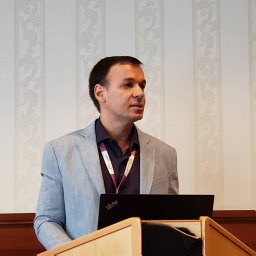 Marcelo Zanetti合作论文数6
 Norbert Mesko合作论文数University of Pécs6
 Amanda Nerini合作论文数6Caterina Grano合作论文数6Adam Kantanista合作论文数6




