Once been orbited, the technological nanosatellite TNS-0 no. 1 is supposed to be used in one of the next missions for the demonstration of orbital maneuvering capability to eliminate a secular relative motion of two satellites due to the J2 harmonic of the Earth gravitational field. It is assumed that the longitudinal axis of the satellite is stabilized along the induction vector of the geomagnetic field and a thruster engine is installed along this axis. Continuous and impulsive thruster control algorithms eliminating the secular relative motion have been developed.Special equipment was developed in ZARM for demonstration and laboratory testing of the satellite motion identification and control algorithms. The facility consists of a horizontal smooth table and mobile mock-up that enables to glide over the table surface due to compressed air stored in on-board pressure tanks. Compressed air is used to control the translation and attitude motion of the mock-up equipped with a number of pulse thrusters. In this work a dynamic model for mock-up controlled motion over the table is developed. This allows us to simulate a relative motion of a pair of TNS-0 type nanosatellites in the plane of the orbit. (c) 2010 Elsevier Ltd. All rights reserved.
International cooperation in space exploration and education can he a benefit hut also a challenge to the accomplishment of a project. The German Russian Education Satellite (GREsat) is a cooperation between the German Center of Applied Space Technology and Microgravity (ZARM), the Russian Institute of Space Device Engineering and the Keldysh Institute of Applied Mathematics (KIAM). The main objective of the program is the education of students from both universities and the technology verification of the satellite subsystems. An annual exchange of students could he established with the support of the German Academic Exchange Service (DAAD). The chapter will roughly outline the mission of GRESat and takes a deeper look onto the new technologies and concepts, that shall be demonstrated with this satellite. The cooperation of the partners also lead to a cooperation for the provision of components for the satellite bus. One of the main aspects will be a heterogeneous redundancy of the onboard data processing by using two different computers. Here the communication between the computers and the mode management are difficult topics to actress, when the cooperation of these units shall work without problems. The communication system for the command and data interface to the ground station is also planned as a redundant system, as Globalstar and ORBCOMM services shall be accessible from the satellite. That enables the test of both communication systems and provides a failure tolerant data interface. The chapter will outline what challenges the layout of the communication protocoll between both onboard computers has faced, and how the application of two independant satellite communication systems could be designed to benefit from the redundant hardware and services. Another part of the on-orbit verification will be the usage of an AMR magnetometer and new micro torquers. These devices are acting as shared resources, so both onboard computers are allowed to access them for attitude control maneuvers. While the sensor delivers its data constantly to both computers, the magnetic torquers have to be managed for an exclusive access of only one computer at the same time. A defined mode management and proper inter-computer communication shall ensure the proper function of these subsystems. Due to the mission outline as a technology verification and student education project, another mission objectives is also the test of novel attitude control algorithms by using magnetic sensors and actuators. A fallback algorithm (B-dot) is used to stabilize the spacecraft in a non conform situation. This shall guarantee a good connectivity for the command and data interface with the ground station via Globalstar and ORBCOMM. Any further mode changes and failure handling can then be prepared offline on ground and uploaded to the satellite afterwards.
A laboratory facility LuVeX consisting of a smooth horizontal table and models moving on its surface was developed at ZARM for adjustment of control algorithms for group motion of satellites. This paper describes the facility and implemented control algorithms for air-breathing pulsed jet engines mounted on moving models to provide their translational and rotational motion. The facility performance is proved by the results of numerical simulation of the control algorithm for the motion of a group of models along a given trajectory.
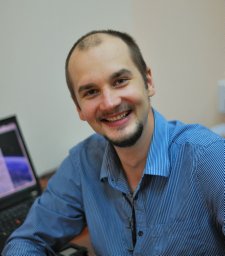 Danil Ivanov合作论文数Keldysh Institute of Applied Mathematics of RAS, Miusskaya Sq. 4, Moscow, Russia6
 Mikhail Ovchinnikov合作论文数Keldysh Institute of Applied Mathematics, Russian Academy of Sciences5
 д о нуждин合作论文数2м ю овчинников合作论文数2
 Sergey Trofimov合作论文数Keldysh Institute of Applied Mathematics2Stephan Theil合作论文数GNC Systems Department, Deutsches Zentrum für Luft- und Raumfahrt;Institute of Space Systems, Deutsches Zentrum für Luft- und Raumfahrt2M. Yu合作论文数1A.S. Selivanov合作论文数1I. E. Zaramenskikh合作论文数1O. E. Khromov合作论文数1J. Rodriguez Navarro合作论文数1N. G. Proncheva合作论文数Keldysh Institute of Applied Mathematics, Russian Academy of Sciences1
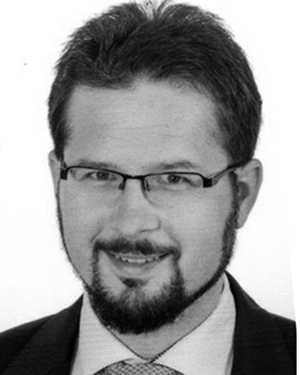 Benny Rievers合作论文数Center of Applied Space Technology and Microgravity ZARM, University of Bremen1A. Selivanov合作论文数1O. Khromov合作论文数1Georgi V. Smirnov合作论文数1




