We present a formalism for the description of oscillations in matter of solar, atmospheric and long-baseline neutrinos in the two schemes of four-neutrino mixing that are allowed by the results of all existing neutrino oscillation experiments. PACS numbers: 14.60.St Typeset using REVTEX
We apply the Lindstedt method to the one dimensional Fermi-Pasta-Ulam β lattice to find fully general solutions to the complete set of equations of motion. The perturbative scheme employed uses ϵ as the expansion parameter, where ϵ is the coefficient of the quartic coupling between nearest neighbors. We compare our nonsecular perturbative solutions to numerical solutions and find striking agreement.
Real-time thermal field theory is used to reveal the structure of plasma corrections to nuclear reactions. Previous results are recovered in a fashion that clarifies their nature and new extensions are made. Brown and Yaffe have introduced the methods of effective quantum field theory into plasma physics. They are used here to treat the interesting limiting case of dilute but very highly charged particles reacting in a dilute, one-component plasma. The highly charged particles are very strongly coupled to this background plasma. The effective field theory proves that the mean field solution plus the one-loop term dominates; higher loop corrections are negligible even though the problem involves strong coupling. Such analytic results for very strong coupling are rarely available, and they can serve as benchmarks for testing computer models.
The ion sphere model introduced long ago by Salpeter is placed in a rigorous theoretical setting. The leading corrections to this model for very highly charged but dilute ions in thermal equilibrium with a weakly coupled, one-component background plasma are explicitly computed, and the subleading corrections shown to be negligibly small. This is done using the effective field theory methods advocated by Brown and Yaffe. Thus, corrections to nuclear reaction rates that such highly charged ions may undergo can be computed precisely. Moreover, their contribution to the equation of state can also be computed with precision. Such analytic results for very strong coupling are rarely available, and they can serve as benchmarks for testing computer models in this limit.
The ion sphere model introduced long ago by Salpeter is placed in a rigorous theoretical setting. The leading corrections to this model for very highly charged but dilute ions in thermal equilibrium with a weakly coupled, one-component background plasma are explicitly computed, and the subleading corrections are shown to be negligibly small. Such analytic results for very strong coupling are rarely available, and they can serve as benchmarks for testing computer models in this limit.
The fermion mass hierarchy and finding a predictive mechanism of the flavor mixing parameters remain two of the least understood puzzles facing particle physics today. In this work, we demonstrate how the realization of the Dirac algebra in the presence of two extra spatial dimensions leads to complex fermion field profiles in the extra dimensions. Dimensionally reducing to four dimensions leads to complex quark mass matrices in such a fashion that CP violation necessarily follows. We also present the generalization of the Randall-Sundrum scenario to the case of a multi-brane, six-dimensional brane-world and discuss how multi-brane worlds may shed light on the generation index of the SM matter content.
Using the resolution of the gauge hierarchy problem recently proposed by Randall and Sundrum, we find a natural explanation for the observed fermion masses and mixings of the three Standard Model (SM) generations. Localizing massless SM matter generations on neighboring 3-branes in an extra dimensional world leads to effective four dimensional masses and mixings from the coupling of the fermions with the background metric. We find that the positions of the 3-branes required to solve the gauge hierachy problem simultaneously reproduces phenomenologically acceptable fermion masses and mixings.
The evidence in favor of neutrino oscillations implies the existence of at least three independent neutrino mass-squared differences. If the Liquid Scintillation Neutrino Detector (LSND) results are confirmed, transitions into active and sterile neutrinos can take place simultaneously for both solar and atmospheric neutrinos. In this paper we present a formalism for the calculation of the transition probabilities into active and sterile neutrinos for solar nu(e)'s and atmospheric nu(mu)'s, taking into account the matter effects in the Sun and in the Earth. We find that the solar neutrino transition probabilities depend on just one single additional parameter compared to that of the standard two-generation analysis, while for atmospheric neutrinos two additional mixing angles are necessary to analyze the data in addition to those of the usual two-generation analysis.
There are many low-energy models of supersymmetry breaking parameters which are motivated by theoretical and experimental considerations. Here, we discuss some of the lesser-known theories of low-energy supersymmetry, and outline their phenomenological consequences. In some cases, these theories have more gauge symmetry or particle content than the Minimal Supersymmetric Standard Model. In other cases, the parameters of the Lagrangian are unusual compared to commonly accepted norms (e.g., Wino LSP, heavy gluino LSP, light gluino, etc.). The phenomenology of supersymmetry varies greatly between the different models. Correspondingly, particular aspects of the detectors assume greater or lesser importance. Detection of supersymmetry and the determination of all parameters may well depend upon having the widest possible view of supersymmetry phenomenology.
We present lower bounds on the Higgs boson mass in the Standard Model with three and four fermion generations, SM (3,4), as well as upper bounds on the lightest Higgs boson mass in the minimal supersymmetric extension of the SM with three and four generations, MSSM (3,4). Our analysis utilizes the SM (3,4) renormalization-group-improved one-loop effective potential of the Higgs boson to find the upper bounds on the Higgs mass in the MSSM (3,4), while the lower bounds in the SM (3,4) are derived from considerations of vacuum stability. All the bounds increase as the degenerate fourth generation mass increases, providing more room in theory space that respects the increasing experimental lower limit of the Higgs mass.
In light of recent experimental results, we present updated bounds on the lightest Higgs boson mass in the Standard Model (SM) and in the Minimal Supersymmetric extension of the Standard Model (MSSM). The vacuum stability lower bound on the SM Higgs boson mass lies above the MSSM lightest Higgs boson mass upper bound for a large amount of SUSY parameter space. We postulate a fourth generation of fermions to see how the area of inconsistency changes, and discover that the MSSM is salvagable if a fourth generation is added to the MSSM (MSSM4).
We perform an analysis of general quark mass matrices in the general nearest neighbor interaction form. Excellent agreement with experiment is realized with this general texture, which is neither hermitian nor real-symmetric. We then propose a new class of quark mass matrices that contain no additional parameters other than the quark masses themselves, and thus possess calculability, i.e., ensure a relationship between the six quark masses and four flavor-mixing parameters of the Standard Model.
 Kyungsik Kang合作论文数7Lowell S. Brown合作论文数Los Alamos National Laboratory3Dean L. Preston合作论文数Los Alamos National Laboratory3Shuaiyan Kang合作论文数1C. W. Kim合作论文数1Je Hammerberg合作论文数1
 Andrea Castro合作论文数INFN Sezione di Bologna;Dipartimento di Fisica, Universita' di Bologna1
 James Wells合作论文数Department of Physics, College of Literature, Science, and the Arts, University of Michigan1
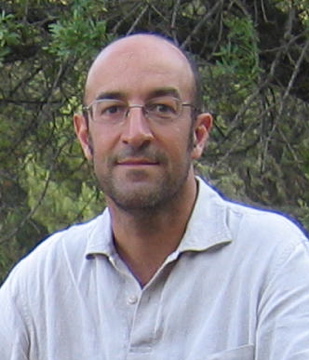 Riccardo Rattazzi合作论文数Theoretical Particle Physics Laboratory, Ecole Polytechnique Federale de Lausanne1
 Tilman Plehn合作论文数Institut fur Theoretische Physik, Fakultat fur Physik und Astronomie, Universitat Heidelberg1
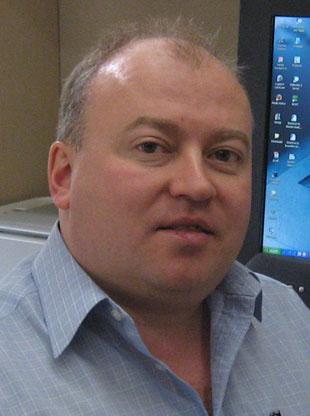 Greg Landsberg合作论文数Department of Physics, Brown University1
 Carlo Giunti合作论文数Istituto Nazionale di Fisica Nucleare1Kang Kyung-Sun合作论文数1
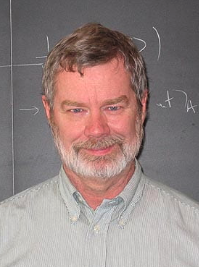 Paul Langacker合作论文数Institute for Advanced Study;University of Pennsylvania1
 Ferruccio Feruglio合作论文数Dipartimento di Fisica e Astronomia “Galileo Galilei”, Universita degli Studi di Padova1
 Louis Clavelli合作论文数1Thomas G. Rizzo合作论文数1
 Maxwell Chertok合作论文数Department of Physics and Astronomy, University of California, Davis1
 Howard Baer合作论文数Department of Physics University of Oklahoma1
 Bhaskar Dutta合作论文数Mitchell Institute for Fundamental Physics and Astronomy, Department of Physics and Astronomy, Texas A&M University1Sandro Ambrosanio合作论文数1
 Mirjam Cvetic合作论文数Department of Physics and Astronomy, School of Arts & Sciences, University of Pennsylvania1
 Fabio Zwirner合作论文数Dipartimento di Fisica e Astronomia G.Galilei, Università degli Studi di Padova1
 Kingman Cheung (張敬民)合作论文数Department of Physics, National Tsing Hua University1
 Lisa L Everett合作论文数Department of Physics, University of Wisconsin-Madison1
 Mu-Chun Chen合作论文数Department of Physics and Astronomy, University of California, Irvine;School of Physical Sciences, University of California, Irvine1Daniel J Muller合作论文数1
 Joanne Hewett合作论文数SLAC National Accelerator Laboratory, Stanford University1Andrea Brignole合作论文数1
 John F. Gunion合作论文数Department of Physics and Astronomy, University of California, Davis1
 Matthew McCullough合作论文数Department of Theoretical Physics, CERN1J. W. Wang合作论文数1
 Ulrich Ellwanger合作论文数Laboratoire de Physique Theorique d’Orsay, CNRS1
 Herbi Dreiner合作论文数Theory Department, University of Bonn;Physics Institute, University of Bonn;Faculty of Mathematics and Natural Sciences, University of Bonn1




