This paper presents the forecasted travel impacts according to a congestion charging scheme if launched in Bangkok. The results show the consequences at different levels of charging values. We implement a transportation network equilibrium model for urban road and rail networks with a road congestion charge to calculate the optimal zonal congestion charge for the city. A congestion charge is sought to maximise the surplus comprising all commuters and government benefits. The model estimates the travel with the times by mode at the level of detail used by transportation planning organizations. The car traffic assignment model of the road and expressway network is solved. The transit assignment model is solved with fixed routes with fixed headways and unknown departure times. The transit route choice model adopts a frequency-based assignment with a route-finding algorithm using the network constructed especially for this study. The transit problem is formulated as an optimization problem using an optimal strategy called the common-line problem. Travellers are assumed to conform to an elastic-demand user equilibrium traffic assignment, corresponding to the data. This paper analyzes the scale of the decrease in the car usage and switching proportions to the other travel modes compared to one in the absence of a congestion charge. It is found that the charge yielding the maximum government revenue is roughly 3.6 times the charge yielding the largest social surplus for the given input conditions.
Forecasts of personal travel support significant planning decisions concerning transportation infrastructure investment and travel demand management policies, as well as major land use changes. This paper reviews the fundamental methodologies that have been developed for urban travel forecasting practice since 1950s. We first describe the conventional four-step sequential procedure with feedback loops, but focus on the mathematical formulations of user equilibrium traffic assignment. We then show how the equilibrium concept and its formulation lead to combined models that internalize the interactions represented by feedback loops in the four-step model. We conclude this paper with remarks on directions for future research in this field.
Regional science owes its existence to the efforts of one individual: American economist Walter Isard. Highly critical of economists for failing to handle space, Isard’s solution was a new, interdisciplinary field, drawing from other social sciences and emphasizing rigorous analysis of cities and regions. He was remarkably successful in promoting regional science and was its most prolific author. Isard established the Regional Science Association (RSA), initiated several journals, and founded the first regional science department, at the University of Pennsylvania. Extremely ambitious in his scholarship, he combined academic prowess with rare talent for organization. In this chapter, David Boyce reviews the contributions of the Founding Father in launching the academic field, establishing its institutions, and diffusing its scholarship through forming sections of the RSA, worldwide.
Free AccessAboutSectionsView PDF ToolsAdd to favoritesDownload CitationsTrack CitationsPermissionsReprints ShareShare onFacebookTwitterLinked InEmail Go to SectionFree Access HomeTransportation ScienceVol. 53, No. 6 In Memoriam: Martin Beckmann (1924–2017)David Boyce , Anna NagurneyDavid Boyce , Anna NagurneyPublished Online:31 Oct 2019https://doi.org/10.1287/trsc.2019.0942More than 60 years since the publication of the classic book Studies in the Economics of Transportation by Beckmann, McGuire, and Winsten (1956), we now mourn the death of Martin Beckmann on April 11, 2017, in Providence, Rhode Island. That his seminal contributions to transportation science and location theory have continued to stimulate our field for well over half a century speaks to the achievement of this book as well as his other books and scientific papers.The first version of Studies was a 1954 report to the Rand Corporation, which had sponsored the research. That report was much later declared to be a Rand Classic and can be downloaded at no charge (https://www.rand.org/pubs/research_memoranda/RM1488.html). Beckmann (1967) did write a short paper for Traffic Quarterly, the only transportation journal then published in the United States. More than 10 years later, however, transportation network equilibrium was the subject of four doctoral dissertations, 1968–1974: Stella Dafermos, Suzanne Evans, Larry LeBlanc, and Sang Nguyen. At an international symposium in 1974 organized by Michael Florian (1976), the research initiated at the Cowles Commission became better recognized.This story really begins at the Cowles Commission for Research in Economics in 1951, which was then based at the University of Chicago. Under the directorship of Tjalling C. Koopmans, who received the Nobel Memorial Prize in Economic Sciences in 1975, Martin Beckmann, Bartlett McGuire, and Christopher Winsten initiated research that led to Part I of Studies in the Economics of Transportation; see also Boyce and Nagurney (2006). They succeeded in formulating and extensively analyzing a nonlinear optimization problem whose optimality conditions correspond to the statement, Demand refers to trips and capacity refers to flows on roads. The connecting link is found in the distribution of trips over the network according to the principle that traffic follows shortest routes in terms of average cost. The idea of equilibrium in a congested network can then be described as follows: … the existing traffic conditions are such to call forth the demand that will sustain the flows that create these conditions. (Cowles 1954, pp. 12, 13, and 26; Beckmann, McGuire, and Winsten 1956, p. 59)This was an enormous advance in the modeling of road network traffic, completely novel for urban traffic and likely for any complex system involving interactions of human behavior with technology.Beckmann, McGuire, and Winsten were the first to provide a rigorous mathematical formulation of the conditions described by the first criterion of Wardrop (1952) (as was also stated in their concurrent research) that allowed for the ultimate solution of the traffic network equilibrium problem in the context of certain increasing link cost functions of flows on the links. They demonstrated that the optimality conditions in the form of Kuhn–Tucker conditions of an appropriately constructed optimization problem coincided with Wardrop’s first criterion. Hence, no traveler acting unilaterally has an incentive to alter the traveler’s route (assuming rational cost (time)-minimizing behavior) because the traveler’s travel cost (time) is minimal. (In an interview with Boyce in 1999, McGuire (1999) stated that this formulation was provided by Beckmann.)They also proposed “efficiency tolls,” such that, by “charging everyone a toll equal to his contribution to the total cost of others, road users can be induced to make an efficient use of the available capacity,” and considered how tolls could be constructed in the case of a simple network (cf. Beckmann et al. 1956, p. 94). Congestion pricing through tolls (now also called system optimum model) continues today as an area of active research; see Richards (2006), for example, about congestion charging in London. A thorough analysis of the contribution of Part I of their book was given by Boyce, Mahmassani, and Nagurney (2005).Martin Beckmann also pursued related research topics while at the University of Chicago during 1950–1954 as analyzed by Boyce (2014). Beckmann formulated the continuous model of transportation, which has now been made operational by scholars in Hong Kong, and studied assignment problems and the location of economic activities with T. C. Koopmans. Extensive references to these works were given by Boyce.Martin Beckmann was born on July 5, 1924, in Ratingen in the county of Düsseldorf, Germany. His youth was marred by war, when he was drafted into the German army. After 1945, Martin studied mathematics and economics at the University of Goettigen, 1945–1947, receiving a BA in mathematics, and then studied economics at the University of Freiburg, 1947–1950. He completed his Doctor rerum politicarum, summa cum laude, in 1950. He did postdoctoral research at the University of Chicago and then took an assistant professorship at Yale University, 1955–1959. He then held simultaneous professorships in economics at Brown University, 1959–1989, and at the University of Bonn, Germany, 1962–1969, and then in applied mathematics at the Technical University, Munich, 1969–1989. He authored or coauthored 14 books, edited 10 books, and authored more than 220 articles by 1992.Martin became an acclaimed and beloved scholar, who won numerous awards and honorary degrees for his groundbreaking research. He was awarded the first Robert Herman Lifetime Achievement Award in Transportation Science by the Transportation Science Section of the Operations Research Society of America (now INFORMS) in 1994. He received the first Founder’s Medal of the Regional Science Association in 1983, following its creation in honor of Walter Isard in 1978. He received honorary doctorates from the University of Karlsruhe, 1981; the University of Umea, 1981; and the Bundeswehr Hochschule Hamburg, 1984.In 2005, two special sessions of INFORMS were held at its annual meeting to honor the coauthors of Studies. Martin and Bart McGuire were able to attend; Chris Winsten had died one year earlier. David Boyce and Anna Nagurney organized these sessions. A highlight of these sessions was the presentation of a citation by Philip Haile (2005), director of the Cowles Foundation for Research in Economics, on the 50th anniversary of the publication of Studies.Martin had served on Anna’s PhD dissertation committee at Brown University in 1983. His final question was, “When do we get to eat the nice food that Anna brought for us!” Anna has published many papers and books related to Martin’s research. David met Martin in 1968 at the Budapest Congress of the Regional Science Association. Although he was aware of Martin’s contributions, he did not understand thoroughly the meaning of Studies until 1983. In 2013, he wrote a short article explaining the optimization result (Boyce 2013) as well as extending his results in papers and a book.As Boyce (1994, p. 179) stated in the citation for the Herman Award, I think of the encouragement Martin provided to each of us by listening carefully and commenting on our papers; by offering his support and friendship to younger colleagues; by showing us how to enjoy excellent food, fine music and art, and the companionship of others, while always maintaining his excitement, enthusiasm and love for our science.ReferencesBeckmann MJ (1967) On the theory of traffic flow in networks. Traffic Quart. 21(1):109–117.Google ScholarBeckmann M, McGuire CB, Winsten CB (1956) Studies in the Economics of Transportation (Yale University Press, New Haven, CT).Google ScholarBoyce DE (1994) Martin J. Beckmann, Robert Herman Lifetime Achievement Award in Transportation Science: Award citation. Transportation Sci. 28(3):177–179.Link, Google ScholarBoyce DE (2013) Beckmann’s transportation network equilibrium model: Its history and relationship to the Kuhn-Tucker conditions. Econom. Transportation 2(1):47–52.Crossref, Google ScholarBoyce DE (2014) Martin Beckmann in the 1950s: Contributions to regional science. Funck R, Rothengatter W, eds. Man, Environment, Space and Time – Economic Interactions in Four Dimensions (Nomos, Baden-Baden, Germany), 15–35.Google ScholarBoyce DE, Nagurney A (2006) In Memoriam: C. Bartlett McGuire (1925–2006) and Christopher B. Winsten (1923–2005). Transportation Sci. 40(1):1–2.Link, Google ScholarBoyce DE, Mahmassani HS, Nagurney A (2005) A retrospective on Beckmann, McGuire, and Winsten’s Studies in the Economics of Transportation. Papers Regional Sci. 84(1):85–103.Crossref, Google ScholarCowles (1954) Cowles Commission for Research in Economics 1952–1954. Report for Period July 1, 1952–June 30, 1954. Accessed October 2, 2019, http://search.library.yale.edu/catalog/2551325.Google ScholarFlorian MA (1976) Traffic Equilibrium Methods, Proceedings, Lecture Notes in Economics and Mathematical Systems (Springer, Berlin).Crossref, Google ScholarHaile PA (2005) Citation on the 50th anniversary of the publication of studies in the economics of transportation. Report, Cowles Foundation for Economic Research, New Haven, CT.Google ScholarMcGuire CB (1999) Interviewed by David Boyce on March 11, Faculty Club, University of California, Berkeley, Berkeley.Google ScholarRichards MG (2006) Congestion Charging in London (Palgrove Macmillan, Basingstroke, Hampshire, UK).Crossref, Google ScholarWardrop JG (1952) Some theoretical aspects of road traffic research. Proc. Institution Civil Engineers: Part II 1(2):325–378.Crossref, Google Scholar Previous Back to Top FiguresReferencesRelatedInformation Volume 53, Issue 6November-December 2019Pages 1501-1799 Article Information Metrics Downloaded 645 times in the past 12 months Information Published Online:October 31, 2019 Copyright © 2019, INFORMSCite asDavid Boyce, Anna Nagurney (2019) In Memoriam: Martin Beckmann (1924–2017). Transportation Science 53(6):1798-1799. https://doi.org/10.1287/trsc.2019.0942
This chapter summarizes a new generation of dynamic network equilibrium models, incorporating dynamic travel choice problems including motorists' departure/arrival time choice and route choice. It presents a dynamic, user-optimal departure time and route choice model for a general network. Dynamic network models can be formulated based on either actual or instantaneous travel times. Route-time-based VI models have an intuitive interpretation. However, their solution requires explicit route enumeration, a computationally intractable problem for realistic networks. A general probit-type variational inequality model was formulated by assuming a general distribution of route choice dispersion. Stochastic dynamic route choice models depict route choice problems of motorists who do not have perfect information and must use their own experience and perception of traffic conditions to make travel decisions. Mode dynamic network models are formulated using the optimization approach through either optimal control or nonlinear programming methods.
Forecasting Urban Travel presents in a non-mathematical way the evolution of methods, models and theories underpinning travel forecasts and policy analysis, from the early urban transportation studies of the 1950s to current applications throughout the urbanized world. From original documents, correspondence and interviews, especially from the United States and the United Kingdom, the authors seek to capture the spirit and problems faced in different eras, as changing information requirements, computing technology and planning objectives conditioned the nature of forecasts.
The aim of this book is to describe the major developments in urban travel forecasting models and methods of analysis that were established in the United States and Canada in the 1950s to current applications throughout the world. The chapters in the book include: Emergence of the Traditional Approach; Early Developments in the United Kingdom; Travel Forecasting Based on Discrete Choice Models I; Travel Forecasting Based on Discrete Choice Models II; Activity-based Travel Analysis and Forecasting; Transportation Network Equilibrium; Tradition and Innovation in United States Practice; Tradition and Innovation in United Kingdom Practice; Computing Environment and Travel Forecasting Software; and Achievements, Current Practices and Future Prospects.
A combined travel model incorporating spatial correlation is derived from the optimality conditions of a multi-objective optimization framework, in which the trip generation and distribution steps are expressed as hierarchical logit functions. Different forms of spatial correlation are shown to be easily accommodated in combined models using hierarchical logit structures. An extension incorporates spatial correlation into combined models enabling analyses of the impacts of urban development policies on transportation systems as well as the effects of transportation projects on trip generation. A principal finding is that integration of spatial correlation into travel models significantly improves their explanatory power and forecasting abilities; indeed, its exclusion may lead to biased parameter estimates.
The standard method for predicting traffic flows on urban road networks, static user-equilibrium traffic assignment, is based on the principle that all used routes have equal costs and no unused route has a lower cost for every origin-destination pair. Although the total flows on links of the urban road network are uniquely determined by this principle, multi-class link flows are not. An additional assumption, the condition of proportionality, may be imposed to determine these flows uniquely. This condition was the basis for adding a post-processing adjustment to the software system, Visum. Analyses of class link flows from Visum assignments of cars and trucks to the Chicago regional network, with and without the condition of proportionality, are presented. Differences in class link flows are analyzed in relation to link attributes. The findings offer insights into the role of proportionality in multi-class road traffic assignments at the link level.
During 1952–54, Martin Beckmann, and his colleagues, formulated a nonlinear programming problem corresponding to behavioral assumptions from the viewpoint of an individual traveler concerning travel demand and cost-minimizing route choice over a congested road network. Their formulation was based on the conditions for a constrained maximum, recently derived by Kuhn and Tucker. This formulation was evidently the first time that economists used the Kuhn–Tucker conditions to formulate a new problem in economics, one of substantial practical importance and consequence, and quite possibly the first to use these conditions to formulate a new, large-scale problem in all fields of engineering. In this paper, an overview of the research leading to the formulation is offered. Then, the derivation presented in their monograph is described and explored in more detail. Finally, the impacts of this model on the field of transportation economics and the associated fields of transportation engineering and regional science are examined.
The standard formulation of the static deterministic user equilibrium (UE) traffic assignment problem based on the criterion of Wardrop provides a unique solution in terms of link flows; however, route flows are not determined uniquely. Analyses based on an arbitrary choice among the infinite number of possible route flow solutions could cause inconsistencies or even controversies in applications. In 2010, a computationally efficient algorithm named Traffic Assignment by Paired Alternative Segments (TAPAS) was successfully implemented to identify UE route flows uniquely. To date, no study has examined to what extent solutions adhere to the condition of proportionality in UE traffic assignments with uniquely determined route flows. In this paper, TAPAS is applied to obtain proportional UE route flows for the Chicago, Illinois, regional network in three highly precise solutions. Various assessments of adherence to proportionality are performed for a selected pair of alternative segments. The results show that route and link flows determined by TAPAS correspond closely to expected proportionality. Only inconsequential differences are found between the expected and computed proportional UE route flows. Systematic characteristics of the plots for the two segments ensure that TAPAS behaves properly according to the condition of proportionality. Insights from these empirical results may help transportation planning professionals to become aware of the magnitude of differences in UE route flows based on proportionality and in distinguishing uniqueness from nonuniqueness of route flows in UE traffic assignments. The results may also be useful to software developers in seeking improved adherence to proportionality of route flow solutions.
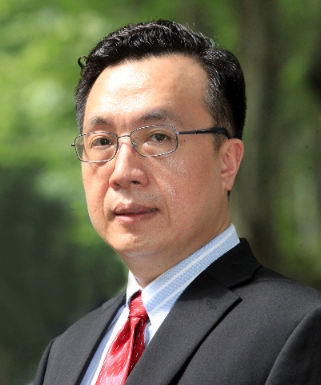 Bin Ran (冉斌)合作论文数38
 Hillel Bar Gera合作论文数Department of Industrial Engineering & Management, Faculty of Engineering Sciences, Ben-Gurion University of the Nege20
 r w eash合作论文数12
 Larry J. LeBlanc合作论文数Department of Operations Management, Owen Graduate School of Management, Vanderbilt University12
 Bruce Janson合作论文数12RC CLELLAND合作论文数8Huw C W L Williams合作论文数8
 Nagui M. Rouphail合作论文数Department of Civil, Construction, and Environmental Engineering, North Carolina State University8
 Yufang Zhang (张玉芳)合作论文数7
 Michelle R. Hribar合作论文数Pacific University in Forest Grove7Rj Hickey合作论文数6richard j hickey合作论文数6
 Valerie E. Taylor合作论文数Electrical and Computer Engineering Department, Northwestern University;Argonne National Laboratory6
 Ralph Weischedel合作论文数Information Sciences Institute, University of Southern California6K. S. Chon合作论文数6Maya Tatineni合作论文数6
 Marco Nie合作论文数Department of Civil and Environmental Engineering, McCormick School of Engineering, Northwestern University;Northwestern University Transportation Center6richard c clelland合作论文数5E B Harner合作论文数5Bn Janson合作论文数5
 Joseph L. Schofer合作论文数Transportation Center, Weinberg College of Arts and Sciences, Northwestern University5Yucong Hu (胡郁葱)合作论文数School of Civil Engineering & Transportation, South China University of Technology5A. Farhi合作论文数5c meneguzzer合作论文数4
 Der-Horng Lee (李德纮)合作论文数International Campus, Zhejiang University;Zhejiang University - University of Illinois Urbana Champaign Institute4y j lee合作论文数4
 Tschangho John Kim合作论文数Department of Urban;Department of Civil and Environmental Engineering;University of Illinois at Urbana-Champaign;Department of Civil and Environmental Engineering, University of Illinois at Urbana-Champaign4Heejoo Ham合作论文数4
 Mary Lupa合作论文数4Cs Fisk合作论文数3A. Kirson合作论文数3Evelyn J. Bowers合作论文数3Eb Harner合作论文数3aroon aungsuyanon合作论文数3
 Omar Ben-Ayed合作论文数Coll Business & Econ, Qatar Univ3
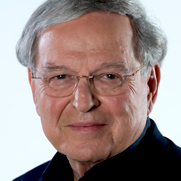 Michael Florian合作论文数Department of Computer Science and Operations Research, Universite de Montreal;Transportation Research Center, University of Montreal3
 Anna Nagurney合作论文数Department of Operations and Information Management, Isenberg School of Management, University of Massachusetts Amherst3
 Geoffrey Hewings合作论文数Department of Economics, College of Liberal Arts and Sciences, University of Illinois at Urbana-Champaign3Stanislaw Berka合作论文数3Kuanting Lin合作论文数3Isabelle Constantin合作论文数3Yanling Xiang合作论文数2
 Tung Nguyen Khanh合作论文数Can Tho University2Yang Liu合作论文数2
 Jun Xie (谢军)合作论文数School of Transportation and Logistics, Southwest Jiaotong University2Kirson, A.合作论文数2
 Michael Romanos合作论文数2
 Athanasios Thanasis Ziliaskopoulos合作论文数Department of Mechanical Engineering, University of Thessaly2
 Huey-Kuo Chen合作论文数2




