Study Objectives Evaluate wrist-placed accelerometry predicted heartrate compared to electrocardiogram (ECG) heartrate in children during sleep.Methods Children (n = 82, 61% male, 43.9% black) wore a wrist-placed Apple Watch Series 7 (AWS7) and ActiGraph GT9X during a polysomnogram. Three-Axis accelerometry data was extracted from AWS7 and the GT9X. Accelerometry heartrate estimates were derived from jerk (the rate of acceleration change), computed using the peak magnitude frequency in short time Fourier Transforms of Hilbert transformed jerk computed from acceleration magnitude. Heartrates from ECG traces were estimated from R-R intervals using R-pulse detection. Lin's concordance correlation coefficient (CCC), mean absolute error (MAE), and mean absolute percent error (MAPE) assessed agreement with ECG estimated heart rate. Secondary analyses explored agreement by polysomnography sleep stage and a signal quality metric.Results The developed scripts are available on Github. For the GT9X, CCC was poor at -0.11 and MAE and MAPE were high at 16.8 (SD = 14.2) beats/minute and 20.4% (SD = 18.5%). For AWS7, CCC was moderate at 0.61 while MAE and MAPE were lower at 6.4 (SD = 9.9) beats/minute and 7.3% (SD = 10.3%). Accelerometry estimated heartrate for AWS7 was more closely related to ECG heartrate during N2, N3 and REM sleep than lights on, wake, and N1 and when signal quality was high. These patterns were not evident for the GT9X.Conclusions Raw accelerometry data extracted from AWS7, but not the GT9X, can be used to estimate heartrate in children while they sleep. Future work is needed to explore the sources (i.e. hardware, software, etc.) of the GT9X's poor performance.
The purpose of this study was to evaluate the reliability and validity of the raw accelerometry output from research-grade and consumer wearable devices compared to accelerations produced by a mechanical shaker table. Raw accelerometry data from a total of 40 devices (i.e., n = 10 ActiGraph wGT3X-BT, n = 10 Apple Watch Series 7, n = 10 Garmin Vivoactive 4S, and n = 10 Fitbit Sense) were compared to reference accelerations produced by an orbital shaker table at speeds ranging from 0.6 Hz (4.4 milligravity-mg) to 3.2 Hz (124.7mg). Two-way random effects absolute intraclass correlation coefficients (ICC) tested inter-device reliability. Pearson product moment, Lin’s concordance correlation coefficient (CCC), absolute error, mean bias, and equivalence testing were calculated to assess the validity between the raw estimates from the devices and the reference metric. Estimates from Apple, ActiGraph, Garmin, and Fitbit were reliable, with ICCs = 0.99, 0.97, 0.88, and 0.88, respectively. Estimates from ActiGraph, Apple, and Fitbit devices exhibited excellent concordance with the reference CCCs = 0.88, 0.83, and 0.85, respectively, while estimates from Garmin exhibited moderate concordance CCC = 0.59 based on the mean aggregation method. ActiGraph, Apple, and Fitbit produced similar absolute errors = 16.9mg, 21.6mg, and 22.0mg, respectively, while Garmin produced higher absolute error = 32.5mg compared to the reference. ActiGraph produced the lowest mean bias 0.0mg (95%CI = -40.0, 41.0). Equivalence testing revealed raw accelerometry data from all devices were not statistically significantly within the equivalence bounds of the shaker speed. Findings from this study provide evidence that raw accelerometry data from Apple, Garmin, and Fitbit devices can be used to reliably estimate movement; however, no estimates were statistically significantly equivalent to the reference. Future studies could explore device-agnostic and harmonization methods for estimating physical activity using the raw accelerometry signals from the consumer wearables studied herein.
Goal and aims: Evaluate the performance of a sleep scoring algorithm applied to raw accelerometry data collected from research-grade and consumer wearable actigraphy devices against polysomnography. Focus method/technology: Automatic sleep/wake classification using the Sadeh algorithm applied to raw accelerometry data from ActiGraph GT9X Link, Apple Watch Series 7, and Garmin Vivoactive 4.Reference method/technology: Standard manual PSG sleep scoring.Sample: Fifty children with disrupted sleep (M = 8.5 years, range = 5-12 years, 42% Black, 64% male).Design: Participants underwent to single night lab polysomnography while wearing ActiGraph, Apple, and Garmin devices.Core analytics: Discrepancy and epoch-by-epoch analyses for sleep/wake classification (devices vs. polysomnography).Additional analytics and exploratory analyses: Equivalence testing for sleep/wake classification (research grade actigraphy vs. commercial devices).Core outcomes: Compared to polysomnography, accuracy, sensitivity, and specificity were 85.5, 87.4, and 76.8, respectively, for Actigraph; 83.7, 85.2, and 75.8, respectively, for Garmin; and 84.6, 86.2, and 77.2, respectively, for Apple. The magnitude and trend of bias for total sleep time, sleep efficiency, sleep onset latency, and wake after sleep were similar between the research and consumer wearable devices.Important additional outcomes: Equivalence testing indicated that total sleep time and sleep efficiency estimates from the research and consumer wearable devices were statistically significantly equivalent.Core conclusion: This study demonstrates that raw acceleration data from consumer wearable devices has the potential to be harnessed to predict sleep in children. While further work is needed, this strategy could overcome current limitations related to proprietary algorithms for predicting sleep in consumer wearable devices.& COPY; 2023 National Sleep Foundation. Published by Elsevier Inc. All rights reserved. All rights reserved.
To compare sleep parameters produced by the Fitbit Charge 3 (Fitbit) and Actigraph GT9X accelerometer (Actigraph) to polysomnography in children and adolescents. Participants (n = 56, ages 9.2 ± 3.3 years) wore a Fitbit and an Actigraph on their nondominant wrist concurrently with polysomnography during an overnight observation at a children’s sleep laboratory. Total sleep time, sleep efficiency, wake after sleep onset, sleep onset, and sleep offset were extracted from the Fitabase and Actilife software packages, respectively, with the Sadeh algorithm. Bland-Altman plots were used to assess the agreement between wearable devices and polysomnography. Seventy-nine percent of participants were diagnosed with OSA. Compared with polysomnography, the Fitbit and the Actigraph underestimated total sleep time by 6.1 minutes (absolute mean bias [AMB] = 27.7 minutes) and 31.5 minutes (AMB = 38.2 minutes), respectively. The Fitbit overestimated sleep efficiency by 3.0
 Sarah Burkart合作论文数Dept Exercise Sci, Univ South Carolina5
 Bridget Armstrong合作论文数Arnold Sch Publ Hlth, Univ South Carolina5
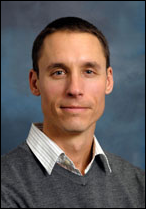 Michael W Beets合作论文数Department of Exercise Science, Arnold School of Public Health, University of South Carolina5
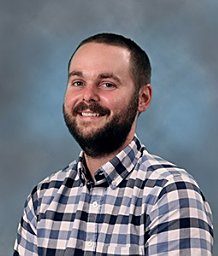 Robert Glenn Weaver合作论文数Department of Exercise Science.5
 Olivia Finnegan合作论文数Arnold School of Public Health, University of South Carolina4
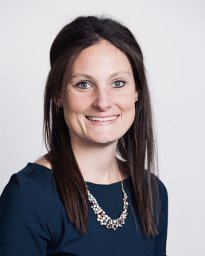 Elizabeth L Adams合作论文数Sch Publ Hlth, Univ South Carolina4
 Rahul Ghosal合作论文数Department of Biostatistics, Johns Hopkins Bloomberg School of Public Health4
 Massimiliano de Zambotti 合作论文数SRI International4
 Yuan Wang合作论文数Xi an Jiaotong Univ, Xi an Jiaotong Univ4
 Gregory John Welk合作论文数Department of Kinesiology, College of Human Sciences, Iowa State University4
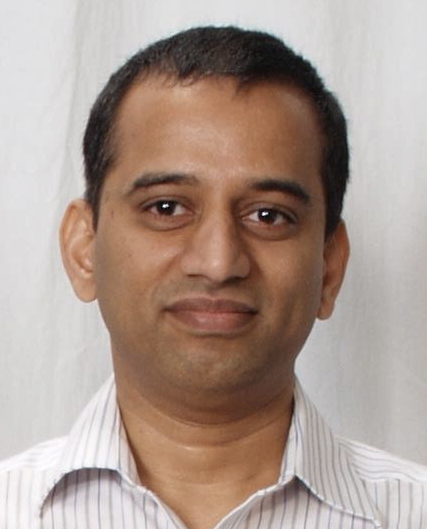 Srihari Nelakuditi合作论文数Computer Science and Engineering Department, Molinaroli College of Engineering and Computing, University of South Carolina4
 Russell R. Pate合作论文数Department of Exercise Science, Arnold School of Public Health, University of South Carolina;Public Health Research Center, University of South Carolina4
 Lauren von Klinggraeff合作论文数Dept Exercise Sci, Univ South Carolina3James White合作论文数3Roddrick Dugger合作论文数2
 Hannah Parker合作论文数Univ South Carolina2
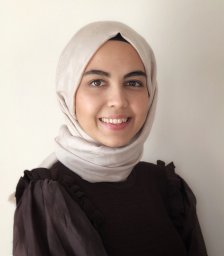 Aliye B Cepni合作论文数2Xuanxuan Zhu合作论文数2
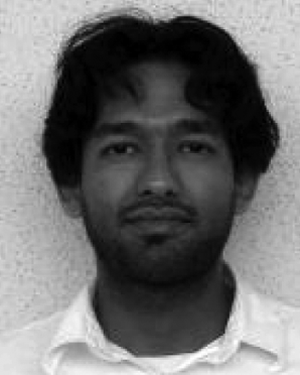 M. V. S. Chandrashekhar合作论文数School of Electrical and Computer Engineering;Cornell University;School of Electrical and Computer Engineering, Cornell University2Nick Tindall合作论文数1Christopher D Pfledderer合作论文数1Meghan Bastyr合作论文数1
 Alexis Jones合作论文数Department of Exercise Science, University of South Carolina1
 Layton Reesor-Oyer合作论文数Arnold School of Public Health, University of South Carolina1
 Hongpeng Yang合作论文数1
 Ethan Hunt合作论文数Arnold Sch Publ Hlth, Univ South Carolina1Zifei Zhong合作论文数Department of Computer Science and Engineering, University of South Carolina1




