We consider the problem of building non-invertible quantum symmetries (as characterized by actions of unitary fusion categories) on noncommutative tori. We introduce a general method to construct actions of fusion categories on inductive limit C*-algberas using finite dimenionsal data, and then apply it to obtain AT-actions of arbitrary Haagerup-Izumi categories on noncommutative 2-tori, of the even part of the $E_{8}$ subfactor on a noncommutative 3-torus, and of $\text{PSU}(2)_{15}$ on a noncommutative 4-torus.
We propose a framework for fusion category symmetry on the (1+1)D lattice in the thermodynamic limit by giving a formal interpretation of SymTFT decompositions. Our approach is based on axiomatizing physical boundary subalgebra of quasi-local observables, and applying ideas from algebraic quantum field theory to derive the expected categorical structures. We show that given a physical boundary subalgebra B of a quasi-local algebra A, there is a canonical fusion category 𝒞 that acts on A by bimodules and whose fusion ring acts by locality preserving quantum channels on the quasi-local algebra such that B is recovered as the invariant operators. We show that a fusion category can be realized as symmetries of a tensor product spin chain if and only if all of its objects have integer dimensions, and that it admits an on-site action on a tensor product spin chain if and only if it admits a fiber functor. We give a formal definition of a topological symmetric state, and prove a Lieb-Schultz-Mattis type theorem. Using this, we show that for any fusion category 𝒞 with no fiber functor there always exists gapless pure symmetric states on an anyon chain. Finally, we apply our framework to show that any state covariant under an anomalous Kramers-Wannier type duality must be gapless.
This paper surveys the long-standing connections and impact be-tween Vaughan Jones's theory of subfactors and various topics in mathematical physics, namely statistical mechanics, quantum field theory, quantum informa-tion, and two-dimensional conformal field theory.
This paper is part of a sequence interpreting quantities of conformal field theories K-theoretically. Here we give geometric constructions of the associated module categories (modular invariants, nimreps, etc). In particular, we give a KK-theory interpretation of all modular invariants for the loop groups of tori, as well as most known modular invariants of loop groups. In addition, we find unexpectedly that the Tambara-Yamagami fusion category has an elegant description as bundles over a groupoid, and use that to interpret its module categories as KK-elements. We establish reconstruction for the doubles of all Tambara-Yamagami categories, generalizing work of Bischoff to even-order groups. We conclude by relating the modular group representations coming from finite groups and loop groups to the Chern character and to the Fourier-Mukai transform
Motivated by the Freed-Hopkins-Teleman theorem we study equivariant higher twists of $K$-theory for the groups $G = SU(n)$ induced by exponential functors. We compute the rationalisation of these groups for all $n$ and all non-trivial functors $F$ using the Mayer-Vietoris spectral sequence. Similar to the classical case only the $K$-theory in degree $\dim(G)$ is non-trivial and the non-vanishing group is a quotient of a localisation of the representation ring $R(G) \otimes \mathbb{Q}$ by a higher fusion ideal $J_{F,\mathbb{Q}}$. We give generators for this ideal and prove that these can be obtained as derivatives of a potential.
We prove that each exponential functor on the category of finite-dimensional complex inner product spaces and isomorphisms gives rise to an equivariant higher (that is, non-classical) twist of K$K$-theory over G=SU(n)$G=SU(n)$. This twist is represented by a Fell bundle E -> G$\mathcal {E}\rightarrow \mathcal {G}$, which reduces to the basic gerbe for the top exterior power functor. The groupoid G$\mathcal {G}$ comes equipped with a G$G$-action and an augmentation map G -> G$\mathcal {G}\rightarrow G$, that is an equivariant equivalence. The C*$C<^>*$-algebra C*(E)$C<^>*(\mathcal {E})$ associated to E$\mathcal {E}$ is stably isomorphic to the section algebra of a locally trivial bundle with stabilised strongly self-absorbing fibres. Using a version of the Mayer-Vietoris spectral sequence, we compute the equivariant higher twisted K$K$-groups K*G(C*(E))$K<^>G_*(C<^>*(\mathcal {E}))$ for arbitrary exponential functor twists over SU(2)$SU(2)$, and also over SU(3)$SU(3)$ after rationalisation.
Vaughan Jones made fundamental contributions to mathematics and mathematical physics, bringing together disparate areas of operator algebras, knots, links and low-dimensional topology in mathematics, and statistical mechanics, quantum field theory and quantum information in physics, while opening up the new field of quantum topology. The key that unlocked all this was his seminal work on subfactor theory in von Neumann algebras of operators, which led to a new invariant of links: the Jones polynomial. For this he was awarded the Fields Medal in 1990.
We develop an equivariant Dixmier-Douady theory for locally trivial bundles of C⁎-algebras with fibre D⊗K equipped with a fibrewise T-action, where T denotes the circle group and D=End(V)⊗∞ for a T-representation V. In particular, we show that the group of T-equivariant ⁎-automorphisms AutT(D⊗K) is an infinite loop space giving rise to a cohomology theory ED,T⁎(X). Isomorphism classes of equivariant bundles then form a group with respect to the fibrewise tensor product that is isomorphic to ED,T1(X)≅[X,BAutT(D⊗K)]. We compute this group for tori and compare the case D=C to the equivariant Brauer group for trivial actions on the base space.
We prove the first nontrivial reconstruction theorem for modular tensor categories: the category associated to any twisted Drinfeld double of any finite group, can be realised as the representation category of a completely rational conformal net. We also show that any twisted double of a solvable group is the category of modules of a completely rational vertex operator algebra. In the process of doing this, we identify the 3-cocycle twist for permutation orbifolds of holomorphic conformal nets: unexpectedly, it can be nontrivial, and depends on the value of the central charge modulo 24. In addition, we determine the branching coefficients of all possible local (conformal) extensions of any finite group orbifold of holomorphic conformal nets, and identify their modular tensor categories. All statements also apply to vertex operator algebras, provided the conjecture holds that finite group orbifolds of holomorphic VOAs are rational, with a category of modules given by a twisted group double.
The main goal of this paper is to classify ⁎-module categories for the SO(3)2m modular tensor category. This is done by classifying SO(3)2m nimrep graphs and cell systems, and in the process we also classify the SO(3) modular invariants. There are module categories of type A, E and their conjugates, but there are no orbifold (or type D) module categories. We present a construction of a subfactor with principal graph given by the fusion rules of the fundamental generator of the SO(3)2m modular category. We also introduce a Frobenius algebra A which is an SO(3) generalisation of (higher) preprojective algebras, and derive a finite resolution of A as a left A-module along with its Hilbert series.
Introduction Sir Vaughan Frederick Randal Jones, who died at age 67 on September 6, 2020, was one of themost influential and inspirational mathematicians of the last four decades. His original and penetrating analysis of inclusions of von Neumann algebras led to the creation of new fields of research, while reinvigorating old ones, thereby setting off an extraordinary interplay between disparate areas of mathematics, from analysis of operator algebras, to low-dimensional topology, statistical mechanics, quantum computing, and
We associate to each Temperley–Lieb–Jones C*-tensor category $${\mathcal {T}}{\mathcal {L}}{\mathcal {J}}(\delta )$$ with parameter $$\delta $$ in the discrete range $$\{2\cos (\pi /(k+2)):\,k=1,2,\ldots \}\cup \{2\}$$ a certain C*-algebra $${\mathcal {B}}$$ of compact operators. We use the unitary braiding on $${\mathcal {T}}{\mathcal {L}}{\mathcal {J}}(\delta )$$ to equip the category $$\mathrm {Mod}_{{\mathcal {B}}}$$ of (right) Hilbert $${\mathcal {B}}$$-modules with the structure of a braided C*-tensor category. We show that $${\mathcal {T}}{\mathcal {L}}{\mathcal {J}}(\delta )$$ is equivalent, as a braided C*-tensor category, to the full subcategory $$\mathrm {Mod}_{{\mathcal {B}}}^f$$ of $$\mathrm {Mod}_{{\mathcal {B}}}$$ whose objects are those modules which admit a finite orthonormal basis. Finally, we indicate how these considerations generalize to arbitrary finitely generated rigid braided C*-tensor categories.
This article discusses the life and work of Professor Ola Bratteli (1946--2015). Family, fellow students, his advisor, colleagues and coworkers review aspects of his life and his outstanding mathematical accomplishments.
Joint spectral measures associated to the rank two Lie group G(2), including the representation graphs for the irreducible representations of G(2) and its maximal torus, nimrep graphs associated to the G(2) modular invariants have been studied. In this paper, we study the joint spectral measures for the McKay graphs (or representation graphs) of finite subgroups of G(2). Using character theoretic methods we classify all non-conjugate embeddings of each subgroup into the fundamental representation of G(2) and present their McKay graphs, some of which are new.
Renault, Wassermann, Handelman and Rossmann (early 1980s) and Evans and Gould (1994) explicitly described the [Formula: see text]-theory of certain unital AF-algebras [Formula: see text] as (quotients of) polynomial rings. In this paper, we show that in each case the multiplication in the polynomial ring (quotient) is induced by a ∗-homomorphism [Formula: see text] arising from a unitary braiding on a C*-tensor category and essentially defined by Erlijman and Wenzl (2007). We also present some new explicit calculations based on the work of Gepner, Fuchs and others. Specifically, we perform computations for the rank two compact Lie groups SU(3), Sp(4) and G2 that are analogous to the Evans–Gould computation for the rank one compact Lie group SU(2). The Verlinde rings are the fusion rings of Wess–Zumino–Witten models in conformal field theory or, equivalently, of certain related C*-tensor categories. Freed, Hopkins and Teleman (early 2000s) realized these rings via twisted equivariant [Formula: see text]-theory. Inspired by this, our long-term goal is to realize these rings in a simpler [Formula: see text]-theoretical manner, avoiding the technicalities of loop group analysis. As a step in this direction, we note that the Verlinde rings can be recovered as above in certain special cases.
In a celebrated series of papers, D. Freed, M. Hopkins and C. Teleman proved that the fusion ring of the loop group over a compact, simply connected Lie group $mathbb{G}$ at level $k$ can be described as the equivariant twisted $K$-theory ring ${}^tau K_{mathbb{G}}^{dimmathbb{G}}(mathbb{G})$, where $mathbb{G}$ acts on itself by conjugation and the twist $tau$ depends on the level. In other words, it can be described via equivariant bundles of compact operators over $mathbb{G}$. In this paper, the authors take a different approach to these fusion rings, which also arise from Wess-Zumino-Witten models in conformal field theory. Their long-term goal is to describe the fusion ring via the equivariant $K$-theory of $M_{n}(mathbb{C})^{otimesinfty}$ under an action of the quantum group $mathbb{G}_q$ for $q$ a root of unity, the idea being that the twist in the Freed-Hopkins-Teleman picture is captured by the non-commutativity of $M_{n}(mathbb{C})^{otimesinfty}$ and the deformation parameter $q$. As a step in this direction, the authors compute the $K$-theory of certain approximately finite dimensional $C^*$-algebras that can be viewed as fixed point algebras under $mathbb{G}_q$ or, more rigorously, arise from corresponding towers of relative commutants of a subfactor (axiomatized either via the $lambda$-lattices of S. Popa, the paragroups of A. Ocneanu, or the planar algebras of V. F. R. Jones), for $mathbb{G} = mathrm{SU}(2)$ and $mathbb{G} = mathrm{SU}(3)$, and relate them, together with their natural ring structure, to the aforementioned fusion rings. We also comment on the other rank 2 Lie groups $mathrm{G}_2$ and $mathrm{Sp}(2)$.
We realise non-unitary fusion categories using subfactor-like methods, and compute their quantum doubles and modular data. For concreteness we focus on generalising the Haagerup-Izumi family of Q-systems. For example, we construct endomorphism realisations of the (non-unitary) Yang-Lee model, and non-unitary analogues of one of the even subsystems of the Haagerup subfactor and of the Grossman-Snyder system. We supplement Izumi's equations for identifying the half-braidings, which were incomplete even in his Q-system setting. We conjecture a remarkably simple form for the modular S and T matrices of the doubles of these fusion categories. We would expect all of these doubles to be realised as the category of modules of a rational VOA and conformal net of factors. We expect our approach will also suffice to realise the non-semisimple tensor categories arising in logarithmic conformal field theories.
MS and NMOSD are inflammatory CNS diseases and early manifestations can be similar creating management problems, since MS drugs may be ineffective and/or worsen NMOSD. MR imaging and AQP4-Abs provide diagnostic information in most NMOSD cases, but a minority remain AQP4-Ab-negative; underlining the need for alternative diagnostic biomarkers. Complement (C) activation is a core pathological feature in both. We have investigated whether plasma C analytes can distinguish MS from NMOSD. Plasma from 53 NMOSD, 49 MS and 69 controls was tested in 2 multiplex assays: the first measuring 5 C activation products and the second comprising 5 C proteins. All activation products were significantly elevated in NMOSD compared to control or MS, particularly in AQP4-Ab-positive samples. Four C proteins (C1inh,C1s,C5,FH) were significantly higher in NMOSD (notably AQP4-Ab-positive) compared to MS or controls, whilst one (C3) was significantly lower. Receiver operating characteristic curves for each comparator identified best distinguishing analytes; a model developed from the most predictive gave an area under the curve of 0.938 for NMOSD versus controls and 0.977 for NMOSD versus MS. These data demonstrate NMOSD is characterised by significant C activation and C3 consumption, and a subset of C analytes could provide a supplementary tool for diagnosis.
Spectral measures for fundamental representations of the rank two Lie groups SU (3), Sp (2) and G 2 have been studied. Since these groups have rank two, these spectral measures can be defined as measures over their maximal torus 𝕋^2 and are invariant under an action of the corresponding Weyl group, which is a subgroup of GL(2,ℤ) . Here we consider spectral measures invariant under an action of the other finite subgroups of GL(2,ℤ) . These spectral measures are all associated with fundamental representations of other rank two Lie groups, namely 𝕋^2=U(1) × U(1) , U(1) × SU(2) , U (2), SU(2) × SU(2) , SO (4) and PSU (3).
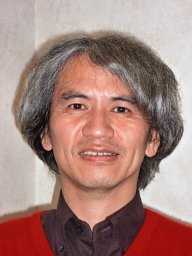 Yasuyuki Kawahigashi合作论文数Department of Mathematical Sciences;University of Tokyo;Department of Mathematical Sciences, University of Tokyo23
 Mathew Pugh合作论文数School of Mathematics;Cardiff University;School of Mathematics, Cardiff University19
 Akitaka Kishimoto合作论文数14
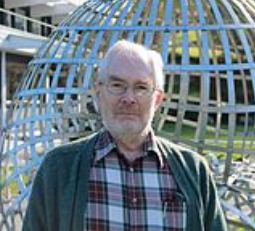 George Arthur Elliott合作论文数Department of Mathematics, University of Toronto9Terry Gannon合作论文数7Ola Bratteli合作论文数7O BRATTELI合作论文数7John T. Lewis合作论文数Monsanto Chemical Company St. Louis6Jens Böckenhauer合作论文数6
 Alan L. Carey合作论文数5Y. Kawahigashi合作论文数3eberlein bob lomax hawes bess合作论文数3Andreas Næs Aaserud合作论文数3
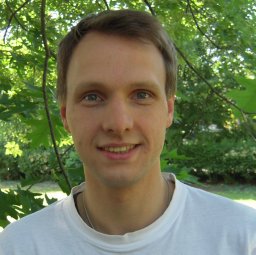 Ulrich Pennig合作论文数Georg-August-Universität Göttingen3peter seeger合作论文数2Les Blank合作论文数2Alan Lomax合作论文数2skip gerson合作论文数2toshi seeger合作论文数2Robert Palmer合作论文数2
 Corey Jones合作论文数Dept Math, North Carolina State Univ2
 Palle E. T. Jorgensen合作论文数Department of Mathematics, College of Liberal Arts and Science, University of Iowa2
 Sorin Popa合作论文数Department of Mathematics, University of California, Los Angeles2
 Derek W. Robinson合作论文数University of Aix-Marseille2Paulo R. Pinto合作论文数2
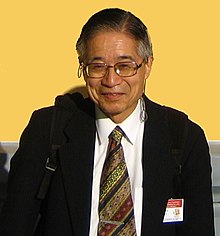 Huzihiro Araki (荒木不二洋)合作论文数Research Institute for Mathematical Sciences, University of Kyoto2Sam Loveless合作论文数1Jb Claiborne合作论文数1Daniel W. Patterson合作论文数1judy peiser合作论文数1bill ferris合作论文数1zheng dao zhu qi (正道 竹崎)合作论文数1
 Neil Robertson合作论文数1Tone Bratteli合作论文数1Aki Kishimoto合作论文数1Carl Cuvilje合作论文数1Ronald Ciro合作论文数1Thane Mitchell合作论文数1
 Rob Kirby合作论文数Department of Mathematics, University of California, Berkeley1
 Paul Morgan合作论文数Division of Infection and Immunity, School of Medicine, Cardiff University1Luppe Sebastian合作论文数1
 Erik Christensen合作论文数Bispebjerg Hospital, University of Copenhagen1Leon Goldstein合作论文数1
 Erling Størmer合作论文数Department of Mathematics, The Faculty of Mathematics and Natural Sciences, University of Oslo1Hiroshi Takai合作论文数1Dietmar Bisch合作论文数1
 Charles J. K. Batty合作论文数Mathematical Institute, University of Oxford1R. Hoegh-Krohn合作论文数1
 Joachim Cuntz合作论文数University of Münster1




