Beryllium carbide (Be2C) is an attractive alternative to graphite as a moderator material because of its high melting point, moderating efficiency, and theoretical environmental compatibility in molten salt reactors. However, its behavior under neutron irradiation is not yet known. For this work, a novel experiment was designed to safely irradiate beryllium-containing samples at the Michigan Ion Beam Laboratory. Using this new capability, Be2C samples were irradiated with 9-MeV C3+ ions from 2 to 30 displacements per atom (dpa) at temperatures up to 500 degrees C. Samples were characterized to investigate radiation tolerance. No evidence of phase precipitation, dislocation loops, or amorphization was observed up to 30 dpa, suggesting good radiation tolerance. One sample left in air for similar to 3 months oxidized slowly and lost structural integrity, while a sample kept in argon did not, suggesting that Be2C is not suitable for moist environments, but maintains its integrity in dry environments.
The primary salt pump installed in the high-temperature FLUoride Salt Test Facility (FLUSTFA) was successfully operated for some time, but later ceased operation. To understand what occurred, a Root Cause Analysis (RCA) was performed. Steps taken to try to get the pump operational include adjusting the shaft position, increasing the heating power of the tape heaters on the pump volute, and manually rotating the pump shaft. While removing the insulation, corrosion was noted on the outside of the pump volute, and decolorization of the insulation and tape heaters was observed. Significant corrosion products were also observed in the pump itself and the piping connected to the pump. The nitrogen cover gas was maintained from before salt was introduced into the loop until the pump was dismounted and continues to be maintained even after the pump was removed. After considering probable scenarios, causes were assigned and corrective actions were developed to prevent those causes. Then, the RCA was presented to an advisory committee for review, the "Review Committee," consisting of experts in large molten salt systems: Brandon Haugh, David Holcomb, Kevin Robb, and Vicente Rojas. The advisory committee provided comprehensive feedback, which have been incorporated into a revised RCA. Findings have then been summarized and reported in this publication.
Liquid-fueled, thermal-spectrum molten salt breeder reactors (TS-MSBRs) offer the potential for affordable, safe, inexhaustible energy with minimal potential for nuclear material misuse and without significant actinide waste generation. Realizing the full set of TS-MSBR capabilities is only now becoming possible with the advent of advanced fuel-salt processing techniques, improved materials, and a more detailed understanding of fuel-salt properties. Additionally, modern higher-fidelity modeling and simulation methods enable a more detailed evaluation of TS-MSBR design options. TS-MSBRs, however, remain immature and will require substantial, sustained development resources.
A liquid fluoride salt forced convection test loop was constructed at Oak Ridge National Laboratory. Its unique features include a pebble bed test section, high-temperature instrumentation, a noncontact rotating gas seal for the pump, a silicon carbide flow tube, and a unique inductive heating technique. Initial startup and shake-down testing has been completed. This paper describes how several of the systems performed, highlights those that worked well, and discusses issues that arose during the start-up process. This discussion should be of interest to those who intend to develop molten salt technologies and who are interested in some of the specific techniques used in this experiment.
The current effort is supported by the U.S. Department of Energy (DOE), Advanced Reactor Demonstration Program (ARDP) Regulatory Development, Regulatory Framework Modernization area, which seeks to address potential regulatory challenges for advanced reactor vendors that are currently or will soon be initiating the licensing process. In pursuit of this goal, this effort seeks to aid the advanced reactor industry and regulatory bodies in understanding and addressing the potential occurrence of high-temperature fluid releases in advanced reactor designs as part of licensing and regulatory oversight of operation. Improving the awareness and understanding of the behavior and potential consequences associated with high-temperature fluid release events can ensure that they are appropriately considered and addressed.
anionic Tc species that can be removed from LAW by anion exchange or solvent extraction methods. There is no definitive information on the origin of the non-pertechnetate Tc species, nor is there a comprehensive description of their composition and behavior. It has been recently proposed that the non-pertechnetate species can comprise Tc(I) metal center and carbonyl or mixed carbonyl nitrosyl ligands stabilizing low-valent Tc. Recent work by our group has significantly expanded this previous work, generating a series of Tc(I) carbonyl compounds and demonstrating that they can be generated from reduction of TcO4- in the simulated Hanford tank waste in presence of CO at elevated temperature (Levitskaia et al. 2014). These results are consistent with the previous proposal that [Tc(CO)3]+ species can be present in the Hanford tank waste and suggest that the low Tc(I) oxidation state is stabilized by the π-accepting ability of the CO ligands. The continuation work has been initiated to develop model Tc carbonyl nitrosyl compounds and investigate their potential presence in the Hanford tank wastes. This report summarizes our to-date results.
This report supports the development and review of an efficient methodology or process for liquid salt fuel system qualification. The report describes the technical issues encountered when developing an adequate understanding of the fuel salt’s chemical and physical behavior under both normal and accident conditions. The concepts presented in this report align with the fundamental safety functions (FSFs) approach of the more general non-light water reactor (nonLWR) fuel qualification guidance provided in NUREG-2246. However, because liquid salt fuel has substantial technical differences from solid fuels, this report describes tailored approaches for achieving the common safety intents when using liquid salt. The purpose of this report is to illustrate how variations in fuel salt properties impact achievement of FSFs at liquid-salt fueled molten salt reactors (MSRs). The focus on FSFs supports methodology compatibility with both current and developing licensing processes. Customized fuel qualification guidance for liquid salt–fueled Nuclear Power Plants (NPPs) are also provided in this report to supplement the generic non-LWR guidance recently developed by the NRC. As with the broader non-LWR fuel qualification, this report focuses on identification and understanding of fuel life-limiting failure and fuel salt property degradation mechanisms that occur as a result of irradiation during reactor operation.
Molten salt reactor (MSR) sites may include additional elements of the nuclear fuel cycle beyond those of the existing fleet. In the existing fleet, the individual elements of the fuel cycle typically have been located on different sites and licensed separately. Providing robust separation between hazards remains a useful safety practice for MSRs. Although the different elements of the fuel cycle at a nuclear site that includes MSRs may transfer material between processes more frequently than prior practices, providing adequate separation between distinct facilities avoids the potential for adverse interactions. Additionally, some elements of the MSR fuel cycle, such as fuel salt preparation or waste stabilization, may be more efficient to share among multiple nearby reactors, and nuclear sites that include MSRs may also include other reactor classes. Hence, discrete MSR fuel cycle facilities located at a common site could be physically separated with robust barriers—albeit potentially connected by piping—and licensed individually. This report describes the hazards of individual elements of representative MSR fuel cycle facilities, including their relationship to overall site level hazards. The report maps the regulatory compliance aspects of the individual MSR fuel cycle elements (e.g., fuel salt preparation, reactor, waste stabilization) to existing and developing regulations, as well as describes current and developing site-level regulations from an MSR perspective.
fresh and irradiated fuel. Operational neutron energy spectrums and breeding ratios also vary significantly across design concepts. Some concepts are burner reactors designed to transmute the spent nuclear fuel from LWRs or pressurized heavy water reactors (PHWRs), while others are breeder reactors designed to breed fissile 233U from naturally occurring fertile 232Th. Some MSR concepts are designed to be a part of a once-through fuel cycle, while others involve chemical separation. Those that include plans to recycle the fuel differ by whether the chemical processing would be done onsite, as a process connected to the fuel salt itself, or offsite at a reprocessing facility similar to how LWR or PHWR spent fuel is reprocessed in some countries. Each overall design concept contains various aspects of each of these features to produce a unique facility
The objective of the integration roadmap is to describe the necessary physics required and a plan for modeling and simulation approach for predicting mass accountancy in molten salt reactors on an engineering scale. The thermophysical properties and the underlying thermodynamics are fundamental inputs. Therefore, the modeling will span length scales from first principles calculations to the engineering scale. The intention is to predict where material accumulates in a reactor core and loop and to understand perturbations on the systems level, for example the downstream effects from a turbine failure.
Molten salt reactors offer a wide range of potential benefits but pose some unique challenges, particularly for designs that use an unclad liquid salt fuel. This type of fuel will result in the transport of fission gases into the headspace of the reactor where in some designs a cover gas can be circulated to remove certain fission products and maintain an inert atmosphere. The cover gas leaving the reactor core is expected to contain both noble and non-noble gases, aerosols, volatile species, tritium, radionuclides, and their daughters. To remove these radioactive gases, it is necessary to develop a robust off-gas system for molten salt–fueled reactors. Various treatment systems must be staged in series to remove the off-gas constituents from the stream before recirculating the gas back to the headspace of the reactor. Treatment options vary greatly depending on what they are designed to remove from the gas stream. This paper reviews the anticipated composition of a typical molten salt reactor off-gas stream and subsequently the available resources that could be employed to remove these species from the gas stream. An example off-gas system is then detailed, along with important design considerations, exemplifying the necessity for high-fidelity modeling. Lastly, the need for further thermophysical property research and the employment of advanced sensor technology for treatment component testing are discussed.
 Roger A Kisner合作论文数Nuclear Science and Technology Division;bEngineering Science and Technology Division;Oak Ridge National Laboratory25
 Richard T. Wood合作论文数University of Tennessee13
 Sacit M Cetiner合作论文数Radiation Science and Engineering Center, Penn State University13
 Dane Wilson合作论文数Oak Ridge National Laboratory12Venugopal Koikal Varma合作论文数12Kofi Korsah合作论文数11
 Dan Ilas合作论文数9George Flanagan合作论文数8
 N. Dianne Bull Ezell合作论文数Oak Ridge Natl Lab, Electrificat & Energy Infrastruct Div, 1 Bethel Valley Rd, Oak Ridge, TN 37831 USA8
 Govindarajan Muralidharan合作论文数Materials Science and Technology Division, Physical Sciences Directorate, Oak Ridge National Laboratory8
 Audrey L Qualls合作论文数8f j peretz合作论文数7Graydon Yoder合作论文数7
 Gerald E Jellison Jr合作论文数Oak Ridge National Laboratory7Willis Poore III合作论文数6
 Tommy Cisneros合作论文数6Fred J Peretz合作论文数6
 Timothy D. Burchell合作论文数Nuclear Materials Science & Technology Group, Materials Science & Technology Division, Oak Ridge National Laboratory6
 Jess Gehin合作论文数Idaho National Laboratory6Michael David Muhlheim合作论文数5eric craig bradley合作论文数5George F. Flanagan合作论文数5
 David Fugate合作论文数5
 M Nance Ericson合作论文数Oak Ridge National Laboratory5c o griffiths合作论文数4
 Cl Britton合作论文数4Heather M. Felmy合作论文数4Alex Huning合作论文数4t l wilson合作论文数4
 Adam M Aaron合作论文数Oak Ridge Natl Lab, Fus Engn Div, Oak Ridge, TN USA4
 Kevin P. Robb合作论文数Oak Ridge National Laboratory4JB WILGEN合作论文数4
 Kristian Myhre合作论文数Oak Ridge National Laboratory4Amanda M Lines合作论文数Pacific Northwest Natl Lab4Don W. Miller合作论文数4Michael D. Muhlheim合作论文数4
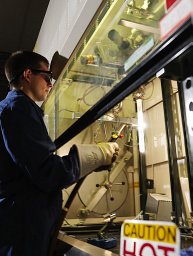 Brian J. Riley合作论文数Pacific Northwest National Laboratory4Graydon L Yoder合作论文数4
 Arnold Burger合作论文数Fisk University4
 Michael Groza合作论文数4M. Bobrek合作论文数3
 Samuel Bryan合作论文数Pacific Northwest National Laboratory3U. Jagadish合作论文数3Randy Belles合作论文数3m j roberts合作论文数3R. Denning合作论文数3
 Hunter Andrews合作论文数Radioisotope Science and Technology Division, Oak Ridge National Laboratory3
 Stephen S. Raiman合作论文数University of Michigan3
 Anne A. Campbell合作论文数Oak Ridge National Laboratory3




