This work-in-progress paper describes a web- based system that is being developed at Ohio University for developing and administering active learning assignments. The paper describes the design of the system, and its intended use in outcomes-based assessment of student learning in Computer Science. The system allows students to access active learning exercises via the web and provides students with immediate feedback on their work. Faculty use the system to design active learning assignments that tie student performance to achievement of specific course outcomes. This work-in-progress paper describes initial experiences with this system in an advanced course where both the software package JFLAP (An Interactive Formal Languages and Automata Package) and C++ programming are used.
Integration of middleware scheduling and resource management services enables open distributed real-time embedded (DRE) applications to meet end-to-end quality of service (QoS) requirements in highly variable operating environments. This paper describes our research on integrating CORBA scheduling and resource management services, and presents experiments we conducted to validate and quantify the benefits of this integration. Our experimental results show that integrating distributed scheduling and resource management in middleware for open DRE systems can offer significant improvements in predictability. Specifically, integrating our stand-alone resource management service with a previously unmanaged experimental baseline application reduced the ratio of missed deadlines from 26% to 10%, and the same application performed even better under the control of integrated scheduling and resource management services, with a missed deadline ratio of only 1%.
Summary form only given. We propose architecture and a general optimization framework for dynamic, distributed real-time systems. Interesting features of this model include the consideration of adaptive applications and utility functions. We extend by formalizing the corresponding multicriterial optimization problem. As the most difficult part of this problem, we identified the evaluation and comparison of the quality of single allocations and sets of allocations, respectively. To this end, we propose and examine metrics for measuring the goodness of solutions within our general resource management framework. These metrics lay the basis for further work on developing both online and offline algorithms to tackle the general optimization problem and provide an efficient adaptive resource manager for dynamic, distributed real-time systems.
Summary form only given. We examine several heuristic algorithms for the maximum allowable workload (MAW) problem for real-time systems with tasks having variable workloads. Briefly, the problem concerns the allocation of tasks to m processors, where each task t is characterized by a function t.r(w) that gives the running time of the task in terms of its workload (or input size) w. The objective of the maximum allowable workload problem is to find an allocation of tasks to processors so that the allocation is feasible (no task misses its deadline) when each task is given a workload of w or smaller and w is maximized. This optimization problem uses a robustness measure that is closely related to the MAIL (maximum allowable increase in load) metric recently proposed by Gertphol et al. The main contribution of this paper is the comparison of several heuristic algorithms for the MAW-RMS problem. Hillclimbing, random search, simulated annealing, and first-fit heuristics are presented and evaluated via simulation. As we show here, the first-fit greedy heuristic produces solutions of a reasonable quality compared to the other algorithms. In addition, we demonstrate the applicability of our model in air defense systems.
Summary form only given. We describe the quality-based adaptive resource management architecture, QARMA, a framework for resource management within CORBA. QARMA consists of three major components: the system repository service, the resource management service, and the enactor service. QARMA serves as a basis for integration of existing CORBA services and management mechanisms into a single, coherent framework for resource management. QARMA supports the management of a wide variety of applications developed using various development paradigms, easily integrates with other management and infrastructure components that already exist as CORBA services, and is easily extended to allow the use of new resource management mechanisms as they become available.
The paper presents a model that is useful for developing resource allocation algorithms for distributed real-time systems that operate in dynamic environments. Interesting aspects of the model include dynamic environments, utility and service levels, which provide a means for graceful degradation in resource-constrained situations and support optimization of the allocation of resources. The paper also provides an allocation algorithm that illustrates how to use the model for producing feasible, optimal resource allocations.
One of the current trends in spacecraft software design is to increase the autonomy of onboard flight and science software. This is especially true when real-time observations may affect the observation schedule of a mission. For many science missions, such as those conducted by the Swift Burst Alert Telescope, the ability of the spacecraft to autonomously respond in real-time to unpredicted science events is crucial for mission success. We apply utility theory within resource management middleware to optimize the real-time performance of application software and achieve maximum system level benefit. We then explore how this methodology can be extended to manage both software and observational resources onboard a spacecraft to achieve the best possible observations.
Increased autonomy and automation in onboard flight systems offer numerous potential benefits, including cost reduction and greater flexibility. The existence of generic mechanisms for automation is critical for handling unanticipated science events and anomalies where limitations in traditional control software with fixed, predetermined algorithms can mean loss of science data and missed opportunities for observing important terrestrial events. We have developed such a mechanism by adding a Hierarchical Agent-based ReaLTime technology (HART) extension to our Dynamic Resource Management (DRM) middleware. Traditional DRM provides mechanisms to monitor the realtime performance of distributed applications and to move applications among processors to improve real-time performance. In the HART project we have designed and implemented a performance adaptation mechanism to improve reaktime performance. To use this mechanism, applications are developed that can run at various levels of quality. The DRM can choose a setting for the quality level of an application dynamically at run-time in order to manage satellite resource usage more effectively. A groundbased prototype of a satellite system that captures and processes images has also been developed as part of this project to be used as a benchmark for evaluating the resource management framework A significant enhancement of this generic mission-independent framework allows scientists to specify the utility, or benefit, of science observations under various conditions like cloud cover and compression method. The resource manager then uses these benefit tables to determine in redtime how to set the quality levels for applications to maximize overall system utility as defined by the scientists running the mission. We also show how maintenance functions llke health and safety data can be integrated into the utility framework. Once thls framework has been certified for missions and successfully flight tested it can be reused with little development overhead for other missions. In contrast, current space missions llke Swift manage similar types of resource trade -off completely with the scientific application code itself, and such code must be re-certified and tested for each mission even if a large portion of the code base is shared. This final report discusses some of the major issues motivating this research effort, provides a literature review of the related work, discusses the resource management framework and ground-based satellite system prototype that has been developed, indicates what work is yet to be performed, and provides a list of publications resulting from this work.
Breakthrough in Earth Science Observing will occur when constellations of Earth observing satellites are able to fully collaborate together and collectively monitor the conditions of our planet through a vast array of instruments. These satellites form a network that consists of distributed processes that need to respond to perceived scientific events, the spacecraft environment, spacecraft anomalies and user commands. The requests and responses exhibit dynamic behavior. In order to handle such dynamic environments, a method is needed to guarantee the real-time quality of service constraints. The DeSiDeRaTa resource management approach is being enhanced to characterize the dynamic aspects of intraconstellation topologies and to accommodate the concept of service levels and utility. This paper presents a design model of cooperative problem solving to show how the solution approach addresses the key challenges presented in the problem and specifies how the agent, resource manager and satellite constellations would operate correctly and interact in complex, dynamic and unpredictable environments. It extends the system model of DeSiDeRaTa to accommodate the concepts of utility, service levels and planning. The system model for the IPA is presented to show the proof of concept.
Allocating computing resources to various applications running on distributed computing platforms in order to satisfy real-time quality-of-service (QoS) requirements is an important problem, as is evident from a recent NASA research challenge problem concerning an autonomous hot-spot convergence system for the next-generation constellation-based satellite sensor webs. This paper presents a new resource management mechanism based on service levels and utility, and motivated by the hot-spot example, to address this problem. Existing approaches to adaptive resource and QoS management typically perform either reallocation of resources or adaptation of application QoS levels in response to dynamic environment changes. While success has been achieved with both of these approaches, this paper demonstrates the potential synergy of implementing both types of techniques. A proof-of-concept implementation is shown and our initial experimental results are analyzed.
We propose a model-driven resource management technique designed for online resource management of distributed real-time and embedded systems. We have implemented this technique in the QARMA resource manager and related design tools. This paper describes a visual modeling tool used by QARMA, the specification languages it generates, as well as QARMA’s underlying model and software architecture.
 Lonnie Welch合作论文数Bioinformatics Laboratory, Ohio University;Department of Electrical Engineering and Computer Science, Ohio University9
 Barbara Pfarr合作论文数5
 David M. Chelberg合作论文数School of Electrical Engineering and Computer Science, Russ College of Engineering and Technology, Ohio University5
 David Juedes合作论文数School of Electrical Engineering and Computer Science;Russ College of Engineering and Technology;Ohio University4
 Frank A. Drews合作论文数University of Utah4Zhenyu Tan合作论文数3Chris Shuler合作论文数3Carl Bruggeman合作论文数Stocker Center 321E3Shikha Jain合作论文数3
 David Parrott合作论文数3
 Chang Liu合作论文数2Klaus H. Ecker合作论文数2Marling Cynthia R合作论文数1
 Martin Hoefer合作论文数Faculty of Computer Science, RWTH Aachen University1
 Frank Drews合作论文数Biomedical Engineering Center of Scientific Computing and Immersive Technologies, Ohio University;Computer Science Department, Russ College Electrical Engineering, Ohio University1Andrew Lenharth合作论文数SiFive1David W. Juedes合作论文数School of Electrical Engineering and Computer Science;Russ College of Engineering and Technology;Ohio University1
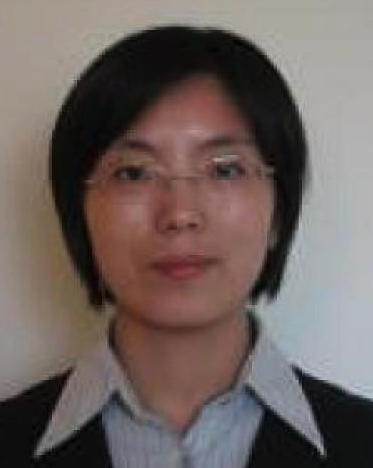 Chunmei Liu (刘春梅)合作论文数Department of Electrical Engineering and Computer Science, College of Engineering and Architecture, Howard University;Department of Systems and Computer Science, Howard University1Lisa C. Dipippo合作论文数Univ. of Rhode Island, Kingston1Andreas Brüning合作论文数1Victor Fay-Wolfe合作论文数Dept. of Computer Science and Statistics1
 Matthew Murphy合作论文数University of Rhode1Matthew Gillen合作论文数1
 Christopher D. Gill合作论文数Department of Computer Science and Engineering, McKelvey School of Engineering, Washington University in St. Louis1
 D. Niehaus合作论文数ITTC Lab Affiliation(s)1Eric Aber合作论文数1Jiangyin Zhang合作论文数1Kevin Bryan合作论文数1




