Alkali-activated concrete (AAC) has been commercialized as a low-CO2 construction material, but its adoption still faces several challenges, including standardization, lack of a dedicated supply chain, limited service track record, and the question of whether laboratory durability testing can predict service life. This paper outlines how using different precursors leads to the formation of different AAC phase assemblages, and how AAC can be recognized in standards using a performance-based approach independent of binder chemistry. Microstructural assessment of pastes, strength development, water permeability, and chloride migration of two AACs (100% slag and 1:1 slag:fly ash) are presented, and compared to Portland cement concrete. Manipulation of binder chemistry leads to differences in the properties of the AACs; however, both AACs assessed exhibited technical benefits in a performance-based comparison. AACs can meet the requirements of the equivalent performance concept, independent of the binder chemistry, supporting their scale-up, regulatory acceptance, and wider adoption.
Alkali-activated concrete (AAC) has been commercialised in Australia as a low-CO2 construction material. The adoption of AAC faces several challenges, including lack of recognition in standards, lack of a dedicated supply chain, lack of a long service track record, and the question whether laboratory durability testing gives a reliable prediction of service life. By using cutting edge analysis of microstructure as a predictor of durability, research plays a key role in the commercialisation of AAC. This paper outlines how AAC can be recognised in standards using knowledge of microstructure and a performance-based approach independent of binder chemistry. The mechanical strength development, water permeability and chloride migration of two AACs (100wt.% slag and 50wt.% slag/50wt.% fly ash) compared to OPC concrete are presented, with mix designs tailored to give comparable 28-day strengths of 50 +/- 3 MPa. AAC exhibited many technical benefits over OPC concrete, such as higher strength and decreased chloride ion penetration. AAC is shown to meet the requirements of the equivalent performance concept and this provides an argument for scale-up, regulatory acceptance and wider market adoption.
Binders formed through alkali-activation of slags and fly ashes, including ‘fly ash geopolymers’, provide appealing properties as binders for low-emissions concrete production. However, the changes in pH and pore solution chemistry induced during accelerated carbonation testing provide unrealistically low predictions of in-service carbonation resistance. The aluminosilicate gel remaining in an alkali-activated slag system after accelerated carbonation is highly polymerised, consistent with a decalcification mechanism, while fly ash-based binders mainly carbonate through precipitation of alkali salts (bicarbonates at elevated CO2 concentrations, or carbonates under natural exposure) from the pore solution, with little change in the binder gel identifiable by nuclear magnetic resonance spectroscopy. In activated fly ash/slag blends, two distinct gels (C–A–S–H and N–A–S–H) are formed; under accelerated carbonation, the N–A–S–H gel behaves comparably to fly ash-based systems, while the C–A–S–H gel is decalcified similarly to alkali-activated slag. This provides new scope for durability optimisation, and for developing appropriate testing methodologies.
In the context of a Report such as this, it is of immense value to be able to provide tangible examples of structures and applications in which alkali-activated concretes have been utilised throughout the past decades. A detailed outline of the utilisation of AAM concretes in the former Soviet Union and in China is given in Chap. 12 of the book by Shi, Krivenko and Roy [1], and this chapter will briefly describe some of the applications mentioned in that (more extensive) document, along with applications elsewhere in the world where AAMs have been utilised on a significant scale in the construction of buildings and other civil infrastructure components. An overview of developments and applications in the former USSR has also been presented by Brodko [2] and by Krivenko [3]. Each project reported in this chapter involves at least pilot-scale, and in some cases full commercial-scale, production of alkali-activated concretes utilising largely standard concrete mixing and placement equipment and labour, indicating that these materials are both accessible and useful on this length scale, given sufficient expertise in mix design based on locally available precursors. In the former USSR in particular, slags obtained from local iron production facilities were used in each of the different locations in which the concretes were produced, and activators were sourced in large part from locally available alkaline industrial waste streams.
Alkali-activated "geopolymer" concrete has been commercialized in Australia, and it is meeting with strong demand from the end-user community and approval from regulatory authorities. Interest in the application of this technology throughout the Asia-Pacific region is growing, as endusers, engineers, and architects increase their environmental awareness and as some jurisdictions introduce a carbon tax or carbon pricing policy. Vic-Roads, the roads authority of the state of Victoria in Australia, is a signature specifier that has already changed its specification for non-structural concrete to accommodate geopolynner concrete. In addition, progress has been made in a RILEM Technical Committee to establish a framework for a performance standard for alkali-activated concrete. The commercialization of geopolymer technology is linked closely with scientific developments in this area, in particular through the use of innovative methods to analyze and predict durability and in understanding and controlling reaction mechanisms. The importance of leading-edge scientific research in enhancing the performance and utility of geopolymer concretes is also highlighted, with the identification of some of the remaining technical and non-technical hurdles that must be overcome. This paper outlines the process of commercializing an alternative binder system at the production scale, including obtaining regulatory approval for groundbreaking applications in civil infrastructure. There has been much discussion of the potential of alkali-activation technology over the past decades, but until now, large-scale application has been limited. Some of the reasons for this slow progress, as well as the methods by which obstacles have been overcome, are discussed.
Mechanical strength, water and chloride permeability of alkali activated slag mortar and concretes with partial fly ash substitution are investigated. Volume of permeable voids (VPV) and sorptivity testing show that alkali-activated materials exhibit higher water absorption than OPC-based samples, and increasing fly ash addition leads to reduced mechanical strength and increased water absorption. Conversely, chloride permeability testing by the NordTest NT Build 492 standard accelerated method, and by chloride ponding (ASTM C1543), shows that the diffusion of chloride in alkali-activated binders is much less than in OPC binders. This divergence between measured water uptake and chloride permeability in alkali-activated specimens is attributed largely due to the specified standard preconditioning (drying) of the samples prior to water absorption testing due to the difference in water environments as a function of slag/fly ash ratio. Drying is likely to be inducing desiccation and consequent microcracking of slag-based binding gels, while less disturbance occurs in a fly ash geopolymer gel. The chemistry of the binding gels in these alkali-activated systems significantly controls the mass and ionic transport in chloride-containing environments. Although higher porosity was measured by these standards, a denser Al-substituted calcium silicate hydrate (C-A-S-H) gel contributes to a higher mechanical strength, and durability under chloride exposure. The inclusion of fly ash promotes the formation of more porous sodium aluminosilicate (N-A-S-H) type gels, reducing the resistance to transport. (C) 2013 Elsevier Ltd. All rights reserved.
The carbonation resistance of alkali-activated binders is often tested via accelerated test protocols designed for Portland cements, without questioning whether the tests replicate the mechanisms observed in service. Thus, validation of accelerated methods is required to enable realistic prediction of material performance. Changes in pore solution equilibria cause the formation of sodium bicarbonates during accelerated carbonation, compared with hydrous sodium carbonates in natural carbonation. This shifts the carbonation mechanism to favour more rapid reaction progress, to give a higher apparent degree of acceleration (compared to natural conditions) than in Portland cements. The pore solution pH under accelerated carbonation is significantly lower than at natural CO2 concentrations, leading to a falsely short predicted service life (time to expected corrosion of embedded steel), as natural CO2 concentrations appear not to reduce the pH below 10. Thus, accelerated carbonation testing is unduly aggressive towards alkali-activated binders, and test results must be cautiously interpreted.
Concentrated sodium silicate solutions of modulus (SiO2/Na2O molar ratio) close to 1.0 are well-known to precipitate hydrous sodium metasilicate crystals; this hinders their industrial-scale utilization in applications including geopolymer concrete synthesis. The substitution of 20-50% of the sodium by potassium in such solutions is seen to greatly reduce or prevent this precipitation, on a time scale of up to 7 years. A potassium substitution rate of 20% does not entirely eliminate precipitation, but does reduce it very significantly; 50% substitution does eliminate precipitation, although the viscosity of the solution increases notably at this level of substitution. This substitution provides a relatively low-cost means of extending the shelf life of concentrated low-modulus alkali silicate solutions for large-scale utilization in the production of geopolymer concretes and in other applications.
Alkali-activated 'geopolymer' concrete has been commercialized in Australia under the trade name E-Crete (TM), and is now finding acceptance among the end-user community and from regulatory authorities. E-Crete (TM) is derived from fly ash and blast furnace slag with an alkali activator, and is available in both precast and pre-mix forms. The pre-mix concrete is able to be placed using largely standard concrete processing equipment and expertise. A life cycle analysis of E-Crete (TM) has shown savings of around 80% in CO2 emissions compared to a standard Portland cement-based binder, which provides the primary driver for the uptake of this technology on a larger scale. Commercialization of geopolymer technology by Zeobond has been linked closely with scientific developments in this area, in particular through the use of innovative methods of analyzing and predicting durability, and in understanding and controlling reaction mechanisms. The importance of leading-edge scientific research in enhancing the performance and utility of geopolymer concretes will be highlighted throughout this paper, and some of the remaining technical and non-technical hurdles which must be overcome will be identified.
Portland cement production has been identified as a primary contributor to the world’s Greenhouse gas emissions, calculated at around 5–8% of all manmade emissions worldwide. The majority of these emissions are inherent to the chemistry of cement and the high-temperature processing required for its synthesis, and so can only be avoided by radical changes in construction materials chemistry and synthesis pathways. Inorganic polymer (including “geopolymer”) binders provide an alternative to traditional cements with approximately 80% less CO 2 emissions, and are derived from industrial waste materials such as fly ash and metallurgical slags, which additionally provide a means of valorizing these wastes. This paper reviews the technical and commercial factors driving the growing commercial adoption of geopolymer technology, and explains that an understanding of the chemistry and mechanisms of geopolymer synthesis is pivotal for the optimal mix design of “green” concretes in industry. Demand pull by a carbon conscious market at a time of growing public awareness of climate change continues to be the key driver for the short term adoption of geopolymer concrete. A detailed chemical understanding of the properties of geopolymers, such as setting time, workability and durability, plays an enabling role in the commercialization process.
 John Provis合作论文数Laboratory for Waste Management, Paul Scherrer Institute13
 Jannie S.J. van Deventer合作论文数Department of Infrastructure Engineering, The University of Melbourne13
 Peter Duxson合作论文数8
 Susan Andrea Bernal Lopez合作论文数School of Civil Engineering, Faculty of Engineering and Physical Sciences, University of Leeds7
 Adam Robert Kilcullen合作论文数6
 Rackel San Nicolas合作论文数Department of Infrastructure Engineering, School of Electrical, Mechanical and Infrastructure Engineering, Faculty of Engineering and Information Technology, The University of Melbourne5
 Idawati Ismail合作论文数Department of Structures and Material;Faculty of Civil Engineering;Universiti Teknologi Malaysia;Faculty of Civil Engineering, Universiti Teknologi Malaysia3
 Brant Walkley合作论文数Department of Chemical and Biological Engineering, Faculty of Engineering, The University of Sheffield2John D. Gehman合作论文数2johannes a l m wiercx合作论文数1Lesley S.-C. Ko合作论文数1elena kavalerova合作论文数1
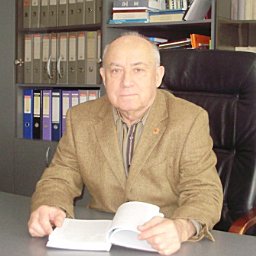 Pavel Krivenko合作论文数V.D. Glukhovsky State Sci. Res. Inst. for Binders & Mater., Kiev Nat. Univ. of Civil Eng. & Archit.;c;V.D. Glukhovsky State Sci. Res. Inst. for Binders & Mater., Kiev Nat. Univ. of Civil Eng. & Archit.1
 Sinin Hamdan合作论文数Universiti Malaysia Sarawak1
 Caijun Shi (史才军)合作论文数College of Civil Engineering, Hunan University;China Building Materials Academy Co., Ltd.1Anja Buchwald合作论文数1




