DEM simulations by Chialvo et al. observed three distinct flow regimes for homogeneous simple shear of soft, frictional, noncohesive spheres in different domains of shear rate and density. This paper shows that all three regimes can be accommodated in a continuum description, using the CIDR formalism.
This paper introduces a new mathematical technique for deriving continuum rheological models of granular matter. Specifically, it is shown that, under the hypothesis of Onsager symmetry, three-dimensional dynamic constitutive laws for general strain rates can be derived from a three-dimensional yield condition plus steady-state empirical data of quasi-two-dimensional flow. To illustrate the technique, a new rate-dependent three-dimensional yield condition, suitable for dry granular materials in the inertial regime, is proposed and combined with discrete-element method (DEM) particle simulation data of simple shear flow. In combination with Onsager symmetry, this generates a complete three-dimensional viscoplastic model for such materials. Despite the simplicity of the inputs, the resulting constitutive laws agree very well with the pioneering non-planar DEM simulations of Clemmer et al . Phys. Rev. Lett . 127 (2021). Unlike several previous theories, the novel Onsager-symmetric constitutive relations incorporate a non-zero second normal stress difference in simple shear and are able to distinguish between general triaxial deformations via dependence on the Lode angle.
Classical theories for suspensions have been formulated by starting from the Navier–Stokes equations describing pure liquid flow and then introducing additional dependencies to account for the presence of suspended particles. These models are often accurate for low particle concentrations but have lacked a convincing description of the frictional interactions of particles, which are important at larger solid volume fractions. The $\mu (J), \varPhi (J)$ rheology, which draws a direct analogy between suspension flow and dry granular flow, is a recent theory that addresses this issue, but is shown here to be dynamically ill-posed for large solid volume fractions. An alternative well-posed theory is introduced that includes additional dependence on the particle-phase dilation and compression. The new theory, denoted vCIDR, is tested numerically to show grid convergence for problems in which the $\mu (J), \varPhi (J)$ rheology instead suffers from catastrophic blow-up. A further well-posed extension provides a framework for handling the transition between viscous and inertial flows.
Granular flows occur in a wide range of situations of practical interest to industry, in our natural environment and in our everyday lives. This paper focuses on granular flow in the so-called inertial regime, when the rheology is independent of the very large particle stiffness. Such flows have been modelled with the $\unicode[STIX]{x1D707}(I),\unicode[STIX]{x1D6F7}(I)$-rheology, which postulates that the bulk friction coefficient $\unicode[STIX]{x1D707}$ (i.e. the ratio of the shear stress to the pressure) and the solids volume fraction $\unicode[STIX]{x1D719}$ are functions of the inertial number $I$ only. Although the $\unicode[STIX]{x1D707}(I),\unicode[STIX]{x1D6F7}(I)$-rheology has been validated in steady state against both experiments and discrete particle simulations in several different geometries, it has recently been shown that this theory is mathematically ill-posed in time-dependent problems. As a direct result, computations using this rheology may blow up exponentially, with a growth rate that tends to infinity as the discretization length tends to zero, as explicitly demonstrated in this paper for the first time. Such catastrophic instability due to ill-posedness is a common issue when developing new mathematical models and implies that either some important physics is missing or the model has not been properly formulated. In this paper an alternative to the $\unicode[STIX]{x1D707}(I),\unicode[STIX]{x1D6F7}(I)$-rheology that does not suffer from such defects is proposed. In the framework of compressible $I$-dependent rheology (CIDR), new constitutive laws for the inertial regime are introduced; these match the well-established $\unicode[STIX]{x1D707}(I)$ and $\unicode[STIX]{x1D6F7}(I)$ relations in the steady-state limit and at the same time are well-posed for all deformations and all packing densities. Time-dependent numerical solutions of the resultant equations are performed to demonstrate that the new inertial CIDR model leads to numerical convergence towards physically realistic solutions that are supported by discrete element method simulations.
Rho-GTPases are master regulators of polarity establishment and cell morphology. Positive feedback enables concentration of Rho-GTPases into clusters at the cell cortex, from where they regulate the cytoskeleton. Different cell types reproducibly generate either one (e.g. the front of a migrating cell) or several clusters (e.g. the multiple dendrites of a neuron), but the mechanistic basis for unipolar or multipolar outcomes is unclear. The design principles of Rho-GTPase circuits are captured by two-component reaction-diffusion models based on conserved aspects of Rho-GTPase biochemistry. Some such models display rapid winner-takes-all competition between clusters, yielding a unipolar outcome. Other models allow prolonged co-existence of clusters. We investigate the behavior of a simple class of models and show that while the timescale of competition varies enormously depending on model parameters, a single factor explains a large majority of this variation. The dominant factor concerns the degree to which the maximal active GTPase concentration in a cluster approaches a "saturation point" determined by model parameters. We suggest that both saturation and the effect of saturation on competition reflect fundamental properties of the Rho-GTPase polarity machinery, regardless of the specific feedback mechanism, which predict whether the system will generate unipolar or multipolar outcomes.
Robert Paul Behringer, a James B. Duke Professor of Physics at Duke University, died unexpectedly on 10 July 2018 in Durham, North Carolina, following complications from surgery. At the time of his death, Bob was an active, highly respected experimental physicist in the areas of fluid dynamics and soft condensed matter; a leader in the American Physical Society (APS); a caring, successful mentor of young scientists; and a devoted husband, father, and grandfather. Robert Paul Behringer PPT|High resolutionBob was born on 26 October 1948 in Baltimore, Maryland, and obtained his undergraduate and graduate degrees, both in physics, from Duke. Under the guidance of Horst Meyer, he earned his PhD in 1975 for work on critical phenomena in helium-3 and 3He–4He mixtures.As a postdoc, Bob went to Bell Labs, where he worked with Guenter Ahlers on heat transport and the onset of Rayleigh–Bénard convection in liquid helium. In the late 1970s, there was great interest in understanding the general principles governing the properties of sustained nonequilibrium systems. Bob and Guenter published several seminal papers on the onset of irregular dynamics in fluids, including the first definitive evidence for deterministic chaos in a fluid. After spending four years as an assistant professor at Wesleyan University in Connecticut, Bob moved back to Duke in 1982 and continued his studies of transport and fluid flow in liquid helium. He remained on the Duke faculty for 36 years.In the late 1980s, Bob became interested in techniques for observing the internal dynamics of flows in porous media and in sand. The possibility of explaining the generic emergence of power-law scaling in nonequilibrium systems enticed physicists with the promise of insights into a diverse array of systems previously studied primarily by engineers and geophysicists. Bob saw an opportunity to perform experiments that could reveal the intricate structures of stresses and flows in granular materials at the grain scale. His observations had a dramatic effect on our understanding of the rheology of granular systems and on the broader topic now known as jamming. Beginning in 2011 and continuing to the present, his group discovered and elucidated the surprising phenomenon of shear jamming in systems with densities below the critical value for random packing.Bob’s images of force chains in two-dimensional packings of plastic disks have become icons of the science of granular materials and of the emergence of complex structures in nonequilibrium systems. Those images have captured the imagination of children and adults at science museums around the country and of physicists around the world. In recognition of his research accomplishments, Bob received the 2013 Jesse W. Beams Award from the Southeastern Section of APS.Bob made several notable contributions to APS and to the broader scientific and engineering communities through his organizational efforts. For many years Bob helped organize the annual Dynamics Days international conference, which brings together physicists, mathematicians, engineers, and researchers in various other fields to share ideas about nonlinear and complex dynamics. He helped found the APS topical groups on statistical and nonlinear physics and on the physics of climate, and he served as chair of both groups in their infancy. Bob also cofounded the journal Granular Matter in 1998 and served as its editor-in-chief. At Duke, Bob cofounded and served as the director of the Center for Nonlinear and Complex Systems, which led to a significant boost in the university’s support of interdisciplinary science.Bob was an exceptionally encouraging and nurturing adviser of young scientists. He saw the potential for excellence in a diverse group of advisees and exchange students, and he found ways to help them succeed. Through his Magic of Science shows, he extended his passion for science to elementary school students. Outside physics, Bob had many talents that he generously shared with others. He was an accomplished pianist and singer, and he loved French language, culture, and history.Bob was author or coauthor of some 260 articles. He also leaves behind a rich legacy of 28 PhD students, more than 20 postdoctoral mentees and visitors to his lab, and many students, friends, and colleagues who greatly benefited from and enjoyed his mentorship, innovation, and leadership. We miss him greatly.© 2018 American Institute of Physics.
Continuum modelling of granular flow has been plagued with the issue of ill-posed dynamic equations for a long time. Equations for incompressible, two-dimensional flow based on the Coulomb friction law are ill-posed regardless of the deformation, whereas the rate-dependent μ(I)-rheology is ill-posed when the non-dimensional inertial number I is too high or too low. Here, incorporating ideas from critical-state soil mechanics, we derive conditions for well-posedness of partial differential equations that combine compressibility with I-dependent rheology. When the I-dependence comes from a specific friction coefficient μ(I), our results show that, with compressibility, the equations are well-posed for all deformation rates provided that μ(I) satisfies certain minimal, physically natural, inequalities.
This book develops the theory of ordinary differential equations (ODEs), starting from an introductory level (with no prior experience in ODEs assumed) through to a graduate-level treatment of the qua
As its title implies, this chapter is concerned with oscillatory solutions of ODEs. Solutions of the van der Pol system ( 1.36 ) van der Pol’s equation plotted in Figure 1.7, are representative of the kind of behavior we focus on. Up to now, we have been forced to rely on the computer to study such phenomena. In this chapter, we introduce analytical techniques to predict and describe oscillatory behavior.
In this chapter we relate the flow of an ODE $$\mathbf{x}^{{\prime}} = \mathbf{F}(\mathbf{x})$$ near an equilibrium b ∗ to the flow of the linearization, by which we mean the equation w′ = A w, where A = DF(b ∗). There are two main theoretical results. (i) In Section 6.1, we assume $$\mathfrak{R}\lambda _{j}(A) <0$$ , which guarantees that all solutions of the linearization converge to the equilibrium; Theorem 6.1.1 shows that under this hypothesis, the full equation shares a version of this behavior, which is called asymptotic stability. (ii) In Section 6.6, the stable-manifold theorem (Theorem 6.6.1) characterizes the behavior of solutions when the Jacobian DF(b ∗) has eigenvalues with both positive and negative real parts.
The preceding chapter had some pretty heavy analysis, and the next has even more. In what may be welcome relief, the present chapter pushes in an orthogonal direction: it focuses on nondimensionalization and scaling, which are techniques for simplifying ODEs that arise in applications.
In Chapter 6 we studied the behavior of solutions of an ODE near a hyperbolic equilibrium point. In this chapter we turn to behavior near nonhyperbolic equilibria.
Theorem 3.2.1 guarantees that a solution to the initial value problem exists for what might be an extremely short time.
In this chapter we state and prove the basic existence and uniqueness theorems (in Sections 3.2 and 3.3, respectively) for the initial value problem (IVP) for systems of nonlinear ODEs. For the moment we consider only autonomous systems, say $$\displaystyle{\mathbf{x}^{{\prime}} = \mathbf{F}(\mathbf{x})\; =\; \left [\begin{array}{c} F_{1}(x_{1},x_{2},\ldots,x_{d}) \\ F_{2}(x_{1},x_{2},\ldots,x_{d})\\ \vdots \\ F_{d}(x_{1},x_{2},\ldots,x_{d}) \end{array} \right ]}$$ where $$\mathbf{F}: \mathbb{R}^{d} \rightarrow \mathbb{R}^{d}$$ ; or more generally, we may assume that F is defined only on an open subset $$\mathcal{U}\subset \mathbb{R}^{d}$$ . In Section 3.4, we discuss extensions of the theory to nonautonomous systems.
The bulk of this chapter is devoted to homogeneous linear systems of ODEs with real constant coefficients. constant-coefficient system This means systems of the form 2.1 $$\displaystyle{ \begin{array}{ccc} x_{1}^{{\prime}}& =& a_{11}x_{1} + a_{12}x_{2} +\ldots +a_{1d}x_{d}, \\ x_{2}^{{\prime}}& =& a_{21}x_{1} + a_{22}x_{2} +\ldots +a_{2d}x_{d},\\ \\ \vdots&\vdots&\vdots\\ \\ x_{d}^{{\prime}}& =&a_{d1}x_{1} + a_{d2}x_{2} +\ldots +a_{dd}x_{d}.\end{array} }$$ (From now on, we shall let d be the dimension of our systems, so that the index n is available for other uses.) The written-out system (2.1) is awkward to read or write, and we shall normally use the vastly more compact linear-algebra notation 2.2 $$\displaystyle{ \mathbf{x}^{{\prime}} = A\mathbf{x}, }$$ where x = (x 1, x 2, …, x d ) is a d-dimensional vector of unknown functions, A is a d × d matrix with real entries, and matrix multiplication is understood in writing A x. In vector notation, an appropriate initial condition for (2.2) is 2.3 $$\displaystyle{ \mathbf{x}(0) = \mathbf{b}, }$$ where $$\mathbf{b} \in \mathbb{R}^{d}$$ .
In light of the successes of the Navier–Stokes equations in the study of fluid flows, similar continuum treatment of granular materials is a long-standing ambition. This is due to their wide-ranging applications in the pharmaceutical and engineering industries as well as to geophysical phenomena such as avalanches and landslides. Historically this has been attempted through modification of the dissipation terms in the momentum balance equations, effectively introducing pressure and strain-rate dependence into the viscosity. Originally, a popular model for this granular viscosity, the Coulomb rheology, proposed rate-independent plastic behaviour scaled by a constant friction coefficient ${\it\mu}$. Unfortunately, the resultant equations are always ill-posed. Mathematically ill-posed problems suffer from unbounded growth of short-wavelength perturbations, which necessarily leads to grid-dependent numerical results that do not converge as the spatial resolution is enhanced. This is unrealistic as all physical systems are subject to noise and do not blow up catastrophically. It is therefore vital to seek well-posed equations to make realistic predictions. The recent ${\it\mu}(I)$-rheology is a major step forward, which allows granular flows in chutes and shear cells to be predicted. This is achieved by introducing a dependence on the non-dimensional inertial number $I$ in the friction coefficient ${\it\mu}$. In this paper it is shown that the ${\it\mu}(I)$-rheology is well-posed for intermediate values of $I$, but that it is ill-posed for both high and low inertial numbers. This result is not obvious from casual inspection of the equations, and suggests that additional physics, such as enduring force chains and binary collisions, becomes important in these limits. The theoretical results are validated numerically using two implicit schemes for non-Newtonian flows. In particular, it is shown explicitly that at a given resolution a standard numerical scheme used to compute steady-uniform Bagnold flow is stable in the well-posed region of parameter space, but is unstable to small perturbations, which grow exponentially quickly, in the ill-posed domain.
Diverse mechanisms have been proposed to explain biological pattern formation. Regardless of their specific molecular interactions, the majority of these mechanisms require morphogen gradients as the spatial cue, which are either predefined or generated as a part of the patterning process. However, using Escherichia coli programmed by a synthetic gene circuit, we demonstrate here the generation of robust, self‐organized ring patterns of gene expression in the absence of an apparent morphogen gradient. Instead of being a spatial cue, the morphogen serves as a timing cue to trigger the formation and maintenance of the ring patterns. The timing mechanism enables the system to sense the domain size of the environment and generate patterns that scale accordingly. Our work defines a novel mechanism of pattern formation that has implications for understanding natural developmental processes.
The virus Hepatitis B infects liver cells, leading to either acute or chronic liver disease. Immune responses involve both curing and killing of cells. Stability analyses show that viral clearance depends only on the strength of the combined killing and curing, independent of the characteristics of the cured cells.
We study the small vibrations of a thin flexible beam immersed in a laminar flow, in which we assume the dominant restoring force in most of the domain is tension due to the shear stress, while bending elasticity plays a small but non‐negligible role. A linearized description is considered, which is reduced to an eigenvalue problem. The resulting singularly‐perturbed problem is solved asymptotically up to the first modification of the eigenvalue.
 Michael Shearer合作论文数Department of Mathematics;North Carolina State University;Department of Mathematics, North Carolina State University25
 M. Golubitsky合作论文数20
 Daniel Gauthier合作论文数Department of Physics, College of Arts and Sciences, The Ohio State University14
 John Wesley Cain合作论文数Department of Mathematics, Harvard University11Ian Stewart合作论文数Department of Mechanical, Aerospace and Civil Engineering, School of Engineering, Faculty of Science and Engineering, The University of Manchester10
 Elena G Tolkacheva合作论文数7Carolyn M. Berger合作论文数6Tom Barker合作论文数Earth and Planetary Science, School of GeoSciences, The University of Edinburgh5
 Xiaopeng Zhao (赵晓鹏)合作论文数Northwestern Polytechnical University5Hana Dobrovolny合作论文数Department of Physics, Duke University5
 E Bruce Pitman合作论文数Department of Mathematics, State University of New York5Shu Dai合作论文数4
 Thomas P. Witelski合作论文数Department of Mathematics, Trinity College of Arts & Sciences, Duke University;Thomas Lord Department of Mechanical Engineering and Materials Science, Pratt School of Engineering, Duke University4
 Nico Gray合作论文数Department of Mathematics, University of Manchester3Soma S. Kalb合作论文数2
 Marty Golubitsky合作论文数Department of Mathematics, College of Arts and Sciences, Ohio State University2Wanda Krassowska合作论文数2
 Carl L. Gardner合作论文数Department of Mathematics and Statistics;Arizona State University;Department of Mathematics and Statistics, Arizona State University2
 Richard M. Iverson合作论文数U.S. Geological Survey2
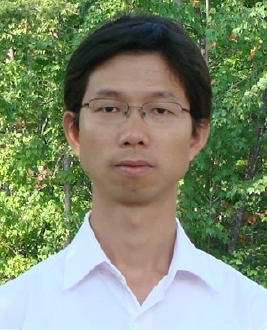 Wenjun Ying (应文俊)合作论文数Department of Mathematics, School of Mathematical Sciences, Shanghai Jiao Tong University;Institute of Natural Sciences, Shanghai Jiao Tong University2
 Joshua E. S. Socolar合作论文数Department of Physics, Trinity College of Arts & Sciences, Duke University2John V. Matthews合作论文数2Robert A. Oliver合作论文数2Anne J. Catlla合作论文数2Brian T. Hayes合作论文数2P. L. Paes-Leme合作论文数1D. Marchesin合作论文数1M. Irfan Khan合作论文数1Colleen Mitchell合作论文数1
 Jian-Geng Chiou合作论文数Duke Univ, Med Ctr, Dept Pharmacol & Canc Biol, Durham, NC 27706 USA1Henry Greenside合作论文数1Stephen Payne合作论文数1
 Stephen Schecter合作论文数Dept Math, North Carolina State Univ1
 Laurens E. Howle合作论文数Thomas Lord Department of Mechanical Engineering & Materials Science, Pratt School of Engineering, Duke University1
 Pei Zhong合作论文数Department of Biomedical Engineering, Pratt School of Engineering, Duke University1
 Marc Daniel Ryser合作论文数Department of Mathematics, Trinity College of Arts & Sciences, Duke University1
 Martin Wechselberger合作论文数School of Mathematics and Statistics, Faculty of Science, The University of Sydney1
 Daniel Julio Lew合作论文数Departments of Basic Science, Duke University;Departments of Pharmacology and Cancer Biology, School of Medicine, Duke University;Massachusetts Institute of Technology1
 Chris Jones合作论文数University of North Carolina Chapel Hill1
 Ciupe Stanca M合作论文数Dept Math, Virginia Tech1Farjoun Yossi合作论文数Program in Medical and Population Genetics, Broad Institute of Harvard and MIT1Yangxiaolu Cao合作论文数1Mitchell C. C.合作论文数1
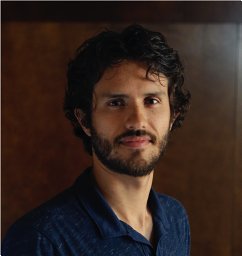 Ramirez Samuel A合作论文数1Forde Jonathan合作论文数Department of Mathematics and Computer Science, Hobart and Williams Smith Colleges1
 John Gray合作论文数The University of Manchester1Feng Wang合作论文数1
 Brian.P. Tighe合作论文数Process and Energy Department, Faculty of Mechanical, Maritime and Materials Engineering, Delft University of Technology1




