We introduce the notion of a naive global 2-ring: a functor from the opposite of the ∞-category of global spaces to presentably symmetric monoidal stable ∞-categories. By passing to global sections, every naive global 2-ring decategorifies to a multiplicative cohomology theory on global spaces, i.e. a naive global ring. We suggest when a naive global 2-ring deserves to be called genuine. As evidence, we associate to such a global 2-ring a family of equivariant cohomology theories which satisfy a version of the change of group axioms introduced by Ginzburg, Kapranov and Vasserot. We further show that the decategorified multiplicative global cohomology theory associated to a genuine global 2-ring canonically refines to an 𝔼_∞-ring object in global spectra. As we show, two interesting examples of genuine global 2-rings are given by quasi-coherent sheaves on the torsion points of an oriented spectral elliptic curve and Lurie's theory of tempered local systems. In particular, we obtain global spectra representing equivariant elliptic cohomology and tempered cohomology.
This paper proposes a connection between algebraic K-theory and foam cobordisms, where foams are stratified manifolds with singularities of a prescribed form. We consider n-dimensional foams equipped with a flat bundle of finitely-generated projective R-modules over each facet of the foam, together with gluing conditions along the subfoam of singular points. In a suitable sense which will become clear, a vertex (or the smallest stratum) of an n-dimensional foam replaces an (n+1)-simplex with a total ordering of vertices. We show that the first K-theory group of a ring R can be identified with the cobordism group of decorated 1-foams embedded in the plane. A similar relation between the n-th algebraic K-theory group of a ring R and the cobordism group of decorated n-foams embedded in ℝ^n+1 is expected for n>1. An analogous correspondence is proposed for arbitrary exact categories. Modifying the embedding and other conditions on the foams may lead to new flavors of K-theory groups.
We establish, in the setting of equivariant motivic homotopy theory for a finite group, a version of tom Dieck’s splitting theorem for the fixed points of a suspension spectrum. Along the way we establish structural results and constructions for equivariant motivic homotopy theory of independent interest. This includes geometric fixed-point functors and the motivic Adams isomorphism.
Following ideas of Lurie, we give a general construction of equivariant elliptic cohomology without restriction to characteristic zero. Specializing to the universal elliptic curve we obtain, in particular, equivariant spectra of topological modular forms. We compute the fixed points of these spectra for the circle group and more generally for tori.
We develop an infinity-categorical version of the classical theory of polynomial and analytic functors, initial algebras, and free monads. Using this machinery, we provide a new model for infinity-operads, namely infinity-operads as analytic monads. We justify this definition by proving that the infinity-category of analytic monads is equivalent to that of dendroidal Segal spaces, known to be equivalent to the other existing models for infinity-operads.
We develop differential algebraic K-theory for rings of integers in number fields and we construct a cycle map from geometrized bundles of modules over such a ring to the differential algebraic K-theory. We also treat some of the foundational aspects of differential cohomology, including differential function spectra and the differential Becker-Gottlieb transfer. We then state a transfer index conjecture about the equality of the Becker-Gottlieb transfer and the analytic transfer defined by Lott. In support of this conjecture, we derive some non-trivial consequences which are provable by independent means.
In this paper we develop methods for classifying Baker-Richter-Szymik's Azumaya algebras over a commutative ring spectrum, especially in the largely inaccessible case where the ring is nonconnective. We give obstruction-theoretic tools, constructing and classifying these algebras and their automorphisms with Goerss-Hopkins obstruction theory, and give descent-theoretic tools, applying Lurie's work on $\infty$-categories to show that a finite Galois extension of rings in the sense of Rognes becomes a homotopy fixed-point equivalence on Brauer spaces. For even-periodic ring spectra $E$, we find that the "algebraic" Azumaya algebras whose coefficient ring is projective are governed by the Brauer-Wall group of $\pi_0(E)$, recovering a result of Baker-Richter-Szymik. This allows us to calculate many examples. For example, we find that the algebraic Azumaya algebras over Lubin-Tate spectra have either 4 or 2 Morita equivalence classes depending on whether the prime is odd or even, that all algebraic Azumaya algebras over the complex K-theory spectrum $KU$ are Morita trivial, and that the group of the Morita classes of algebraic Azumaya algebras over the localization $KU[1/2]$ is $\Bbb Z/8 \times \Bbb Z/2$. Using our descent results and an obstruction theory spectral sequence, we also study Azumaya algebras over the real K-theory spectrum $KO$ which become Morita-trivial $KU$-algebras. We show that there exist exactly two Morita equivalence classes of these. The nontrivial Morita equivalence class is realized by an "exotic" $KO$-algebra with the same coefficient ring as $End_{KO}(KU)$. This requires a careful analysis of what happens in the homotopy fixed-point spectral sequence for the Picard space of $KU$, previously studied by Mathew and Stojanoska.
We identify the type of $\mathbb{C}[[\hbar]]$-linear structure inherent in the $\infty$-categories which arise in the theory of Deformation Quantization modules. Using this structure, we show that the $\infty$-category of quasicoherent cohomologically complete DQ-modules is a deformation of the $\infty$-category of quasicoherent sheaves. We also obtain integral representation results for DQ-modules similar to the ones of To\"en and Ben-Zvi-Nadler-Francis, stating that suitably linear functors between $\infty$-categories of DQ-modules are integral transforms.
This article is a survey of algebra in the $\infty$-categorical context, as developed by Lurie in "Higher Algebra", and is a chapter in the "Handbook of Homotopy Theory". We begin by introducing symmetric monoidal stable $\infty$-categories, such as the derived $\infty$-category of a commutative ring, before turning to our main example, the $\infty$-category of spectra. We then go on to consider ring spectra and their $\infty$-categories of modules, as well as basic constructions such as localization, completion, and dualizability. We conclude with a brief account of the cotangent complex and deformation theory.
We set up a general theory of weak or homotopy-coherent enrichment in an arbitrary monoidal $\infty$-category $\mathcal{V}$. Our theory of enriched $\infty$-categories has many desirable properties; for instance, if the enriching $\infty$-category $\mathcal{V}$ is presentably symmetric monoidal then $\mathrm{Cat}^\mathcal{V}_\infty$ is as well. These features render the theory useful even when an $\infty$-category of enriched $\infty$-categories comes from a model category (as is often the case in examples of interest, e.g. dg-categories, spectral categories, and $(\infty,n)$-categories). This is analogous to the advantages of $\infty$-categories over more rigid models such as simplicial categories - for example, the resulting $\infty$-categories of functors between enriched $\infty$-categories automatically have the correct homotopy type. We construct the homotopy theory of $\mathcal{V}$-enriched $\infty$-categories as a certain full subcategory of the $\infty$-category of "many-object associative algebras" in $\mathcal{V}$. The latter are defined using a non-symmetric version of Lurie's $\infty$-operads, and we develop the basics of this theory, closely following Lurie's treatment of symmetric $\infty$-operads. While we may regard these "many-object" algebras as enriched $\infty$-categories, we show that it is precisely the full subcategory of "complete" objects (in the sense of Rezk, i.e. those whose space of objects is equivalent to its space of equivalences) which are local with respect to the class of fully faithful and essentially surjective functors. Lastly, we present some applications of our theory, most notably the identification of associative algebras in $\mathcal{V}$ as a coreflective subcategory of pointed $\mathcal{V}$-enriched $\infty$-categories as well as a proof of a strong version of the Baez-Dolan stabilization hypothesis.
2 Category theory 8 2.1 Presheaves and colimits . . . . . . . . . . . . . . . . . . . . . . . 8 2.2 The Grothendieck construction . . . . . . . . . . . . . . . . . . . 10 2.3 Monoidal and symmetric monoidal ∞-categories . . . . . . . . . 12 2.4 Presentable ∞-categories . . . . . . . . . . . . . . . . . . . . . . 14 2.5 Stable ∞-categories . . . . . . . . . . . . . . . . . . . . . . . . . 17 2.6 Homotopy groups and t-structures . . . . . . . . . . . . . . . . . 20
Schlichting conjectured that the negative K-groups of small abelian categories vanish and proved this for noetherian abelian categories and for all abelian categories in degree $-1$. The main results of this paper are that $K_{-1}(E)$ vanishes when $E$ is a small stable $\infty$-category with a bounded t-structure and that $K_{-n}(E)$ vanishes for all $n\geq 1$ when additionally the heart of $E$ is noetherian. It follows that Barwick's theorem of the heart holds for nonconnective K-theory spectra when the heart is noetherian. We give several applications, to non-existence results for bounded t-structures and stability conditions, to possible K-theoretic obstructions to the existence of the motivic t-structure, and to vanishing results for the negative K-groups of a large class of dg algebras and ring spectra.
We introduce a general theory of parametrized objects in the setting of infinity categories. Although spaces and spectra parametrized over spaces are the most familiar examples, we establish our theory in the generality of objects of a presentable infinity category parametrized over objects of an infinity topos. We obtain a coherent functor formalism describing the relationship of the various adjoint functors associated to base-change and symmetric monoidal structures. Our main applications are to the study of generalized Thom spectra. We obtain fiberwise constructions of twisted Umkehr maps for twisted generalized cohomology theories using a geometric fiberwise construction of Atiyah duality. In order to characterize the algebraic structures on generalized Thom spectra and twisted (co)homology, we characterize the generalized Thom spectrum as a categorification of the well-known adjunction between units and group rings.
We identify the $K$-theoretic fiber of a localization of ring spectra in terms of the $K$-theory of the endomorphism algebra spectrum of a Koszul-type complex. Using this identification, we provide a negative answer to a question of Rognes for $n>1$ by comparing the traces of the fiber of the map $K(BP(n))\rightarrow K(E(n))$ and of $K(BP(n-1))$ in rational topological Hochschild homology.
After developing the basic theory of locally cartesian localizations of presentable locally cartesian closed infinity-categories, we establish the representability of equivalences and show that univalent families, in the sense of Voevodsky, form a poset isomorphic to the poset of bounded local classes, in the sense of Lurie. It follows that every infinity-topos has a hierarchy of "universal" univalent families, indexed by regular cardinals, and that n-topoi have univalent families classifying (n-2)-truncated maps. We show that univalent families are preserved (and detected) by right adjoints to locally cartesian localizations, and use this to exhibit certain canonical univalent families in infinity-quasitopoi (certain infinity-categories of "separated presheaves", introduced here). We also exhibit some more exotic examples of univalent families, illustrating that a univalent family in an n-topos need not be (n-2)-truncated, as well as some univalent families in the Morel--Voevodsky infinity-category of motivic spaces, an instance of a locally cartesian closed infinity-category which is not an n-topos for any $0\leq n\leq\infty$. Lastly, we show that any presentable locally cartesian closed infinity-category is modeled by a combinatorial type-theoretic model category, and conversely that the infinity-category underlying a combinatorial type-theoretic model category is presentable and locally cartesian closed. Under this correspondence, univalent families in presentable locally cartesian closed infinity-categories correspond to univalent fibrations in combinatorial type-theoretic model categories.
We define and discuss lax and weighted colimits of diagrams in $\infty$-categories and show that the coCartesian fibration associated to a functor is given by its lax colimit. A key ingredient, of independent interest, is a simple characterization of the free Cartesian fibration associated to a a functor of $\infty$-categories. As an application of these results, we prove that lax representable functors are preserved under exponentiation, and also that the total space of a presentable Cartesian fibration between $\infty$-categories is presentable, generalizing a theorem of Makkai and Par\'e to the $\infty$-categorical setting. Lastly, in the appendix, we observe that pseudofunctors between (2,1)-categories give rise to functors between $\infty$-categories via the Duskin nerve.
We set up a general theory of weak or homotopy-coherent enrichment in an arbitrary monoidal infinity-category. Our theory of enriched infinity-categories has many desirable properties; for instance, if the enriching infinity-category V is presentably symmetric monoidal then Cat(infinity)(v), is as well. These features render the theory useful even when an infinity-category of enriched infinity-categories comes from a model category (as is often the case in examples of interest, e.g. dg-categories, spectral categories, and (infinity, n)-categories). This is analogous to the advantages of infinity-categories over more rigid models such as simplicial categories for example, the resulting infinity-categories of functors between enriched infinity-categories automatically have the correct homotopy type.We construct the homotopy theory of V-enriched infinity-categories as a certain full subcategory of the infinity-category of "many-object associative algebras" in V. The latter are defined using a non-symmetric version of Lurie's infinity-operads, and we develop the basics of this theory, closely following Lurie's treatment of symmetric infinity-operads. While we may regard these "many-object" algebras as enriched infinity-categories, we show that it is precisely the full subcategory of "complete" objects (in the sense of Rezk, i.e. those whose spaces of objects are equivalent to their spaces of equivalences) that are local with respect to the class of fully faithful and essentially surjective functors. We also consider an alternative model of enriched infinity-categories as certain presheaves of spaces satisfying analogues of the "Segal condition" for Rezk's Segal spaces. Lastly, we present some applications of our theory, most notably the identification of associative algebras in V as a coreflective subcategory of pointed V-enriched infinity-categories as well as a proof of a strong version of the Baez-Dolan stabilization hypothesis. (C) 2015 Elsevier Inc. All rights reserved.
We establish a canonical and unique tensor product for commutative monoids and groups in an1‐category C which generalizes the ordinary tensor product of abelian groups. Using this tensor product we show that En ‐(semi)ring objects in C give rise to En ‐ring spectrum objects in C . In the case that C is the1‐category of spaces this produces a multiplicative infinite loop space machine which can be applied to the algebraic K‐theory of rings and ring spectra. The main tool we use to establish these results is the theory of smashing localizations of presentable 1‐categories. In particular, we identify preadditive and additive 1‐categories as the local objects for certain smashing localizations. A central theme is the stability of algebraic structures under basechange; for example, we show Ring.D C/’ Ring.D/ C . Lastly, we also consider these algebraic structures from the perspective of Lawvere algebraic theories in1‐categories. 55P48; 55P43, 19D23
Making use of the theory of noncommutative motives, we characterize the topological Dennis trace map as the unique multiplicative natural transformation from algebraic K-theory to topological Hochschild homology (THH) and the cyclotomic trace map as the unique multiplicative lift through topological cyclic homology (TC). Moreover, we prove that the space of all multiplicative structures on algebraic K-theory is contractible. We also show that the algebraic K-theory functor from small stable infinity categories to spectra is lax symmetric monoidal, which in particular implies that E_n ring spectra give rise to E_{n-1} ring algebraic K-theory spectra. Along the way, we develop a "multiplicative Morita theory", establishing a symmetric monoidal equivalence between the infinity category of small idempotent-complete stable infinity categories and the Morita localization of the infinity category of spectral categories.
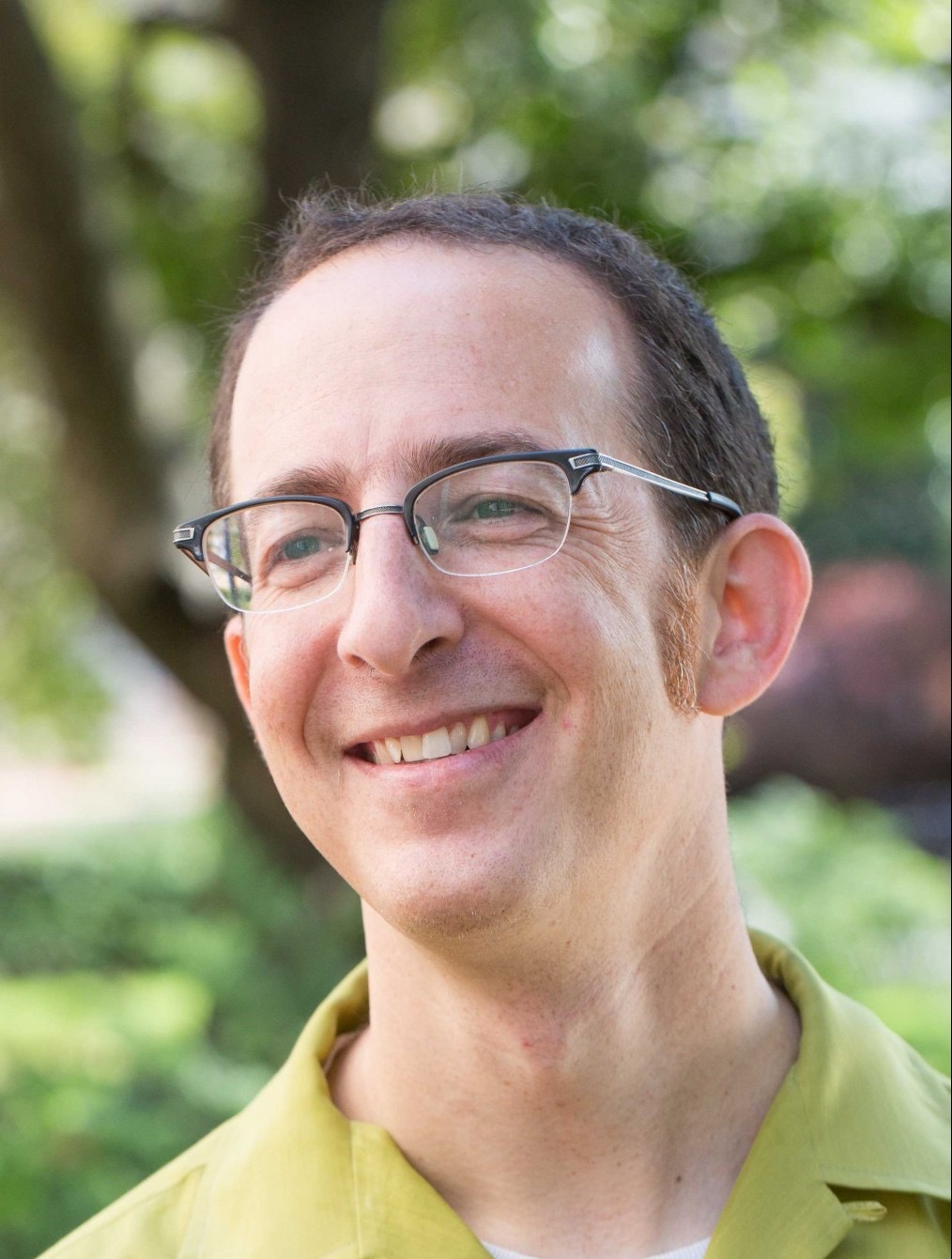 Andrew J. Blumberg合作论文数Department of Math, Columbia University in the City of New York;Herbert and Florence Irving Institute of Cancer Dynamics, Columbia University in the City of New York;Herbert Irving Comprehensive Cancer Center, Columbia University in the City of New York7
 Matthew Ando合作论文数5
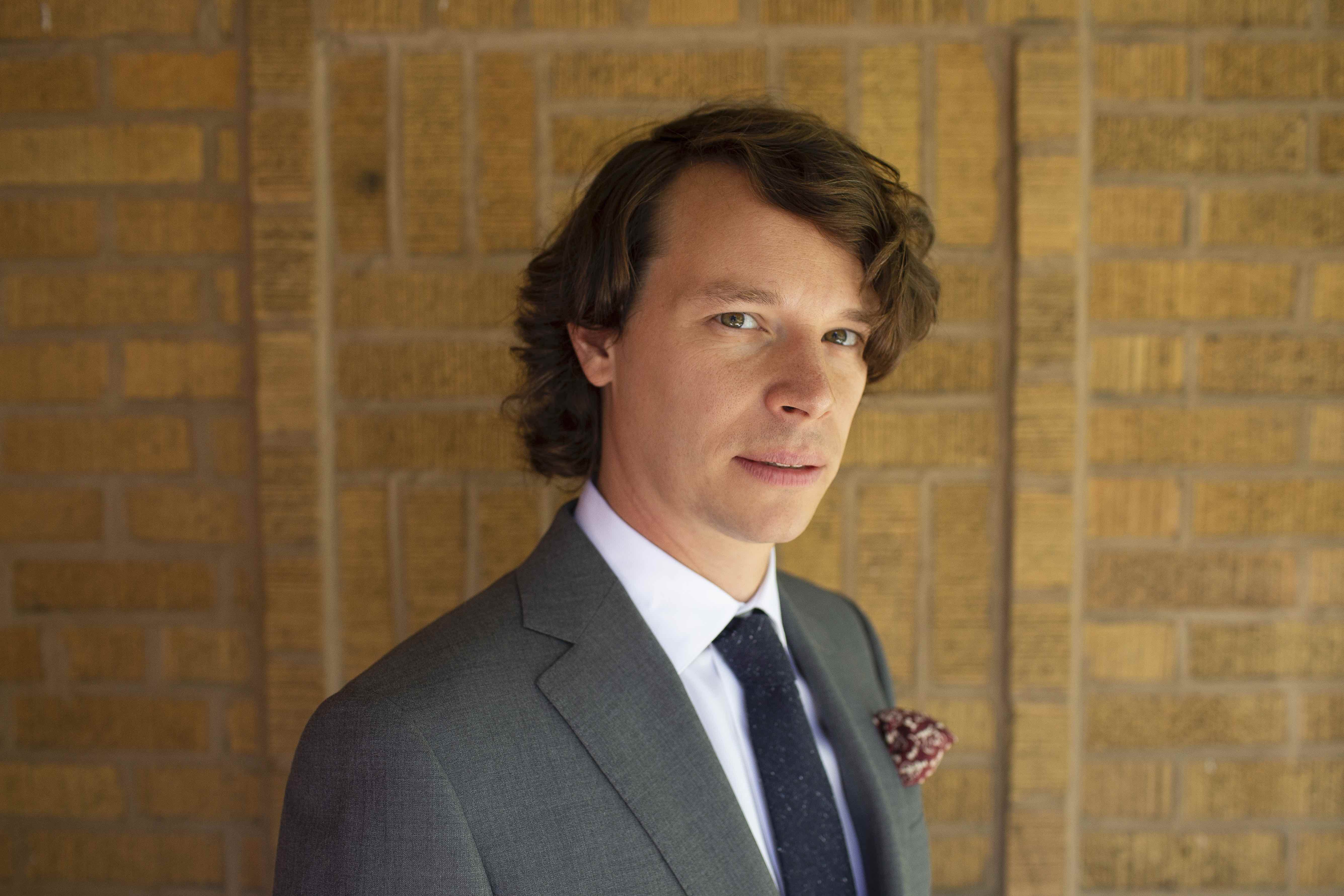 David Benjamin Antieau合作论文数Department of Mathematics, Northwestern University5
 Rune Haugseng合作论文数4
 Charles Rezk合作论文数Department of Mathematics, College of Liberal Arts and Sciences, University of Illinois at Urbana-Champaign3
 Michael Hopkins合作论文数Department of Mathematics, Harvard University3Thomas Nikolaus合作论文数Math Inst, Univ Munster2
 Jose Manuel Gomez合作论文数Escuela Matemat, Univ Nacl Colombia2Goncalo Tabuada合作论文数Universite Paris2
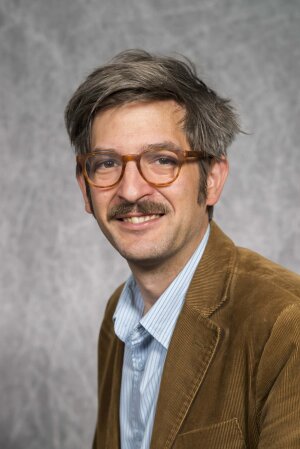 Jeremiah Heller合作论文数Department of Mathematics, College of Liberal Arts and Sciences, University of Illinois at Urbana-Champaign2Joachim Kock合作论文数Recife2moritz groth合作论文数1Tobias Barthel合作论文数1
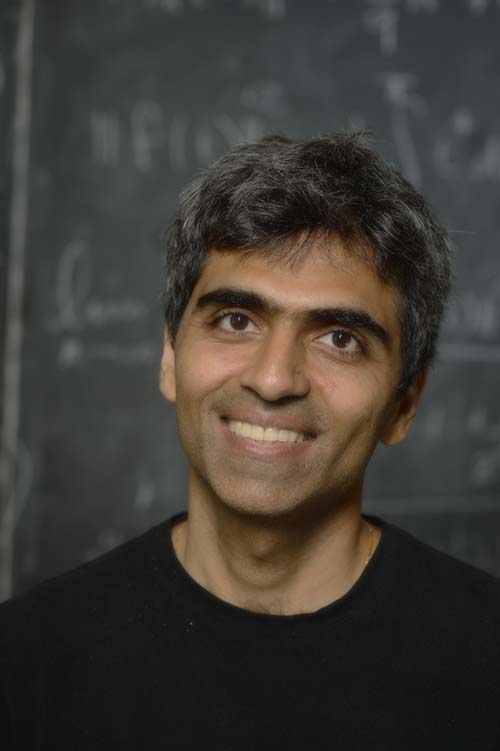 Nitu Kitchloo合作论文数Department of Mathematics, Krieger School of Arts & Sciences, Johns Hopkins University1Ulrich Bunke合作论文数1Francois M Petit合作论文数Cabinet médical Saint-Jacques1
 Mee Seong Im合作论文数1Mikhail Khovanov合作论文数Department of Mathematics, Columbia University1
 Tyler Lawson合作论文数School of Mathematics, College of Science and Engineering, University of Minnesota1
 André Henriques合作论文数Mathematical Institute, University of Oxford1
 Victor Snaith合作论文数Department of Mathematics,The University of Sheffield1Lennart Meier合作论文数Swiss Federal Institute of Technology (ETH) Zurich1




