OBJECTIVES:For evaluation of aortic valve area (AVA), transthoracic echocardiography (TTE) is the method of choice. Cardiac magnetic resonance (CMR) at 1.5-Tesla is an alternative. The aim of the study was to check whether quantification of whole range of AVA without severe aortic stenosis is possible and reliable in higher magnetic field strength, and also including a comparison to TTE. METHODS:In 3-T CMR phase contrast sequences were assessed above aortic valve and left ventricular output tract. AVA was calculated using the continuity equation. Planimetric analysis of AVA was performed in magnitude images. TTE was used as reference method for graduation of AVA. RESULTS:Totally 48 patients (64 ± 18 years) without severe aortic valve stenosis were prospectively enrolled. In CMR planimetric AVA was 2.5 ± 1.3 cm(2) and calculated AVA 2.4 ± 1.3 cm(2), whereas AVA in TTE was 1.9 ± 1.1 cm(2). Planimetric and calculated AVA in CMR and also AVA in CMR and TTE showed good correlation (r = 0.97, 0.92, respectively). Bland-Altman analysis demonstrated no signs of over- or underestimation. Inter- and intraobserver variabilities were low. DISCUSSION:Determination of AVA using 3-T CMR is possible using direct planimetry and continuity equation. CMR is the alternative first choice method in cases with discrepant or insufficient echocardiographic results.
Assessment of aortic valve area (AVA) is primarily carried out by echocardiography in clinical routine. In cases of insufficient acoustic window, discrepant medical findings or suboprimal Doppler conditions, 1.5 T magnetic resonance imaging (MRI) is discussed as an non-invasive alternative imaging method for planimetry of AVA. If quantification of AVA is also possible at higher magnetic field strength had not been investigated until now. The aim of the present study was to quantify AVA using planimetry and continuity equation and correlate them with each other.
Third- and sixth-grade students used a graphical simulation of the honeybee dance presented on a plasma panel deployed for several weeks in the corner of their classrooms. Among third graders, acceptance was hindered by discrepancies between the representation of phenomena in the simulation and students' prior knowledge of those phenomena. Sixth graders were forgiving of fidelity limitations, but experienced delays in learning due to their imposition of a "video game" interpretation of the activity.
Elementary school science focuses on the early phases of science inquiry: observation, description, data collection, reflection, and reporting. Technologies afford opportunities to scaffold and extend the domains of inquiry, but successful adoption depends on their integration with classroom organization and practice. In elementary schools, small group and whole class activities dominate over solitary activity, and the effective use of traditional desktop computer systems has proven to be a difficult challenge for classroom teachers. Increasingly affordable large-format displays more naturally support small-group collaboration, but require careful activity design to maximize utility. We describe an activity design employing large displays that accommodates both the constraints of the classroom and the play experiences of children in support of observational science learning.
The study of memory loss has been going on for a long time. Memories systematically distort and modify with time. Many biological organs go through a continuum of cellular atrophy and regeneration. In this continuum, many of the processing elements will eventually atrophy, reducing the total number of processing elements, thus increasing the system's efficiency. In this paper, we briefly describe memory loss in biological systems and how to present this concept in realistic neural nets, for instance, geometric pattern recognition.
To obtain a better estimate of course offerings required to run a four year curriculum in Computer Science, ten years of student flow was simulated. The simulation was based on the Computer Science curriculum at Southeastern and its student's progression as of Fall, 1984. Mentioned topics will include (1) model construction (2) model validation (3) balancing of course loads (4) impact of curriculum changes, and (5) recommendations.
 Speiser U合作论文数2
 Ruth Strasser合作论文数Technische Universität Dresden2
 Janet Yonga Kim Knowles合作论文数Argonne National Laboratory2Andrew Johnson合作论文数1Steffen Schoen合作论文数1Jellinghaus Stefanie合作论文数1
 Silvio Quick合作论文数1Waessnig Nadine合作论文数1Youssef Akram合作论文数1
 Karim Ibrahim合作论文数1
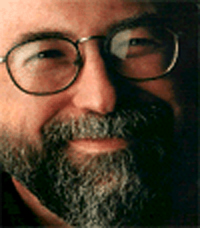 Tom Moher合作论文数Department of Computer Science
Electronic Visualization Laboratory
College of Engineering1Achmed Abbas合作论文数1Dia Ali合作论文数1
Tom Moher合作论文数Department of Computer Science
Electronic Visualization Laboratory
College of Engineering1Achmed Abbas合作论文数1Dia Ali合作论文数1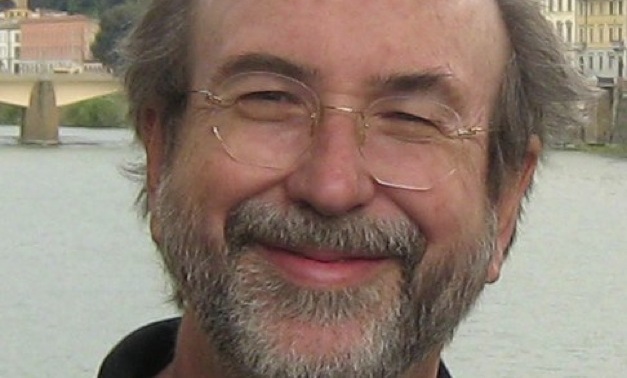 Thomas G. Moher合作论文数Learning Technologies Group
Electronic Visualization Laboratory
Department of Computer Science
Learning Sciences Research Institute
University of Illinois at Chicago1
Thomas G. Moher合作论文数Learning Technologies Group
Electronic Visualization Laboratory
Department of Computer Science
Learning Sciences Research Institute
University of Illinois at Chicago1




