Summary: Unrelated-donor marrow transplantation is a potential option for transplant candidates lacking a compatible related donor. The T-cell Depletion Study compared the 3-year disease-free survival for patients receiving T-cell-depleted (TCD) donor marrow ( n =203) vs unmanipulated donor marrow with methotrexate and cyclosporine (M/C) ( n =207). Hospital costs during index admission were documented with billing data, while hospital costs during subsequent 6-month follow-up were estimated from case report forms. Patients with index admission billing were included in the analysis (TCD=119, M/C=127). Total hospital length of stay (LOS) was similar across groups, with medians 47.0 days for TCD and 52.0 days for M/C ( P =0.72). Total hospital costs were comparable, $145 115 vs $141 981 ( P =0.63) for TCD and M/C, respectively. However, controlling for site and patient characteristics, TCD was associated with a 12.1% reduction in LOS for the index admission (95% CI −19.4%, −4.3%). Independent of treatment, HLA matching (6/6) was associated with an 8.6% (95% CI −17.4%, +1.2%) reduction in the index admission LOS, while cost was lower by 15.8% (95% CI −26.7%, −3.3%). Treatment costs were similar for TCD and M/C study groups. Savings on reduced cost for treating acute graft-versus-host disease were likely offset by increase in serious infections in the TCD arm.
In conjunction with a randomized trial of T-cell depletion versus conventional graft-versus-host disease (GVHD) prophylaxis, we assessed GVHD grading by comparing the transplant center 100-day score, a clinically calculated algorithm, and a blinded expert panel review (PR). Weekly skin, gut, and liver clinical staging; clinically verified differential diagnosis; biopsy information; cyclosporine levels; and initiation of treatment were reviewed and graded according to the consensus GVHD grading method modified by a prospectively determined grading algorithm that specified liver and gut downstaging if a differential diagnosis in that organ was identified. Transplant center (TC) determination of maximum grade was compared with the algorithm-calculated grade and the final expert PR. Of 404 patients reviewed, the TC grade concurred with the calculated algorithm grade in 72% (the algorithm upgraded 18% and downgraded 10%), whereas the TC grade agreed with the PR in 77% (the PR upgraded 12% and downgraded 11%). The calculated algorithm grade was nearly fully (92%) concordant with the final PR grade (the PR upgraded 0.7% and downgraded 7%). Blinded, duplicate reviews for quality control (n = 108) agreed with the initial review in 89% of cases. Algorithm and/or PR review reduced the TC-reported incidence of grade II (28% to 23%) and increased grade III (11% to 20%), whereas grade 0 (41% to 42%), grade I (13% to 12%), and grade IV (7% to 6%) were invariant. Recalculation of the algorithm grading without differential diagnosis downstaging reduced agreement with the TC to a small extent. The original algorithm changed 51 (13%) of 404 from grade 0 to II into grade III or IV or vice versa; calculation without the downgrade modified 44 cases (11%). Maximum acute GVHD grade had a major effect on 2-year disease-free survival, but assignment by TC, calculated algorithm, or final PR grade had little effect on survival within grades or grade categories 0 through II versus III or IV. We conclude that detailed and expert PR yields GVHD scoring that is internally consistent and reproducible with 89% concordance. Weekly recording of GVHD stage along with a calculated grading algorithm acknowledging differential diagnoses results in a final and maximum grade nearly fully concordant with the expert blinded PR. Multicenter prospective GVHD scoring using all available weekly staging and differential diagnosis data can be reliably assessed with a clinically relevant algorithm. This approach can thereby reduce investigator bias, facilitate comparison between centers, and perhaps eliminate the need for an expert PR. This technique should be used in future prospective studies of GVHD prophylaxis.
Arsenic trioxide has been shown to be effective in treating acute promyelocytic leukemia (APL), with minimal overall toxicity reported to date. A phase I/II study was initiated in June 1998 using arsenic trioxide for relapsed APL to determine the maximum tolerated or minimal effective dose and to determine the efficacy of treatment at that dose. Ten patients received 1 to 4 monthly cycles of treatment with 0.1 mg/kg per day intravenous arsenic trioxide. Six of 7 patients evaluable for response achieved cytogenetic or molecular complete remission. However, 3 patients died suddenly during the first cycle of treatment. Autopsies obtained on 2 of these failed to identify a cause of sudden death, despite evidence of pulmonary hemorrhage in one. A third patient, for whom an autopsy was not performed, became asystolic and died while on continuous cardiac telemetry. These observations suggest that arsenic trioxide may be significantly or even fatally toxic at doses currently used and that caution is warranted in its use.
Between November 1976 and December 1987, 84 patients with newly diagnosed acute non-lymphoblastic leukemia who had achieved complete remission underwent non T-cell depleted allogeneic bone marrow transplantation from Human Leukocyte Antigen-Mixed Lymphocyte Culture (HLA-MLC) matched sibling donors. The first 36 patients (November 1976–June 1983) were prepared with cyclophosphamide sibling donors. The first 36 patients fraction total body irradiation with 750 cGy at a dose rate of 26 cGy/minute (Group I). The next 48 patients (July 1983–December 1987) were prepared with similar chemotherapy, but received hyperfractionated total body irradiation with total 1320 cGy, 165 cGy twice a day at a dose rate of 10 cGy/minute (Group II). Patient characteristics between these two groups are similar except for the significantly older age distribution in Group II. Median follow-up of Groups I and II are 8 years and 11 months and 2 years and 3 months, respectively. The Kaplan-Meier relapse-free survival, survival, and relapse rates at 3 years are 56, 58, and 19% in Group I and 69 (p = 0.22), 77 (p = 0.07), and 10% (p = 0.37) in Group II. There is no difference in the incidence of interstitial pneumonitis, viral or idiopathic, engraftment rate, or incidence of graft versus host disease (GVHD) between these two groups. The fractionated total body irradiation treated group had significantly less nausea and vomiting. Multivariate analysis shows that total body irradiation regimen is not a significant factor in regard to relapse rate, relapse-free survival, and survival.
Acute lymphoblastic leukemia (ALL) includes heterogeneous clinical leukemic syndromes which differ in clinical presentation, immunophenotype, cytogenetics, and clinical outcome. Recognition of this heterogeneity has allowed definition of curative therapy for more than 50% of patients with ALL, especially in children. Despite these scientific and clinical advances, certain patient subgroups at presentation and most after clinical relapse have a poor prognosis and thus have been considered candidates for therapy with bone marrow transplantation (BMT). Since 1982, at the University of Minnesota, we have undertaken a series of consecutive parallel trials of bone marrow transplantation for patients with high-risk acute lymphoblastic leukemia using histocompatible sibling donor marrow when available and ex vivo purged autologous re-mission bone marrow for patients lacking an available matched donor [3].
Bronchiolitis obliterans occurred in the setting of chronic graft-versus-host disease 1 year after allogeneic bone marrow transplantation for chronic myelogenous leukemia. The severe obstructive pulmonary disease followed an episode of interstitial pneumonitis. The etiology and possible relationship to graft-versus-host disease of this rare pulmonary lesion following bone marrow transplantation are discussed.
Allogeneic bone marrow transplantation was performed in 10 patients with disseminated Burkitt's lymphoma or poor-prognosis T-cell lymphoblastic lymphoma. All patients received a cytoreduction regimen consisting of cyclophosphamide, cytosine arabinoside, bis-chloro-nitroso-urea, and total-body irradiation. Eight patients received marrow from HLA-matched sibling donors. One patient received marrow from a parent donor and one patient died during initial cytoreduction and did not undergo total-body irradiation or marrow infusion. Six patients had Burkitt's lymphoma stages III and IV at diagnosis, and three of the six are alive at 18, 28, and 73 months. Four patients had T-cell lymphoblastic lymphoma, stages III and IV at diagnosis, and two of the four are alive at 29 and 49 months. Overall survival in the nine patients who underwent transplantation is 56 percent by life-table analysis. Follow up for the surviving patients ranges from 18 to 73 months (median 29 months). All five survivors are at home with unmaintained remissions.
 N Ramsay合作论文数9Mark E. Nesbit合作论文数9
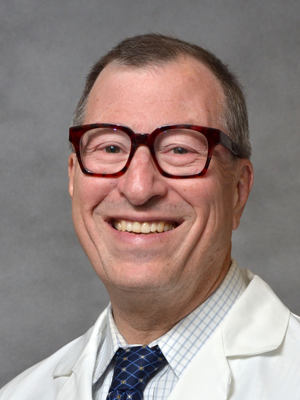 Daniel Weisdorf合作论文数Division of Hematology, Oncology and Transplantation, Department of Medicine, Medical School, University of Minnesota;Clinical and Translational Science Institute, University of Minnesota9Philip Mcglave合作论文数7Jh Kersey合作论文数7
 Philip B. Mcglave合作论文数University of Minnesota Blood and Marrow Transplant Clinic;Division of Hematology, Oncology and Transplantation, University of Minnesota Medical School5Anne I. Goldman合作论文数5T LEBIEN合作论文数4
 John Kersey合作论文数Masonic Cancer Center, University of Minnesota4
 Tak Kim合作论文数Department of Obstetrics and Gynecology, College of Medicine, Korea University4William Krivit合作论文数University of Minnesota4Bruce Bostrom合作论文数3C Howe合作论文数3S. Carter合作论文数3Woods William G合作论文数3Tae H. Kim合作论文数3William G. Woods合作论文数3Nancy a Kernan合作论文数3La Jensen合作论文数2TH KIM合作论文数2
 Daniel A. Vallera合作论文数Department of Radiation Oncology, Medical School, University of Minnesota2
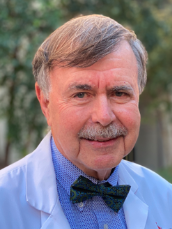 Greg Vercellotti合作论文数Division of Hematology, Oncology and Transplantation, Department of Medicine, Medical School, University of Minnesota2Richard D Brunning合作论文数2N.K.C. Ramsay合作论文数2Donald Stablein合作论文数2Robert Haake合作论文数2
 John Wagner合作论文数Division of Blood and Marrow Transplant & Cellular Therapy, Department of Pediatrics, University of Minnesota;Medical School, University of Minnesota2
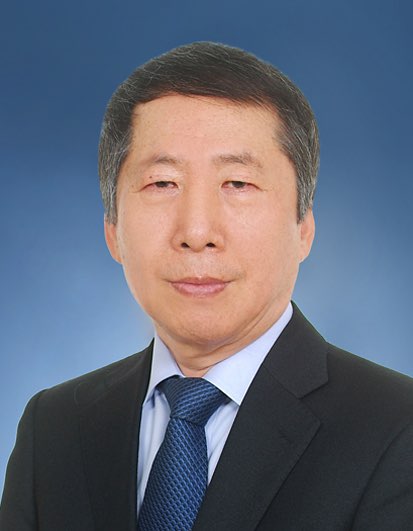 Tae-Whan Kim合作论文数Department of Electronic Engineering, Hanyang University2Na Kernan合作论文数1R Stong合作论文数1naji hakim合作论文数1R YOULE合作论文数1M OLEARY合作论文数1Frank Ferko合作论文数1Dale C. Snover合作论文数1R A Brown合作论文数1E Wagner合作论文数1DC ARTHUR合作论文数1P Westervelt合作论文数1G de Lissovoy合作论文数1John S. Thompson合作论文数1
 Selina M. Luger合作论文数Division of Hematology and Oncology, University of Pennsylvania1Nesbit M E合作论文数1Tucker W Lebien合作论文数DEPT LAB MED & PATHOL, UNIV MINNESOTA1R Gingrich合作论文数1
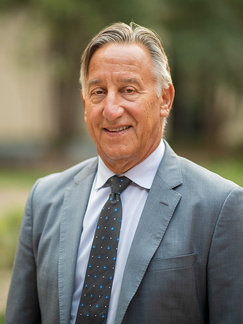 Mark Rosenberg合作论文数Division of Nephrology and Hypertension, University of Minnesota;Medical School, University of Minnesota1
 Fatih M. Uckun合作论文数Ares Pharmaceuticals, LLC;AresMIT Biomedical Computational Strategies1
 Alexandra (Lisa) H. Filipovich合作论文数Department of Pediatrics, UC;Cincinnati Children’s Hospital Medical Center1John F. Dipersio合作论文数1




