This article outlines the development of a continuous flow process for the manufacture of a key intermediate of the active pharmaceutical ingredient ipatasertib for the treatment of metastatic castration-resistant prostate cancer and triple-negative metastatic breast cancer. The reaction sequence incorporates multiple telescoped unit continuous operations, including a Br/Mg exchange reaction leading to intramolecular cyclization of the magnesium species onto a neighboring nitrile group to form a five-membered ring in 5-exo-dig fashion. The product from the reaction mixture is obtained after continuous aqueous acidic hydrolysis, neutralization/extraction, water wash, and phase separation. Each of these unit operations took place in a cascade of continuous stirred tank reactors. The control strategy was refined via a series of continuous lab studies at 20 g/h using a Design of Experiments approach to define process parameter ranges and to help identify any criticality therein. The learnings from this laboratory study served as a basis for the construction of a suitable pilot-plant facility, where the control strategy was verified at a representative manufacturing scale of about 1.0 kg/h.
Increasing demands on economic, social and environmental sustainability throughout society is putting pressure on the development of new and improved materials for resource efficiency, improved com ...
Cladosin C is one of the few known enaminotetramic acids, isolated from extracts of the deep sea fungus Cladosporium sphaerospermum. It was synthesised in ten steps and 14% overall yield by a late-stage amination of the corresponding 3-acyltetramic acid. This was obtained by a Dieckmann condensation of an N-β-ketoacylaminoester derived from dehydrovalinate and the thioester-terminated side chain containing the stereogenic centre which stemmed from poly-(R)-3-hydroxybutyrate.
(R)-(+)-Carolinic acid was prepared in seven steps and 59% yield from inexpensive benzyl L-lactate, the configuration of which was inverted by a Mitsunobu reaction with trifluoroacetate. The resulting benzyl D-lactate was cyclised by a domino addition-Wittig alkenation reaction with Ph3PCCO. The product tetronic acid was acylated with a second equivalent of this ylide to give a 3-acylylidenetetronic acid, which was olefinated directly with tert-butyl glyoxylate. The product alkene was hydrogenated and deprotected to afford pure crystalline (R)-(+)-carolinic acid, which proved inactive against Staphylococcus aureus and Escherichia coli mutant D21f2.
An enantioselective synthesis of a putative lipiarmycin aglycon was accomplished and features: 1) Brown's enantioselective alkoxyallylboration and allylation of aldehydes, 2) chain elongation by iterative Horner-Wadsworth-Emmons olefination, 3) Evans' aldol reaction and 4) an ene-diene ring-closing metathesis. A neighboring-group-assisted chemoselective reductive desilylation was uncovered in this study and was instrumental to the realization of the present synthesis.
This paper proposes a novel data structure for equationbased plant models. The data structure facilitates the plant modelling process starting from physics-based component creation through model simplification to Modelica model export.
The stereodivergent behavior of allenyl(cyano)- and allenyl(alkyl)cuprates toward aldehydes, providing a selective preparation of both syn- and anti-homopropargylic alcohols, is described. This study, which combines both experimental and theoretical support, shows that the copper nontransferred "dummy ligand" controls the localization of the lithium cation with respect to the allenylcuprate moiety. As a consequence, Li(+) acts as a Lewis acid activator but also controls the diastereoselectivity during the addition of allenylcuprates onto aldehydes. The combined high selectivity, efficiency, and versatility of these cuprate compounds opens the way to new one-pot synthetic procedures, as illustrated by the combined Klein rearrangement/transmetalation methodology described herein.
(Cyclopentadienyl)tris(acetonitrile)ruthenium hexafluorophosphate {[CpRu(NCMe) 3 ][PF 6 ]} or (cyclopentadienyl)(η 6 -naphthalene)ruthenium hexafluorophosphate {[CpRu(η 6 -naphthalene)][PF 6 ]} in combination with a pyridine oxazoline ligand efficiently catalyze the decarboxylative allylic rearrangement of allyl aryl carbonates. Good levels of regio- and enantioselectivity are obtained. Starting from enantioenriched secondary carbonates, the reaction is stereospecific and the corresponding allylic ethers are obtained with net retention of configuration. An intermolecular version of this transformation was also developed using allyl alkyl carbonates as substrates. Conditions were found to obtain the corresponding products with similar selectivity as in the intramolecular process. Through the use of a hemi-labile hexacoordinated phosphate counterion, a zwitterionic air- and moisture-stable chiral ruthenium complex was synthesized and used in the enantioselective etherification reactions. This highly lipophilic metal complex can be recovered and efficiently reused in subsequent catalysis runs.
[592479-02-2] C11H13NO2 (MW 191.23) InChI = 1S/C11H13NO2/c1-12-10-7-5-4-6-9(10)8-11(13-2)14-3/h4-7,11H,8H2,2-3H3 InChIKey = XSTAOBURMHGXDG-UHFFFAOYSA-N (convertible isocyanide; reagent for use in isocyanide-based multicomponent reactions such as the Ugi reaction, Ugi–Smiles reaction, and Passerini reaction) Alternate Names: 2-(2-isocyanophenyl)acetaldehyde dimethyl acetal; 1-isocyano-2-(2,2-dimethoxyethyl)benzene; 2-(2,2-dimethoxyethyl)phenyl isocyanide. Handling, Storage, and Precautions: stable for several weeks at 0 °C without any noticeable degradation.
The addition of a Lewis acidic metal triflate salt Mg(OTf)(2) as co-catalyst in the CpRu-catalyzed decarboxylative allylation of in situ-generated ketone enolates allows the reaction to proceed at lower temperature with higher regio- and enantioselectivity. Even so-far-unreactive substrates react.
ChemInform is a weekly Abstracting Service, delivering concise information at a glance that was extracted from about 200 leading journals. To access a ChemInform Abstract of an article which was published elsewhere, please select a “Full Text” option. The original article is trackable via the “References” option.
Pd(II) allyl and Pd(0) olefin complexes containing the configurationally labile ligand 1,2-bis-[4,5-dihydro-3H-dibenzo[c-e]azepino]ethane were studied as models for intermediates in Pd-catalyzed allylic alkylations. According to NMR and DFT studies, the ligand prefers C(s) conformation in both eta3-1,3-diphenylpropenyl and eta3-cyclohexenyl Pd(II) complexes, whereas in Pd(0) olefin complexes it adopts different conformations in complexes derived from the two types of allyl systems in both solution and, as verified by X-ray crystallography, in the solid state. These results demonstrate that the Pd complex is capable of adapting its structure to the reacting substrate. The different structural preferences also provide an explanation for the behavior of 1,3-diphenyl-2-propenyl acetate and 2-cyclohexenyl acetate in Pd-catalyzed allylic alkylations using pseudo-C2 and pseudo-C(s) symmetric ligands.
AbstractChemInform is a weekly Abstracting Service, delivering concise information at a glance that was extracted from about 200 leading journals. To access a ChemInform Abstract of an article which was published elsewhere, please select a “Full Text” option. The original article is trackable via the “References” option.
Asymmetric ruthenium catalysis is useful for the preparation of chiral allylic compounds through nucleophilic attack at the more substituted position of an allyl-ruthenium fragment. However, these reactions require large amounts (10 mol%) of Cp*Ru type catalysts which are difficult to recover owing to their sensitivity to oxygen and moisture. The present study reports that air- and moisture-stable Cp*Ru complexes are achievable through the use of the anionic monodentate ligand TRISPHAT-N.
La combinaison du precatalyseur stable a l'air [CpRu(η⁶-C₁₀H₈)] [PF₆] avec des ligands de type pyridine-monooxazoline a permis de developper une nouvelle strategie pour effectuer des reactions de substitution allyliques avec des conditions experimentales simples. Cette famille de ligands est apparue particulierement appropriee pour effectuer l'etude de reactions du type rearrangement de Carroll. Le mecanisme de cette reaction a ete etudie et un cycle catalytique raisonnable en a decoule. Une strategie de double activation par co-catalyse a donc ete developpee: l'utilisation synergique de sels de magnesium a permis d'effectuer ces reactions a temperature ambiante et donc de maniere plus selective.
 Jérôme Lacour合作论文数Département de Chimie Organique, Université de Genève18
 Samuel Constant合作论文数7
 Buron Frédéric合作论文数6Bk Mccaw合作论文数5Frederick M. Hecht合作论文数5Martina Austeri合作论文数5Simone Tortoioli合作论文数4Ew Lovrien合作论文数4
 Jieping Zhu (祝介平)合作论文数Institute of Chemical Sciences and Engineering, School of Basic Sciences, Ecole Polytechnique Fédérale De Lausanne4Jessica Müller合作论文数3govindasvamy padavattan合作论文数2jurgen gerhard合作论文数2F Hecht合作论文数2
 Hisahiro Ito合作论文数2
 Georg Süss Fink合作论文数Institut de Chimie, Faculté des sciences, Université de Neuchâtel2Erik Postma合作论文数Maplesoft2
 Rainer Schobert合作论文数Faculty of Biology, Chemistry & Earth Sciences, Universität Bayreuth2
 Bruno Therrien合作论文数University of Neuchatel2Elena Shmoylova合作论文数2
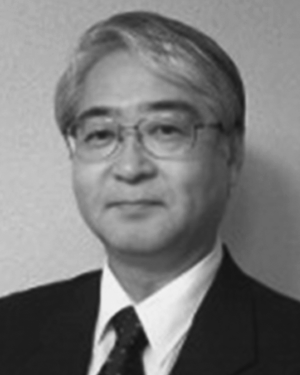 Akira Ohata合作论文数2
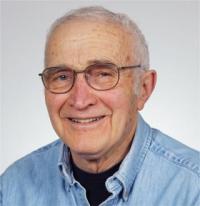 Stanley M. Gartler合作论文数Division of Medical Genetics, Department of Medicine, University of Washington2
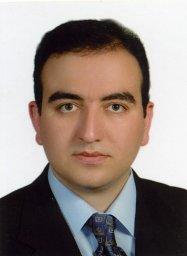 Masoud Abbaszadeh合作论文数Department of Electrical and Computer Engineering, University of Alberta2Jérôme Marrot合作论文数1Stefan Hildbrand合作论文数1
 Alexis Bouet合作论文数1Dainis Kaldre合作论文数1Kenneth Butts合作论文数1RA CAMPBELL合作论文数1john work合作论文数1Andreas Fischer合作论文数1Yb Talwalkar合作论文数1Je Musgrave合作论文数1
 Jens Lamerz合作论文数Translational Research Sciences, Pharmaceuticals Division,F. Hoffmann-La Roche Ltd.,Basel,Switzerland1
 Ken Butts合作论文数1Grassot Jean-Marie合作论文数1
 William Erb合作论文数1Pierre Mangeney合作论文数1Leland Allen合作论文数1John R. Campbell合作论文数1Judith Power合作论文数1
 János Pintér合作论文数Pintér Consulting Services, Inc.1
 Raivis Zalubovskis合作论文数1Barbara Kaiser Mccaw合作论文数1John Weis合作论文数1Paulina Chin合作论文数1Nacira Alouane合作论文数1Malcolm B. Berry合作论文数1Cyril Nicolas合作论文数1
 Hélène Gérard合作论文数Laboratoire de Chimie Théorique (UMR-CNRS 7616), Université Pierre et Marie Curie1




