Renewable energy is not a viable option unless energy can be stored on a large scale. David Lindley looks at five ways to do that.
Waste heat from industrial plants and electricity-generating stations represents a huge amount of lost energy. David Lindley finds out what engineers and regulators need to do to get it back.
This paper discusses the rationale, design and online delivery of postgraduate education by the Australian Computer Society (ACS). Called the Computer Professional Education (CPe) Program, the education aims to fill the gap between university study and industry experience. It aims to improve the employment and career prospects of recent ICT graduates and Provisional Members of the ACS. To achieve these aims, the ACS employs a teaching methodology describe as mentored and collaborative; meaning that, under the guidance of experienced IT educators and practitioners, students work individually and together to analyse and understand workplace situations and problems. And to support both its aims and its teaching methodology, it is delivered in a learning environment which is anywhere anytime, affordable, and based on students' own workplace circumstances. At a technical level, the teaching methodology is based on Salmon's Model of Online Learning and built on the Moodle learning management system.
Renaissance StudiesVolume 21, Issue 1 p. 129-131 Elizabethan Triumphal Processions by William Leahy David Lindley, David Lindley University of LeedsSearch for more papers by this author David Lindley, David Lindley University of LeedsSearch for more papers by this author First published: 31 January 2007 https://doi.org/10.1111/j.1477-4658.2007.00224.xRead the full textAboutPDF ToolsRequest permissionExport citationAdd to favoritesTrack citation ShareShare Give accessShare full text accessShare full-text accessPlease review our Terms and Conditions of Use and check box below to share full-text version of article.I have read and accept the Wiley Online Library Terms and Conditions of UseShareable LinkUse the link below to share a full-text version of this article with your friends and colleagues. Learn more.Copy URL Share a linkShare onEmailFacebookTwitterLinkedInRedditWechat Volume21, Issue1February 2007Pages 129-131 RelatedInformation
Music permeates Shakespeare's plays. This comprehensive study explores the variety of its theatrical functions, situating them in the context of the Early Modern period's understanding of music. From the trumpet calls which animate the battle scenes of the histories and tragedies to the songs which inflect the moods of the comedies and romances, Shakespeare experiments throughout his career with music's potential to contribute to the effect of his dramas. David Lindley sets the musical scene of Shakespeare's England, outlining the period's theoretical understanding of music and discussing the experience of music heard in the streets, alehouses, private residences, courts and theatres, which an audience brought with them to the Globe and Blackfriars. Music could be praised as a symbol of divine and political harmony, or vilified as an incitement to lust and effeminacy; it could heal and cure, or fuel drunken rebellion. Focusing throughout on the plays as theatrical events, this work analyzes Shakespeare's dramatic and thematic exploitation of these conflicting perceptions of music.
Researchers verify a 19th-century theory for the oscillations of a sphere using lasers and nanospheres.
In the United States people take their temperatures in Fahrenheit and, more mysteriously, rate their air-conditioners in British thermal units (Btus). Experience shows that it takes a few thousand Btus to cool a typical room (volume measured in cubic feet, of course, and let me not get started on the fact that we build our houses using two-by-fours whose cross-section is an inch and a half by three-and-a-half inches).
Researchers verify a 19th-century theory for the oscillations of a sphere using lasers and nanospheres.
 Christopher Anderson合作论文数Biol Sci, Dominican Univ2
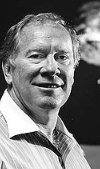 David Schramm合作论文数Physical Sciences Division, University of Chicago2
 Rocky Kolb合作论文数Kavli Institute for Cosmological Physics, University of Chicago;Department of Astronomy and Astrophysics, Division of the Physical Sciences, University of Chicago;Enrico Fermi Institute, University of Chicago2P Aldhous合作论文数1E. W. Kolb合作论文数1irving john good合作论文数1john w pratt合作论文数1Paul C. Southgate合作论文数1Oscar Kempthorne合作论文数1Brooks Hanson合作论文数1Kerr Russell G合作论文数1
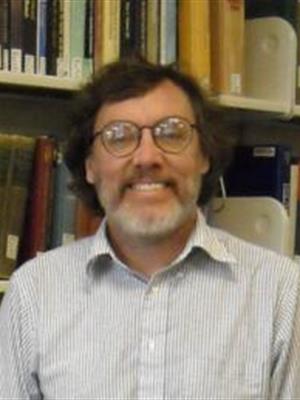 David Seckel合作论文数Department of Physics and Astronomy, College of Arts & Sciences, University of Delaware1
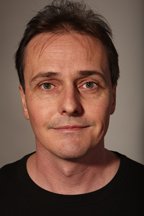 Peter Aldhous合作论文数New Scientist's1
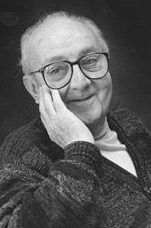 George E. P. Box合作论文数University of Wisconsin-Madison1Allan Birnbaum合作论文数1Brian Norton合作论文数1
 Jens Knauer合作论文数Atlas South Sea Pearl1Hugh Lockhart-Ball合作论文数1Marcia Barinaga合作论文数1Leonard J. Savage合作论文数1joseph palca合作论文数1David Swinbanks合作论文数Ocean Research Institute, University of Tokyo1
 Arthur Dempster合作论文数Harvard University;Purdue University;Harvard University, Harvard University1Jim Coombs合作论文数1Howard Levene合作论文数1Irwin D. J. Bross合作论文数1Jerome Cornfield合作论文数1




