A method includes providing a plurality of simulation components (101-105), each simulating operation of a distinct element of a cyber-physical system and including at least first and second simulation components (101, 102) arranged in series with one or more outputs of the first simulation component (101) being provided as input to the second simulation component (102). A plurality of output predictions are generated using a surrogate model of the first simulation component and, in response, a plurality of the second simulation components (102-1, 102-2, 102-3), or a plurality of second surrogate models, are executed in parallel. The input values of each second simulation component (102-1, 102-2, 102-3), or surrogate model corresponds to a respective one of the plurality of output predictions from the surrogate model of the first simulation component (101). Upon completion of execution of the first simulation component (10), a correct prediction of the plurality of output predictions is determined, the correct output prediction corresponding to an actual output of the first simulation component (101) at completion. In response, one or more of the plurality of second simulation components (102-1, 102-2, 102-3) or surrogate models not corresponding to the correct prediction are discarded.
This chapter presents a scalable software‐defined orchestration architecture to intelligently compose and orchestrate thousands of heterogeneous Fog appliances (devices, servers). Specifically, it provides a resource filtering‐based resource assignment mechanism to optimize the resource utilization and fair resource sharing among multitenant Internet of things (IoT) applications. The chapter also presents a component selection and placement mechanism for containerized IoT microservices to minimize the latency by harnessing the network uncertainty and security while considering different applications’ requirement and capabilities. It describes a fog simulation scheme to simulate the aforementioned procedure by modeling the entities, their attributes, and actions. The chapter also provides the results of practical experiences on the orchestration and simulation. It outlines numerous difficulties and …
Modern Cloud computing systems are massive in scale, featuring environments that can execute highly dynamic Internetware applications with huge numbers of interacting tasks. This has led to a substantial challenge—the straggler problem, whereby a small subset of slow tasks significantly impede parallel job completion. This problem results in longer service responses, degraded system performance, and late timing failures that can easily threaten Quality of Service (QoS) compliance. Speculative execution (or speculation) is the prominent method deployed in Clouds to tolerate stragglers by creating task replicas at runtime. The method detects stragglers by specifying a predefined threshold to calculate the difference between individual tasks and the average task progression within a job. However, such a static threshold debilitates speculation effectiveness as it fails to capture the intrinsic diversity of timing constraints in Internetware applications, as well as dynamic environmental factors, such as resource utilization. By considering such characteristics, different levels of strictness for replica creation can be imposed to adaptively achieve specified levels of QoS for different applications. In this article, we present an algorithm to improve the execution efficiency of Internetware applications by dynamically calculating the straggler threshold, considering key parameters including job QoS timing constraints, task execution progress, and optimal system resource utilization. We implement this dynamic straggler threshold into the YARN architecture to evaluate it’s effectiveness against existing state-of-the-art solutions. Results demonstrate that the proposed approach is capable of reducing parallel job response time by up to 20% compared to the static threshold, as well as a higher speculation success rate, achieving up to 66.67% against 16.67% in comparison to the static method.
With the evolution of the Internet of things and smart cities, a new trend of the Internet of simulation has emerged to utilise the technologies of cloud, edge, fog computing, and high-performance computing for design and analysis of complex cyber-physical systems using simulation. These technologies although being applied to the domains of big data and deep learning are not adequate to cope with the scale and complexity of emerging connected, smart, and autonomous systems. This study explores the existing state-of-the-art in automating, augmenting, and integrating systems across the domains of smart cities, autonomous vehicles, energy efficiency, smart manufacturing in Industry 4.0, and healthcare. This is expanded to look at existing computational infrastructure and how it can be used to support these applications. A detailed review is presented of advances in approaches providing and supporting intelligence as a service. Finally, some of the remaining challenges due to the explosion of data streams; issues of safety and security; and others related to big data, a model of reality, augmentation of systems, and computation are examined.
The increasing autonomy, complexity, and decentralisation of modern systems require an increasing reliance on large-scale simulation to cope with the social, technical, economic, and environmental challenges of the world we live in. These large-scale simulations aid in the understanding of processes and design of complex systems. The Internet of Simulation (IoS) is an emerging trend towards a decentralised ecosystem of geographical disparate simulations that are readily combined to form more complex simulations. This chapter explores some of the challenges in implementing this distributed simulation system and its use in design, maintenance, analysis, and training of complex systems. These include the management of complex interactions between integrated simulation components and wider operational challenges. The contextualised applications of IoS and some of the relevant issues' post-deployment are discussed.
The Internet of Things (IoT) interconnects physical objects including sensors, vehicles, and buildings into a virtual circumstance, resulting in the increasing integration of Cyber-physical objects. The Fog computing paradigm extends both computation and storage services in Cloud computing environment to the network edge. Typically, IoT services comprise of a set of software components running over different locations connected through datacenter or wireless sensor networks. It is significantly important and cost-effective to orchestrate and deploy a group of microservices onto Fog appliances such as edge devices or Cloud servers for the formation of such IoT services. In this chapter, we discuss the challenges of realizing Fog orchestration for IoT services, and present a software-defined orchestration architecture and simulation solutions to intelligently compose and orchestrate thousands of heterogeneous Fog appliances. The resource provisioning, component placement and runtime QoS control in the orchestration procedure can harness workload dynamicity, network uncertainty and security demands whilst considering different applications’ requirement and appliances’ capabilities. Our practical experiences show that the proposed parallelized orchestrator can reduce the execution time by 50% with at least 30% higher orchestration quality. We believe that our solution plays an important role in the current Fog ecosystem.
With the evolution of autonomous distributed systems such as smart cities, autonomous vehicles, smart control and scheduling systems there is an increased need for approaches to manage the execution of services to deliver real-time performance. As Cloud-hosted services are increasingly used to provide intelligence and analytic functionality to Internet of Things (IoT) systems, Quality of Service (QoS) techniques must be used to guarantee the timely service delivery. This paper reviews state-of-the-art QoS and Cloud techniques for real-time service delivery and data analysis. A review of straggler mitigation and a classification of real-time QoS techniques is provided. Then a mathematical framework is presented capturing the relationship between the host execution environment and the executing service allowing the response-times to predicted throughout execution. The framework is shown experimentally to reduce the number of QoS violations by 21% and provides alerts during the first 14ms provide alerts for 94% of future violations.
Cloud Computing allows users to control substantial computing power for complex data processing, generating huge and complex data. However, the virtual resources requested by users are rarely utilized to their full capacities. To mitigate this, providers often perform over-commitment to maximize profit, which can result in node overloading and consequent task eviction. This paper presents a novel framework that mines the huge and growing historical usage data generated by Cloud data centers to identify the causes of overloads. Provenance modelling is applied to add contextual meaning to the data, and the PROV-TE diagnostic framework provides algorithms to efficiently identify the causality of task eviction. Using simulation to reflect real world scenarios, our results demonstrate a precision and recall of the diagnostic algorithms of 83% and 90% respectively. This demonstrates a high level of accuracy of the identification of causes.
The next era of computing is the evolution of the Internet of Things (IoT) and Smart Cities with development of the Internet of Simulation (IoS). The existing technologies of Cloud, Edge, and Fog computing as well as HPC being applied to the domains of Big Data and deep learning are not adequate to handle the scale and complexity of the systems required to facilitate a fully integrated and automated smart city. This integration of existing systems will create an explosion of data streams at a scale not yet experienced. The additional data can be combined with simulations as services (SIMaaS) to provide a shared model of reality across all integrated systems, things, devices, and individuals within the city. There are also numerous challenges in managing the security and safety of the integrated systems. This paper presents an overview of the existing state-of-the-art in automating, augmenting, and integrating systems across the domains of smart cities, autonomous vehicles, energy efficiency, smart manufacturing in Industry 4.0, and healthcare. Additionally the key challenges relating to Big Data, a model of reality, augmentation of systems, computation, and security are examined.
A trend seen in many industries is the increasing reliance on modelling and simulation to facilitate design, decision making and training. Previously, these models would operate in isolation but now there is a growing need to integrate and connect simulations together for co-simulation. In addition, the 21st century has seen the expansion of the Internet of Things (IoT) enabling the interconnectivity of smart devices across the Internet. In this paper we propose that an important, and often overlooked, domain of IoT is that of modelling and simulation. Expanding IoT to encompass interconnected simulations enables the potential for an Internet of Simulation whereby models and simulations are exposed to the wider internet and can be accessed on an "as-a-service" basis. The proposed IoS would need to manage simulation across heterogeneous infrastructures, temporal and causal aspects of simulations, as well as variations in data structures. Via the proposed Simulation as a Service (SIMaaS) and Workflow as a Service (WFaaS) constructs in IoS, highly complex simulation integration could be performed automatically, resulting in high fidelity system level simulations. Additionally, the potential for faster than real-time simulation afforded by IoS opens the possibility of connecting IoS to existing IoT infrastructure via a real-time bridge to facilitate decision making based on live data.
The expansion of the Internet of Things (IoT) has resulted in a complex cyber-physical system of systems that is continually evolving. With ever more complex systems being developed and changed there has been an increasing reliance on simulation as a vital part of the design process. There is also a growing need for simulation integration and co-simulation in order to analyse the complex interactions between system components. To this end we propose that the Internet of Simulation (IoS) as an extension of IoT can be used to meet these needs. The IoS allows for multiple heterogeneous simulations to be integrated together for co-simulation. It's effect on the engineer process is to facilitate agile practices without sacrificing rigour. An Industry 4.0 example case study is provided showing how IoS could be utilized.
Holistic modelling of a data center to include both thermodynamics and computational processes has the potential to revolutionize how data centers are designed and managed. Such a model is inherently multi-disciplinary, bringing together the computational elements studied by computer scientists; thermodynamics studied by mechanical engineers; and other aspects in the domain of electrical engineering. This paper proposes the use of the Internet of Simulation to allow engineers to build models of individual complex elements and deploy them as simulation services. These services can then be integrated as simulation system workflows. A proof of concept server simulation is presented, incorporating simulations of CPUs, heat sinks, and fans exposed using the Simulation as a Service (SIMaaS) paradigm. The integrated workflow of the server is then exposed as a service (WFaaS) to facilitate the building of an entire virtual data center. Unlike other data center simulations, this approach requires no direct characterisation of the hardware being simulated. Preliminary results are presented showing the effectiveness of the simulation technique and representative behaviour under various simulated cloud workloads. The benefits and future applications of this rapid prototyping approach extend to data center design and data center efficiency research.
Service-Orientation has long provided an effective mechanism to integrate heterogeneous systems in a loosely coupled fashion as services. However, with the emergence of Internet of Things (IoT) there is a growing need to facilitate the integration of real-time services executing in non-controlled, non-real-time, environments such as the Cloud. With the need to integrate both cyberphysical systems as hardware-in-the-loop (HIL) components and also with Simulation as a Service (SIMaaS) the execution performance and response-times of the services must be managed. This paper presents a mathematical framework that captures the relationship between the host execution environment and service performance allowing the estimation of Quality of Service (QoS) under dynamic Cloud workloads. A formal mathematical definition is provided and this is evaluated against existing techniques from both the Cloud and Real-Time Service Oriented Architecture (RT-SOA) domains. The proposed approach is evaluated against the existing techniques through simulation and demonstrates a reduction of QoS violation percentage by 22% with respect to response-times as well as reducing the number of Micro-Service (S) instances with QoS violations by 27%.
Cloud computing represents a paradigm shift in provisioning on-demand computational resources underpinned by data center infrastructure, which now constitutes 1.5% of worldwide energy consumption. Such consumption is not merely limited to operating IT devices, but encompasses cooling systems representing 40% total data center energy usage. Given the substantive complexity and heterogeneity of data center operation spanning both computing and cooling components, obtaining analytical models for optimizing data center energy-efficiency is an inherently difficult challenge. Specifically, difficulties arise pertaining to the non-intuitive relationship between computing and cooling energy in the data center, computationally complex energy modeling, as well as cooling models restricted to a specific class of data center facility geometry - all of which arise from the interdisciplinary nature of this research domain.In this paper we propose a framework for energy-efficient scheduling to alleviate these challenges. It is applicable to any type of data center infrastructure and does not require complex modeling of energy.Instead, the concept of a target workload distribution is proposed. If the workload is assigned to nodes according to the target workload distribution, then the energy consumption is minimized. The exact target workload distribution is unknown, but an approximated distribution is delivered by the framework. The scheduling objective is to assign workload to nodes such that the workload distribution becomes as similar as possible to the target distribution in order to reduce energy consumption.Several mathematically sound algorithms have been designed to address this novel type of scheduling problem. Simulation results demonstrate that our algorithms reduce the relative deviation by at least 16.9% and the relative variance by at least 22.67% in comparison to (asymmetric) load balancing algorithms.
The trend towards turning existing cities into smart cities is growing. Facilitated by advances in computing such as Cloud services and Internet of Things (IoT), smart cities propose to bring integrated, autonomous systems together to improve quality of life for their inhabitants. Systems such as autonomous vehicles, smart grids and intelligent traffic management are in the initial stages of development. However, as of yet there, is no holistic architecture on which to integrate these systems into a smart city. Additionally, the existing systems and infrastructure of cities is extensive and critical to their operation. We cannot simply replace these systems with smarter versions, instead the system intelligence must augment the existing systems. In this paper we propose a service oriented reference architecture for smart cities which can tackle these problems and identify some related open research questions. The abstract architecture encapsulates the way in which different aspects of the service oriented approach span through the layers of existing city infrastructure. Additionally, the extensible provision of services by individual systems allows for the organic growth of the smart city as required.
Real-time stream processing is a frequently deployed application within Cloud datacenters that is required to provision high levels of performance and reliability. Numerous fault-tolerant approaches have been proposed to effectively achieve this objective in the presence of crash failures. However, such systems struggle with transient late-timing faults - a fault classification challenging to effectively tolerate - that manifests increasingly within large-scale distributed systems. Such faults represent a significant threat towards minimizing soft real-time execution of streaming applications in the presence of failures. This work proposes a fault-tolerant approach for QoS-aware data prediction to tolerate transient late-timing faults. The approach is capable of determining the most effective data prediction algorithm for imposed QoS constraints on a failed stream processor at run-time. We integrated our approach into Apache Storm with experiment results showing its ability to minimize stream processor end-to-end execution time by 61% compared to other fault-tolerant approaches. The approach incurs 12% additional CPU utilization while reducing network usage by 44%.
Simulation is critical when studying real operational behavior of increasingly complex Cyber-Physical Systems, forecasting future behavior, and experimenting with hypothetical scenarios. A critical aspect of simulation is the ability to evaluate large-scale systems within a reasonable time frame while modeling complex interactions between millions of components. However, modern simulations face limitations in provisioning this functionality for CPSs in terms of balancing simulation complexity with performance, resulting in substantial operational costs required for completing simulation execution. Moreover, users are required to have expertise in modeling and configuring simulations to infrastructure which is time consuming. In this paper we present Simulation EnvironmEnt Distributor (SEED), a novel approach for simulating large-scale CPSs across a loosely-coupled distributed system requiring minimal user configuration. This is achieved through automated simulation partitioning and instantiation while enforcing tight event messaging across the system. SEED operates efficiently within both small and large-scale OTS hardware, agnostic of cluster heterogeneity and OS running, and is capable of simulating the full system and network stack of a CPS. Our approach is validated through experiments conducted in a cluster to simulate CPS operation. Results demonstrate that SEED is capable of simulating CPSs containing 2,000,000 tasks across 2,000 nodes with only 6.89× slow down relative to real time, and executes effectively across distributed infrastructure.
Increased complexity and scale of virtualized distributed systems has resulted in the manifestation of emergent phenomena substantially affecting overall system performance. This phenomena is known as “Long Tail”, whereby a small proportion of task stragglers significantly impede job completion time. While work focuses on straggler detection and mitigation, there is limited work that empirically studies straggler root-cause and quantifies its impact upon system operation. Such analysis is critical to ascertain in-depth knowledge of straggler occurrence for focusing developmental and research efforts towards solving the Long Tail challenge. This paper provides an empirical analysis of straggler root-cause within virtualized Cloud datacenters; we analyze two large-scale production systems to quantify the frequency and impact stragglers impose, and propose a method for conducting root-cause analysis. Results demonstrate approximately 5 percent of task stragglers impact 50 percent of total jobs for batch processes, and 53 percent of stragglers occur due to high server resource utilization. We leverage these findings to propose a method for extreme straggler detection through a combination of offline execution patterns modeling and online analytic agents to monitor tasks at runtime. Experiments show the approach is capable of detecting stragglers less than 11 percent into their execution lifecycle with 95 percent accuracy for short duration jobs.
Cloud computing systems face the substantial challenge of the Long Tail problem: a small subset of straggling tasks significantly impede parallel jobs completion. This behavior results in longer service response times and degraded system utilization. Speculative execution, which create task replicas at runtime, is a typical method deployed in large-scale distributed systems to tolerate stragglers. This approach defines stragglers by specifying a static threshold value, which calculates the temporal difference between an individual task and the average task progression for a job. However, specifying static threshold debilitates speculation effectiveness as it fails to consider the intrinsic diversity of job timing constraints within modern day Cloud computing systems. Capturing such heterogeneity enables the ability to impose different levels of strictness for replica creation while achieving specified levels of QoS for different application types. Furthermore, a static threshold also fails to consider system environmental constraints in terms of replication overheads and optimal system resource usage. In this paper we present an algorithm for dynamically calculating a threshold value to identify task stragglers, considering key parameters including job QoS timing constraints, task execution characteristics, and optimal system resource utilization. We study and demonstrate the effectiveness of our algorithm through simulating a number of different operational scenarios based on real production cluster data against state-of-the-art solutions. Results demonstrate that our approach is capable of creating 58.62% less replicas under high resource utilization while reducing response time up to 17.86% for idle periods compared to a static threshold.
 Jie Xu (徐杰)合作论文数School of Computing, University of Leeds25
 S. J. Clement合作论文数School of Computing, University of Leeds12
 Peter Garraghan合作论文数School of Computing, University of Leeds8
 Xue Ouyang合作论文数Parallel & Distrib. Lab., Nat. Univ. of Defense Technol.;c;Parallel & Distrib. Lab., Nat. Univ. of Defense Technol.7
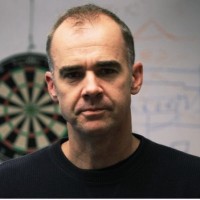 David Webster合作论文数Department of Civil & Environmental Engineering, University of Washington6David Battersby合作论文数5
 Paul Townend合作论文数School of Computing;University of Leeds;School of Computing, University of Leeds5
 Bernhard Primas合作论文数Univ Klagenfurt2
 Jaber Almutairi合作论文数Taibah Univ, Dept Comp Sci, Coll Comp Sci & Engn, Al Madinah 12512, Saudi Arabia2Davd Battersby合作论文数2
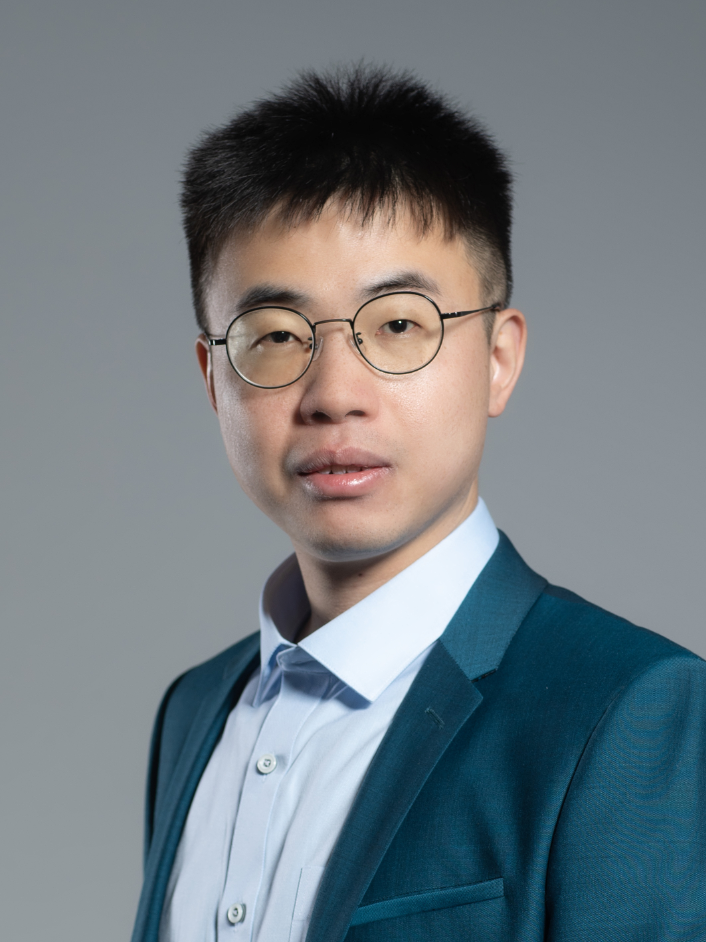 Tao Lin (林涛)合作论文数School of Engineering, Westlake University;Learning and INference Systems (LINs) Laboratory, Westlake University2
 Zhenyu Wen合作论文数Institute of Cyberspace Security, Zhejiang University of Technology2
 Charles Dickerson合作论文数2
 Renyu Yang (杨任宇)合作论文数Reliable, Automated and Intelligent Distributed Systems Lab, School of Software, Beihang University2
 Richard Romano合作论文数Institute for Transport Studies, University of Leeds2Yuyang Ren合作论文数Shanghai Jiao Tong University1
 Niall Turner合作论文数Occupational Therapy Department, Cluain Mhuire Service1
 Abdulaziz Albatli合作论文数1
 Siyuan Ji合作论文数School of Mechanical, Electrical and Manufacturing Engineering, Loughborough University;Deputy Director of Doctoral Training Centre, Loughborough University1John K. Davies合作论文数1
 Ismael Solis Moreno合作论文数University of Leeds1
 Lydia M.S. Lau合作论文数1
 Jonathan Summers合作论文数School of Mechanical Engineering;University of Leeds;School of Mechanical Engineering, University of Leeds1




