This chapter examines the process of organ transplantation, which is different from other therapies in a very important way—there is a persistent and large gap between the need for transplants and the availability of organs. Many more patients need a transplant than can receive one. The shortage of organs is compounded by enormous variability in the donation and transplant activity of different countries. These disparities in access reflect factors that are highly complex and sensitive, including legal, organizational, and cultural. Still, as indicated, the shortage of organs is a global problem that affects all countries, both those that have implemented effective donation and transplant systems and those that still lack them. Accordingly, in the regulation of organ transplantation, considerable attention is paid to strategies for increasing the organ supply and policies for allocating the organs that are available.
Abstract Racial and ethnic minority populations in the US experience greater cumulative disease burden, as well as social and economic barriers, stressors, and limited advocacy/access to culturally informed healthcare. This increased risk burden is expected to be associated with an increased risk for delirium during acute care encounters. Previous studies on health disparity and delirium are limited and report equivocal findings regarding delirium incidence, possibly related to sample bias or non-validated measures. Risk for delirium during acute care in health disparity populations (HDP) that include Black African Americans (BAA) and Hispanic-Latinx (HL) has not been systematically studied using validated measures. We conducted a retrospective analysis utilizing our delirium program (ADAPT) registry that systematically assessed all hospitalized patients through their entire hospital stay for the years 2018-2019 (36K patients, 80% NHW, 11% HL, 9% BAA). The Confusion Assessment Method (CAM and CAM-ICU) and Richmond Agitation Sedation Scale (RASS) were used as screening assessments to identify delirium. We know from previous studies that negative CAM results in our environment have high specificity. The incidence of delirium between populations was compared using a chi-square test. Delirium incidence was higher in HDP (BAA combined with HL) compared to NHW in 71-80yo (16.0% vs 12.6%, p=0.003). Delirium incidence was not different in all other age groups compared; <65yo (p=0.191), 61-70yo (p=0.223), 81-90yo (p=0.644). Understanding the association, or lack thereof, between health disparities, ethnic and race-based risks for delirium is expected to provide important insights into more focused delirium assessment, prevention and mitigation strategies in these populations.
Philosophical debates over the fundamental principles that should guide life-and-death medical decisions usually occur at a considerable remove from the tough, real-world choices made in hospital rooms, courthouses, and legislatures. David Orentlicher seeks to change that, drawing on his extensive experience in both medicine and law to address the translation of moral principle into practice - a move that itself generates important moral concerns. Orentlicher uses controversial life-and-death issues as case studies for evaluating three models for translating principle into practice. Physician-assisted suicide illustrates the application of "generally valid rules," a model that provides predictability and simplicity and, more importantly, avoids the personal biases that influence case-by-case judgments. The author then takes up the debate over forcing pregnant women to accept treatments to save their fetuses. He uses this issue to weigh the "avoidance of perverse incentives," an approach to translation that follows principles hesitantly for fear of generating unintended results. And third, Orentlicher considers the denial of life-sustaining treatment on grounds of medical futility in his evaluation of the "tragic choices" model, which hides difficult life-and-death choices in order to prevent paralyzing social conflict. Matters of Life and Death is a rich and stimulating contribution to bioethics and law. It is the first book to examine closely the broad problems of translating principle into practice. And by analyzing specific controversies along the way, it develops original insights likely to provoke both moral philosophers and those working on thorny issues of life and death.
For the first fifty years of its existence, Medicaid suffered from a serious defect. While it was adopted to meet the health care needs of the poor, it only met the needs of the so-called “deserving” poor — children, pregnant women, single caretakers of children, and disabled persons — people who could not fairly be held accountable for their inability to afford health care insurance.The Affordable Care Act (ACA) seemingly has abandoned Medicaid’s conception of the deserving poor with its expansion of the Medicaid program to all persons up to 138% of the federal poverty level. One no longer needs to be a child, disabled, pregnant, or a caretaker of a child to be eligible for Medicaid; it is sufficient simply to be poor.In this essay, I consider the significance of this major modification of the Medicaid program. Does the ACA signal a more generous view of the deserving poor, or even an abandonment of the distinction between the poor and the “deserving” poor? Or does the ACA tell us more about the nature of health care than about societal views of the poor? And what do the answers to these questions tell us about the durability of the Medicaid expansion? Can we expect Congress to maintain the ACA’s revision of Medicaid for the next fifty years?Most likely, the Medicaid expansion reflects concerns about the high costs of health care rather than an evolution in societal thinking about the “deserving” poor. As a result, the expansion may not provide a durable source of health care coverage for the expansion population.
An abstract is not available for this content so a preview has been provided. Please use the Get access link above for information on how to access this content.
Richard Epstein, in his book Mortal Peril, supports euthanasia and assisted suicide and rejects the distinction between them and withdrawal treatment. In this essay, Professor Orentlicher argues that Epstein is correct in finding no meaningful moral distinction between euthanasia and treatment withdrawal, examines the reasons why the distinction has persisted in American jurisprudence, and explains why the distinction has eroded. Epstein also concludes in his book that there is no constitutional right to euthanasia or assisted suicide. Professor Orentlicher's response is that constitutionality is not the appropriate inquiry; rather, the better question is whether to recognize a right to assisted suicide once a right to euthanasia in the form of terminal sedation already exists. He answers this question in the affirmative, arguing that assisted suicide enhances patient welfare and reduces risks of abuse in a world with euthanasia.
The symposium was designed to address introductory issues of nanotechnology across a broad range of disciplines by incorporating presentations from several different professionals into one event.Each presenter focused on an issue of nanotechnology within his or her expertise.Following the presentations, a brief moderated panel discussion was held to allow audience members to ask questions of the presenters.Due to technical difficulties,
Studies in several developing countries for treatmen to prevent HIV-transmission from mother to child generated considerable controversy in 1997. Critics of the studies argued that basic principles of research ethics were violated. According to the critics, researchers subjected women in developing countries to studies that would have been unethical in the United States (and other developed countries) and that the researchers were therefore engaged in unethical exploitation ofcitizens of the developing countries in which the studies were conducted.While the critics agreed that unethical exploitation had occurred, they differed on the exact nature of the exploitation. Some observers condemned the researchers for employing a double standard — because the researchers were applying a standard of care that would have been unacceptable in their own country. In the view of these critics, researchers should have been comparing the experimental treatment to established therapy rather than to placebo, as would have been required in the United States or other developed countries.
Previous articleNext article No AccessCan Assisted Suicide Be Regulated?David Orentlicher and Lois SnyderDavid OrentlicherIndiana University School of Law Search for more articles by this author and Lois SnyderUniversity of Pennsylvania Search for more articles by this author PDFPDF PLUS Add to favoritesDownload CitationTrack CitationsPermissionsReprints Share onFacebookTwitterLinkedInRedditEmail SectionsMoreDetailsFiguresReferencesCited by Volume 11, Number 4Winter 2000 Published on behalf of the MacLean Center for Clinical Medical Ethics Article DOIhttps://doi.org/10.1086/JCE200011410 © 2000 The University of Chicago. All rights reserved.PDF download Crossref reports no articles citing this article.
Recent educational efforts in the US medical community have begun to address the critical issue of palliative care for terminally ill patients. However, a newly introduced bill in Congress, the Pain Relief Promotion Act of 1999 (PRPA), could dramatically hinder these efforts if enacted. The act criminally punishes the use of controlled substances to cause-or assist in causing-a patient's death. The primary purposes of PRPA are to override the physician-assisted suicide law currently in effect in Oregon and prohibit other states from enacting similar laws. The act also includes valuable provisions for better research and education in palliative care, but the benefits of those provisions are outweighed by the punitive sections of the act. Under PRPA, the quality of palliative care in the United States could be compromised when physicians, fearing criminal prosecution, err on the side of caution rather than risk their patients' deaths by using highly aggressive pain treatments. Furthermore, PRPA would put Drug Enforcement Administration officials, who have no medical expertise, in the position of regulating medical decisions. The act also would interfere with individual states' long-standing authority over medical practice. Finally, PRPA would discourage physicians from engaging in experimentation and innovation in palliative care, again out of concern for crossing the line between relief of suffering and physician-assisted suicide. Other bills have been introduced that go much further than PRPA to encourage palliative care, without its problematic provisions. Regardless of the controversy surrounding physician-assisted suicide in the United States, the need for quality end-of-life care will be far better served if Congress enacts one of these bills rather than PRPA.
The possibility of human cloning has sparked debate, a proposed moratorium on cloning by the National Bioethics Advisory Commission and state legislation prohibiting the use of cloning techniques in human reproduction. Yet, anti-cloning guidelines or laws may have the unintended and unfortunate effect of preventing genetic reproduction by same-sex couples.Further advances in cloning technology could permit same-sex couples to have children whose genes come from both members of the couple. If all of the genes of a single adult can become the genes of a child through cloning, then half the genes of two adults should someday be able to become the genes of a child.Such a development could yield profound benefits. Homosexual couples have the same strong interest as heterosexual couples in raising children with whom they have biological ties. Genetically related children permit the continuation of one's lineage and heritage in a way that is not possible with biologically unrelated children. Moreover, with genetic parenthood, the same-sex family would look more like the heterosexual family, and that could help diminish societal stigmatization of homosexual individuals. Prejudice is rooted in large part in perceived differences. If differences between homosexuals and heterosexuals are narrowed, it might help reduce discrimination by heterosexuals against homosexual persons.Despite the value of same-sex reproduction, laws designed to prevent human cloning could inadvertently preclude genetic reproduction by same-sex couples. Anti-cloning legislation defines cloning in a way that would include genetic reproduction by same-sex couples, especially male-male couples. Such an effect of the laws indicates the need for revision, and possibly abandonment, of anti-cloning legislation.
Recent educational efforts in the US medical community have begun to address the critical issue of palliative care for terminally ill patients. However, a newly introduced bill in Congress, the Pain Relief Promotion Act of 1999 (PRPA), could dramatically hinder these efforts if enacted. The act criminally punishes the use of controlled substances to cause—or assist in causing—a patient's death. The primary purposes of PRPA are to override the physician-assisted suicide law currently in effect in Oregon and prohibit other states from enacting similar laws. The act also includes valuable provisions for better research and education in palliative care, but the benefits of those provisions are outweighed by the punitive sections of the act. Under PRPA, the quality of palliative care in the United States could be compromised when physicians, fearing criminal prosecution, err on the side of caution rather than risk their patients' deaths by using highly aggressive pain treatments. Furthermore, PRPA would put Drug Enforcement Administration officials, who have no medical expertise, in the position of regulating medical decisions. The act also would interfere with individual states' long-standing authority over medical practice. Finally, PRPA would discourage physicians from engaging in experimentation and innovation in palliative care, again out of concern for crossing the line between relief of suffering and physician-assisted suicide. Other bills have been introduced that go much further than PRPA to encourage palliative care, without its problematic provisions. Regardless of the controversy surrounding physician-assisted suicide in the United States, the need for quality end-of-life care will be far better served if Congress enacts one of these bills rather than PRPA.
Undoubtedly, empirical data from Oregon will play a key role for academics, legislators, judges, and the public as debate over the legalization of physician-assisted suicide continues. A central issue in the debate is whether a right to assisted suicide can be limited to only the truly compelling cases, or whether it will in practice be provided to patients who choose it out of depression, coercion, or misunderstanding. Empirical research can provide critical insights into this questions.
 Oscar W Clarke合作论文数11J Glasson合作论文数10CW Plows合作论文数10Gt Wilkins合作论文数7james h cosgriff合作论文数6V Ruff合作论文数4Ch Epps合作论文数4
 Karey Harwood合作论文数4richard j mcmurray合作论文数3victoria n ruff合作论文数3RM Tenery合作论文数3JA BARRASSO合作论文数3R MCQUILLAN合作论文数3jeff leslie合作论文数2
 Joaquin Cayon合作论文数2
 Linda L Emanuel合作论文数General Internal Medicine and Geriatrics, Department of Medicine, Feinberg School of Medicine, Northwestern University2
 Ezekiel J. Emanuel合作论文数Health Transformation Institute, Perelman School of Medicine, University of Pennsylvania;Department of Medical Ethics and Health Policy, Perelman School of Medicine, University of Pennsylvania;World Health Organization2
 Bruce Jennings合作论文数2Dexanne B. Clohan合作论文数2J La Puma合作论文数1R. R. Frank合作论文数1R Califf合作论文数1allison m august合作论文数1kirk b johnson合作论文数1Thomas Kintanar合作论文数1Am August合作论文数1Jl Nelson合作论文数1
 Robert Dicks合作论文数1S M Wolf合作论文数1Te Spielberg合作论文数1kyle salyers合作论文数1drew fuller合作论文数1kody varahramyan合作论文数1mildred z solomon合作论文数1M. Pittman合作论文数1L. Emanuel合作论文数1D. Callahan合作论文数1J Lynn合作论文数1N Desbiens合作论文数1S. Johnson合作论文数1Emily Michiko Morris合作论文数University of Akron1
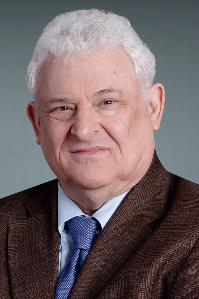 Arthur L. Caplan合作论文数Division of Medical Ethics, Department of Population Health, Grossman School of Medicine, New York University;New York University Langone Medical Center1
 Joseph J. Fins合作论文数Division of Medical Ethics, Weill Cornell Medicine, Cornell University1Mariner Wendy K合作论文数1Moss Robert J合作论文数1
 Peter Boyle合作论文数University of Strathclyde;International Prevention Research Institute;Strathclyde Institute for Global Public Health1
 John D. Lantos合作论文数University of Missouri at Kansas City;Children’s Mercy Hospital1
 Taylor Beth A合作论文数Henry Low Heart Center, Hartford Hospital;Department of Health Sciences, University of Hartford;University of Connecticut School of Medicine;University of Hartford, University of Connecticut School of Medicine1Moss R J合作论文数1




