We re-examine the CHSH experiment, which we abstract here as a multi-round game played between two parties with each party reporting a single binary outcome at each round. We explore in particular the role that symmetries, and the spontaneous breaking thereof, play in determining the maximally achievable correlations between the two parties. We show, with the help of an explicit statistical model, that the spontaneous breaking of rotational symmetry allows for stronger correlations than those that can be achieved in its absence. We then demonstrate that spontaneous symmetry breaking may lead to a violation of the renowned CHSH inequality. We believe that the ideas presented in this paper open the door to novel research avenues that have the potential to deepen our understanding of the quantum formalism and the physical reality it describes.
The strong experimental evidence for the violation of Bell's inequalities is widely interpreted as the ultimate proof of the impossibility to describe Bell's polarization states of two entangled particles in terms of a local and realistic statistical model of hidden variables in which the observers are free to choose the settings of their measurements. In this paper we note, however, that Bell's theorem relies crucially on a fourth implicit theoretical assumption, in addition to the explicit hypotheses of locality, physical realism and 'free will'. Namely, we note that the proof of Bell's inequalities for generic models of hidden variables implicitly assumes that there exists an absolute reference frame of angular coordinates, with respect to which we can define the polarization properties of the hidden configurations of the pair of particles. This implicit additional assumption, however, is not required by any fundamental physical principle and, indeed, it may be incorrect if the hidden configuration of the pair of entangled particles breaks the rotational symmetry along an otherwise arbitrary direction. We explicitly show that by giving up to this additional implicit assumption it is possible to build a local and realistic model of hidden variables for Bell's polarization states, which complies with the demands of 'free-will' and fully reproduces the quantum mechanical predictions. The model presented here offers a new insight into the notion of quantum entanglement and the role of measurements in the dynamics of quantum systems. It may help also to develop new tools for performing numerical simulations of quantum systems.
We describe an explicitly non-contextual statistical model of hidden variables for the qutrit, which fully reproduces the predictions of quantum mechanics, and thus, bypasses the constraints imposed by the Kochen-Specker theorem and its subsequent reformulations. We notice that these renowned theorems crucially rely on the implicitly assumed existence of an absolute frame of reference with respect to which physically indistinguishable tests related by spurious gauge transformations can supposedly be assigned well-defined distinct identities. We observe that the existence of such an absolute frame of reference is not required by fundamental physical principles, and hence, assuming it is an unnecessarily restrictive demand.
The Greenberger-Horne-Zeilinger version of the Einstein-Podolsky-Rosen (EPR) paradox is widely regarded as a conclusive logical argument that rules out the possibility of reproducing the predictions of Quantum Mechanics within the framework of any physical theory sharing the notions of reality and relativistic causality that we acknowledge as a given in our classical descriptions of the macroscopic world. Thus, this renowned argument stands as a seemingly insurmountable roadblock on the path to a very desired, physically intuitive understanding of quantum phenomena and, in particular, quantum entanglement. In this paper, we notice, however, that the GHZ argument involves unaccounted spurious gauge degrees of freedom and that it can be overcome once these degrees are properly taken into account. It is then possible to explicitly build a successful statistical model for the GHZ experiment based on the usual notions of relativistic causality and physical reality. This model, thus, completes—in the EPR sense—the quantum description of the GHZ state and paves the way to a novel intuitive interpretation of the quantum formalism and a deeper understanding of the physical reality that it describes.
We describe an explicit statistical model of local hidden variables that reproduces the predictions of quantum mechanics for the ideal Franson experiment and sheds light on the physical mechanisms that might be involved in the actual experiment. The crux of our model is the spontaneous breaking of time-translation gauge symmetry by the hidden configurations of the pairs of photons locked in time and energy involved in the experiment, which acquire a non-zero geometric phase through certain cyclic transformations.
We study bipartite correlations in Bell-type games. We show that in a setup where the information carriers are allowed to locally deform the manifold on which the game is played, stronger correlations may be obtained than those maximally attainable otherwise. We discuss the implications of our results in the context of Bell's theorem and the Einstein-Podolsky-Rosen paradox.
The Bell inequality is thought to be a common constraint shared by all models of local hidden variables that aim to describe the entangled states of two qubits. Since the inequality is violated by the quantum mechanical description of these states, it purportedly allows distinguishing in an experimentally testable way the predictions of quantum mechanics from those of models of local hidden variables and, ultimately, ruling the latter out. In this paper, we show, however, that the models of local hidden variables constrained by the Bell inequality all share a subtle, though crucial, feature that is not required by fundamental physical principles and, hence, it might not be fulfilled in the actual experimental setup that tests the inequality. Indeed, the disputed feature neither can be properly implemented within the standard framework of quantum mechanics and it is even at odds with the fundamental principle of relativity. Namely, the proof of the inequality requires the existence of a preferred absolute frame of reference (supposedly provided by the lab) with respect to which the hidden properties of the entangled particles and the orientations of each one of the measurement devices that test them can be independently defined through a long sequence of realizations of the experiment. We notice, however, that while the relative orientation between the two measurement devices is a properly defined physical magnitude in every single realization of the experiment, their global rigid orientation with respect to a lab frame is a spurious gauge degree of freedom. Following this observation, we were able to explicitly build a model of local hidden variables that does not share the disputed feature and, hence, it is able to reproduce the predictions of quantum mechanics for the entangled states of two qubits.
In the cited paper [White, T., Mutus, J., Dressel, J. et al., Preserving entanglement during weak measurement demonstrated with a violation of the Bell-Leggett-Garg inequality, npj Quantum Information 2, 15022 (2016), arXiv:1504.02707], experimental results were presented that clearly prove that the quantum entanglement between two qubits is preserved after weak enough measurements are performed on them. The theoretical interpretation of the reported results, however, requires further consideration. The remarks made in this paper may have serious implications both for quantum foundations and for quantum cryptography.
the Bell theorem stands as an insuperable roadblock in the path to a very desired intuitive solution of the EPR paradox and, hence, it lies at the core of the current lack of a clear interpretation of the quantum formalism. The theorem states through an experimentally testable inequality that the predictions of quantum mechanics for the Bell's polarization states of two entangled particles cannot be reproduced by any statistical model of hidden variables that shares certain intuitive features. In this paper we show, however, that the proof of the Bell theorem involves a subtle, though crucial, assumption that is not required by fundamental physical principles and, hence, it is not necessarily fulfilled in the experimental setup that tests the inequality. Indeed, this assumption can neither be properly implemented within the standard framework of quantum mechanics. Namely, the proof of the theorem assumes that there exists a preferred absolute frame of reference, supposedly provided by the lab, which enables to compare the orientation of the polarization measurement devices for successive realizations of the experiment and, hence, to define jointly their response functions over the space of hypothetical hidden configurations for all their possible alternative settings. We notice, however, that only the relative orientation between the two measurement devices in every single realization of the experiment is a properly defined physical degree of freedom, while their global rigid orientation is a spurious gauge degree of freedom. Hence, the preferred frame of reference required by the proof of the Bell theorem does not necessarily exist. In fact, it cannot exist in models in which the gauge symmetry of the experimental setup under global rigid rotations of the two detectors is spontaneously broken by the hidden configurations of the pair of entangled particles and a non-zero geometric phase appears under some cyclic gauge symmetry transformations. Following this observation, we build an explicitly local model of hidden variables that reproduces the predictions of quantum mechanics for the Bell's states.
The well known inequalities of John S. Bell may be regarded, from a purely mathematical viewpoint, as a direct consequence of Vorob'ev-type topological-combinatorial cyclicities formed with functions on a common probability space. However, the interpretation of these cyclicities becomes more subtle when considerations related to gauge symmetries and geometric-combinatorial phases are taken into account. These physics related considerations permit violations of all Bell-type inequalities within the realm of Einstein's causal physical-mathematics.
The Bell experiment is a random game with two binary outcomes whose statistical correlation is given by E_0(Θ)=-cos(Θ), where Θ∈ [-π, π) is an angular input that parameterizes the game setting. The correlation function E_0(Θ) belongs to the affine space H≡{E(Θ)} of all continuous and differentiable periodic functions E(Θ) that obey the parity symmetry constraints E(-Θ)=E(Θ) and E(π-Θ)=-E(Θ) with E(0)=-1 and, furthermore, are strictly monotonically increasing in the interval [0, π). Here we show how to build explicitly local statistical models of hidden variables for random games with two binary outcomes whose correlation function E(Θ) belongs to the affine space H. This family of games includes the Bell experiment as a particular case. Within this family of random games, the Bell inequality can be violated beyond the Tsirelson bound of 2√(2) up to the maximally allowed algebraic value of 4. In fact, we show that the amount of violation of the Bell inequality is a purely geometric feature.
Conditional probabilities in quantum systems which have both initial and final boundary conditions are commonly evaluated using the Aharonov-Bergmann-Lebowitz rule. In this short note we present a seemingly disturbing paradox that appears when applying the rule to systems with slightly broken degeneracies. In these cases we encounter a singular limit - the probability "jumps" when going from perfect degeneracy to negligibly broken one. We trace the origin of the paradox and solve it from both traditional and modern perspectives in order to highlight the physics behind it: the necessity to take into account the finite resolution of the measuring device. As a practical example, we study the application of the rule to the Zeeman effect. The analysis presented here may stress the general need to first consider the governing physical principles before heading to the mathematical formalism, in particular when exploring puzzling quantum phenomena.
The Greenberger-Horne-Zeilinger~(GHZ) version of the Einstein-Podolsky-Rosen~(EPR) paradox is widely regarded as a conclusive logical argument that rules out the possibility of describing quantum phenomena within the framework of a local and realistic model of hidden variables in which the observers are free to choose their own experimental settings. In this paper we show, however, that the GHZ argument implicitly relies on an additional crucial assumption, which is not required by fundamental physical principles and had gone unnoticed. Namely, we note that the argument implicitly assumes the existence of an absolute angular frame of reference with respect to which the polarization properties of the hypothetical hidden configurations of the entangled particles as well as the orientation of the measurement apparatus that test the system can be defined. We further note that such an absolute frame of reference would not exist if the hidden configurations of the entangled particles spontaneously break the gauge rotational symmetry. Indeed, by skipping this unnecessary additional assumption we are able to build an explicitly local and realistic model of hidden variables for the GHZ state, which complies with the 'free-will' hypothesis and reproduces the quantum mechanical predictions, and thus completes the description of the system in the EPR sense.
We propose a novel interpretation of Quantum Mechanics, which can resolve the outstanding conflict between the principles of locality and realism and offers new insight on the so-called weak values of physical observables. The discussion is presented in the context of Bohm's system of two photons in their singlet polarization state in which the Einstein-Podolski-Rosen paradox is commonly addressed. It is shown that quantum states can be understood as statistical mixtures of non-interfering pseudo-classical paths in a {\it hidden} phase space, in a way that overcomes the implicit assumptions of Bell's theorem and reproduces all expected values and correlations. The polarization properties of the photons along these paths are gauge-dependent magnitudes, whose actual values get fixed only after a reference direction is set by the observer of either photon A or B. Furthermore, these values are not constrained to fulfill standard classical algebraic relationships. These {\it hidden} paths can be grouped into coarser ones consistent with particular post-selection conditions for a complete set of commuting observables and along which every physical observable gets on average its corresponding weak value. Obviously, different sets of commuting observables lead to different coarse statistical representations of the same quantum state. This interpretation follows from the observation that in the Heisenberg picture of a closed quantum system in state $|\Psi>$ every physical observable ${\cal O}(t)=e^{+i H t} {\cal O} e^{-i H t}$ can be represented by an operator $P_{o(t)}$ within a commutative algebra, such that ${\cal O}(t)|\Psi>=P_{o(t)}|\Psi>$. The formalism presented here may become a useful tool for performing numerical simulations of quantum systems.
We present a novel homogeneous and geometrically flat exact solution of Einstein's General Relativity equations for an ideal fluid. The solution, which describes an expanding/contracting hypercylinder, fits well with the observational pillars upon which rely the standard FLRW cosmology and, furthermore, it can naturally solve some of its most outstanding problems.
Motivated in part by the several observed anomalies involving CP asymmetries of B and B-s decays, we consider the standard model with a 4th sequential family (SM4) which seems to offer a rather simple resolution. We initially assume T-invariance by taking the up and down-quark 4x4 mass matrix to be real. Following Friedberg and Lee (FL), we then impose a hidden symmetry on the unobserved (hidden) up and down-quark SU(2) states. The hidden symmetry for four generations ensures the existence of two zero-mass eigenstates, which we take to be the (u,c) and (d,s) states in the up and down-quark sectors, respectively. Then, we simultaneously break T-invariance and the hidden symmetry by introducing two phase factors in each sector. This breaking mechanism generates the small quark masses m(u), m(c) and m(d), m(s), which, along with the orientation of the hidden symmetry, determine the size of CP-violation in the SM4. For illustration we choose a specific physical picture for the hidden symmetry and the breaking mechanism that reproduces the observed quark masses, mixing angles and CP-violation, and at the same time allows us to further obtain very interesting relations/predictions for the mixing angles of t and t('). For example, with this choice we get V-td similar to(V-cb/V-cd-V-ts/V-us)+O(lambda(2)) and V(t)(')b similar to V(t)(')d center dot(V-cb/V-cd), V-tb(')similar to V(t)(')d center dot(V-ts/V-us), implying that V(t)(')d > V(t)(')b, V-tb('). We furthermore find that the Cabibbo angle is related to the orientation of the hidden symmetry and that the key CP-violating quantity of our model at high energies, J(SM4)equivalent to Im(V(tb)V(t)(')b(star)V(t)(')b(')V(tb)('star)), which is the high-energy analogue of the Jarlskog invariant of the SM, is proportional to the light-quark masses and the measured Cabibbo-Kobayashi-Maskawa quark-mixing matrix angles: |J(SM4)|similar to A(3)lambda(5)x(m(u)/m(t)+m(c)/m(t)(')-m(d)/m(b)+m(s)/m(b)('))similar to 10(-5), where A similar to 0.81 and lambda=0.2257 are the Wolfenstein parameters. Other choices for the orientation of the hidden symmetry and/or the breaking mechanism may lead to different physical outcomes. A general solution, obtained numerically, will be presented in a forthcoming paper.
The most distinctive feature of the primordial density inhomogeneities that existed in the cosmic plasma at the instant of decoupling is their scale invariant power spectrum ${\cal P}(k) \sim k$ over the range $k \ll H_{eq}$ of modes with cosmologically large comoving wavelength. We characterize this feature in real space, in terms of their correlation function at two points. We show that over cosmologically large comoving distances $r \gg H^{-1}_{eq}$ the primordial inhomogeneities were (anti)correlated as $f(r) \sim - r^{-4}$. We revisit the so-called {\it origin of structures problem} of the standard cosmology at the light of this observation. Our conclusions contradict the current wisdom on this issue.
Interference effects are important for swimming of mesoscopic systems that are small relative to the coherence length of the surrounding quantum medium. Swimming is geometric for slow swimmers and the distance covered in each stroke is determined, explicitly, in terms of the on-shell scattering matrix. Remarkably, for a one-dimensional Fermi gas at zero temperature we find that slow swimming is topological: the swimming distance covered in one stroke is quantized in half integer multiples of the Fermi wavelength. In addition, a careful choice of the swimming stroke can eliminate dissipation.
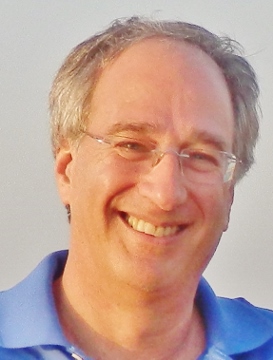 Ram Brustein合作论文数Department of Physics, Ben-Gurion University7
 J. M. Moreno合作论文数4
 Mariano Quirós合作论文数Theory Division, Institut de Fisica d'Altes Energies4Shay Caspi合作论文数2
 Ariel Zhitnitsky合作论文数Department of Physics & Astronomy, The University of British Columbia2
 Joseph Avron合作论文数Department of Physics, Technion – Israel Institute of Technology2Ariel R. Zhitnitsky合作论文数Department of Physics and Astronomy;University of British Columbia2
 Itay Hen合作论文数School of Physics and Astronomy, Tel-Aviv University2
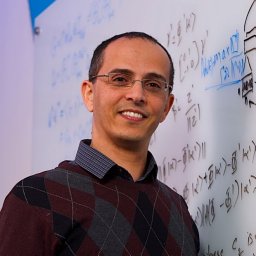 Amir Kalev合作论文数Department of Physics;Technion - Israel Institute of Technology;Department of Physics, Technion - Israel Institute of Technology2
 Eliahu Cohen合作论文数Faculty of Engineering, Bar Ilan University;Institute of Nanotechnology and Advanced Materials, Bar Ilan University1
 Yakir Aharonov合作论文数Institute for Quantum Studies, Chapman University;School of Physics and Astronomy Tel Aviv University1
 Karl Hess合作论文数Department of Electrical & Computer Engineering, The Grainger College of Engineering, University of Illinois at Urbana-Champaign;Center for Advanced Study, University of Illinois at Urbana-Champaign1
 David Eichler合作论文数Department of Physics, Ben-Gurion University of the Negev1Oded Kenneth合作论文数1Nahum Izhaky合作论文数1
 Boris Gutkin合作论文数Laboratoire de Neurosciences Cognitives, Département d'Études Cognitives, Ecole Normale Superieure1
 Amarjit Soni合作论文数Physics Department, Brookhaven National Laboratory1
 Shaouly Bar-Shalom合作论文数Physics Department1
 Amos Yarom合作论文数1Stefano Foffa合作论文数1




