Field and laboratory studies were conducted to evaluate the impact of proppant sand mining and processing activities on community particulate matter (PM) concentrations. In field studies outside 17 homes within 800m of sand mining activities (mining, processing, and transport), respirable (PM4) crystalline silica concentrations were low (<0.4μg/m3) with crystalline silica detected on 7 samples (2% to 4% of mass). In long-term monitoring at 6 homes within 800m of sand mining activities, the highest daily mean PM concentrations observed were 14.5μg/m3 for PM2.5 and 37.3μg/m3 for PM10, although infrequent (<3% of time), short-term elevated PM concentrations occurred when wind blew over the facility. In laboratory studies, aerosolized sand was shown to produce respirable-sized particles, containing 6% to 19% crystalline silica. Dispersion modeling of a mine and processing facility indicated that PM10 can exceed standards short distances (<40m) beyond property lines. Lastly, fence-line PM and crystalline silica concentrations reported to state agencies were substantially below regulatory or guideline values, although several excursions were observed for PM10 when winds blew over the facility. Taken together, community exposures to airborne particulate matter from proppant sand mining activities at sites similar to these appear to be unlikely to cause chronic adverse health conditions.
A novel aspect of the 8th International PCB Workshop at Woods Hole, MA, was the interaction between scientists and activists. While earlier workshops in this series had mentioned policy making, this Workshop focused on the problem of PCBs in schools. Focus on a problem brought an activist to give a plenary talk and facilitated a 1-day registration for other non-scientists to attend. The workshop was cohosted by the Superfund Research Programs at University of Iowa and Boston University and included active participation of each Program's Research Translation and Community Engagement Cores. A mandate of each National Institute of Environmental Health Science (NIEHS)-funded Superfund Research Program is bidirectional communication between scientists and community groups. The authors describe the events leading up to community involvement in the Workshop and the substance of the community engagement aspects of the workshop, in particular the participation by a parent-teacher group, Malibu Unites. The authors also discuss the value of such communication in terms of making important research accessible to those who are most affected by the results and poised to use it and the value of making scientists aware of the important role they play in society in addressing difficult questions that originate in community settings.
A consensus of the Workgroup on Community and Socioeconomic Issues was that improving and sustaining healthy rural communities depends on integrating socioeconomic development and environmental protection. The workgroup agreed that the World Health Organization's definition of health, "a state of complete physical, mental and social well-being and not merely the absence of disease or infirmity," applies to rural communities. These principles are embodied in the following main points agreed upon by this workgroup. Healthy rural communities ensure a) the physical and mental health of individuals, b) financial security for individuals and the greater community, c) social well-being, d ) social and environmental justice, and e) political equity and access. This workgroup evaluated impacts of the proliferation of concentrated animal feeding operations (CAFOs) on sustaining the health of rural communities. Recommended policy changes include a more stringent process for issuing permits for CAFOs, considering bonding for manure storage basins, limiting animal density per watershed, enhancing local control, and mandating environmental impact statements.
Animal agriculture in the United States for the most part has industrialized, with negative consequences for air and water quality and antibiotic use. We consider health and environmental impacts of current US swine production and give an overview of current federal, state, and local strategies being used to address them.
The article deals with Niklas Luhmann's treatise Die Gesellschaft der Gesellschaft, exposing it to a critique in terms of Luhmann's own criterion: plausibility. It is argued that both Parsons' general sociology and Marxism render more plausible accounts of modern society than does Luhmann's theory of autopoietic systems. It is asserted that the fundamental mistake in Luhmann's theory is his conflation of the concepts of differentiated social systems and autonomous social systems, a conflation that confers a ring of the imaginary to Luhmann's treatise.
supposed to determine the quality and the development of society as a whole. The author argues that our society has become more opaque in the course of the 50 years of social democracy. Earlier, it may have been the case that one could come to understand the basic structures of industrial capitalism by interpreting one’s own everyday social experience. This experience, that is, may have been expressive of the structures of investment and accumulation. But this presupposes
Climate change is already affecting the way Iowans live and work. Without action to mitigate these effects, our future responses will become more complex and costly . The following policy recommendations are offered as initial steps to help safeguard our state’s economy, environment, and residents. Disciplines Agricultural Science | Agriculture | Agronomy and Crop Sciences | Climate Authors Iowa Climate Change Impacts Committee, Peter B. Berendzen, Richard M. Cruse, Laura L. Jackson, Robert Mulqueen, Cornelia F. Mutel, David Osterberg, Natalia P. Rogovska, Jerald L. Schnoor, Dave Swenson, Eugene S. Takle, and Peter S. Thorne This poster is available at Iowa State University Digital Repository: http://lib.dr.iastate.edu/leopold_pubspapers/74 Dr. Peter B. Berendzen University of Northern Iowa Dr. Richard M. Cruse Iowa State University Dr. Laura L. Jackson University of Northern Iowa Robert Mulqueen Iowa Office of Energy Independence / Dept. of Economic Development (project coordinator) Cornelia F. Mutel University of Iowa (report editor) David Osterberg University of Iowa Dr. Natalia P. Rogovska Iowa State University Dr. Jerald L. Schnoor University of Iowa Dave Swenson Iowa State University Dr. Eugene S. Takle Iowa State University Dr. Peter S. Thorne University of Iowa Iowa Climate Change Impacts Committee (July 2009 – December 2010) Contributing members: January 1, 2011 Report to the Governor and the Iowa General Assembly The Complete Report and Executive Summary are posted at: www.energy.iowa.gov and at www.iowadnr.gov/iccac/
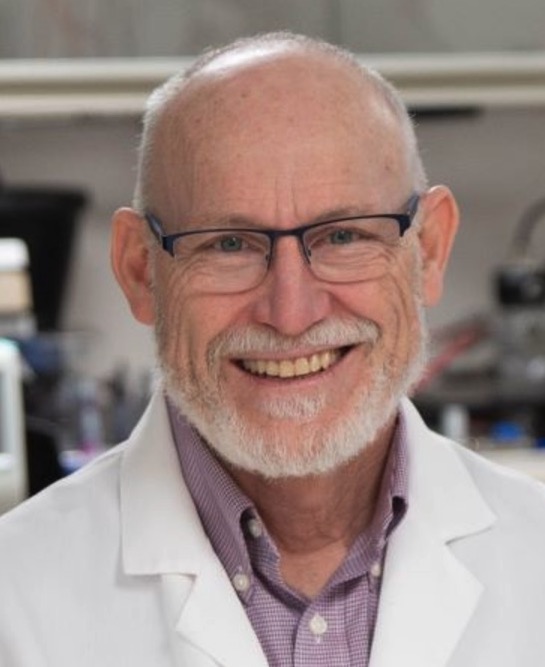 Peter S. Thorne合作论文数Department of Occupational & Environmental Health, College of Public Health, University of Iowa;Environmental Health Sciences Research Center, College of Public Health, University of Iowa;P30 Environmental Health Science Research Center, National Institute of Environmental Health Sciences7
 David Courard-Hauri合作论文数5Gene Takle合作论文数4Jerry Schnoor合作论文数4Nancy G Wyland合作论文数3
 Elizabeth A. Stone合作论文数Leiden Institute of Chemistry, Gorlaeus Laboratories, Leiden University, P.O. Box 9502, 2300 RA Leiden, The Netherlands
Department of Chemistry, and ‡Department of Chemical and Biochemical Engineering, University of Iowa, Iowa City, Iowa 52242, United States.3
Elizabeth A. Stone合作论文数Leiden Institute of Chemistry, Gorlaeus Laboratories, Leiden University, P.O. Box 9502, 2300 RA Leiden, The Netherlands
Department of Chemistry, and ‡Department of Chemical and Biochemical Engineering, University of Iowa, Iowa City, Iowa 52242, United States.3 Ulrike Passe合作论文数Department of Architecture, Iowa State University3David A. Swenson合作论文数2Connie Mutel合作论文数2Neil Bernstein合作论文数2
 Gregory Carmichael合作论文数Department of Chemical & Biochemical Engineering, University of Iowa2Steven Wing合作论文数1Kristin E Swanton合作论文数1Chris Anderson合作论文数1Karin Allenspach合作论文数1
 Sinan Sousan合作论文数Brody School of Medicine, East Carolina University;North Carolina Agromedicine Institute;North Carolina Agromedicine Institute, East Carolina University1
 Patrick T O'Shaughnessy合作论文数Dept Occupat & Environm Hlth, Univ Iowa1
 Ralph Altmaier合作论文数1
 Kelley Donham合作论文数Department of Occupational and Environmental Health, College of Public Health, The University of Iowa1
 Brett Carlos Ramirez合作论文数Department of Agricultural and Biological Engineering, University of Illinois at Urbana-Champaign1Hansen Mary Mincer合作论文数1Fouad Ajami合作论文数1
 David Wallinga合作论文数Institute for Agriculture and Trade Policy1
 Thomas M. Peters合作论文数University of Iowa;Occupational and Environmental Health;Occupational and Environmental Health, University of Iowa1
 David M. Cwiertny合作论文数University of California at Riverside1
 Silvia Secchi合作论文数Center for Agricultural and Rural Development;Iowa State University;Center for Agricultural and Rural Development, Iowa State University1
 Jan L. Flora合作论文数1
 Madeleine Kangsen Scammell合作论文数1
 Emily Heaton合作论文数Department of Crop Sciences, Education and Communications, College of Agricultural, Consumer and Environmental Sciences, University of Illinois at Urbana-Champaign1Kendall Thu合作论文数1
 Albert E. Jergens (Albert Jergens)合作论文数Department of Veterinary Clinical Sciences, College of Veterinary Medicine, Iowa State University1
 Diane M. Debinski合作论文数Department of Ecology, Evolution and Organismal Biology, Iowa State University1
 Eric Tate合作论文数Department of Geography and Hazards & Vulnerability Research Institute, University of South Carolina1
 Edith Parker合作论文数Health Behavior and Health Education;University of Michigan;School of Public Health;School of Public Health, University of Michigan1Carol J. Hodne合作论文数1




