Many observers think that it is impossible to cut federal government spending as a percentage of Gross Domestic Product (GDP). But it can be done. And the evidence is hidden in plain sight: it's called the 1990s. Between 1990 and 2000, federal spending fell from 21.85 percent of GDP to 18.22 percent, a drop of 3.6 percentage points. Most of the reduction was in defense spending after the Cold War ended. Domestic spending also fell slightly as a percentage of GDP. This drop cannot be attributed to higher economic growth in the 1990s because average growth in the 1990s was the same as growth in the previous two decades.
"On the basis of these conclusions and for the purpose of ascertaining the meaning of the dream, I have developed a procedure which I call "taking up the context." This consists in making sure that every shade of meaning which each salient feature of the dream has for the dreamer is determined by the associations of the dreamer himself. I therefore proceed in the same way as I would in deciphering a difficult text." [1] Jung presents his method of dream interpretation as one of "taking up the context." The implication of this approach is that meaning is stimulated by the relationship with an other. Difference is the possibility of meaning. This is the structure of all of Jung's enquiries from the word association experiments to his final writings. The existence of a context/other offers the possibility of meaning. The nature of the other is indeterminate. What matters is that the other is a stimulant to associations, thought, emotion and turbulence. This paper considers some of the implications of Jung's methodology for the practice of psychotherapy. The method privileges process over content. It undermines reliance on saturated views of psychic contents, i.e. the anima, the self, etc. There is no stable centre to the analytic enquiry or to the psyche. There are pressures and impacts on consciousness from unknown others. Everything is in flux. The other is both a provocation and a consolation. As Jung observed, "Were it not for the leaping and twinkling of the soul, man would rot away in his greatest passion, idleness." [2] [1] CW8 542 [2] CW9i 56
Download This Paper Open PDF in Browser Add Paper to My Library Share: Permalink Using these links will ensure access to this page indefinitely Copy URL Copy DOI
President Saddam Hussein of Iraq has no qualms about torturing or even murdering innocent people. If he should manage to hold on to Kuwait and to capture Saudi Arabia, he would have access to even greater wealth than he has in Iraq. No doubt, he would attempt to use that wealth to strengthen his military, maybe even to speed up development of nuclear weapons. Saddam could then be an even bigger menace to peace in the Middle East than he was before he invaded Kuwait.
An increasingly popular justification for conscription is that it would increase the probability that the “children” of politically powerful people would serve in the military, thus giving them an incentive to lobby against war. However, this argument neglects the fact that avoiding war for a nation is a public good and is, therefore, subject to the classic free-rider problem. Under-provision of anti-war agitation from those seeking to avoid the draft is exacerbated by the fact that seeking a deferment provides an alternative with a superior private payoff. Empirical findings since World War II are consistent with our thesis.
Contrary to the views of some libertarians, "libertarian paternalism" is not an oxymoron. But are its two most prominent advocates, Richard Thaler and Cass Sunstein, really libertarian paternalists or are they paternalists in sheep's clothing? Thaler seems to be somewhat of a libertarian paternalist whereas Sunstein appears to be more of a straight coercive paternalist. But even Thaler passes up major chances to advocate reducing straight paternalism by making it more libertarian. Those who favor freedom should not reject the concept of libertarian paternalism altogether. Instead they should apply the concept more consistently than Thaler and Sunstein have doneand use it to push for a less coercive government. Indeed, the fact that government officials who plan our lives also have human foibles argues for less government, not true.
The Stern Review, described as the most comprehensive review ever carried out on the economics of climate change, was published on 30 October 2006. The twin papers from a combined team of scientists and economists present a critique in two parts of the Stern Review. Part I focuses on scientific issues and their treatment in the Review. It forms the point of departure for Part II which deals with economic aspects. Each paper has its own list of authors. In relation to both scientific and economic issues, the authors question the accuracy and completeness of the Stern Review’s analysis and the objectivity of its treatment. They conclude that the Review fails to present an accurate picture of scientific understanding of climate change issues, and will reinforce ill-informed alarm about climate change. Two interrelated features of the Stern Review are that it greatly understates the extent of uncertainty as to possible developments, in highly complex systems that are not well understood, over a period of two centuries or more; and its treatment of sources and evidence is persistently selective and biased. These twin features have combined to make the Review a vehicle for speculative alarmism. In the judgement of the authors of the Dual Critique, the Stern Review mishandles data; gives too little attention to actual observation and evidence, as distinct from the results of model-based exercises; and takes no account of the failures of due disclosure, and the chronic limitations of peer reviewing, that have been characteristic of work relating to climate change which governments have commissioned and drawn on. As to specifically economic aspects, the authors note among other weaknesses that the Review systematically overstates projected costs of climate change, partly though by no means wholly as a result of its failure to acknowledge the scope for long-term adaptation to possible global warming; underestimates the likely cost—including to the world’s poor—of the drastic global mitigation programme that it calls for; and proposes worldwide adoption of a specially low rate of interest for discounting the costs and benefits of mitigation, on the basis of inadequate analysis and without regard for the problems and risks that would result. So far from being an authoritative guide to the economics of climate change, the Stern Review is deeply flawed. It does not provide a basis for informed and responsible policies.
 ian castles合作论文数6colin robinson合作论文数6julian morris合作论文数5Alan Peacock合作论文数4Ross Mckitrick合作论文数Department of Economics;University of Guelph;Department of Economics, University of Guelph4
 Jeffrey Rogers Hummel合作论文数3Robert Skidelsky合作论文数2
 Henry I Miller合作论文数2
 Tamas Rozsas合作论文数2
 Chad W. Seagren合作论文数George Mason University2Charles L. Hooper合作论文数2
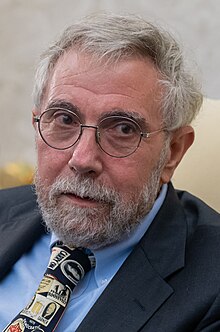 Paul R. Krugman合作论文数Princeton School of Public and International Affairs, Princeton University;London School of Economics and Political Science;Graduate Center, City University of New York2
 Robert M. Mcnab合作论文数Georgia State University2
 Indur Goklany合作论文数2Geoffrey Owen合作论文数1david holland合作论文数1rudiger dornbusch合作论文数1Jeromy E. DePledge合作论文数1Joseph W. Kroeschel合作论文数1Dennis Freed合作论文数1f john ege合作论文数1martha george合作论文数1cameron dinning合作论文数1
 Zachary Gochenour合作论文数James Madison University1
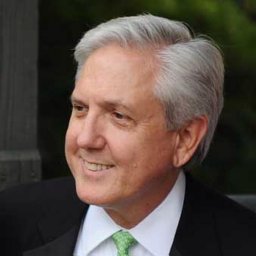 David Chandler Thomas合作论文数Dept Gen Med, Womens & Childrens Hosp Adelaide1Paul Conway合作论文数1
 Mark Pennington合作论文数Department of Political Economy, School of Politics & Economics, Faculty of Social Science & Public Policy, King’s College London1Brian Barry合作论文数1Helen Evans合作论文数1Michael A. Hall合作论文数1
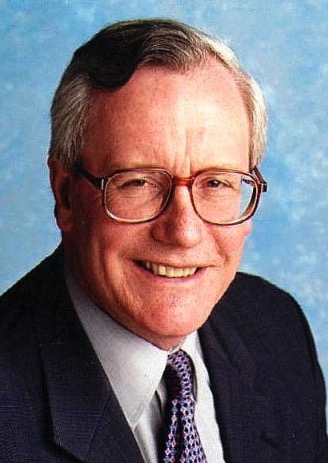 Patrick Minford合作论文数Cardiff Business School, Cardiff University;Julian Hodge Institute of Applied Macroeconomics, Cardiff University;Centre for Economic Policy Research1Steven Globerman合作论文数1
 Razeen Sally合作论文数School of Economics and Political Science, London1
 Bob Goodin合作论文数School of Philosophy, College of Arts & Social Sciences, Australian National University;Centre for Moral, Social and Political Theory, Australian National University1Robert S. Gaston合作论文数1Carl W. Anderson合作论文数1Ralph Harris合作论文数1American Indian合作论文数1Andrew Chermak合作论文数1
 Larry D. Brown合作论文数Institute for the Study of the Continents, Cornell University1Istvan Barany合作论文数1Dortha Dougherty合作论文数1
 Michael Fehler合作论文数Earth Resources Laboratory, Department of Earth, Atmospheric and Planetary Sciences, Massachusetts Institute of Technology1Tim Evans合作论文数1Sean T. Boerner合作论文数1Anthony F. Gangi合作论文数1George Ball合作论文数1Michael Batzle合作论文数1
 Juan Hernandez合作论文数University of Extremadura1




