Charge-exchange recombination with neutral atoms significantly influences the ionization balance in electron beam ion traps (EBIT) because its cross section is relatively large compared to cross sections of electron collision induced processes. Modeling the highly charged ion cloud requires the estimate of operating parameters, such as electron beam energy and density, the density of neutral atoms, and the relative velocities of collision partners. Uncertainty in the charge-exchange cross section can dominate the overall uncertainty in EBIT experiments, especially when it compounds with the uncertainties of experimental parameters that are difficult to determine. We present measured and simulated spectra of few-electron Fe ions, where we used a single charge-exchange factor to reduce the number of free parameters in the model. The deduction of the charge-exchange factor from the ratio of Li-like and He-like features allows for predicting the intensity of H-like lines in the spectra.
Essential to atomic, molecular, and optical physics is the ability to perform numerical computations accurately and efficiently. Whether the specific approach involves perturbation theory, close coupling expansion, solution of classical equations of motion, or fitting and smoothing of data, basic computational techniques such as integration, differentiation, interpolation, matrix and eigenvalue manipulation, Monte Carlo sampling, and solution of differential equations must be among the standard tool kit. This chapter outlines a portion of this tool kit with the aim of giving guidance and organization to a wide array of computational techniques. After having digested the present overview, the reader is then referred to detailed treatments given in many of the large number of texts existing on numerical analysis and computational techniques 1 ; 2 ; 3 ; 4 ; 5 ; 6 , mathematical functions 7 ; 8 ; 9 , and mathematical physics 10 ; 11 ; 12 ; 13 ; 14 ; 15 ; 16 ; 17 ; 18 . In addition to these excellent general references, in the age of the internet, many resources are also available through free publishing projects or research laboratory resources made public. Many of these resources seek to provide techniques and computer codes of high accuracy, portability, robustness, and efficiency, and often take advantage of modern structured programming and computational parallelism, going beyond the highly accessible, broadly applicable, but simple numerical recipes and codes described in the classic texts. A list of such numerical analysis software is given on the Wikipedia, providing very brief descriptions of the packages available 19 , and the journal Computer Physics Communications (CPC) publishes computational physics research and applications software with many codes applicable to atomic, molecular, and optical physics (see the CPC program library maintained at Queen's University Belfast 20 ). Especially in the sections that follow on differential equations and computational linear algebra, mention is made of the role of software packages readily available to aid in implementing practical solutions. Finally, in this brief introduction to computational techniques, we note the existence of commercial packages for mathematics, including those for computer algebra, performing numerical calculations and visualizing results through proprietary programming languages, and even performing simulations through such tools as finite-element analysis, including Mathematica, Maple, MATLAB, Mathcad, and COMSOL, for example.
In an effort to measure electron-impact ionization (EII) cross-sections of He-like Fe24+ at the electron beam ion trap (EBIT) facility of the National Institute of Standards and Technology (NIST), we have experimentally determined the corrections to the nominal beam energy determined by the voltages applied to the EBIT. High-resolution X-ray spectra were recorded at nominal electron beam energies between 6660 eV and 6750 eV using X-ray microcalorimetry based upon an array of 192 transition-edge sensors (TES). A large-scale collisional-radiative simulation of the non-Maxwellian EBIT plasma using relevant atomic data calculated with Flexible Atomic Code allowed us to determine the space-charge correction due to the electron beam including the neutralization factor by the ion cloud of the EBIT.
Spanning the center-of-mass energy range of 10−4 to 108eV, presented here are recommended integral and differential cross sections for elastic scattering in collisions of protons with atomic hydrogen. The recommended values have been determined by analysis of results of three primary theoretical methods with overlapping regimes of applicability within this broad range of collision energies. With comparison to data available in the literature and study of the numerical and physical convergences of the calculations, uncertainty quantification of the results has been made, which in turn aids uncertainty quantification of the astrophysical and other environment simulations the data is aimed at enabling. Along with other data for processes including excitation, ionization, and charge transfer, the present data support improved transport modeling of the passage of protons through atomic hydrogen, describing energy loss, charge change, secondary electron production, and photon emission.
Multiple theoretical methods are used to calculate the elastic scattering cross section for collisions of alpha particles with atomic hydrogen in the center-of-mass energy range of 10(-4)-10(8) eV. At the lowest energies where elastic scattering greatly dominates other reaction channels, a single-channel quasi-molecular-orbital approach is used. With the opening of inelastic channels at higher energies the multi-channel atomic-orbital, close-coupling method is applied, and at the highest energies considered perturbation theory (the Born approximation) is used. The results are compared with other data available in the literature and from preliminary multi-channel molecular-orbital, close-coupling calculations in order to assess the accuracy of the results and to create a recommended set of data spanning the entire energy range. The data is made available for use in astrophysical modeling and other plasma science applications online.
Data are presented over a wide range of impact energies describing the ionization or stripping probability, projectile energy loss, and ejected electron and recoiling target energies and angles for proton and hydrogen passage through hydrogen astrophysical environments. These kinematic and reaction data are tabulated at three levels of detail for use in heavy-particle (H+, H) and secondary-electron transport simulations: (1) the integral scattering cross section and average values of the distributions of energy and angle of the particles, (2) the singly differential cross sections as a function of particle energy and angle, and (3) a subset of the many possible doubly differential cross sections as functions of the particle energy and angle chosen to be most relevant to transport simulations.
In this paper, we present a detailed theoretical analysis of charge exchange recombination spectroscopy based on interactions of the planned ITER neutral beams (diagnostic beam of 100 keV u(-1) and heating beam of approximate to 1 MeV u(-1)) with highly-charged ions of tungsten. The results of the present spectral synthesis are based on the new set of nl-resolved charge exchange (CX) cross sections for recombination of the Wq+ ions (q = 61-66) with atomic hydrogen calculated using the classical trajectory Monte Carlo method. A large-scale collisional-radiative model describing the population kinetics of the high-n atomic states of Si-like through O-like W ions has been developed using the NOMAD code for typical conditions of the ITER core plasma, and the resulting spectra have been generated for wavelengths in the x-ray to visible range (0.1-1000 nm). A detailed analysis of the plasma emission predicts a significant effect of CX recombination on the W line intensity ratios that can be used for more advanced diagnostics of the ITER plasma.
Results of calculations describing secondary-electron production and other inelastic processes in collisions of 1 to 25,000 keV/u Sq+ (q = -1-16) with H-2 are presented. These data complement previous results for the same processes in Oq+ (q = -1-8) + H-2 (Schultz et al. 2017, 2019) and for Hq+ (q = -1,0,1) (Schultz et al. 2020). Used in ion-transport and secondary-electron simulations, these data provide a description of the atomic processes driven by these principal ions precipitating into the upper atmosphere of Jupiter, enabling better understanding the coupling of the Jovian magnetosphere, ionosphere, and atmosphere. (C) 2021 Elsevier Inc. All rights reserved.
Motional Stark effect (MSE) spectroscopy represents a unique diagnostic tool capable of determining the magnitude of the magnetic field and its direction in the core of fusion plasmas. The primary excitation channel for fast hydrogen atoms in injected neutral beams, with energy in the range of 25-1000 keV, is due to collisions with protons and impurity ions (e.g., He2+ and heavier impurities). As a result of such excitation, at the particle density of 1013-1014 cm-3, the line intensities of the Stark multiplets do not follow statistical expectations (i.e., the populations of fine-structure levels within the same principal quantum number n are not proportional to their statistical weights). Hence, any realistic modeling of MSE spectra has to include the relevant collisional atomic data. In this paper we provide a general expression for the excitation cross sections in parabolic states within n = 3 for an arbitrary orientation between the direction of the motion-induced electric field and the proton-atom collisional axis. The calculations make use of the density matrix obtained with the atomic orbital close coupling method and the method can be applied to other collisional systems (e.g., He2+, Be4+, C6+, etc.). The resulting cross sections are given as simple fits that can be directly applied to spectral modeling. For illustration we note that the asymmetry detected in the first classical cathode ray experiments between the red- and blue-shifted spectral components can be quantitatively studied using the proposed approach.
22 Many attempts have been made to model X-ray emission from both bremsstrahlung and 23 ion precipitation into Jupiter’s polar caps. Electron bremsstrahlung modeling has fallen 24 short of producing the total overall power output observed by earth-orbit-based X-ray 25 observatories. Heavy ion precipitation was able to reproduce strong X-ray fluxes, but 26 the proposed incident ion energies were very high (>1 MeV/nucleon). Now with the Juno 27 spacecraft at Jupiter, there have been many measurements of heavy ion populations above 28 the polar cap with energies up to 300-400 keV/nucleon (keV/u), well below the ion en29 ergies required by earlier models. Recent work has provided a new outlook on how ion30 neutral collisions in the Jovian atmosphere are occurring, providing us with an entirely 31 new set of impact cross-sections. The model presented here simulates oxygen and sul32 fur precipitation, taking into account the new cross-sections, every collision process, the 33 measured ion fluxes above Jupiter’s polar aurora, and synthetic X-ray spectra. We pre34 dict X-ray fluxes, efficiencies, and spectra for various initial ion energies considering opac35 ity effects from two different atmospheres. We demonstrate an in situ measured heavy 36 ion flux above Jupiter’s polar cap is capable of producing over 1 GW of X-ray emission 37 when some assumptions are made. Comparison of our approximated synthetic X-ray spec38 trum produced from in situ particle data with a simultaneous X-ray spectrum observed 39 by XMM-Newton show good agreement for the oxygen part of the spectrum, but not for 40 the sulfur part. 41
To extend the range of data required for modeling the secondary-electron production from ion precipitation into the upper atmosphere of Jupiter, inelastic processes for collisions of 1 key to 25 MeV H+, H, and H- with H-2 are considered. As in other work treating the dominant heavy-ion species of magnetospheric origin, O and S ions (Schultz et al., 2017, 2019; Gharibnejad et al., 2019) the classical trajectory Monte Carlo method is employed to describe the secondary-electron-producing channels (single and double ionization, transfer ionization, and single and double stripping) as well as the other inelastic channels (single and double charge transfer and projectile and target excitation) required to model the energy loss and charge state evolution of the precipitating ions in their passage through the atmospheric gas. Data is described and tabulated both as directly obtained from these calculations and normalized to widely accepted recommended values (Hunter et al., 1990) for channels for which recommendations exist. As in the previous work, the overall accuracy and completeness of the data presented is verified by use of a Monte Carlo ion-transport simulation to obtain the stopping power and ion-fraction populations as a function of impact energy in comparison with accepted values. The addition of the present data to models of secondary-electron production in Jupiter's atmosphere improves such model's ability to interpret in situ observations of the precipitating ions' effect by the spacecraft Juno as well as enhancing the physical reality of models of the coupling of the Jovian magnetosphere, ionosphere, and atmosphere. (C) 2019 Elsevier Inc. All rights reserved.
To improve the physical completeness of the data previously calculated (Schultz et al., 2017) to enable modeling of the effects of secondary electrons produced by energetic ion precipitation at Jupiter, we extend the treatment to include inelastic processes that occur simultaneously on the projectile (Oq+, q=0–8)) and target (H2). Here, processes considered in the previous work (single and double ionization, transfer ionization, double capture with subsequent autoionization, single and double stripping, single and double charge transfer, and target excitation) reflecting non-simultaneous projectile and target electron transitions, are replaced with processes that include both non-simultaneous and simultaneous electronic transitions on the target and projectile. These include, for example, single ionization, single ionization with simultaneous single projectile excitation, single ionization with double projectile excitation, single ionization with single projectile stripping, and single ionization with double projectile stripping. Using this expanded set of processes, we show, via Monte Carlo ion-transport simulation, that improved representation of the energy deposition, measured by the stopping power, is obtained as compared to accepted recommended values for intermediate energies (100–2000 keV/u) where the stopping power is largest, while maintaining the existing good agreement with these recommended values for low (∼10–100 keV/u) and high (≥2000 keV/u) energies. In addition, the ion-fraction distribution is altered by use of the improved data set. Both of these effects have implications for the energy deposition by oxygen ion precipitation in an H2 atmosphere. Therefore, use of this expanded data set can provide a more physically realistic secondary-electron distribution, and consequently improved atmospheric reaction network, improved description of ion contribution to atmospheric currents, and therefore improved understanding of Jovian ionosphere–atmosphere coupling.
Many attempts have been made to model X‐ray emission from both bremsstrahlung and ion precipitation into Jupiter's polar caps. Electron bremsstrahlung modeling has fallen short of producing the total overall power output observed by Earth‐orbit‐based X‐ray observatories. Heavy ion precipitation was able to reproduce strong X‐ray fluxes, but the proposed incident ion energies were very high ( > 1 MeV per nucleon). Now with the Juno spacecraft at Jupiter, there have been many measurements of heavy ion populations above the polar cap with energies up to 300–400 keV per nucleon (keV/u), well below the ion energies required by earlier models. Recent work has provided a new outlook on how ion‐neutral collisions in the Jovian atmosphere are occurring, providing us with an entirely new set of impact cross sections. The model presented here simulates oxygen and sulfur precipitation, taking into account the new cross sections, every collision process, the measured ion fluxes above Jupiter's polar aurora, and synthetic X‐ray spectra. We predict X‐ray fluxes, efficiencies, and spectra for various initial ion energies considering opacity effects from two different atmospheres. We demonstrate that an in situ measured heavy ion flux above Jupiter's polar cap is capable of producing over 1 GW of X‐ray emission when some assumptions are made. Comparison of our approximated synthetic X‐ray spectrum produced from in situ particle data with a simultaneous X‐ray spectrum observed by XMM‐Newton shows good agreement for the oxygen part of the spectrum but not for the sulfur part.
We present synthetic spectra for light emission following charge exchange (CX) recombination for Ne-like W64+ ions colliding with neutral atomic hydrogen at 100 and 500 keV/u, which is of relevance to the plasma diagnostics of the international experimental fusion device ITER now under construction. The spectra are calculated using a detailed collisional-radiative model for the W63+ ion that includes more than 6000 singly- and doubly-excited states and accounts for major physical processes in hot fusion plasmas. The CX cross sections into excited states are computed using the classical trajectory Monte Carlo method. A comprehensive analysis of the modifications to the spectra due to CX is presented.
Fine-structure line emission from [Ne ii] is observed in the infrared (12.81 μm) and could serve as a diagnostic of X-ray irradiation in protoplanetary disks. [Ne ii] emission may also trace the disk gas and indicate the presence of shocks due to outflows. As the electron fraction decreases with decreasing height from the plane of a disk, collisions with atomic hydrogen begin to play an important role in populating excited fine-structure levels. We present computations of cross sections for fine-structure excitation in collisions of with atomic hydrogen using a fully quantal molecular-orbital close-coupling approach with complete angular momentum coupling. The results are based on accurate calculations of NeH+ molecular potentials obtained from the multireference single- and double-excitation configuration interaction method. We find that the excitation cross sections are dominated by resonances at energies below 1000 cm−1. Quenching rate coefficients are given at temperatures (10–2000 K) of astronomical interest and compared with the electron impact rate.
A model is described for the transport of magnetospheric oxygen ions with low charge state and energies up to several MeV/nucleon (MeV/u) as they precipitate into Jupiter's polar atmosphere. A revised and updated hybrid Monte Carlo model originally developed by Ozak et al. (2010, https://doi.org/10.1029/2010JA015635) is used to model the Jovian X-ray aurora. The current model uses a wide range of incident oxygen ion energies (10 keV/u to 5 MeV/u) and the most up-to-date collision cross sections. In addition, the effects of the secondary electrons generated from the heavy ion precipitation are included using a two-stream transport model that computes the secondary electron fluxes and their escape from the atmosphere. The model also determines H-2 Lyman-Werner band emission intensities, including a predicted spectrum and the associated color ratio. Implications of the new model results for interpretation of data from National Aeronautics and Space Administration's Juno mission are discussed. In particular, the model predicts that for a 2 MeV/u oxygen ion energy input of 10 mW/m(2): (1) escaping electrons are produced with an energy range from 1 eV to 4 keV, which is a smaller range than previous models by Ozak et al. (2013, https://doi.org/10.1002/2013GL50812) predicted, (2) H-2 band emission rates of 75 kR are generated, similar to previous estimates, and (3) a newly calculated Lyman and Werner band color ratio of 10 is expected. The color ratios are put into a context of various methane number density distributions.
 Phillip Stancil合作论文数Department of Physics and Astronomy, Franklin College ofarts and Sciences, University of Georgia;Center for Simulational Physics, University of Georgia58
 Predrag Krstic合作论文数Institute for Advanced Computational Science, Stony Brook University58
 Carlos O. Reinhold合作论文数Oak Ridge National Laboratory45
 M. S. Pindzola合作论文数Department of Physics, Auburn University32
 Teck-Ghee Lee合作论文数23
 Re Olson合作论文数21Charles C. Havener合作论文数20
 Thomas E. Cravens合作论文数Department of Physics & Astronomy, College of Liberal Arts & Sciences, University of Kansas19S. Yu. Ovchinnikov合作论文数15
 Robert J. Buenker合作论文数Fakultät für Mathematik und Naturwissenschaften, Bergische Universität Wuppertal;Department of Physics and Astronomy, University of Georgia14
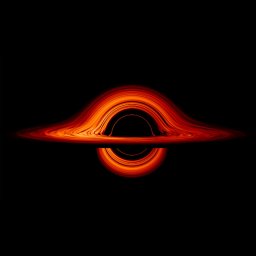 Yawei Hui合作论文数Physics Division, Oak Ridge National Laboratory14M. J. Raković合作论文数11James R. Beene合作论文数11Charles Vane R合作论文数Physics Division, Oak Ridge National Laboratory11
 Nataly Ozak合作论文数10T. Minami合作论文数10Yu. Ralchenko合作论文数10
 Renata S. Cumbee合作论文数College Pk, Univ Maryland9
 J.H. Macek合作论文数9Dc Griffin合作论文数9Tatsuya Minami合作论文数9Bernard Zygelman合作论文数Department of Physics;University of Nevada Las Vegas;MIT-Harvard Center for Ultra-Cold Atoms;University of Nevada Las Vegas, MIT9
 j c wells合作论文数NVIDIA Corp8
 Don H. Madison合作论文数Missouri University of Science and Technology8David J. Jeffery合作论文数8S D Loch合作论文数University of Strathclyde8Daniel W. Stracener合作论文数Forschungszentrum Jfilich8
 Gary Ferland合作论文数Department of Physics and Astronomy, College of Arts and Sciences, University of Kentucky8
 Heman Gharibnejad合作论文数Computat Phys Inc7Gerhard Hirsch合作论文数7
 Ratko K. Janev合作论文数Department of Plasma Physics, Jülich Research Centre7
 Balakrishnan Naduvalath合作论文数Department of Chemistry, University of Nevada, Las Vegas;Department of Biochemistry, University of Nevada, Las Vegas7
 Hardy Krause合作论文数Physics Division, Oak Ridge National Laboratory7Robin L. Shelton合作论文数7J. L. Nolte合作论文数7Joseph Macek合作论文数7
 Vasili Kharchenko合作论文数Department of Physics, College of Liberal Arts and Sciences, University of Connecticut;Harvard-Smithsonian Center for Astrophysics7james sternberg合作论文数6fay ownby合作论文数6Weihong Liu合作论文数6Stephen Houston合作论文数6
 Fred Meyer合作论文数6
 Alexander Dalgarno合作论文数Department of Astronomy, Harvard University;Institute For Theoretical Atomic and Molecular Physics, Harvard University;Center for Astrophysics Harvard & Smithsonian, Harvard University6
 James Colgan合作论文数Theoretical Division, Los Alamos National Laboratory6C P Ballance合作论文数Centre for Theoretical Atomic, Molecular and Optical Physics, Queen's University Belfast;School of Mathematics and Physics, Queen's University Belfast6
 Rami Ali合作论文数kansas state university6Jerry Peacher合作论文数6
 Jurij Simcic合作论文数Jožef Stefan Institute6
 Robert Forrey合作论文数The Pennsylvania State University6




