The divergence of Homo from gracile australopiths has been described as a trend of decreasing dentognathic size and robusticity, precipitated by stone tool use and/or a shift to softer foods, including meat. Yet, mechanical evidence supporting this narrative is sparse, and isotopic and archaeological data have led to the suggestion that a shift away from a gracile australopith-like diet would not have occurred in the most basal members of Homo but rather only with the appearance of Homo erectus, implying that the origin of our genus is not rooted in dietary change. Here, we provide mechanical evidence that Homo habilis exhibits an australopith-like pattern of facial strain during biting but, unlike most australopiths, was not suited for a diet that required forceful processing by the molar teeth. Homo habilis was at elevated risk of distractive jaw joint forces during those bites, constraining muscle recruitment so as to avoid generating uncomfortable/dangerous levels of tension in the joint. Modern humans have similar limitations. This suggests that selection on skeletal traits favouring forceful postcanine processing was relaxed by the earliest stages in the evolution of our genus, implying that dietary or food processing changes played an important role in the emergence of Homo.
The palaeocave site of Drimolen Main Quarry (DMQ) in Gauteng Province, South Africa, has produced fossil hominin material dating to 2.04–1.95 Ma, including craniodental remains attributed to Paranthropus robustus and the earliest specimen of Homo erectus sensu lato along with numerous postcrania of uncertain taxonomic affiliation. Among this collection is a partial pelvis (DNH 43), which includes the sacrum and elements of the right os coxae. Although previously described as showing similarities to the pelvis of Australopithecus and Paranthropus, comparisons across the broader hominin fossil record have been limited and DNH 43 has never been analysed quantitatively. Here we present a partial digital reconstruction of DNH 43 and compare it to an expanded data set of fossil specimens to determine its closest morphological affinities. Overall, the quantitative analysis is congruent with qualitative results reflecting the primitive features of DNH 43, suggesting an Australopithecus/Paranthropus-like anatomy, including small absolute size, relatively small sacroiliac articulation, moderately wide tuberoacetabular sulcus, gracile acetabulosacral buttress, and obstetric dimensions that are relatively broad. A study of this rare articulated pelvis shows that the orientation of the sacrum (pelvic incidence) is similar to that of recent Homo sapiens. Although DNH 43 shares some specific metric similarities with specimens MH2 (Australopithecus sediba) and OH 28 (cf. Homo erectus), the taxonomic relevance is unclear given the poor understanding of Paranthropus and early Homo postcranial variation. Affiliation with Paranthropus robustus (which dominates the DMQ craniodental assemblage) cannot be ruled out, and we consider assignment to that taxon to be a reasonable provisional attribution.
The Constrained Lever Model of vertebrate jaw biomechanics posits that the configuration of the triangle of support—demarcated by the bite point and the temporomandibular joints (TMJs)—limits muscle activity and thus feeding function. In particular, the resultant vector of the masticatory muscle forces must pass through the triangle or else the working-side mandibular condyle may be distracted out of the TMJ. We predict that the triangle acts as a functional module that is integrated with other aspects of mandibular morphology to facilitate coordinated evolution of the mandible as a whole. We tested whether skeletal traits in a triangle of support module facilitate mandibular evolution to a greater extent than random modules along a hypothetical selective trajectory. We applied viability selection modeling to simulate mandibular evolution from an ancestral population (common chimpanzees or Australopithecus afarensis) toward an adaptive peak representing modern humans. In these simulations, selection acts only on measurements assigned to the triangle of support or a random module, but other dimensions evolve via observed integration. The results demonstrated that selection on the triangle of support was more effective than expected by chance in producing a human-like mandible in a shorter amount of evolutionary time, when compared with randomly grouped sets of measurements.
Le présent article est une synthèse de quelques-unes des nouvelles découvertes les plus récentes concernant le Paléolithique et le Mésolithique de la Ligurie. Les résultats des fouilles dans les couches du Moustérien tardif (45–42,000cal BO) et du Protoaurignacien (41,500–36,000cal BP) du Riparo Bombrini (Vintimille, Imperia) et des couches moustériennes (60–50,000cal BP) et mésolithiques (10,000cal BP) l’Arma Veirana (Erli, Savone) sont présentés.
Despite decades of research on the emergence of human speech capacities, an integrative account consistent with hominin evolution remains lacking. We review paleoanthropological and archaeological findings in search of a timeline for the emergence of modern human articulatory morphological features. Our synthesis shows that several behavioral innovations coincide with morphological changes to the would-be speech articulators. We find that significant reductions of the mandible and masticatory muscles and vocal tract anatomy coincide in the hominin fossil record with the incorporation of processed and (ultimately) cooked food, the appearance and development of rudimentary stone tools, increases in brain size, and likely changes to social life and organization. Many changes are likely mutually reinforcing; for example, gracilization of the hominin mandible may have been maintainable in the lineage because food processing had already been outsourced to the hands and stone tools, reducing selection pressures for robust mandibles in the process. We highlight correlates of the evolution of craniofacial and vocal tract features in the hominin lineage and outline a timeline by which our ancestors became 'pre-adapted' for the evolution of fully modern human speech.
This paper is a synthesis of some of the most recent results concerning the Palaeolithic and Mesolithic of Liguria. The outcomes from the excavations in the Late Mousterian (45-42 ky cal BP) and the Protoaurignacian (41.5-36 ky cal BP) levels at Riparo Bombrini (Ventimiglia, Imperia) and in the Mousterian (60-50 ky cal BP) and the Early Mesolithic (10 ky cal BP) levels at Arma Veirana (Erli, Savona) are presented. (c) 2025 Elsevier Masson SAS. All rights are reserved, including those for text and data mining, AI training, and similar technologies.
Changes in foot morphology have played a crucial role in the evolution of bipedalism. Examining the evolution of pedal characters among hominins makes it possible to identify when and where key anatomical changes required for bipedalism evolved. This study uses ancestral character reconstruction to investigate foot morphology in the Homo + Pan last common ancestor and subsequent nodes in the hominin phylogeny. We explore the pattern of hominin foot evolution and examine the presence of terrestrial and arboreal adaptations at hominin ancestral nodes. In this study, we analyzed 62 discrete pedal characters hypothesized to be functionally significant. Our likelihood-based approach supports the hypothesis of a Pan-like last common ancestor of humans and chimpanzees. The earliest foot synapomorphies in hominins are related to foot and ankle eversion and midtarsal stability. These results are consistent with the hypothesis that lateral midfoot stability might have evolved before medial midfoot stability. Moreover, several homoplasies were inferred across different taxa, particularly related to features hypothesized to reflect joint mobility and the longitudinal arch. Finally, the Paranthropus and the Australopithecus africanus + Australopithecus sediba clades evolved arboreal characteristics, suggesting adaptations for arboreality. Overall, the results demonstrate how pedal characters evolved in hominins from an African ape-like ancestor.
OBJECTIVE:Although disagreement persists as to the precise nature of the diet of Paranthropus, there is a consensus that the food resources consumed by Paranthropus were in some way mechanically challenging to process (i.e., by being "hard" and/or "tough"). While the highly derived feeding apparatus of Paranthropus likely conferred biomechanical performance advantages while consuming certain types of foods, it may also have limited the ability of these early hominins to respond to selection and evolve rapidly toward new adaptive peaks (i.e., reduced their evolvability). MATERIALS AND METHODS:We employed viability selection modeling to test this hypothesis. Viability selection simulations were performed using Paranthropus boisei (OH 5), Australopithecus afarensis (A.L. 444-2), and Homo habilis (KNM-ER 1813) specimens. We simulated the generation-to-generation evolution of biomechanically informative linear dimensions in a population where an individual's probability of survival (i.e., viability) was determined by its distance to a predetermined adaptive peak. The number of generations required for an evolving population to reach a new adaptive peak was used as a measure of evolvability. RESULTS:The results showed that the mean number of generations from P. boisei to H. habilis was larger than in the reverse direction when modeled using either chimpanzee or human estimates of population variance/covariance. It took longer for P. boisei to evolve toward Au. afarensis than in the reverse direction, but only with the chimpanzee estimates of population variance/covariance. DISCUSSION:The results suggest that P. boisei faced limitations in cranial evolvability, particularly if selection favored a cranial morphology similar to H. habilis.
An uncritical reliance on the phylogenetic species concept has led paleoanthropologists to become increasingly typological in their delimitation of new species in the hominin fossil record. As a practical matter, this approach identifies species as diagnosably distinct groups of fossils that share a unique suite of morphological characters but, ontologically, a species is a metapopulation lineage segment that extends from initial divergence to eventual extinction or subsequent speciation. Working from first principles of species concept theory, it is clear that a reliance on morphological diagnosabilty will systematically overestimate species diversity in the fossil record; because morphology can evolve within a lineage segment, it follows that early and late populations of the same species can be diagnosably distinct from each other. We suggest that a combination of morphology and chronology provides a more robust test of the single-species null hypothesis than morphology alone.
Classic depictions of human evolutionary ecology cast Homo as predator and other hominins, including Paranthropus robustus, as prey. Such hypotheses rest on a small number of fossils that exhibit evidence of carnivore predation, including the iconic SK 54 cranium from Swartkrans in South Africa. Here we demonstrate that the SK 54 cranium shares its closest affinities with H. erectus sensu lato rather than P. robustus. Demonstrating that Homo was prey for leopards at Swartkrans weakens the historically significant hypothesis that Homo was better able to avoid predation because of being behaviourally and technologically advanced compared to Paranthropus. Subsequent ideas about hominin palaeobiology derived from this hypothesis warrant reconsideration.
Historical biogeography provides crucial insights into understanding the evolutionary history of hominins. We applied maximum-likelihood and biogeographical stochastic mapping to infer the ancestral ranges of hominins and estimate the frequency of biogeographical events. These events were inferred using two time-calibrated phylogenetic trees that differ in the position of Australopithecus sediba . Results suggest that regardless of which phylogeny was selected, Northcentral Africa was the preferred ancestral region for the ancestor of the Homo - Pan clade, as well as the ancestor of Sahelanthropus and later hominins. The northern and middle part of eastern Africa was the preferred ancestral region for several clades originating at subsequent deep nodes of the trees (-5-4 Ma). The choice of tree topology had one important effect on results: whether hominin ancestors appearing after -4 Ma were widespread or endemic. These different patterns highlight the biogeographic signi ficance of the phylogenetic relationships of A. sediba. Overall, the results showed that dispersal, local extinction, and sympatry played vital roles in creating the hominin distribution, whereas vicariance and jump dispersal were not as common. The results suggested symmetry in the directionality of dispersals. Distance probably in fluenced how rapidly taxa colonized a new region, and dispersals often followed the closest path. These findings are potentially impacted by the imperfection of the fossil record, suggesting that the results should be interpreted cautiously. (c) 2024 Elsevier Ltd. All rights are reserved, including those for text and data mining, AI training, and similar technologies.
 Callum F. Ross合作论文数Department of Organismal Biology and Anatomy, The University of Chicago59
 Barth W. Wright合作论文数47
 Paul C. Dechow合作论文数Department of Biomedical Sciences, College of Dentistry, Texas A&M University46
 Brian G. Richmond合作论文数Center for the Advanced Study of Hominid Paleobiology, The George Washington University46
 Ian Grosse合作论文数Department of Mechanical and Industrial Engineering, University of Massachusetts Amherst;Center for Personalized Health Monitoring, University of Massachusetts Amherst;Institute for Applied Life Sciences, University of Massachusetts Amherst34
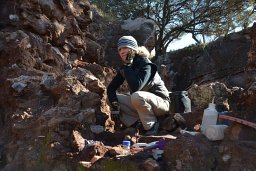 Amanda L Smith合作论文数Department of Anatomy, Pacific Northwest University of Health Sciences32
 Qian Wang (王谦)合作论文数Department of Biomedical Sciences, Texas A&M University College of Dentistry30
 Mark Spencer合作论文数Institute of Human Origins, Arizona State University29
 Stefano Benazzi合作论文数Department of Anthropology, University of Vienna27
 Justin A. Ledogar合作论文数Department of Health Sciences, East Tennessee State University24
 Gerhard W. Weber合作论文数Department of Evolutionary Anthropology, University of Vienna23
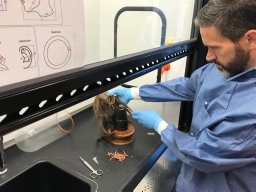 Craig Daniel Byron合作论文数Department of Biology, Mercer University22
 van Casteren Adam合作论文数Faculty of Life Sciences, University of Manchester21
 Frederick E. Grine合作论文数Departments of Anthropology, Stony Brook University;Departments of Anthropology and Anatomical Sciences, Renaissance School of Medicine, Stony Brook University20
 Peter W. Lucas合作论文数Department of Bioclinical Sciences, Kuwait University;Anthropology Department, Columbian College of Arts & Sciences, George Washington University14
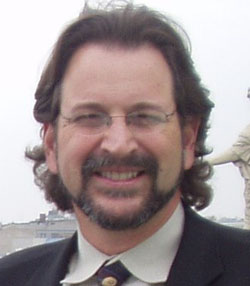 Dennis E. Slice合作论文数Department of Scientific Computing, Florida State University13Tamvada Kelli合作论文数12
 Michael Berthaume合作论文数Department of Mechanical &Industrial Engineering, University of Massachusetts;Department of Mechanical & Industrial Engineering, University of Massachusetts11
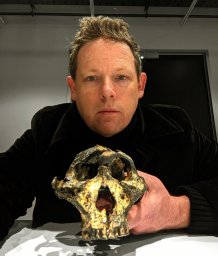 Andy I R Herries合作论文数School of Medical Sciences, The University of New South Wales11Kristin A Wright合作论文数11
 A B Leece合作论文数Dept Archaeol & Hist, La Trobe Univ10Jesse Martin合作论文数Dept. of Archaeology and History, La Trobe University10
 Myra F. Laird合作论文数Dept Basic & Translat Sci, Univ Penn10Mariana Dutra Fogaca合作论文数Neotrop Primates Res Grp NeoPReGo, Sao Paulo, Brazil9Michael Shaji合作论文数9
 Mongle Carrie合作论文数9
 Abdulwahab S. Almusallam合作论文数Department of Chemical Engineering;Carnegie Mellon University;Department of Chemical Engineering, Carnegie Mellon University9
 Gary T. Schwartz合作论文数Department of Anthropology;George Washington University;Department of Anthropology, George Washington University9
 Khaled J Al-Fadhalah合作论文数9
 Stephanie Edwards Baker合作论文数Palaeo-Research Institute, University of Johannesburg8Hyunwoo Jung合作论文数Dept Anat, Midwestern Univ8
 Jamie Hodgkins合作论文数Institute of Human Origins, Arizona State University;Institute of Human Origins, Arizona State University8Robert B. Scott合作论文数8
 Janine Chalk-Wilayto合作论文数8
 Kristian J Carlson合作论文数8
 Darryl J. De Ruiter合作论文数Department of Anthropology, Texas A & M University8
 Karen L Baab合作论文数Department of Anatomical Sciences, Stony Brook University Medical Center8Ma Spencer合作论文数7leslie pryor smith合作论文数7Q. Wang合作论文数7sarah wood合作论文数7
 Claudine Gravel-Miguel合作论文数Sch Human Evolut & Social Change, Arizona State Univ7
 Marco Peresani合作论文数7
 Lee Rogers Berger合作论文数Centre for Exploration of the Deep Human Journey, University of the Witwatersrand, Johannesburg7
 Dorothy M. Fragaszy合作论文数Department of Psychology, Franklin College of Arts and Sciences, University of Georgia7
 Julien Riel-Salvatore合作论文数Department of Anthropology, Arizona State University7
 Caley M. Orr合作论文数Department of Anthropology, Smithsonian Institution7Christopher E. Miller合作论文数Institute for Archaeological Sciences, University of Tübingen;Institute for Archaeological Sciences, University of Tübingen6
 Jana Makedonska合作论文数Department of Anthropology, University at Albany6




