INTRODUCTION:Influenza A virus (IAV) is a zoonotic pathogen with pandemic potential that infects a wide range of species, including companion animals. Although surveillance efforts have primarily focused on North America, Europe and Asia, data from South America remain scarce. This study evaluated the molecular and serological evidence of IAV circulation in dogs and cats from shelters and multi-pet households in central Chile. METHODS:Between June and November 2020, oropharyngeal swabs and serum samples were collected from dogs and cats in shelters and multi-pet households in central Chile. Samples were analysed by RT-qPCR, NP-ELISA and hemagglutination inhibition assay. RESULTS:IAV was detected by RT-qPCR in 3.2% (11/342) of dogs (95% CI: 1.3%-5.1%) and 5.8% (4/69) of cats (95% CI: 0.3%-11.3%). Serological analysis revealed IAV seropositivity in 55.5% (96/173) of dogs (95% CI: 48.1%-62.9%) and 50.0% (10/20) of cats (95% CI: 28.1%-71.9%). Additionally, pdmH1N1 antibodies were detected in 26 animals (25.7%; 95% CI: 17.2%-34.2%) out of 101 NP-ELISA-positive serum samples, with higher median titres for cats (median = 160) compared to dogs (median = 20). Low-level antibody titres against Canine/H3N2 (range = 10-20) were identified in three dogs (3.0%; 95% CI: 0.0%-6.3%), whereas no antibodies were detected against Canine/H3N8 or Avian/H3N6. No significant associations were observed between seropositivity and animal age, sex, origin or area. CONCLUSIONS:This study presents the first report of IAV detection in cats in South America and highlights a high level of IAV exposure among companion animals in central Chile. These findings underscore the importance of including pets in IAV surveillance efforts under a One Health approach and highlight the need for expanded monitoring and genetic characterization of circulating strains to assess zoonotic risk.
Salmonids play vital ecological and economic roles and have been introduced to many regions worldwide. When not held captive in farms, they can be classified as free-living salmonids, a group that includes native, feral, and naturalized populations, as well as fish that have escaped from aquaculture facilities. Compared to farmed salmonids, knowledge of viral infections affecting free-living populations remains limited, creating a significant gap in understanding the ecological impacts of interactions between aquaculture and natural ecosystems. To address this knowledge gap, we reviewed global reports and summarized the information on viruses infecting free-living salmonids. Most viral detections reported in the reviewed studies were found in native wild salmonids, with escaped salmon ranking second in detection frequency. Atlantic salmon ( Salmo salar ), sockeye salmon ( Oncorhynchus nerka ), and brown trout ( Salmo trutta ) were the most commonly reported host species. The most frequently reported viruses included infectious hematopoietic necrosis virus (IHNV), piscine orthoreovirus (PRV), infectious pancreatic necrosis virus (IPNV), and infectious salmon anemia virus (ISAV). Evidence from some studies suggests a bidirectional transmission of viruses between farmed and free-living salmonids, highlighting the complex interplay between these groups. Beyond their potential role as reservoirs for aquaculture pathogens, free-living salmonids may also be negatively impacted by viruses from farmed fish, contributing to the decline of native populations. By enhancing our understanding of the prevalence and impacts of viral infections in free-living salmonids, we can inform future research and management strategies to protect the health of both farmed and wild fish populations.
This study presents a comprehensive molecular and epidemiological characterisation of infectious pancreatic necrosis virus (IPNV) in Chilean salmon aquaculture. Between 2015 and 2016, 26 sampling events were conducted in freshwater and seawater farms spanning a broad latitudinal gradient (30.3° S to 52.6° S). Three diagnostic methods were used: Quantitative real-time Polymerase Chain Reaction (PCR) (qRT-PCR) (targeting VP1 and VP2 protein coding genes), nested PCR and virus isolation in CHSE-214 cells. In addition, a 523-bp VP2 gene fragment was sequenced directly from samples. These approaches were employed to assess detection sensitivity and to explore IPNV genogroup distribution and persistence. Nested PCR and viral isolation detected IPNV in 50 of 53 samples, outperforming qRT-PCR, which detected only 39. Phylogenetic analysis of the 523-bp VP2 gene fragment classified the isolates into two genogroups-5 (Salmo salar) and 1 (Oncorhynchus spp.), confirming host-specific associations. Identical or near-identical sequences were identified in geographically distant farms and temporally spaced samples, suggesting persistent isolates and potential long-distance spread, likely via egg transfers or fish movement. The most severe mortality event (> 125,000 fish) occurred during a genogroup 1 outbreak (Isla del Rey, GMTS, O. kisutch), followed by genogroup 5 outbreaks documented in Molco Alto (PMLC, S. salar) and Chayahue (S. salar). Although less frequently detected, genogroup 1 was associated with higher virulence, particularly in coho salmon. These findings highlight the need of integrated diagnostic strategies, genogroup-specific monitoring and strengthened biosecurity to mitigate the impact of IPNV in Chilean salmon farming.
Backyard production systems (BPSs) are common in Chile and play an important role in food access and local trade. However, these systems often lack basic biosecurity and disease prevention practices, which increases the risk of disease spreading. In this study, we evaluated the presence of two major avian respiratory viruses, infectious bronchitis virus (IBV) and infectious laryngotracheitis virus (ILTV), in BPSs located near wetlands in central Chile. These areas are known as the country’s main poultry production zones. We collected 449 poultry serum samples from 88 BPSs and performed serological tests using ELISA. Additionally, we analyzed 250 poultry tracheal swabs from 31 BPSs using qPCR. The results showed high seroprevalence levels: 95.5% of BPSs tested positive for IBV and 85.2% for ILTV. At the animal level, 82.2% were positive for IBV and 57.2% for ILTV. Most birds had antibodies to both viruses. However, active infections were less frequent, with 4.3% of tracheal swabs testing positive for IBV and 14.1% for ILTV during 2021 and 0.6% and 3.8% for IBV and ILTV, respectively, during 2024. This is the first serological and molecular evidence of IBV and ILTV circulation in backyard poultry in central Chile. Since this region includes most of the country’s poultry industry, these findings raise concern about the risk of virus transmission to commercial farms. The high circulation rates suggest that backyard poultry could act as reservoirs and may contribute to decreased productivity. Our results highlight the need for improved disease surveillance and enhancement of biosecurity in BPSs in Chile.
Infectious pancreatic necrosis virus (IPNV) is one of the most pervasive pathogens in aquaculture worldwide. It causes a highly contagious disease in salmonids that has a significant economic impact in almost every country where salmonid fish are farmed. For decades IPNV studies have focussed on the molecular characterisation of isolates collected from around the world and the discovery of molecular markers associated with virulence and pathogenicity. The great success of selective breeding for resistance to IPNV has caused special emphasis to be put on the immune response of salmon genetically resistant/susceptible to IPNV. In this work, we review the classification of IPNV, summarise virulence markers and add recent findings about the molecular epidemiology and worldwide distribution of the virus. We also review genetic improvements for IPNV resistance, the kinetics of the immune response to IPNV and the transcriptomic response of salmonids, made possible through the use high-throughput technologies.
The IPN virus (IPNV) causes a highly contagious disease that affects farmed salmonids. IPNV isolates have been phylogenetically classified into seven genogroups, of which two are present in Chile, genogroups 1 and 5. This study aimed to compare the transcriptomic response of rainbow trout fry challenged with two Chilean isolates of IPNV, RTTX (genogroup 1), and ALKA (genogroup 5). Tissue samples from challenged individuals and controls were taken at 1, 7, and 20 days post-challenge and analyzed by RNA-Seq. The results revealed that infection with RTTX elicited a greater modulation of the trout transcriptome compared to ALKA infection, generating a greater number of highly differentially expressed genes in relation to the control fish. Gene Ontology enrichment indicated that functions related to the inflammatory and immune responses were modulated in fish challenged with both isolates throughout the trial, but with different regulation patterns. On day 1 post challenge, these functions were activated in those challenged with ALKA, but suppressed in RTTX-challenged fish. These results suggest that rainbow trout exhibit a differential transcriptomic response to infection with the two genetically distinct IPNV isolates, especially at early times post-infection.
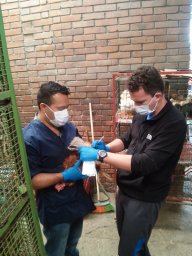
As companion animals, dogs and cats live in close contact with humans, generating the possibility of interspecies pathogen transmission events. Equine origin H3N8 and avian origin H5N1 influenza virus have been reported in dogs and cats respectively since 2004 with outbreaks associated with different strains recorded for both species in Asia and North America. To date, there have been no reports of influenza viruses from companion animals in South America. To fill this gap in knowledge, we performed active epidemiological surveillance in shelters that received abandoned animals, backyard production systems and veterinary clinics between May 2017 and January 2019 to estimate the burden of influenza infection in cats and dogs in the central region of Chile. Blood samples, oropharyngeal swabs or both were collected for influenza A virus detection by RT-qPCR, NP-ELISA, and hemagglutination inhibition assay. Logistic regression models were performed to assess the association between NP-ELISA-positivity and variables including sex and animal origin. The percentage of ELISA-positive samples was 43.5 % (95 % CI: 37.0-50.1) and 23.3 % (95 % CI: 10.6-42.7) for dogs and cats, respectively. No association was found between NP-ELISA results and sex or animal origin for either dogs or cats. Two ELISA positive samples showed hemagglutination inhibition titers against pandemic H1N1 influenza. One dog sample tested positive by RT-qPCR, indicating an overall RT-qPCR positivity in dogs of 1.1 % (95 % CI: 0.05-6.7). None of the tested cat samples were positive by this assay.
Infectious Pancreatic Necrosis Virus (IPNV) is the etiological agent of a highly contagious disease that affects farmed salmonids. IPNV isolates have been phylogenetically classified into eight genogroups, of which two are present in Chile, genogroups 1 and 5. Here we compare the mortality rate caused by isolates from both genogroups in rainbow trout (Oncorhynchus mykiss) fry to determine if there is an association between host susceptibility and phylogenetic characterization of IPNV. Fish were challenged by immersion with one of four isolates (two of each genogroup) and mortality curves were assessed after 30 days. Viral load was measured in all mortalities and in live fish sampled at 1, 7 and 20 days post-infection. Although mortality was low throughout the challenge, differences were found between fish infected with different isolates. Both isolates from genogroup 1, caused greater cumulative mortalities than either of the isolates from Genogroup 5. When combined, the overall mortality rate of fish challenged with genogroup 1 isolates was significantly higher than those infected with genogroup 5. However, viral load was lower on trout infected with genogroup 1 isolates. These results suggest that rainbow trout are more susceptible to IPNV isolates from genogroup 1 than genogroup 5.
Background: Infectious PancreaticNecrosis Virus (IPNV) is the etiological agent of a highly contagious disease that affects salmonids. In Chile, the second worldwide salmon producer, IPNVcauses great economic loss and is one of themost frequently detected pathogens. Due to its high level of persistence and the lack of information about the efficiency of its diagnostic techniques, the National Reference Laboratory (NRL) for IPNV in Chile performed the first inter-laboratory ring trial, to evaluate the sensitivity, specificity and repeatability of the qRT-PCR detection methods used in the country.Results: Results showed 100% in sensitivity and specificity in most of the laboratories. Only three of the twelve participant laboratories presented problems in sensitivity and one in specificity. Problems in specificity (false positives) were most likely caused by cross contamination of the samples, while errors in sensitivity (false negatives) were due to detection problems of the least concentrated viral sample. Regarding repeatability, many of the laboratories presented great dispersion of the results (Ct values) for replicate samples over the three days of the trial. Moreover, large differences in the Ct values for each sample were detected among all the laboratories.Conclusions: Overall, the ring trial showed high values of sensitivity and specificity, with some problems of repeatability and inter-laboratory variability. This last issue needs to be addressed in order to allow harmonized diagnostic of IPNV within the country. We recommend the use of the NRL methods as validated and reliable qRT-PCR protocols for the detection of IPNV. (C) 2017 Pontificia Universidad Catilica de Valparaiso. Production and hosting by Elsevier B. V. All rights reserved. This is an open access article under the CC BY-NC-ND license
Samples of fish organs from three salmonid species present in Chile, were analyzed through the nested polymerase chain reaction (nested PCR) to detect the presence of Infectious Necrosis Pancreatic virus (IPNV) and leading to their phylogenetic classification. The technique proved to be efficient and sensitive for detection and genotypification of viral samples which could not even be isolated in cell culture. The phylogenetic analysis showed the two genogroups previously described in the country, ie., European (Genogroup 5) and American (Genogroup 1), being the IPNV that belong to Genogroup 5 the dominant one (78.8%). It is clear that the Chilean IPNV is clustered within the Genogroup 1 forming a Chilean genotype that is separated from the reference strains (e.g. WB, VR-299). It was determined that there is a statistically significant relationship between the genonogroup that a viral isolate belongs and a specific host. Most of the viruses from Genogroup 5 were detected in Salmo salar , while the ones from Genogroup 1 were detected mainly in Oncorhynchus mykiss and O. Kisutch (P
Samples of fish organs (kidney and spleen) from the main salmonid species farmed in Chile were analyzed through the nested polymerase chain reaction (nested PCR) to detect the presence of infectious pancreatic necrosis virus (IPNV). The technique proved to be efficient and sensitive, allowing amplification of viral genetic material for sequencing directly from tissue, even from samples that could not be isolated in cell culture. The phylogenetic analysis showed the two genogroups previously described in the country, i.e., European (Genogroup 5) and American (Genogroup 1), being the IPNV that belong to Genogroup 5 the dominant one (78.8%). It is clear that the Chilean IPN viruses are clustered within the Genogroup 1 forming a sub-group that is separated from the reference strains (e.g., WB, VR-299), hence we propose its denomination as a Chilean genotype. Additionally, a statistically significant host-specific relationship was observed between the genogroups identified: viruses from Genogroup 5 were detected in Salmo salar, while the ones from Genogroup 1 were detected in Oncorhynchus mykiss or O. kisutch (P < 0.001). The association of this host-specific relationship with the virulence can provide important information for the management and control of IPNV in Chile.
Background: The genomes of several infectious pancreatic necrosis viruses (IPNVs) isolated in Chile were sequenced with a single amplification approach for both segments A and B. The resulting sequences were then used to determine the conservation of the primer-binding regions used in polymerase chain reaction (PCR)-based diagnostic methods proposed in the literature. Thus, the robustness of each technique was studied, particularly the eventual effect of further mutations within the primer-binding sites.Results: On analysis, most methods currently used to detect Chilean IPNV varieties were deemed adequate. However, the primers were designed to be genogroup specific, implying that most detection methods pose some risk of detecting all strains prevalent in the country, due to the coexistence of genogroups 1 and 5.Conclusions: Negative resultsmust be interpreted carefully given the high genomic variability of IPNVs. Detection techniques (quantitative reverse transcription (qRT)-PCR) based on degenerate primers can be used to minimize the possibilities of false-negative detections. (C) 2016 Pontificia Universidad Catolica de Valparaiso. Production and hosting by Elsevier B. V. All rights reserved.
Infectious pancreatic necrosis virus (IPNV) is the etiological agent of a highly contagious disease that is endemic to salmon farming in Chile and causes great economic losses to the industry. Here we compared different diagnostic methods to detect IPNV in field samples, including 3 real-time reverse transcription PCR (qRT-PCR) assays, cell culture isolation, and indirect fluorescent antibody test (IFAT). Additionally, we performed a phylogenetic analysis to investigate the genogroups prevailing in Chile, as well as their geographic distribution and virulence. The 3 qRT-PCR assays used primers that targeted regions of the VP2 and VP1 genes of the virus and were tested in 46 samples, presenting a fair agreement within their results. All samples were positive for at least 2 of the qRT-PCR assays, 29 were positive for cell culture, and 23 for IFAT, showing less sensitivity for these latter 2 methods. For the phylogenetic analysis, portions of 1180 and 523 bp of the VP2 region of segment A were amplified by RT-PCR, sequenced and compared with sequences from reference strains and from isolates reported by previous studies carried out in Chile. Most of the sequenced isolates belonged to genogroup 5 (European origin), and 5 were classified within genogroup 1 (American origin). Chilean isolates formed clusters within each of the genogroups found, evidencing a clear differentiation from the reference strains. To our knowledge, this is the most extensive study completed for IPNV in Chile, covering isolates from sea- and freshwater salmon farms and showing a high prevalence of this virus in the country.
 Juan Kuznar合作论文数8
 Yoanna Eissler合作论文数6
 José Manuel Yáñez López合作论文数Departamento de Medicina Preventiva Animal, Facultad de Ciencias Veterinarias y Pecuarias, University of Chile4
 Torres Pamela合作论文数4
 Juan Espinoza合作论文数3Juan C. Espinoza合作论文数1Alejandra Sepúlveda合作论文数1
 Soledad Ruiz合作论文数1Cecilia Baumberger合作论文数1Carla Salazar合作论文数1Pablo Galdames合作论文数1Victor Marambio合作论文数1
 Agustin Barria合作论文数Fac Ciencias Vet & Pecuarias, Univ Chile1Bridget Sharp合作论文数St Jude Childrens Res Hosp, Dept Infect Dis, 332 N Lauderdale St, Memphis, TN 38105 USA1
 Pedro Jimenez Bluhm合作论文数Fac Vet Sci, Univ Chile1
 Francisca Di Pillo合作论文数Nucleo Invest Aplicadas Ciencias Vet & Agron, Univ Amer1Meliopoulos Victoria A合作论文数1Freiden Pamela合作论文数1
 Felipe Reyes合作论文数Centro de Biotecnología Acuícola, Facultad de Química y Biología, Universidad de Santiago de Chile;Universitat Politècnica de Catalunya;Universitat Autònoma de Barcelona1
 Christopher Hamilton-West合作论文数1
 Rodolfo Farlora合作论文数Interdisciplinary Center for Aquaculture Research (INCAR),, University of Concepción1
 Stacey L. Schultz Cherry合作论文数St. Jude Children's Research Hospital1
 Cristian B. Canales-Aguirre合作论文数Universidad de Concepción Laboratorio de Genética y Acuicultura, Departamento de Oceanografía Casilla 160-C Concepción Chile1Pablo Conejeros合作论文数Instituto de Biología, Pontificia Universidad Católica de Valparaíso1Juan Carlos Espinoza合作论文数1
 Daniel Gomez-Uchida合作论文数School of Aquatic and Fishery Sciences1




