The ability to send information securely is a vital aspect of today’s society, and with the developments in quantum computing, new ways to communicate have to be researched. We explored a novel application of quantum key distribution (QKD) and synchronized chaos which was utilized to mask a transmitted message. This communication scheme is not hampered by the ability to send single photons and consequently is not vulnerable to number splitting attacks like other QKD schemes that rely on single photon emission. This was shown by an eavesdropper gaining a maximum amount of information on the key during the first setup and listening to the key reconciliation to gain more information. We proved that there is a maximum amount of information an eavesdropper can gain during the communication, and this is insufficient to decode the message.
In an effort to provide an alternative method to represent a quantum spin, a precise 3D nonlinear dynamics method is used. A two-sided torque function is created to mimic the unique behavior of the quantum spin. A full 3D representation of the magnetic field of a Stern-Gerlach device was used as in the original experiment. Furthermore, the temporarily driven nonlinear damped model exhibits chaos, but struggles to be consistent through azimuthal angles in reproducing the quantum spin statistics.
A nonlinear dynamics semi-classical model is used to show that standard quantum spin analysis can be obtained. The model includes a classically driven nonlinear differential equation with dissipation and a semi-classical interpretation of the torque on a spin magnetic moment in the presence of a realistic magnetic field, which will represent two equilibrium positions. The highly complicated driven nonlinear dissipative semi-classical model is used to introduce chaos, which is necessary to produce the correct statistical quantum results. The resemblance between this semi-classical spin model and the thoroughly studied classical driven-damped nonlinear pendulum are shown and discussed.
PurposeThe purpose of this paper is to describe a multi‐robot solution to the problem of chemical source localization, in which a team of inexpensive, simple vehicles with short‐range, low‐power sensing, communication, and processing capabilities trace a chemical plume to its source emitterDesign/methodology/approachThe source localization problem is analyzed using computational fluid dynamics simulations of airborne chemical plumes. The analysis is divided into two parts consisting of two large experiments each: the first part focuses on the issues of collaborative control, and the second part demonstrates how task performance is affected by the number of collaborating robots. Each experiment tests a key aspect of the problem, e.g. effects of obstacles, and defines performance metrics that help capture important characteristics of each solution.FindingsThe new empirical simulations confirmed previous theoretical predictions: a physics‐based approach is more effective than the biologically inspired methods in meeting the objectives of the plume‐tracing mission. This gain in performance is consistent across a variety of plume and environmental conditions. This work shows that high success rate can be achieved by robots using strictly local information and a fully decentralized, fault‐tolerant, and reactive control algorithm.Originality/valueThis is the first paper to compare a physics‐based approach against the leading alternatives for chemical plume tracing under a wide variety of fluid conditions and performance metrics. This is also the first presentation of the algorithms showing the specific mechanisms employed to achieve superior performance, including the underlying fluid and other physics principles and their numerical implementation, and the mechanisms that allow the practitioner to duplicate the outstanding performance of this approach under conditions of many robots navigating through obstacle‐dense environments.
Purpose In light of the current international concerns with security and terrorism, interest is increasing on the topic of using robot swarms to locate the source of chemical hazards. The purpose of this paper is to place this task, called chemical plume tracing (CPT), in the context of fluid dynamics. Design/methodology/approach This paper provides a foundation for CPT based on the physics of fluid dynamics. The theoretical approach is founded upon source localization using the divergence theorem of vector calculus, and the fundamental underlying notion of the divergence of the chemical mass flux. A CPT algorithm called fluxotaxis is presented that follows the gradient of this mass flux to locate a chemical source emitter. Findings Theoretical results are presented confirming that fluxotaxis will guide a robot swarm toward chemical sources, and away from misleading chemical sinks. Complementary empirical results demonstrate that in simulation, a swarm of fluxotaxis‐guided mobile robots rapidly converges on a source emitter despite obstacles, realistic vehicle constraints, and flow regimes ranging from laminar to turbulent. Fluxotaxis outperforms the two leading competitors, and the theoretical results are confirmed experimentally. Furthermore, initial experiments on real robots show promise for CPT in relatively uncontrolled indoor environments. Practical implications A physics‐based approach is shown to be a viable alternative to existing mainly biomimetic approaches to CPT. It has the advantage of being analyzable using standard physics analysis methods. Originality/value The fluxotaxis algorithm for CPT is shown to be “correct” in the sense that it is guaranteed to point toward a true source emitter and not be fooled by fluid sinks. It is experimentally (in simulation), and in one case also theoretically, shown to be superior to its leading competitors at finding a source emitter in a wide variety of challenging realistic environments.
Recently, distributed computation has assumed a dominant role in the fields of artificial intelligence and robotics. To improve system performance, engineers are combining multiple cooperating robots into cohesive collectives called swarms. This thesis illustrates the application of basic principles of physicomimetics, or physics-based design, to swarm robotic systems. Such principles include decentralized control, short-range sensing and low power consumption. We show how the application of these principles to robotic swarms results in highly scalable, robust, and adaptive multi-robot systems. The emergence of these valuable properties can be predicted with the help of well-developed theoretical methods. In this research effort, we have designed and constructed a distributed physicomimetics system for locating sources of airborne chemical plumes. This task, called chemical plume tracing (CPT), is receiving a great deal of attention due to persistent homeland security threats.For this thesis, we have created a novel CPT algorithm called fluxotaxis that is based on theoretical principles of fluid dynamics. Analytically, we show that fluxotaxis combines the essence, as well as the strengths, of the two most popular biologically-inspired CPT methods– chemotaxis and anemotaxis. The chemotaxis strategy consists of navigating in the direction of the chemical density gradient within the plume, while the anemotaxis approach is based on an upwind traversal of the chemical cloud. Rigorous and extensive experimental evaluations have been performed in simulated chemical plume environments. Using a suite of performance metrics that capture the salient aspects of swarm-specific behavior, we have been able to evaluate and compare the three CPT algorithms. We demonstrate the improved performance of our fluxotaxis approach over both chemotaxis and anemotaxis in these realistic simulation environments, which include obstacles. To test our understanding of CPT on actual hardware, we have implemented chemotaxis on three laboratory-scale robots. Chemotaxis requires only chemical sensors; eventually, when small-scale anemometers capable of reliably detecting low air velocities become available, we plan to implement anemotaxis and fluxotaxis on the robots as well. Our chemotaxis robots use the physicomimetics control algorithm to arrange the team of vehicles into a triangular formation, which then traces an ethanol vapor plume to its source emitter. In agreement with our theoretical predictions, the swarm implementation shows a consistent gain in CPT performance as compared to a single-robot solution.
This paper presents a novel and effective algorithm for the chemical plume tracing (CPT) task, i.e., tracing a toxic chemical gas to its source emitter. This algorithm is based on a firm, theoretical foundation of fluid flow physics. It assumes a team of plume-tracing robots that act as a mobile, distributed, adaptive sensing grid. In addition to presenting the foundation and the algorithm, an empirical comparison is provided between our algorithm and the two most popular alternatives, on a suite of simulated plume configurations of practical interest.
The task addressed here is a dynamic search through a bound-ed region, while avoiding multiple large obstacles, such as buildings. In the case of limited sensors and communication, maintaining spatial coverage – especially after passing the obstacles – is a challenging problem. Here, we investigate two physics-based approaches to solving this task with multiple simulated mobile robots, one based on artificial forces and the other based on the kinetic theory of gases. The desired behavior is achieved with both methods, and a comparison is made between them. Because both approaches are physics-based, formal assurances about the multi-robot behavior are straightforward, and are included in the paper.
This paper presents a novel chemical plume tracing algorithm executed by a distributed network of mobile sensing robots that measure the ambient fluid velocity and chemical concentration. The algorithm drives the robotic network to the source of the toxic plume, where measures can be taken to remove or extinguish the source emitter.
This paper presents a rigorous evaluation of a novel, distributed chemical plume tracing algorithm. The algorithm is a combination of the best aspects of the two most popular predecessors for this task. Furthermore, it is based on solid, formal principles from the field of fluid mechanics. The algorithm is applied by a network of mobile sensing agents (e.g., robots or micro-air vehicles) that sense the ambient fluid velocity and chemical concentration, and calculate derivatives. The algorithm drives the robotic network to the source of the toxic plume, where measures can be taken to disable the source emitter. This work is part of a much larger effort in research and development of a physics-based approach to developing networks of mobile sensing agents for monitoring, tracking, reporting and responding to hazardous conditions.
 Diana F. Spears合作论文数8
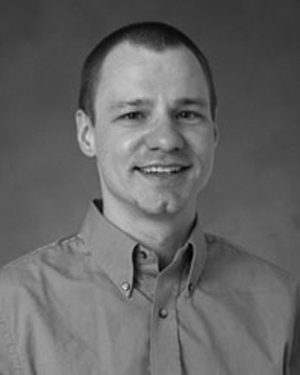 Dimitri Zarzhitsky合作论文数7
 William M. Spears合作论文数Swarmotics LLC3
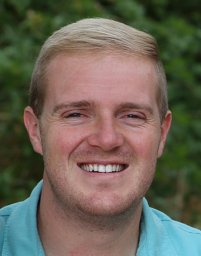 Joshua J Heiner合作论文数University of Wyoming2
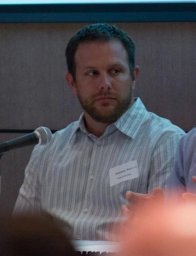 Wesley Kerr合作论文数Department of Computer Science;University of Wyoming;Department of Computer Science, University of Wyoming1
 Joshua Bodyfelt合作论文数Department of Physics;Wesleyan University;Department of Physics, Wesleyan University1
 Harry C Shaw合作论文数NASA Goddard Space Flight Center1




