A spectre is haunting consensus protocols-the spectre of adversary majority. The literature is inconclusive, with possibilities and impossibilities running abound. Dolev and Strong in 1983 showed an early possibility for up to 99 adversaries. Yet, we have known impossibility results for adversaries above 1/2 in synchrony, and above 1/3 in partial synchrony. What gives? It is high time that we pinpoint the culprit of this confusion: the critical role of the modeling details of clients. Are the clients sleepy or always-on? Are they silent or communicating? Can validators be sleepy too? We systematize models for consensus across four dimensions (sleepy/always-on clients, silent/communicating clients, sleepy/always-on validators, and synchrony/partial-synchrony), some of which are new, and tightly characterize the achievable safety and liveness resiliences with matching possibilities and impossibilities for each of the sixteen models. To this end, we unify folklore and earlier results, and fill gaps left in the literature with new protocols and impossibility theorems.
Motivated by proof-of-stake (PoS) blockchains such as Ethereum, two key desiderata have recently been studied for Byzantine-fault tolerant (BFT) state-machine replication (SMR) consensus protocols: Finality means that the protocol retains consistency, as long as less than a certain fraction of validators are malicious, even in partially-synchronous environments that allow for temporary violations of assumed network delay bounds. Accountable safety means that in any case of inconsistency, a certain fraction of validators can be identified to have provably violated the protocol. Earlier works have developed impossibility results and protocol constructions for these properties separately. We show that accountable safety implies finality, thereby unifying earlier results.
IntroductionRhabdomyosarcoma (RMS) is a common pediatric orbital malignancy but is extremely rare in adults. This study assesses clinical and radiographic features, management, and outcomes in adult orbital RMS patients with comparison to pediatric patients.MethodsA retrospective chart review from 2000-2023 at Bascom Palmer Eye Institute was conducted evaluating patients aged 0 to 100-years-old with biopsy-confirmed orbital RMS. Medical records were reviewed for demographics, clinical features, imaging, histopathology, management, and outcomes. Statistical analysis was conducted with Mann-U Whitney and chi-squared testing.ResultsTwenty-four patients were included, 15 children (mean age 6.4 +/- 4.4 years) and 9 adults (35.7 +/- 12.4 years). Patients in both groups presented with eyelid edema followed by proptosis with similar symptom duration (p = 0.31). Lesions were frequently located medially and inferiorly in both groups. At presentation, adults had significantly more metastatic disease in addition to bone, extraocular muscle, intracranial, and parameningeal involvement. The most common pediatric RMS subtype was embryonal (80%), whereas most adults were alveolar (77.8%, p = 0.001). Treatment in both groups frequently included chemoradiation. Both groups demonstrated similar local recurrence (p = 0.72), overall survival (p = 0.86), and ophthalmologic sequelae (p = 0.45), although pediatric follow-up duration was notably longer.ConclusionsTo our knowledge, this study is the largest report of adult orbital RMS from a single institution, highlights key comparisons in features and outcomes between adult and pediatric orbital RMS, and provides an updated literature review. While pediatric and adult orbital RMS clinical presentations are similar, adult disease more often demonstrates aggressive features, including alveolar subtype, local structure involvement, and lower disease-free survival.
Lazy blockchains decouple consensus from transaction verification and execution to increase throughput. Although they can contain invalid transactions (e.g., double spends) as a result, these can easily be filtered out by full nodes that check if there have been previous conflicting transactions. However, creating light (SPV) clients that do not see the whole transaction history becomes a challenge: A record of a transaction on the chain does not necessarily entail transaction confirmation. In this paper, we devise a protocol that enables the creation of efficient light clients for lazy blockchains. The number of interaction rounds and the communication complexity of our protocol are logarithmic in the blockchain execution time. Our construction is based on a bisection game that traverses the Merkle tree containing the ledger of all - valid or invalid - transactions. We prove that our proof system is succinct, complete and sound, and empirically demonstrate the feasibility of our scheme.
The idea of security sharing traces back to Nakamoto's introduction of merge mining, a technique that enables Bitcoin miners to reuse their hash power to bootstrap and secure other Proof-of-Work (PoW) blockchains. However, with the rise of Proof-of-Stake (PoS) chains (where merge mining is inapplicable) there is a need for new methods of Bitcoin security sharing. In this paper, we introduce remote staking as a technique that allows Bitcoin holders to use their idle assets to secure PoS chains. Our remote staking protocol achieves optimal economic safety: in the event of a safety violation on the PoS chain, at least one-third of the Bitcoin stake securing the chain is slashed. We make two key technical contributions to enable this: 1) A cryptographic protocol that enables slashing of Bitcoin stake despite the absence of smart contracts on Bitcoin; 2) A secure unbonding mechanism that guarantees slashing can occur before the stake is withdrawn from Bitcoin if a safety violation occurs on the PoS chain. Our design is entirely modular and can be integrated with any PoS chain as the security consumer and any chain (including Bitcoin) as the security provider. A version of this protocol was deployed to mainnet in August 2024 and has since accumulated over 4.1 billion USD worth of staked bitcoins.
Since the creation of Bitcoin 15 years ago, there has been an explosion in the number of permissionless blockchains. Each of these blockchains provides an open ledger that anyone can read from and write to. In this multi-chain world, an important question emerges: how can we build a more secure overlay blockchain by reading from and writing to a given set of blockchains? Drawing an analogy with switching circuits, we approach the problem by defining two basic compositional operations between blockchains, serial and triangular compositions, and use these operations as building blocks to construct general overlay blockchains. Under the partially synchronous setting, we have the following results: 1) the serial composition, between two blockchains, yields an overlay blockchain that is safe if at least one of the two underlay blockchains is safe and that is live if both underlay blockchains are live; 2) the triangular composition between three blockchains, akin to parallel composition of switching circuits, yields an overlay blockchain that is safe if all underlay blockchains are safe and that is live if at least half of them are live; 3) repeated composition of these two basic operations can yield all possible tradeoffs of safety and liveness for an overlay blockchain built on arbitrary number of underlay chains. The results are also extended to the synchronous setting.
PurposeTo evaluate the incidence of nasocutaneous fistula (NCF) development, following en bloc resection of lacrimal outflow system malignancies (LOSM), and describe the methods of surgical repair.MethodsRetrospective review of all patients who underwent resection of LOSM with reconstruction and post-treatment protocol at the University of Miami between 1997 and 2021.ResultsOf the 23 included patients, 10 (43%) developed postoperative NCF. All NCFs developed within one year of surgical resection or completion of radiation therapy. NCF was seen more frequently in patients who underwent adjuvant radiation therapy and those who had reconstruction of the orbital wall with titanium implants. All patients underwent at least one revisional surgery to close the NCF, including local flap transposition (9/10), paramedian forehead flap (5/10), pericranial flap (1/10), nasoseptal flap (2/10), and microvascular free flap (1/10). Local tissue transfer, pericranial, paramedian, and nasoseptal forehead flaps failed in most cases. Two patients had long-term closure; one patient who underwent a paramedian flap and a second who underwent a radial forearm free flap, suggesting that well-vascularized flaps may be the most viable option for repair.ConclusionsNCF is a known complication, following en bloc resection of lacrimal outflow system malignancies. Risk factors for formation may include adjuvant radiation therapy and use of titanium implants for reconstruction. Surgeons should consider utilizing robust vascular-pedicled flaps or microvascular free flaps for repair of NCF in this clinical scenario.
Adenoid cystic carcinoma (ACC) is a rare and lethal malignancy that originates in secretory glands of the head and neck. A prominent molecular feature of ACC is the overexpression of the proto-oncogene MYB. ACC has a poor long-term survival due to its high propensity for recurrence and protracted metastasis. Currently, clinical technologies lack the efficiency to distinguish patient prognosis prior to its redevelopment. We hypothesize that metastatic ACC can be detected by monitoring tumor-specific MYB expression in patients' blood. We developed a quantitative polymerase chain reaction (qPCR) assay for MYB transcripts and screened blood samples from four patient cohorts: no history or evidence of ACC (n=23), past history of ACC and no evidence of disease (NED) for greater than three years (n=15), local ACC (n=6), and metastatic ACC (n=5). Our assay detected significantly elevated levels of MYB transcripts in the metastatic ACC cohort (p < 0.01). Receiver operating characteristic (ROC) curves comparing metastatic to NED and metastatic to local disease were significant, with p values < 0.0001 and 0.0008, respectively. Single-cell RNA sequencing (scRNA-seq) of blood from metastatic ACC identified a cluster of circulating tumor cells (CTCs) expressing MYB. Here, we report a sensitive, cost-effective, and minimally invasive diagnostic test that leverages tumor-specific signatures to screen for metastatic ACC disease, potentially enhancing detection earlier than the current clinical standard.
Localized orbital amyloidosis is a rare clinical entity. Periocular and orbital amyloid deposits are mainly located at the lacrimal apparatus, eyelid, conjunctiva, ocular adnexa, extraocular muscles, and levator palpebrae muscle. In this article, the authors report an unusual case of optic nerve amyloid deposition in an 82-year-old African American woman who presented with vertical diplopia. MRI revealed an enhancing mass from the optic nerve sheath, and CT showed foci of calcifications suggestive of optic nerve meningioma. However, an incisional biopsy demonstrated lymphoproliferative disease with focal optic nerve sheath amyloid deposition confirmed by histologic Congo red staining and immunohistochemistry.
Existing Deep Fully Convolutional Network (DFCN) based pupil segmentation models have been shown to perform robust and accurate pupil detection. However, they lack high computational resources when real-time predictions for low computational wearable devices such as Raspberry Pi are of interest. Simple FCN (Fully Convolutional Network) models, on the other hand, can provide real-time yet not as accurate predictions with low computational power devices. In this study, we address this dilemma by proposing a CNN (Convolutional Neural Network)-based model, Residual CNN, with several advanced operations such as residual connections, Squeeze and Excitation (SE) attention, and Atrous Spatial Pyramid Pooling (ASPP) to improve the prediction performance without complicating the model. Moreover, we leverage transfer learning by training synthetic images, then fine-tuning them with authentic eye images. We also fully quantize our model parameters to speed up the predictions and apply the Quantization Aware Training (QAT) strategy to obtain accurate predictions. Our experiments show that our quantized Res-CNN model trained by QAT strategy with 40x30 resolution images provides robust yet real-time predictions with an average of 1.351 Root Mean Square Error (RMSE) for the pupil center predictions and 8.317 ms response time per image on Raspberry Pi.
The softmax function is ubiquitous in machine learning and optimization applications. Computing the full softmax evaluation of a matrix-vector product can be computationally expensive in high-dimensional settings. In many applications, however, it is sufficient to calculate only the top few outputs of the softmax function. In this work, we present an algorithm, dubbed AdaptiveSoftmax, that adaptively computes the top k softmax values more efficiently than the full softmax computation, with probabilistic guarantees. We demonstrate the sample efficiency improvements afforded by AdaptiveSoftmax on real and synthetic data to corroborate our theoretical results. AdaptiveSoftmax yields >10x gain over full softmax computation on most datasets, yielding up to 30x improvement for Mistral7B evaluated on the Wikitext dataset. The adaptive method we propose for estimating the partition function (the softmax denominator) is of independent interest and can be used in other applications such as kernel density estimation.
Classic BFT consensus protocols guarantee safety and liveness for all clients if fewer than one-third of replicas are faulty. However, in applications such as high-value payments, some clients may want to prioritize safety over liveness. Flexible consensus allows each client to opt for higher safety resilience, albeit at the expense of reduced liveness resilience. We present the first construction that allows optimal safety–liveness tradeoff for every client simultaneously. This construction is modular and is realized as an add-on applied on top of an existing consensus protocol. The add-on consists of an additional round of voting and permanent locking done by the replicas, to sidestep a sub-optimal quorum-intersection-based constraint present in previous solutions. We adapt our construction to the existing Ethereum protocol to derive optimal flexible confirmation rules that clients can adopt unilaterally without requiring system-wide changes. This is possible because existing Ethereum protocol features can double as the extra voting and locking. We show an implementation using Ethereum’s consensus API.
For Nakamoto's longest-chain consensus protocol, whose proof-of-work (PoW) and proof-of-stake (PoS) variants power major blockchains such as Bitcoin and Cardano, we revisit the classic problem of the security--performance tradeoff: Given a network of nodes with finite communication- and computation-resources, against what fraction of adversary power is Nakamoto consensus (NC) secure for a given block production rate? State-of-the-art analyses of NC fail to answer this question, because their bounded-delay model does not capture the rate limits to nodes' processing of blocks, which cause congestion when blocks are released in quick succession. We develop a new analysis technique to prove a refined security--performance tradeoff for PoW NC in a bounded-capacity model. In this model, we show that, in contrast to the classic bounded-delay model, Nakamoto's private attack is no longer the worst attack, and a new attack we call the teasing strategy, that exploits congestion, is strictly worse. In PoS, equivocating blocks can exacerbate congestion, making traditional PoS NC insecure except at very low block production rates. To counter such equivocation spamming, we present a variant of PoS NC we call Blanking NC (BlaNC), which achieves the same resilience as PoW NC.
Purpose: Lacrimal gland adenoid cystic carcinoma (LGACC) is a rare orbital malignancy with devastating lethality. Neoadjuvant intra-arterial chemotherapy (IACC) has demonstrated cytoreductive effects on LGACC macroscopically, but limited studies have examined cellular and molecular determinants of the cytoreductive effect. This post hoc study assessed apoptotic marker expression on excised tumor specimens after neoadjuvant IACC and globe-sparing resection, emphasizing the examination of tumor margins. Methods: This retrospective study identified LGACC specimens resected in a globe-sparing technique after neoadjuvant IACC by reviewing the Florida Lions Ocular Pathology database at Bascom Palmer Eye Institute. Histopathology slides of the specimens were re-examined to confirm the diagnosis and identify the tumor margin. Immunofluorescent staining was performed for apoptotic markers, including P53, cleaved caspase-3, cleaved PARP-1, and terminal deoxynucleotidyl transferase dUTP nick end labeling (TUNEL). Positive expression was determined by comparison to the negative control. Results: Tumor specimens from 5 patients met inclusion criteria. All 5 cases were positive at the center and the margin for TUNEL, p53, and cleaved caspase-3. One case did not show positive expression of cleaved PARP-1 at the margin but was positive for the other apoptotic markers. Conclusions: This post hoc study demonstrated positive staining for multiple apoptotic markers in post-IACC tumor specimens at the tumor center and margin. Apoptotic marker expression along the margins of post-treatment specimens is important, as it may offer surrogate information to speculate on the state of residual cancer cells adjacent to the excision margin inadvertently remaining in the orbit.
The idea of security sharing goes back to Nakamoto's introduction of merge mining, a technique that enables Bitcoin miners to reuse their hash power to bootstrap and secure other Proof-of-Work (PoW) blockchains. However, with the rise of Proof-of-Stake (PoS) chains, there is a need for new methods of Bitcoin security sharing. We introduce Bitcoin staking, a protocol that allows Bitcoin holders to trustlessly use their idle asset to secure a PoS chain. The key challenge is to enable automatic slashing of bitcoins on the Bitcoin chain upon safety violations on the PoS chain. We achieve this using double-authentication-preventing signatures, finality gadgets and bi-directional timestamping between Bitcoin and the PoS chain. Our design is entirely modular and can be integrated with any PoS chain. A version of this protocol was deployed to secure the Babylon mainnet in April 2025 and currently has over 58,000 bitcoins staked (about 4 billion USD at current prices) while paying only 0.05
Contingency tables, data represented as counts matrices, are ubiquitous across quantitative research and data-science applications. Existing statistical tests are insufficient however, as none are simultaneously computationally efficient and statistically valid for a finite number of observations. In this work, motivated by a recent application in reference-free genomic inference [K. Chaunget al.,Cell186, 5440–5456 (2023)], we develop Optimized Adaptive Statistic for Inferring Structure (OASIS), a family of statistical tests for contingency tables. OASIS constructs a test statistic which is linear in the normalized data matrix, providing closed-formP-value bounds through classical concentration inequalities. In the process, OASIS provides a decomposition of the table, lending interpretability to its rejection of the null. We derive the asymptotic distribution of the OASIS test statistic, showing that these finite-sample bounds correctly characterize the test statistic’sP-value up to a variance term. Experiments on genomic sequencing data highlight the power and interpretability of OASIS. Using OASIS, we develop a method that can detect SARS-CoV-2 andMycobacterium tuberculosisstrains de novo, which existing approaches cannot achieve. We demonstrate in simulations that OASIS is robust to overdispersion, a common feature in genomic data like single-cell RNA sequencing, where under accepted noise models OASIS provides good control of the false discovery rate, while Pearson’sX2consistently rejects the null. Additionally, we show in simulations that OASIS is more powerful than Pearson’sX2in certain regimes, including for some important two group alternatives, which we corroborate with approximate power calculations.
Although primary tumors of the lacrimal gland are rare, adenoid cystic carcinoma (ACC) is the most common and lethal epithelial lacrimal gland malignancy. Traditional management of lacrimal gland adenoid cystic carcinoma (LGACC) involves the removal of the eye and surrounding socket contents, followed by chemoradiation. Even with this radical treatment, the 10-year survival rate for LGACC is 20% given the propensity for recurrence and metastasis. Due to the rarity of LGACC, its pathobiology is not well-understood, leading to difficulties in diagnosis, treatment, and effective management. Here, we integrate bulk RNA sequencing (RNA-seq) and spatial transcriptomics to identify a specific LGACC gene signature that can inform novel targeted therapies. Of the 3499 differentially expressed genes identified by bulk RNA-seq, the results of our spatial transcriptomic analysis reveal 15 upregulated and 12 downregulated genes that specifically arise from LGACC cells, whereas fibroblasts, reactive fibrotic tissue, and nervous and skeletal muscle account for the remaining bulk RNA-seq signature. In light of the analysis, we identified a transitional state cell or stem cell cluster. The results of the pathway analysis identified the upregulation of PI3K-Akt signaling, IL-17 signaling, and multiple other cancer pathways. This study provides insights into the molecular and cellular landscape of LGACC, which can inform new, targeted therapies to improve patient outcomes.
 Daniel Pelaez合作论文数Research Service, Miami Veterans Affairs Medical Center35
 Pramod Viswanath合作论文数Department of Electrical and Computer Engineering, School of Engineering and Applied Science, Princeton University;Kaleidoscope Blockchain27
 Sander R. Dubovy合作论文数Department of Pathology, University of Miami Health System23
 Ertem Nusret Tas合作论文数18
 Matthias Grossglauser合作论文数School of Computer and Communication Sciences, Ecole Polytechnique Federale de Lausanne18
 Wensi Tao合作论文数Sylvester Comprehensive Cancer Center, University of Miami Miller School of Medicine16
 Joachim Neu合作论文数Stanford University15
 Ryan A Gallo合作论文数Lieber Institute for Brain Development14
 Sreeram Kannan合作论文数Electrical & Computer Engineering Department, University of Washington;EigenLayer14Brian C Tse合作论文数13
 Salman Avestimehr合作论文数Department of Electrical and Computer Engineering, Viterbi School of Engineering, University of Southern California;FedML, Inc.13
 Changho Suh合作论文数Department of Electrical Engineering, Korea Advanced Institute of Science and Technology13
 Guy Bresler合作论文数Electrical Engineering & Computer Science Department, Massachusetts Institute of Technology12
 Stephen Hanly合作论文数School of Engineering, Faculty of Science and Engineering, Macquarie University12
 Andrew Rong合作论文数11
 Baosen Zhang合作论文数Department of Electrical & Computer Engineering, University of Washington;Clean Energy Institute, University of Washington11Suhas N. Diggavi合作论文数faculty of the School of Computer and Communication Sciences at EPFL11
 Lizhong Zheng合作论文数Department of Electrical Engineering and Computer Science, Massachusetts Institute of Technology10
 Kannan Ramchandran合作论文数Department of Electrical Engineering and Computer Science, University of California, Berkeley10
 Ilan Shomorony合作论文数Department of Electrical and Computer Engineering, The Grainger College of Engineering, University of Illinois Urbana-Champaign10
 Farzan Farnia合作论文数Department of Computer Science & Engineering, The Chinese University of Hong Kong10
 Govinda M. Kamath合作论文数10x Genomics10
 Dmitry Ivanov合作论文数9
 Tavor Baharav合作论文数Stanford University9
 Olivier Lévêque合作论文数Ecole Polytechnique Federale of Lausanne9
 S. Keshav合作论文数Department of Computer Science and Technology, University of Cambridge;Fitzwilliam College, University of Cambridge;Bee Networx Corp.9
 Galina Dvoriantchikova合作论文数Bascom Palmer Eye Institute, University of Miami Miller School of Medicine9
 Vivek Kumar Bagaria合作论文数Dept Elect Engn, Stanford Univ9
 Acadia Moeyersoms合作论文数8Michelle G Zhang合作论文数8
 Srivatsan Sridhar合作论文数Dept Elect Engn, Indian Inst Technol8Erickson Benjamin P合作论文数8
 Thomas Courtade合作论文数Department of Electrical Engineering and Computer Sciences, University of California8
 Soheil Mohajer合作论文数School of Computer and Communication Sciences, Ecole Polytechnique Fédérale de Lausanne8
 Suhas Diggavi合作论文数Information Theory and Systems Laboratory, Department of Electrical and Computer Engineering, Samueli School of Engineering, University of California, Los Angeles7Choi Catherine J合作论文数7Doddapaneni Ravi合作论文数7
 John N. Tsitsiklis合作论文数Department of Electrical Engineering and Computer Science, Massachusetts Institute of Technology7
 I-Hsiang Wang (王奕翔)合作论文数Department of Electrical Engineering, National Taiwan University;Graduate Institute of Communication Engineering, National Taiwan University7
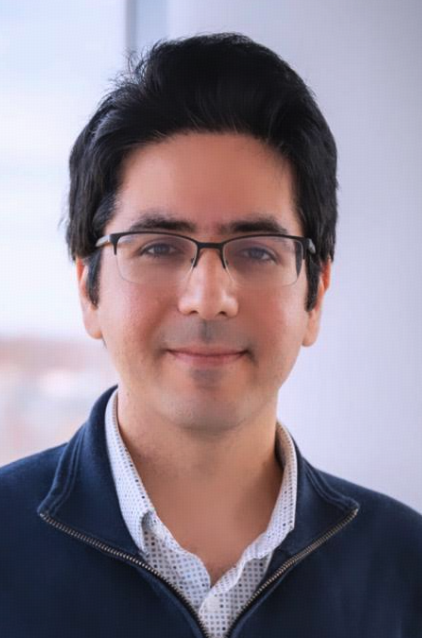 Soheil Feizi合作论文数Department of Computer Science, University of Maryland;RELAI7
 Lei Yang合作论文数MegaLabs6Thomas E Johnson合作论文数6Alabiad Chris合作论文数Miller School of Medicine, University of Miami6Martin Jinye Zhang合作论文数6
 Venkat Anantharam合作论文数Department of Electrical Engineering and Computer Science, University of California, Berkeley6
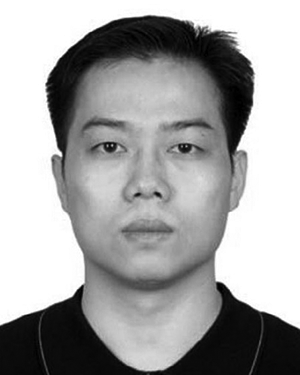 Hui Shen合作论文数6
 Massimo Franceschetti合作论文数Department of Electrical and Computer Engineering, Jacobs School of Engineering, University of California, San Diego;Center for Information Theory and Applications, University of California, San Diego;Center for Wireless Communications, Jacobs School of Engineering, University of California, San Diego;California Institute for Telecommunications and Information Technologies6Leonard H. Grokop合作论文数6
 Lee John合作论文数Quintiles Cardiovasc5




