Molecular dynamics computer simulations were performed on model colloidal binary mixtures of two large and many small soft repulsive spheres. Depletion forces arise between the two large spheres, as a function of their distance, because of the nonadditivity of the volume they exclude to the small spheres. The probability distribution functions of both longitudinal and transverse component of the total force exerted by the small particles were calculated and generally turned out non-Gaussian. The distributions of the collective forces were analyzed in terms of the distribution of the force that a single small sphere exerts on a large sphere and of the number of the surrounding small spheres. The reconstructed function matches well the corresponding exact distribution. Residual correlation among small particles, combined with a relatively small number of neighbors, slows the approach to the Gaussian limit. In our fully repulsive model, the direct force between a large and a small sphere is a monotonic function of their distance. On these bases, we propose and successfully test an approach that relates the probability distribution function of the depletion forces to the large-sphere-small-sphere radial distribution function. This approach can be extended to experimental data of radial distribution function, thus allowing for an estimate of depletion force fluctuations in real colloidal mixtures.
The intramolecular and intermolecular contributions to the longitudinal current fluctuations of the hydrogens of liquid water have been computed by molecular dynamics simulation on the TIP4P model at 245 K. This indicates that the recently discovered high frequency (approximately 165 THz) 'optical-like' collective mode of the hydrogens is due to the intermolecular contributions and that these and the intramolecular part cancel each other in the frequency range 20-120 THz. Conversely, they mutually reinforce outside this region to produce the acoustical (approximately 8 THz) and 'optical like' collective bands, in the low-k region. The high frequency mode is rooted in the librational motion of the molecules. This is shown by a comparison of the intermolecular part spectrum with that of the interparticle correlation function of the projection of the angular velocity over the principal axes of inertia of the molecule. In particular, we are able to show that the high frequency band is almost entirely due to correlations of the rotation of the tagged molecule and that of the cluster of neighbours around the axis normal to the dipole, in the molecular plane. Large cage effects are also observed in the translational dynamics, and the interparticle centre of mass velocity correlation function is found to be almost equal to the time propagated auto-correlation function.
Measurements for the determination of the complex permittivity of liquid and solid materials based on the use of whispering gallery (WG) dielectric resonators are presented. The procedure implies the measurement of the electromagnetic parameters of the involved resonator interacting with the material under study. The field distribution in the different WG resonant modes was obtained by an analytical calculation under the mode matching method approximation. The results of this calculation, combined with the experimental data, well account for the values of the complex permittivity of materials of interest. Due to the peculiar properties of WG resonators, the method shares the advantages of the wideband systems with the sensitivity and accuracy of the resonator systems in dielectric measurements. Dielectric permittivity of alumina (Al2O3) and of cyclohexane is measured in the frequency range 18-26 GHz. The overall accuracy of the measurements is discussed and the different sources of errors analyzed. Specific attention is paid to the measurements of variations of dielectric properties to monitor some physico-chemical processes. Finally, preliminary measurements at hundreds of GHz show that the procedure is particularly useful for study of dielectric properties up to the THz frequency region. (C) 2000 American Institute of Physics. [S0021-9606(00)50205-0].
Details are reported for a differential calorimetric technique to measure both the heat capacity and the thermal conductivity of liquid samples. The accuracy of the measured heat capacity is better than 0.4%, while sensitivity is about 4×10⁻⁴ J/°C. The accuracy of the measured thermal conductivity kL is about 1% if the difference between the kL value of the reference and the sample liquid is within 40%. Measurements were performed on: (a) water+t-butanol, (b) water+n-butanol, and (c) methanol+t-butanol mixtures at 25 °C. The experimental results for solute molar fraction x less than 0.2 are compared with data in the literature in the case of water+t-butanol mixtures. The heat capacity and thermal conductivity data versus x are probably the first ones published for mixtures (b) and (c).
A theoretical scheme to evaluate the long-time effects of hydrogen bond fluctuations on water dynamics is carefully reexamined in the light of recent experimental results of quasielastic neutron scattering (QENS). A molecular dynamics computer simulation is also carried out on a fairly large (343 TIP4P molecules) sample and for a total time of ≈100 ps. at three temperatures. The length of the runs has allowed to obtain good results for a number of properties. Also the temperature dependence of the static dielectric constant agrees with the experimental data. Further, some crucial predictions of our theoretical model have been carefully checked. The prediction on the deviation from Fick’s law is found to be in a satisfactory accord with the results of our computer simulation. The reasons for the less satisfactory agreement with the low-temperature results of QENS are discussed.
 M. Cassettari合作论文数4G Salvetti合作论文数4Alessandro Tani合作论文数4
 Renzo Vallauri合作论文数Laboratorio di Elettronica Quantistica del C.N.R. Firenze2
 E. Tombari合作论文数2Giorgio Cinacchi合作论文数1
 Stefano Veronesi合作论文数Dipartimento di Fisica, Università di Siena1
 Massimo Martinelli合作论文数Istituto di Fisica;Atomica e Molecolare;Istituto di Fisica|Atomica e Molecolare1Maria Fittipaldi合作论文数1
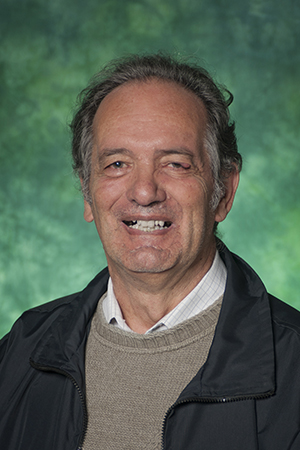 Paolo Grigolini合作论文数Department of Physics, College of Science, University of North Texas1
 Mauro Ferrario合作论文数Istituto Nazionale per la Fisica della Materia and Dipartimento di Fisica, Università degli Studi di Modena1
 Iginio Longo合作论文数1Giuseppe Annino合作论文数1




