The paper focuses on the construction of a blind receiver specifically tailored to the characteristics of the filterbank multicarrier offset QAM transceiver. The proposed method extends to the blind case methods already proposed in the literature for the trained case. It is derived with reference to the case in which the pulse transmitted on the single subcarrier is not substantially distorted by the channel. The number of bits per symbol used by the transmitter is an important parameter; increasing it increases complexity and degrades performance. Unlike other methods already proposed in the literature, the method is able to operate also for short bursts. Its performance is particularly good with reference to the ideal scenario of a flat subcarrier channel, but it resists well to moderate increases in distortion within the subcarrier bandwidth.
Orthogonal frequency division multiplexing (OFDM) systems present some shortcomings such as strict requirements for synchronization and reduced spectral efficiency. Filter bank multicarrier (FBMC) systems based on quadrature amplitude modulation (QAM-FBMC) have attracted increasing attention since they are considered an effective alternative to OFDM schemes. In this paper, the bit error rate (BER) of QAM-FBMC systems with single-tap equalization, is obtained. Moreover, the asymptotic (fora large number of subcarriers) expression of the BER and an approximate expression of the asymptotic BER are derived. The numerical results show that the derived BER expressions are quite accurate.
The paper considers the problem of burst truncation in FBMC-OQAM, which is strictly related to what is usually considered an important limit of this system: the tails at the beginning and at the end of the transmitted burst. Although the greatest part of the comparisons appeared in the literature among the different proposals for possible transceiver systems do not consider the introduction of burst truncation in FBMC-OQAM system, its spectral efficiency can be improved by careful use of the methods already proposed in the literature. This paper is dedicated to one of the most important methods already proposed in the literature that resorts to the use of virtual symbols in order to introduce an additive signal on the transmitted burst that does not introduce interference at the receiver but it is able to reduce the energy of the tails of the transmitted burst, limiting the relative interference levels. This method is considered in order to simplify its implementation and to provide a complete analysis of its performance. It is also analyzed how the presence of a near-far effect of the time-adjacent burst transmitters deteriorates the advantages of the method and affects the setting of the virtual symbols to be used. The results show that the considered burst truncation method allows a non negligible increase in the number of transmitted information symbols and makes the FBMCOQAM system particularly competitive when operating with limited resources dedicated to multiple access control and with a limited number of subcarriers per block.
This paper is focused on the analysis of the impact of carrier-frequency offset (CFO) on the performance of filter bank multicarrier systems with pulse amplitude modulation (FBMC-PAM). FBMC-PAM has been introduced since FBMC systems based on offset QAM modulation (FBMC/OQAM) achieve limited performance when a short prototype filter is adopted to reduce system latency and complexity. Unlike previous studies based on the signal-to-interference ratio, an analytical asymptotic expression of the symbol-error rate in the presence of CFO is derived. The simulation results have shown that the performance evaluated through the proposed method is sufficiently close to that obtained by computer simulations, especially for moderate values of the signal-to-noise ratio.
The filter bank multicarrier offset-QAM transceiver is increasingly investigated for its use in multiple-access uplink scenario. The use of the filter bank multicarrier transceiver, however, is attractive when a simple equalizer with a few taps is able to perform correct equalization. In this paper it is provided an extension of a general matrix description of the considered transceiver that is much useful for correctly setting the overall number of subcarriers for which simple channel equalization is possible. The obtained frequency-domain description allows the derivation of a class of simple receiver equalizers; two examples of possible equalizer derivations are provided.
The FBMC-OQAM transceiver is increasingly investigated for its use as alternative to OFDM transceiver. A general matrix description of the transceiver is able to describe the existing interferences among different transmitted symbols, and is often employed to design the prototype filter and the basic equalizer parameters. In the present paper the general model of FBMC-OQAM transceiver, already proposed by the authors and used for single-tap equalization, is considered and a method for its fast evaluation is proposed. Some applications of the proposed procedure to single-tap transceiver equalization are suggested; computer simulations are carried out in order to confirm the value of the proposed method.
This paper deals with single-tap equalization for the recently introduced FBMC-PAM system, a multi carrier scheme able to meet the requirements of cognitive radio such as high level of adjacent channel leakage ratio and asynchronous communications. The optimum single-tap gain in the minimum mean square error (MMSE) sense is derived and its performance is compared with that of previously considered receivers. It is shown that, when the zero-mean output of the standard matched filter is noncircular, the proposed equalizer is superior to the existing single-tap alternative solution and comes close in performance to a more advanced previously considered structure.(c) 2021 Elsevier B.V. All rights reserved.
Although orthogonal frequency division multiplexing (OFDM) schemes are widely used for their advantages related, for example, to the low complexity equalization, they present some issues related to the spectral efficiency reduction due to the insertion of the cyclic prefix and the contained out-of-band attenuation, and, moreover, to the strict synchronization requirements. Filter bank multicarrier (FBMC) techniques are emerging alternatives to OFDM for applications such as machine type communications or cognitive radio. In particular, the FBMC-PAM scheme based on a sine prototype filter assures a reduced system latency and is robust to carrier-frequency offset. In this paper the performance of FBMC-PAM systems in Rayleigh-fading frequency selective channels in the presence of a phase estimation error, is analyzed. Specifically, an analytical expression for the symbol error rate (SER) is derived and compared with simulation results.
Filter bank multicarrier (FBMC) techniques are emerging alternatives to the widely used orthogonal frequency division multiplexing (OFDM) schemes for applications such as machine type communications or cognitive radio. Recently an FBMC scheme based on a sine prototype filter with overlapping factor K=2 termed FBMC-PAM has been introduced. It assures an interesting performance, a reduced system latency and is robust to carrier-frequency offset. After presentation of the system model, an analytical expression of the BER of the single-tap sub-channel equalizer for the considered FBMC-PAM system operating in frequency-selective Rayleigh fading channel is obtained and compared with simulation results. Moreover, a performance comparison with an approximate single-tap sub-channel equalizer and with the previously proposed FBMC-PAM-2M, is presented.
In mobile communications, the most widely used multicarrier technique, namely OFDM, is known to exhibit performance limitations in high speed scenarios. FBMC is an alternative approach and, among FBMC techniques, the recently introduced FBMC-PAM scheme has emerged as the most robust to CFO. Therefore, it is chosen here as the challenger of OFDM for performance comparison in doubly dispersive channels. After presentation of the system model, multicarrier scheme and wireless channel, an analytical evaluation of the BER in the particular case of single path time-varying channel is provided for FBMC-PAM and validated through simulations. Then, simulation results are reported for both OFDM and FBMC-PAM, using the 3GPP multipath channel models. It appears that FBMC-PAM can outperform OFDM in highly time-varying frequency-selective channels. (C) 2020 Elsevier B.V. All rights reserved.
We consider the problem of the downlink transceiver design when it needs to operate in an ultralarge analog bandwidth; more specifically, we propose to use the FBMC/OQAM system in a scenario where many other multicarrier transceivers are not able to operate. For such a case, we consider the problems of the equalizer implementation and of the design of its coefficients, and we define proper procedures for solving them by resorting to the MMSE approach. The simulation results show the capability of the proposed solutions to operate also on the most hostile wireless channels at the price of a reasonable increase of the receiver computational complexity.
The analysis of the spectral efficiency that can be achieved by using the FBMC-OQAM transceiver in the uplink of the modern wireless networks is carried out. Such efficiency is studied in a scenario where the limitations are introduced by interferences due to the multiple access scenario, rather than by the presence of hostile wireless channels. The analysis shows that the FBMC-OQAM transceiver is able to achieve significant values of spectral efficiency also in the most difficult conditions, i.e., when the subcarriers blocks to be shared according to a time multiplexing approach are much small.
We consider one of the most interesting candidates for the 5G transceiver system, the windowed OFDM, and we carry out an evaluation of the spectral efficiency that can be achieved in the uplink of small but crowded cells by means of a time-frequency multiple-access scheme. Our analysis is first carried out in the absence of multiple-access interference in order to determine a performance upper bound and to gain more insights about the role of the system parameters. The main contribution of the paper is constituted by the evaluation of the achievable spectral efficiency as a function of the most important transceiver parameters, and above all by the number of subcarriers assigned to each active mobile terminal. In particular, we show that, unlike the downlink scenario, the spectral efficiency in multiple access is not optimized by choosing the cyclic prefix length to be just larger than the multipath delay spread, but increasing it much more, especially when the number of adjacent subcarriers assigned to each terminal is small.
Sensitivity to carrier frequency offset, due to oscillator inaccuracy and terminal mobility, is a key issue that modern multicarrier systems have to face. In that respect, FBMC-PAM holds a specific position due to its short prototype filter: the overlapping factor is K = 2 and the width of the main lobe of its frequency response is 3 times the sub-carrier spacing, while OFDM and FBMC-OQAM schemes have frequency response whose main lobe width is 2 times the sub-carrier spacing. As a consequence, it is shown in the present paper that FBMC-PAM outperforms other multicarrier techniques in terms of CFO sensitivity. In order to best exploit this property in burst transmission, an efficient and accurate approach for joint symbol timing and CFO estimation is proposed, based on a specific preamble. A theoretical in-depth analysis of the scheme is provided as well as performance validation in multipath channel through simulations. (C) 2019 Elsevier B.V. All rights reserved.
This paper deals with the problem of blind carrier-frequency offset (CFO) estimation for filter bank multicarrier systems with pulse amplitude modulation (FBMC-PAM). In FBMC-PAM a sequence of real-valued symbols can be transmitted over 2 M spectrally separated subcarriers operating at the same symbol rate as OFDM. This recently proposed system does not require a cyclic prefix and, in the multi-user context, it provides a high level of spectral separation among users. In this paper is derived the maximum likelihood (ML) blind CFO estimator for AWGN channel under the assumption of low SNR conditions. Since the FBMC-PAM signal is a noncircular random process, the obtained ML estimator exploits both the unconjugate and the conjugate correlation (or relation function). The performance of the derived CFO estimator is compared with that of the two estimators obtained by separately maximizing the contribution to the ML cost function exploiting the unconjugate correlation or the conjugate correlation, and with the modified Cramér-Rao bound.
This paper deals with the problem of blind symbol timing estimation for filter bank multicarrier systems with pulse amplitude modulation (FBMe-PAM). In FBMe-PAM a sequence of real-valued symbols can be transmitted over 2 $M$ spectrally separated subcarriers operating at the same symbol rate as OFDM. This recently proposed system exhibits many advantages in comparison with the OFDM system; in particular, it does not require a cyclic prefix and, in the multi-user context, it provides a high level of spectral separation among users. In this paper is derived the maximum likelihood (ML) blind symbol timing estimator for AWGN channel under the assumption of low SNR conditions. Since the FBMe-PAM signal is a noncircular random process (i.e., its conjugate correlation function or relation function is different from zero), the obtained ML estimator exploits both the conjugate and the unconjugate correlation. In addition, a closed-form low-complexity blind estimator exploiting only the unconjugate correlation, is proposed. The performance of the derived estimators, assessed via computer simulation, is compared with that of the two estimators obtained by separately maximizing the contribution to the ML cost function exploiting the unconjugate correlation or the conjugate correlation.
Among the filter bank multicarrier techniques for efficient transmission in communication systems, the recently proposed FBMC-PAM transceiver exhibits many advantages in comparison with the OFDM system; in particular, it does not require a cyclic prefix and, in the asynchronous multi-user context, it provides a high level of spectral separation among users. However, a performance loss is encountered when operating in hostile multipath channel if the latency of the overall transceiver and the receiver complexity are maintained limited. The equalizer proposed here is aimed at reducing the performance gap between the two systems without resorting to an increase of latency and complexity. Its performance is assessed by computer simulations. The obtained results show that it exhibits a performance improvement in comparison with the standard FBMC-PAM equalizer, significantly reducing the gap with the standard OFDM system when a low-rate transceiver constellation is used. Moreover, a reduced complexity version of the proposed equalizer is derived and analyzed.
Synchronization is a crucial operation in multicarrier systems. Similarly to Orthogonal Frequency-Division Multiplexing (OFDM), FilterBank MultiCarrier with Offset-QAM subcarrier modulation (FBMC/OQAM) systems require good frequency offset and symbol timing synchronization. However they usually have slightly relaxed synchronization requirements with respect to OFDM as the residual errors can be efficiently corrected by a multitap equalizer if it is present. In this chapter, several synchronization techniques are presented for coping with symbol timing offset and carrier frequency offset, which may be based on training input (preamble or scattered pilots) or be blind. In addition, both time domain and frequency domain implementations are studied. Finally, an asynchronous multi-user uplink scenario is analyzed, where the fast-convolution filter bank structure is used to enable simultaneous processing of non-synchronized signals from different users.
FBMC-PAM is a recently introduced filter bank multicarrier technique which exploits pulse amplitude modulation and operates at the same symbol rate as OFDM, unlike FBMC-OQAM which operates at twice that symbol rate. The scheme is efficiently implemented in the frequency domain and, in the system, the receiver is equipped with a frequency domain equalizer. In the present paper, uplink access is considered, focusing on two issues, single carrier modulation and preamble-based channel estimation. It is shown that the scheme can handle asynchronous users, thanks to the spectral separation brought by the filter bank and flexible frequency domain equalizers, and the performance is demonstrated by simulations. An FBMC-PAM-based physical layer can be envisaged for the uplink of future wireless systems.
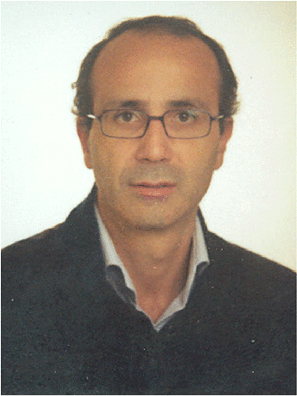 Mario Tanda合作论文数Elettronica e delle Telecomunicazioni, Università di Napoli Federico II33
 Francesco Palmieri合作论文数Department of Computer Science, University of Salerno22
 Maurice G. Bellanger合作论文数Conservatoire National Des Arts Et Metiers14
 Luigi Paura合作论文数Dipartimento di Ingegneria;Elettronica e delle Telecomunicazioni;Universita degli Studi di Napoli Federico II;Elettronica e delle Telecomunicazioni, Universita degli Studi di Napoli Federico II9
 Fabio Sterle合作论文数9
 P. Salvo Rossi合作论文数Postdoc at Norwegian University of Science and Technology (NTNU)8
 Gianmarco Romano合作论文数Dipartimento di Informatica e Sistemistica - Universit;Dipartimento di Ingegneria;Seconda Universita di Napoli;Dipartimento di Informatica e Sistemistica - Universit, Seconda Universita di Napoli7
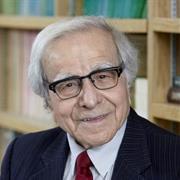 Simon Haykin合作论文数Department of Electrical and Computer Engineering, Faculty of Engineering, McMaster University6Maurice Bellanger合作论文数3
 Alessandra Budillon合作论文数Dipartimento Di Ingegneria, Università Degli Studi Di Napoli Parthenope3
 Stefano Maranò合作论文数Department of Information Engineering, Electrical Engineering and Applied Mathematics, University of Salerno2
 Palmieri, F.合作论文数Dipartimento di Ingegneria Industriale e dell ’Informazione, Universita degli Studi della Campania “Luigi Vanvitelli”,2
 Salvatore Marano合作论文数I. S. Department;University of Calabria;I. S. Department, University of Calabria2Maddalena Lipardi合作论文数2
 Luciano Izzo合作论文数Department of General Surgery “Pietro Valdoni”,, University “Sapienza” of Rome2S Haykin合作论文数1F Palmieri合作论文数1Romano, G.合作论文数1Massarelli, F.合作论文数1
 Peter Willett合作论文数Department of Electrical and Computer Engineering, School of Engineering, University of Connecticut1
 Martin Fuhrwerk合作论文数1Patrizia Falco合作论文数1
 Giacinto Gelli合作论文数Dipartimento di Ingegneria;Elettronica e delle Telecomunicazioni;Universita degli Studi di Napoli Federico II;Elettronica e delle Telecomunicazioni, Universita degli Studi di Napoli Federico II1
 Jerome Louveaux合作论文数Université Catholique De Louvain1Michele Calabrese合作论文数1
 Markku Renfors合作论文数Faculty of Information Technology and Communication Sciences, Tampere University1A Fiore合作论文数1
 Domenico Ciuonzo合作论文数Department of Electrical Engineering and Information Technologies, Università degli Studi di Napoli Federico II1




