‘Columbia Star’ is a high-quality, thornless, trailing blackberry ( Rubus L. subgenus Rubus Watson) grown for the machine-harvested processed market in Oregon and Washington, USA. Because it is a relatively new cultivar, little is known about how to manage it best. Therefore, a new planting was established in Fall 2019 to study the impact of plant spacing (0.75 vs. 1.5 m), chemical primocane suppression (with or without), and primocane training [August training vs. “new-over-old” (unpruned)] on its growth, yield, fruit quality, machine-harvest efficiency, and labor requirements. In each treatment, primocanes were trained to a vertical two-wire trellis system the first year after planting. By the second year and each year afterward, a chemical suppressant was sprayed on the primocanes when they reached ∼0.3 m in length in late April or early May, and the planting was machine-harvested on four to six dates from late June to late July. When averaged across plant spacings, the combination of August training and primocane suppression resulted in more primocanes (15 canes/plant) than any combination of new-over-old training and/or no primocane suppression (averaged 12 canes/plant). New-over-old training, on the other hand, increased the number of fruit per lateral, depending on the year and plant spacing, and resulted in higher yields than August training in the final 2 years of the study (2023 and 2024). The plants also produced a higher yield when they were spaced at 0.75 m than at 1.5 m, but only during the first 2 years of fruit production. Primocane suppression had no effect on yield in any year, likely because it resulted in more canes per plant, which compensated for shorter cane lengths. Any treatment differences in fruit weight were small and were <0.2 g/fruit. However, total soluble solids in the fruit were nearly 1% less on average with new-over-old training, perhaps because a portion of the fruit were knocked off earlier during harvest than with August training. In terms of labor, new-over-old training required 87% less time than August training when the plants were spaced at 0.75 m, and 79% less time when they were spaced at 1.5 m. Primocane suppression reduced the time by an average of 7% and 13% with new-over-old and August training, respectively. After the first 3 years of fruit production, new-over-old training resulted in a cumulative net return of $52,875 and $49,006/ha when the plants were spaced at 0.75 and 1.5 m, respectively, when averaged across treatments with and without primocane suppression. August training, in comparison, resulted in a loss of $11,606/ha at 0.75 m and a return of only $7218/ha at 1.5 m. Across plant spacings, primocane suppression increased cumulative net returns by $7217/ha when the primocanes were trained in August, but only by $1067/ha when the primocanes were trained using the new-over-old method. Given economic and labor constraints and positive impact on yields, the new-over-old method is expected to become the industry standard very quickly .
‘Mini Blues’ highbush blueberry (Vaccinium sp.) was released in 2016 as a high-quality, machine-harvestable cultivar for processed markets. A planting was established in Oct 2015 in western Oregon and an initial study, published in 2022, included the following pruning treatments, which began in Winter 2017–18: 1) conventional highbush pruning (HB); 2) removing one or two of the oldest canes per bush (Speed); 3) leaving plants to grow from 2017–21 (Unpruned); and 4) hedging after fruit harvest in 2018 (Hedge) and then unpruned afterward. Hedge plants were considered identical to Unpruned at the end of the initial study. In Winter 2021–22, this study began when Unpruned and Hedge treatment plants were renovated by cutting all canes back to a height of ∼30 cm and thinning to the strongest 8 to 10 canes per plant. In Winter 2022–23, half of the renovated plants were thinned (“cane thinning”), leaving 10 to 12 strong canes, and the other half were left unthinned. Pruning time, yield, berry weight, and total soluble solids (TSS) were measured from 2022 to 2024 to determine how quickly plants recovered from renovation and what the economic considerations are for this practice given the loss of yield in 2022 after renovation. Cane thinning in Winter 2022–23 reduced yield compared with all other treatments in 2023, but all treatments had similar yield by the third season after renovation (2024). Berry weight and TSS were similar among treatments, except Speed had smaller berries in 2023. Cane thinning required 331 h/ha compared with 44 h/ha for Unthinned (removing low growth) and 376 h/ha for HB in 2022–23. The highest post-renovation economic returns, as well as cumulative returns (2018–24) came from Speed pruning, followed by unpruned with renovation and no cane thinning. Cane thinning reduced yield for 1 year, cost more for labor, and showed no significant benefit in the 2 years since it was performed. ‘Mini Blues’ continues to perform well with reduced labor practices and does not need to be pruned using conventional techniques.
Two, large weighing lysimeters were installed near the center of a level field and used to measure crop evapotranspiration (ETc) of trailing blackberry (Rubus L. subgenus Rubus Watson ‘Columbia Star’) in western Oregon, USA. The lysimeters were constructed from steel and included an inner soil tank (1.0-m wide × 1.5-m long × 1.7-m deep) positioned within a slightly larger outer tank on four hermetically sealed, shear-beam load cells. Plants were spaced 1.5 × 3.0 m apart (one plant/lysimeter; 2153 plants/ha), irrigated by drip, and trained to a vertical two-wire trellis system. During the first year after planting, when only non-fruiting primocanes were present, ETc totaled 120 mm, or 18
Soil amendment, mulching, and fertilization practices are key components of blueberry production, yet grower practices range widely and long-term impacts are not commonly studied. ‘Elliott’ northern highbush blueberry (Vaccinium corymbosum L.) was evaluated from establishment to maturity (2003–18) to investigate the impacts of pre-plant sawdust incorporation (with or without 141 m3·ha−1 sawdust incorporated into the bed area), sawdust mulch (with or without an 8-cm-deep layer on soil surface), and N fertilizer rate (low, medium, and high, increased incrementally from 22, 67, and 112 kg·ha−1 in 2004, respectively, to 56, 168, and 269 kg·ha−1 of N from 2010 to 2018). Soil with sawdust incorporated had 4.3% soil organic matter at the end of the study in 2018 compared with 3.4% for nonincorporated soil. Soil pH was higher with sawdust incorporation and mulch when plants were young, but by 2011 these treatments were similar. High rates of N fertilization decreased soil pH by 0.3 to 0.4 throughout the study compared with the low rate, but all treatments were within or above the recommended pH range (4.5–5.5) throughout the study. Low levels of N fertilization were associated with higher soil pH and lower leaf N in most years, but higher leaf Ca and often any impacts of the low N rate were mitigated when sawdust was incorporated. Soil and leaf Ca increased when sawdust was incorporated and used as a mulch and when fertilizing with the low rate of N, but fruit Ca concentration only increased with mulch and the low N rate, whereas levels decreased with incorporation. When sawdust was not incorporated before planting, N fertilization rate affected leaf N, Ca, S, and Mn concentration, whereas this was not found when soil was amended with sawdust. Unmulched plants generally had higher leaf N, K, Fe, and Al but lower leaf Ca compared with mulched. Sawdust incorporation increased yield 4% and produced fruit with higher total soluble solids (TSS), but similar firmness, on average (2008–13), than for unamended soil. There was no main effect of mulch on yield or berry traits; however, plants grown with sawdust incorporated and no mulch had 7% greater yield per plant (averaged over 2006–13) compared with incorporated with mulch or nonincorporated with or without mulch. Nitrogen fertilization rate had no effect on yield, but berry weight was greater with low or medium N rates, particularly when sawdust was not incorporated. Net returns from higher yield with sawdust incorporation more than compensated for the materials and labor costs. Berry firmness and TSS were similar among incorporation, mulch, and fertilizer treatments for most years. Incorporating sawdust before planting resulted in an estimated $7680/ha greater net profit from fruit sales during the study period, more than compensating for the initial materials and application cost ($3150/ha). Use of the low rate of N from 2004 to 2018 saved $2680/ha and $5152/ha compared with the medium and high rates, respectively.
‘Mini Blues’ highbush blueberry (Vaccinium sp.) was released in 2016 as a high-quality, machine-harvestable alternative to lowbush (V. angustifolium Ait.) or other small-fruited highbush blueberry cultivars for processed markets. A planting was established in Oct. 2015 in western Oregon to evaluate the effects of pruning method on yield, machine-harvest efficiency (MHE), berry weight and total soluble solids (TSS), leaf tissue nutrients, pruning weight, pruning time, and costs. Plants were pruned for shape and to remove flower buds in 2015–16 and 2016–17. Pruning treatments began in 2017–18 and included: 1) conventional highbush pruning (HB); 2) removing one or two of the oldest canes per bush (Speed); 3) leaving plants to grow from 2017 to 2021 (Unpruned) before doing a hard renovation prune in 2021–22 (cutting the plants back to a height of ≈0.3 m and leaving the best 8–10 canes/plant); and 4) hedging after fruit harvest in 2018 (Hedge) and then unpruned afterward until renovation in 2021–22. The pattern of yield progression, observed wood aging, and reduced berry size after 4 years of no pruning indicated renovation was necessary in the unpruned and hedge treatments. Low growth was removed each year in all treatments, and hedging was only done in 2018 because it severely reduced yield the following year and, therefore, was not a viable option. An over-the-row machine harvester was used from 2018 to 2021. Speed-pruned plants, averaged over 4 years, had the greatest potential yield (3.75 kg/plant) compared with the other treatments (averaged 2.99 kg/plant) but had a similar yield as HB because more fruit remained on the bush after harvest with speed pruning. In 2021, speed pruning resulted in the highest yield (4.2 kg/plant), followed by HB (3.8 kg/plant) and the unpruned and hedge methods (averaged 3.1 kg/plant). MHE increased from 43% in 2018 to 74% in 2021, mainly because, as the plants aged, a larger proportion of the canopy was above the catcher plates on the harvester. On average, MHE was highest with HB pruning (70%), intermediate in the unpruned and speed-pruned plants (59%), and lowest in the hedged plants (49%). In 2021, ground drop loss was highest for hedge (18%), lowest for speed (14%), and intermediate for HB and unpruned (averaged 16%) methods. HB-pruned plants had heavier berries (0.64 g) than unpruned and hedge treatments (averaged 0.57 g) and a similar berry weight as the speed-pruned plants (0.61 g). Pruning had no effect on berry TSS. In contrast to leaf K, leaf Mg and Ca concentrations were lowest in HB and higher in all other treatments. In 2020–21, HB pruning required 471 h·ha−1, while speed pruning took 79 h·ha−1; the hedge and unpruned treatments required an average of 60 h·ha−1 to remove low-growing branches that would interfere with machine harvest. In 2021–22, renovation of the unpruned and hedge treatments took 290 h·ha−1. While leaving bushes unpruned during establishment appears to be a promising option for ‘Mini Blues’, further work is needed to evaluate fruit production after renovation and to determine how long the plants could remain unpruned thereafter. Speed pruning is also a good option, reducing pruning costs by 85%.
A 6-year trial was established in Oct. 2015 in western Oregon to evaluate the effects of pruning and trellising on yield, hand- and machine-harvest efficiency, fruit quality, and costs of pruning and harvest of ‘Legacy’ highbush blueberry (complex hybrid based largely on Vaccinium corymbosum L. and Vaccinium darrowii Camp.). Pruning treatments began in Winter 2017–18 (before year 3) and continued each year through 2020–21 (year 6). Treatments included 1) recommended pruning for ‘Legacy’, removing less wood and leaving more short, thin laterals and a denser bush than is typical for most northern highbush cultivars (“control” with standard T-trellis), 2) control pruning and training to a V-trellis (“V”), and 3) standard northern highbush style pruning (“HB” with standard T-trellis). Fruit were harvested solely by hand in 2017 and 2018, and by hand for early harvests followed by machine for later harvests from 2019 to 2021. In most years, more wood was removed from HB- than control-pruned plants. On average, HB-pruned plants had a lower yield (6.7 kg/plant) than control-pruned plants, particularly those trained to a V-trellis (7.5 kg/plant). There was little effect of pruning treatment on fruiting season and hand- (7% drop) or machine-harvest efficiency (23% drop). Pruning method had no effect on berry weight, diameter, total soluble solids, or firmness over the study period or percent internal bruising in 2019. All of the ‘Legacy’ pruning methods studied required more time (358 to 561 h·ha−1) than the industry standard, ‘Duke’ (247 h·ha−1). Control and HB pruning did not differ in time to prune per unit area; however, in 2 of the 4 years, adding a V-trellis increased pruning time. On average, control and HB pruning had a similar cost per harvested fruit ($0.20 to $0.21/kg), whereas control pruning with a V-trellis ($0.23/kg) cost more than HB pruning. All treatments required the same amount of time to harvest (12.7 and 0.5 min·kg−1 for hand and machine picking, respectively). Total cost to prune and harvest ranged from $1.63/kg in 2019 to $3.43/kg in 2021 but was most heavily influenced by harvest costs rather than pruning. The one-time installation cost of $637/ha for the V-trellis was not compensated for by increased yield or efficiency of pruning or harvest compared with the control method with a standard T-trellis. Pruning according to recommended methods for ‘Legacy’ (control) increased yield without having a negative effect on fruit quality and had similar or lower costs to prune per kg of fruit harvested as typical northern highbush pruning.
Information was gathered from 13 caneberry (blackberry and red and black raspberry; Rubus spp.) growers in Oregon's Willamette Valley in 2018 to learn which nutrient management tools growers were using and to determine relationships between plant (leaf and fruit) and soil nutrient status and planting performance for various cultivars. The floricane-fruiting caneberry cultivars studied were 'Meeker' red raspberry, 'Munger' black raspberry; 'Black Diamond', 'Columbia Star', 'Marion', and 'Obsidian' trailing blackberry; and 'Triple Crown' semi-erect blackberry. Our goal was to understand key challenges and questions that remain after many years of nutrient management research and extension outreach. Considerable variation in fertilization practices among grower sites was found. Several growers were applying fertilizer within the recommended rates and had good plant growth and yield, but many sites in this study included fields that were not performing to their full potential. Key problems identified that may have reduced plant performance and yield included soil pH lower than the recommended range of 5.6-6.5, likely reducing nutrient availability; in the study, 28% had a soil pH below 5.6 and some had a pH as low as 4.6. Soil levels of P, K, and Mg were generally high across grower sites indicating no fertilizer was needed, yet many growers fertilized with P and K regardless. Many growers applied excessive rates of N fertilizer from sources that would exacerbate low pH, and timed applications improperly based upon existing extension recommendations. Site or grower management impacted the concentration of almost all leaf nutrients within cultivars, with deficient levels for N, P, K, and Ca at many sites. Site had a significant impact on the concentration of many fruit nutrients. Fruit %P, K, Ca, Mg, and S were positively correlated with their respective leaf concentrations. Percent moisture content of fruit ranged from 72-86% and was affected by grower management for 'Black Diamond', 'Munger', 'Obsidian', and 'Triple Crown'. Despite adequate to high N fertilizer rates being applied, leaf %N was low or just sufficient, supporting the hypothesis that management practices were limiting fertilizer uptake. Some growers applied granular product while drip irrigating, likely reducing availability of nutrients during periods of demand. Insufficient irrigation at key times of the season or stages of plant development may have limited plant uptake of N and K. While current recommendations are to collect soil samples every few years and leaf tissue samples annually to assess nutrient management programs, many growers were not doing so. Growers most frequently relied on fertilizer company field representatives regarding best nutrient management practices rather than using free extension resources for sampling and fertilization methods. Improved outreach to company representatives and revising nutrient management publications to incorporate new research-based information will be key in helping the industry better monitor soil and leaf nutrient status and manage fertilizer requirements in their caneberry crops.
Microbial communities on soil are fundamental for the long-term sustainability of agriculture ecosystems. Microbiota in soil would impact the yield and quality of blueberries since microbial communities in soil can interact with the rhizosphere of plant. This study was conducted to determine how different mulching treatments induce changes in soil microbial composition, diversity, and functional properties. A total of 150 soil samples were collected from 5 different mulch treatments (sawdust, green weed mat, sawdust topped with green weed mat, black weed mat, and sawdust topped with black weed mat) at 3 different depths (bottom, middle, and top region of 20 cm soil depth) from 2 different months (June and July 2018). A total of 8,583,839 sequencing reads and 480 operational taxonomic units (OTUs) of bacteria were identified at genus level. Eight different plant growth promoting rhizobacteria (PGPR) were detected, and the relative abundances of Bradyrhizobium , Bacillus , and Paenibacillus were more than 0.1% among all soil samples. Sampling depth and month of soil samples impacted the amount of PGPR, while there were no significant differences based on mulch type. Functional properties of bacteria were identified through PICRUSt2, which found that there is no significant difference between mulch treatment, depth, and month. The results indicated that sampling month and depth of soil impacted the relative abundance of PGPR in soil samples, but there were no significant differences of functional properties and beneficial microbial communities based on mulch type.
In long-lived organic blueberry production systems, nutrient imbalances caused by some fertilization and mulching practices can reduce plant growth and yield. The ability to balance nutrient levels and thus improve productivity over time was evaluated in a mature planting of ‘Duke’ and ‘Liberty’ that had been used to study different mulching practices [sawdust (9-cm deep), yard-debris compost (4-cm) topped with sawdust (5-cm), and weed mat] and various rates and sources of N fertilizer (feather meal or fish solubles, each applied initially at “low” or “high” rates of 29 and 57 kg·ha−1 N in 2007–08 and then increased incrementally as the planting matured to 73 and 140 kg·ha−1 N in 2013–16). In Winter 2016–17, existing weed mat was removed and replaced where it was present, and new weed mat was installed on top of any existing organic mulches, thus changing the mulch treatments to weed mat (over bare soil), weed mat over sawdust, and weed mat over compost + sawdust from 2017 to 2020. A hydrolyzed soy-protein–based fertilizer containing essentially only N was applied at a moderate rate (106 kg·ha−1 N) relative to prior treatments. Plants grown on flat and raised beds were evaluated separately. From 2016 to 2020, yield of ‘Duke’ and ‘Liberty’ increased by an average of 19% and 56%, respectively, on flat beds and 8% and 42%, respectively, on raised beds. On flat or raised beds, plants that had weed mat placed over the existing sawdust or compost + sawdust mulch had a greater increase in yield (averaging 41%) than those with weed mat alone (over bare soil; averaging 12%). Soil under weed mat alone continued to have the lowest organic matter content (averaging 3%) throughout the study. Prior fertilization source and rate had no impact on the increase in yield of ‘Duke’, whereas ‘Liberty’ plants previously fertilized with feather meal had a larger increase in yield through 2020 than those fertilized with fish solubles. Fertilizing with an intermediate rate of N from 2017 to 2020 increased yield regardless of whether plants received the low or high N rate from 2007 to 2016, confirming our previous conclusion that the low rate provided sufficient N. Soil K and leaf %K declined after discontinuing fertilization with fish solubles and use of yard-debris compost, likely a factor in yield improvement. However, there were still negative correlations between yield and leaf %K in multiple years. This study illustrated that changing mulch and fertility practices in established organic blueberry to mitigate prior applications of high K can improve plant performance, nutrient imbalances, and yield within a relatively short period of time.
A 4-year trial was established in Oct. 2016 in western Oregon to evaluate the effects of various in-row mulch treatments on yield, fruit quality, and costs of installation and maintenance during establishment of northern highbush blueberry (Vaccinium corymbosum L. ‘Duke’). The treatments included douglas fir [Pseudotsuga menziesii (Mirb.) Franco] sawdust, black weed mat (woven polypropylene groundcover), green weed mat, and sawdust covered with black or green weed mat. Fruit were harvested during 2018–20 (second through fourth growing seasons). Weed mat color had no effect on yield or fruit quality. In 2018, yield was higher with black weed mat over sawdust mulch than with black weed mat alone, whereas mulch had no effects during 2019 and 2020, or on cumulative yield. Percent total soluble solids in the berries was highest with sawdust and weed mat alone compared with weed mat over sawdust mulches, whereas berry weight, diameter, and firmness were unaffected by mulch. Sawdust was the most expensive mulch over the lifespan of the planting because it required replenishment after 2 years. Black weed mat over sawdust resulted in the highest net profit when fruit sales and cost of materials and labor were considered.
A 2-year trial was established in Oct. 2016 in western Oregon to evaluate the effects of various in-row mulch treatments on the establishment of northern highbush blueberry (Vaccinium corymbosum L. ‘Duke’). The treatments included douglas fir [Pseudotsuga menziesii (Mirb.) Franco] sawdust, black weed mat (woven polypropylene groundcover), green weed mat, and sawdust covered with black or green weed mat. Soil temperature was unaffected by the color of the weed mat, but it was often higher during the day in beds with weed mat mulch than in those with sawdust alone or sawdust covered with weed mat. Black or green weed mat also resulted in higher canopy temperatures, particularly when sawdust was underneath the weed mat. Plant growth was mainly unaffected by the color of the weed mat, and the maximum depth of the root system was similar among the mulch treatments. However, plants grown with sawdust mulch, with or without weed mat, had a greater canopy width and volume in year 2, a wider root system in both years, and more dry weight (DW) in the crown in year 1 and in the whips in year 2 than those with weed mat alone. Furthermore, plants with weed mat over sawdust were taller in year 1 and had greater canopy cover and more DW in new wood in year 2 than those with sawdust alone, and they had a larger canopy, more root development, and greater DW in the crown, new and old wood, fruit, and pruning wood in one or both years than those with weed mat alone. Over the course of the 2 years of the study, the net gain in total plant DW was lowest when the plants were grown with black weed mat and highest when they were grown with black weed mat over sawdust. Although it was more expensive initially, the use of weed mat over sawdust resulted in more plant growth than weed mat alone due to the insulating properties of the sawdust, and it was more effective for weed control than using sawdust alone.
A 2-year trial was established in Oct. 2016 in western Oregon to evaluate the effects of various in-row mulch treatments on establishment of northern highbush blueberry ( Vaccinium corymbosum L. ‘Duke’). The treatments included douglas fir [ Pseudotsuga menziesii (Mirb.) Franco] sawdust, black weed mat (woven polypropylene groundcover), green weed mat, and sawdust covered with black or green weed mat. For the most part, plant nutrient concentration and content were unaffected by the color of the weed mat. In both years, mulching with weed mat over sawdust reduced soil NO 3 -N compared with weed mat alone. The only other soil nutrient affected by mulch was K, which was highest with sawdust mulch and intermediate with black weed mat alone in year 2. There were inconsistent effects of mulch on leaf nutrient concentration during the study. In 2018, leaf N concentration was lowest with black weed mat over sawdust. There were few mulch effects on nutrient concentrations in senescent leaves in both years and in harvested fruit in year 2. Mulch had greater effect on nutrient concentration in dormant plant parts after the second growing season than after the first, with the addition of sawdust under weed mat leading to significant differences for many nutrients in various plant parts compared with weed mat alone. Total uptake of N ranged from 12 kg·ha −1 (black weed mat) to 17 kg·ha −1 (black weed mat over sawdust) in year 1 and averaged 33 kg·ha −1 in year 2, with no effect of mulch. Fertilizer use efficiency for N was 8% to 12% in year 1 and 42% in year 2. Uptake of other nutrients was unaffected by mulch and, depending on the year, ranged from 1.3 to 4.3 kg·ha −1 P, 4.0 to 8.0 kg·ha −1 K, 2.1 to 4.9 kg·ha −1 Ca, and 1.0 to 1.5 kg·ha −1 Mg. Each of these other nutrients was derived from the soil or decomposing roots.
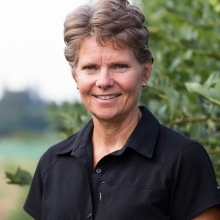 Bernadine Strik合作论文数Department of Horticulture, College of Agricultural Sciences, Oregon State University11
 David R. Bryla合作论文数Agricultural Research Service, United States Department of Agriculture4
 Scott T. Orr合作论文数3Patrick A. Jones合作论文数2Jesse Carroll合作论文数1
 Jun Haeng Nam合作论文数1
 Jungmin Choi合作论文数These authors contributed equally to this work.1
 Sang In Lee合作论文数1
 Si Hong Park合作论文数1Chad Finn合作论文数United States Department of Agriculture;Agricultural Research Service;Horticultural Crops Research Laboratory;Horticultural Crops Research Laboratory, United States Department of Agriculture1
 Sang-Do Ha合作论文数School of Food Science and Technology, Chung-Ang University;Center for Food Safety, Chung-Ang University1Yong-Sun Cho合作论文数1




