冷泉活动是现代深海极端环境系统之一,其在天然气水合物资源勘探、全球气候变化、极端环境生命活动等方面具有重要的科学研究意义.重建海底冷泉区氧化还原环境是研究其中生物地球化学过程、揭示甲烷渗漏活动特征的重要途径.近年来,大量矿物学及地球化学指标在冷泉系统氧化还原条件的恢复研究中获得了成功的应用.在前人研究的基础上,对自生矿物学标志、稀土元素、氧化还原敏感元素(Mo、U、Fe)和稳定同位素(钼同位素δ98Mo、铁同位素δ56Fe、硫同位素δ34S)等不同指标对氧化还原环境变化的响应机制进行了系统总结,从测试分析方法、后期成岩改造、单一指标的多解性等多个方面探讨了各指标的影响因素和当前仍存在的问题,并指出了未来该领域需进一步加强的关键研究方向.
Shallow methane/sulfate transition zones in cold seeps are hotspots to study microbially mediated geochemical cycles due to high methane fluxes. However, our knowledge about the microbial communities in remote seafloor cold seep ecosystems with different methane seepage intensity is still sparse due to the challenge for sampling and visual observations. In this work, three remotely operated vehicle (ROV) video-guided push sediment cores were sampled from cold seep fields with different methane seepage intensity (low-intensity seepage, R5-C1; moderate-intensity seepage, R6-C2; high-intensity seepage, R6-C3) at the western slope of Mid-Okinawa Trough (Mid-OT) and subjected to high throughput sequencing of 16S rRNA genes for bacteria and archaea. Vesicomyid clams and white microbial mats are visible by video at R6-C3 with methane bubbles. The high relative abundances of anaerobic methanotrophic archaea (ANME-1, -2, and -3), δ-Proteobacteriacea and Campylobacteria in R6-C3 indicated that the processes of anaerobic methane oxidation (AOM), sulfate reduction and sulfur oxidation might occur in this active seeping site. In contrast, Bathyarchaeia, Nitrosopumilales, Sphingomonadales, and Burkholderiales were enriched in bubble-free sites, which commonly involved in the degradation of organic compounds. Principal coordinate analysis showed that both bacterial and archaeal communities were clustered according to sampling sites, also indicating the impact of methane seepage intensity on microbial communities. The co-occurrence network analysis revealed that microbes at the site with high methane fluxes mainly cooperated with each other to sustain the ecosystems, whereas competition enhanced at sites with low methane fluxes. Detection of thermophiles Thermoanaerobaculia and Hydrothermarchaeota may indicate microbial transmission from nearby hydrothermal vents, suggesting potential interactions between cold seepage and hydrothermal vent ecosystems. These results expand our knowledge about the composition and distribution of bacteria and archaea with different methane seepage intensity in cold seep field at the Mid-OT, contributing to the ongoing efforts in understanding carbon cycling in the cold seep ecosystems.
甲烷是一种重要的温室气体,深刻影响着全球的气候变化.同时,甲烷还是海底潜在能源—天然气水合物的主要成分.海洋沉积物是甲烷生物转化的一个重要生态区域,产甲烷菌主要利用H2、CO2及简单的有机物(甲醇、甲胺、二甲基硫等)作为底物生成甲烷,产生的甲烷在向上迁移的过程中主要被甲烷厌氧氧化(anaerobic oxidation of methane,AOM)和甲烷好氧氧化(aerobic oxidation of methane,AeOM)消耗,进而大大减少了甲烷向大气的排放量.AeOM主要发生在含氧的沉积物及沉积物-水界面中,由甲烷好氧氧化菌(aerobic methane-oxidizing bacteria,MOB)介导.然而,绝大部分甲烷在穿透缺氧沉积物层之前是被AOM反应消耗,甲烷厌氧氧化古菌(anaerobic methanotrophic archaea,ANME)是主要的参与者,这些功能微生物耦联电子受体SO42-、NO2-/NO3-或Fe3+和Mn4+将甲烷进行氧化.本文对产甲烷菌和甲烷氧化菌的种类、代谢途径及其在海洋沉积物中的分布特征进行了综述,并在前人工作基础上,对今后海洋生境中甲烷代谢过程的研究进行了展望,以期为进一步开展海洋环境中甲烷的生物转化过程及元素耦合的研究提供理论依据.
海底水合物丘与泥火山均属于不同相态流体向上运移排出至地表过程中的产物,与这2种特殊地质体相关的浅表层天然气水合物具有独特的成藏过程和赋存规律,同时,它们也都是富碳流体排放的重要途径.然而,由于对这2种地质体缺少系统的调查,加之对浅表层天然气水合物资源和碳泄漏过程的研究程度不高,当前在海底水合物丘与泥火山特征刻画及准确甄别上还存在障碍,导致难以科学地评价与其伴生的水合物资源的聚集过程及环境效应.通过总结已有海底水合物丘与泥火山的阶段性研究工作,对该2种特殊地质体从地貌特征、内部结构、形成机制等方面开展比较研究,系统分析了二者的演化过程以及对与之相关的天然气水合物聚集过程的影响,并讨论了2种地质体的区别与联系.本研究可为理解全球海底富碳流体的排放及其对海洋碳循环的贡献以及海底浅表层天然气水合物资源量的评价提供参考.
A newly confirmed hydrothermal sulfide ore hosted by ultramafic rocks was identified in the Tianzuo field on the Southwest Indian Ridge. In this study, detailed mineralogy, geochemistry, and stable isotope analyses were carried out to assess the source origin and mineralization of the Tianzuo field sulfide deposits. The mineralogical examination indicates that the massive sulfides recovered from the seafloor in this area exhibit multi-stage deposition features with four distinct mineralization stages. In terms of geochemistry, the deposit is characterized by high Fe (31.57-44.59 wt%), Co (up to 2400 ppm), and Ba contents (up to 47.89 ppm), and relatively low Cu + Zn (0.17-7.25 wt%) and Ni contents (3.74-30.6 ppm). These results somewhat different from the features of massive sulfides of the ultramafic-hosted ridge in the Atlantic Ocean. The elevated Ba and Co contents presumably reflect a contribution of deep gabbmic intrusions that, together with serpentinization, drove the high-temperature (similar to 335 degrees C) hydrothermal vent activity in the Tianzuo field. The Co distribution is influenced by high-temperature and high-gradient conditions apart from the basement rock. In contrast, the depletion of Ni suggests that most of the Ni-rich sulfides are concentrated in the deep stockwork mineralization, whereas the low Cu + Zn content indicates a partial influence of the depleted mantle. With regard to isotopic composition, the sulfide in the Tianzuo field shows relatively heavy in situ S isotopic values, which implies that the widely developed transform faults and episodic hydrothermal events allowed cold seawater to repeatedly rinse the entire plumbing system. In comparison, the bulk Pb isotopic composition indicates that Pb in these sulfide deposits is mainly derived from the leaching of basalts and peridotites by seawater. By integrating all of the evidence, we demonstrate that, apart from the basement rock composition, the pervasive transform faults and multistage hydrothermal activity are important factors that affect the composition of the Tianzuo field sulfide.
海底冷泉-热液极端环境是岩石圈与外部圈层进行物质交换和能量流动的主要窗口,其独特的地质条件和营养模式孕育了繁茂的生物群落和生态系统.由于多种因素的叠加控制,海底极端环境的理化性质通常变化频繁且剧烈.大量研究表明,这种变化或波动又能不同程度地被环境中生存的生物记录下来,因此,生物所保留下来的某些地球化学信息具有恢复重建其生存环境变化的潜在能力,这对人类目前尚难自由出入的深海极端环境的探索尤为重要.本文从海底极端环境生物种类和空间分布、生物壳体的地球化学信息、生物元素和同位素地球化学指标以及生物有机生标等几方面出发,探讨当前科学家关注的典型地球化学指标对沉积环境的记录应用,并展望了未来需要进一步加强研究的几个方面,希望借此能引起广大研究者对该领域的兴趣和重视,以加深加快对海底极端环境内运行规律和影响的认识.
海洋沉积物中大部分甲烷会通过甲烷厌氧氧化作用(anaerobic oxidation of methane,AOM)而被消耗.早期研究表明,AOM可与硫酸盐、硝酸盐和亚硝酸盐的还原作用相耦合,从而有效减少甲烷向大气的排放.最近,金属依赖型AOM(metal-AOM,活性金属氧化物还原反应驱动的AOM)被证实存在于自然界沉积物和富集培养的样品中.但是,目前仍未从自然海洋环境中分离获得能够介导metal-AOM的微生物.对海洋沉积物中metal-AOM的研究大多聚焦于热液或冷泉等海洋特殊生境,一系列研究表明地质流体在这些海底化能自养生态系统的维持和演化方面起到了重要作用,并深刻影响全球地球化学循环,因此,该科学问题研究吸引了越来越多的注意力.本文讨论了可能参与海洋沉积物中metal-AOM的微生物类群及其地球化学证据,并在前人工作基础上,以冲绳海槽冷泉-热液共生区为例,提出一种新的metal-AOM作用机制.认为在全球冷泉-热液系统相互作用地区的调查有助于更好地探讨metal-AOM的发生机制及微生物在深海生境中分布的连通性问题.
碳酸盐晶格硫(CAS)是古环境恢复的重要手段之一,它系指在碳酸盐成岩过程中微量的硫酸盐离子取代碳酸盐离子并保存在晶格中的硫酸盐.CAS对矿物沉淀发生时的海水硫酸根的氧、硫同位素组成、硫酸盐浓度和当时古环境的氧化还原状态都有很好的保存和记录作用,因此引发了对其持续关注,并开展了一系列卓有成效的研究.本文综述了CAS当前的研究进展,主要从前处理方法、影响因素、同位素组成和古环境恢复等重点问题来探讨CAS的成因和CAS对不同沉积环境的恢复应用,并展望了需要进一步研究的几点研究方向,希望借此能引起广大研究者的兴趣和重视.
 Zhilei Sun合作论文数8Hong Cao合作论文数8Wei Geng合作论文数8XiLin Zhang (张喜林)合作论文数8
 Cuiling xu (徐翠玲)合作论文数6Bin Di (翟滨)合作论文数5Xianrong Zhang (张现荣)合作论文数5
 Nengyou Wu (吴能友)合作论文数Qingdao Institute of Marine Geology, China Geological Survey;Qingdao National Laboratory for Marine Science and Technology5ye chen (陈烨)合作论文数4Youzhi Xin合作论文数3LV Taiheng (吕泰衡)合作论文数3ZHANG Dong (张栋)合作论文数3Xin LI (李鑫)合作论文数3
 Shuangshuang Qin合作论文数2ZHOU Yucheng (周渝程)合作论文数2YunBao Sun (孙运宝)合作论文数2LiBo Wang (王利波)合作论文数2
 Hongmei Wang (王红梅)合作论文数中国地质大学环境学院2xin li合作论文数1Jing LI (李晶)合作论文数1Aiguo Dong (董爱国)合作论文数Inst Earth Sci, China Univ Geosci Beijing1Bin Zhai合作论文数1CAO Youwen (曹又文)合作论文数1
 ANG LI合作论文数1Di Luo合作论文数1Zike Jiang合作论文数1
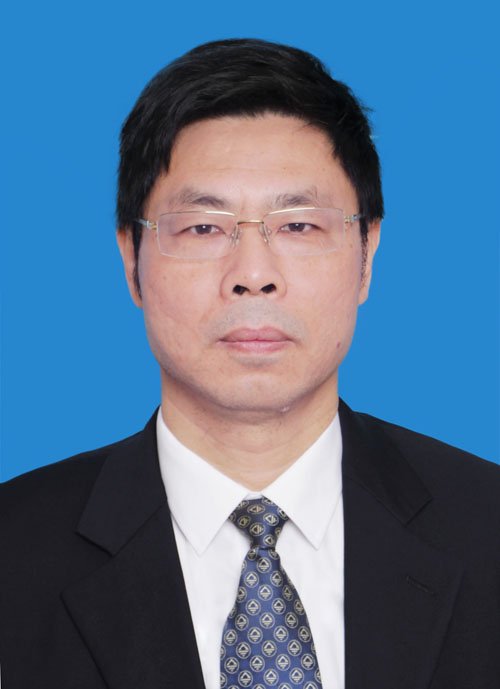 Feng Cai (蔡锋)合作论文数Third Institute of Oceanography, Ministry of Natural Resources1
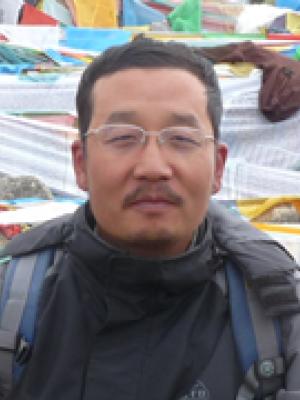 Weiliang Liu (刘维亮)合作论文数School of Marine Sciences, Sun Yat-sen University1
 Qing li (李清)合作论文数1
 Changling Liu (刘昌岭)合作论文数Qingdao Institute of Marine Geology, China Geological Survey;College of Control Science and Engineering, China University of Petroleum (East China);Chinese Academy of Geological Sciences1




