During the COVID-19 pandemic, higher education workloads exploded, putting those employed in postsecondary institutions under significant mental, emotional, physical, and, at times, financial uncertainty. This strain has had clear consequences for the long-term well-being, productivity, and retention of employees in higher education, including in student affairs. This critical discourse analysis interrogates how emails from an alliance of 14 U.S.-based research universities discursively presented the ideal worker during the global COVID-19 pandemic. Drawing from analyses of 686 emails, the authors find institutional messages presented images of higher education employees as self-sacrificing heroes who were individually thriving despite, and at times because of, the pandemic. They problematize these findings in the context of employee well-being and productivity and in light of ongoing equity concerns in the higher education workforce. They conclude by making recommendations for how higher education institutions can disrupt ideal worker norms and transform organizational culture.
For undergraduate students interested in STEM fields, participating in a research lab with a faculty mentor is an important developmental step for their future careers. However, autistic college students often feel devalued in academic contexts in general and experience interactions with faculty members who know little about autism or how to be inclusive to their needs. Informed by the double empathy theoretical approach to studying autism, our aim is to elucidate the areas of knowledge, skills, behaviors, and attitudes where STEM faculty most need to improve to facilitate mutual understanding within STEM research labs. We conducted focus groups and interviews with 16 autistic students (graduate and undergraduate) who had experience in a STEM research lab or were interested in STEM and 14 STEM faculty and lab staff. We analyzed the qualitative data using a training needs assessment approach, in which we focused on key gaps between what autistic students reported wanting faculty to know/ be able to do and what STEM faculty reported knowing/ doing currently. We identified three overarching themes that each contained several key targets for learning: awareness of autistic experiences (e.g., understanding the non-linear spectrum of autism and the diversity of autistic individuals), readiness to implement accommodations (e.g., normalizing the accommodations process in the lab), and commitment to an inclusive lab culture (e.g., providing clear norms and expectations). The three “ARC” themes can help prioritize training content for labs, as well as lab policies and procedures, to ensure that non-autistic individuals are putting forth appropriate efforts toward ensuring mutual understanding through having basic knowledge of autism, normalized accommodations processes, and specific affirming lab practices.
Despite legal mandates and historical investment from federal agencies, private funders, and colleges/universities, the representation of U.S.-born Black and African American, Latinx, and Indigenous faculty members remains abysmally low, meaning the academic workforce continues to be overwhelmingly White. Higher education institutions have made several efforts to increase the representation of racially minoritized faculty, but research shows that most colleges and universities are underprepared to transform in ways that genuinely welcome, retain, and support the success of these scholars. As such, campus administrators, funders, faculty, and diversity advocates have a vested interest in understanding how colleges and universities can be better prepared-or ready-to undertake transformation. This conceptual article advances a framework for examining readiness for transformation. Drawing from multiple fields and disciplines, we define readiness for transformation as the degree to which a higher education organization is prepared to undertake deep, cultural and structural changes that promote racial equity in the academic workplace. We argue that readiness for transformation demands attention to the individual/collective, organizational, and external levels-or what we refer to as "nested influences." We identify conditions that shape readiness within each level, and within each condition, examples of evidence-based barriers and facilitators of readiness. We also make key recommendations for researchers and practitioners about how to use the framework to understand and facilitate transformation efforts.
Over one-third of U.S. faculty members are in a dual-career academic couple, wherein both partners are faculty members. As such, many higher institutions have put in place dual-career hiring policies as a way to recruit and retain top talent, and in particular, enhance the recruitment of diverse women in STEM faculty positions. This study examined dual-career hiring policies through the lens of gendered organizations. Using a multiple case study of 16 couples in three research universities, I explored how gendered organizational processes shape the implementation and use of dual-career hiring policies. Results showed that although dual-career hiring policies are formulated in gender neutral ways, gender was a relevant factor in divisions in who was the first and second hire and the kinds of positions offered to second hires; images related to career unevenness and the ideal academic; social interactions with between second hires and department members; and the ways in which dual-career considerations reflected and activated participant's identities. Similar to other policies and practices intended to make faculty recruitment more inclusive, my results suggest that institutions need to consider the social structures and contexts that surround policy implementation and usage to make dual-career hiring policies more equitable and effective.
Many faculty members believe that the racial demography of their disciplines afford highly qualified, racially minoritized scholars more power in the academic job market. As such, search committees may not offer faculty positions to candidates from these groups because they perceive them to be high risk and difficult to retain. One often cited study debunked this myth, showing that highly competitive racially minoritized candidates did not have more offers; however, the study was published over two decades ago and the narrative still remains. Using publicly available data from the National Science Foundation Graduate Research Fellowship Program, we identified 671 awardees and found no statistically significant differences in rates of early departure between highly qualified, racially minoritized scholars and other highly qualified racial groups across three different science, technology, engineering, and mathematics disciplines. We also used data from U.S. News and World Report university rankings, and the FY 2007 Survey of Research and Development Expenditures at Universities and Colleges to understand whether early departing faculty members across all racial categories leave for more prestigious institutions, as is assumed. Those results indicate a slight trend of early departing faculty members leaving for more prestigious institutions than their previous one. We situate these findings within the faculty diversity discourse and offer implications for practice and future research.
Dual-career academic couples, or faculty members who are married or partnered to other faculty members, make up a critical mass of the professoriate in the United States. Women faculty members are more likely to be in these kinds of relationships. Thus, many institutions have implemented dual-career support policies to increase the number of women in the academy. Though a few studies have examined the rates at which these policies are used, less research examines the way using (or not using) said policies can impact each partner's ability to advance toward their professional goals. Drawing from a multiple, embedded case study of 16 couples at three research universities, I found that features of dual-career hiring processes (e.g., unstructured and informal processes) and biased notions about academic merit, quality, autonomy, and independence undermined professional legitimacy, particularly for women who were, or who were perceived to be, the "second hire. " Nevertheless, couples and partners took steps, as individuals and together, to assert their legitimacy and advance toward their professional goals. Implications for more equitable improvement of dual-career hiring policies are considered.
Colleges and universities are formidable knowledge-producing spaces in society. At the heart of these knowledge producing spaces are academics who carry out teaching, research, and service, amid other education activities. Accordingly, academic hiring, which includes hiring into any instructional and/or research position in a college or university, is a significant opportunity to shape the kinds of knowledge(s) that are generated, taught, and shared with society. Hiring-related research has recently boomed, making it an opportune time to assess what has been learned and how it has been learned. Thus, the purpose of this chapter is threefold. First, we review hiring literature published between 2000 and 2023 to describe how academic hiring unfolds across diverse appointment types. Second, we use frame theory to analyze how academic hiring has been conceptualized, studied, and practiced. Third, we introduce a novel conceptual lens, which we describe as labor justice, to illuminate how hiring research and practice might be conducted in ways that remediate historical legacies of exclusion while highlighting how the collective fates and interests of all academic workers, from postdoctoral scholars to tenure-track professors are intertwined. This chapter will be of interest to scholars who study academic hiring, academic labor, labor organizers working within higher education, and academic administrators.
Many colleges and universities now require faculty search committees to use rubrics when evaluating faculty job candidates, as proponents believe these "decision-support tools" can reduce the impact of bias in candidate evaluation. That is, rubrics are intended to ensure that candidates are evaluated more fairly, which is then thought to contribute to the enhanced hiring of candidates from minoritized groups. However, there is scant - and even contradictory - evidence to support this claim. This study used a multiple case study methodology to explore how five faculty search committees used rubrics in candidate evaluation, and the extent to which using a rubric seemed to perpetuate or mitigate bias in committee decision-making. Results showed that the use of rubrics can improve searches by clarifying criteria, encouraging criteria use in evaluation, calibrating the application of criteria to evidence, and in some cases, bringing diversity, equity, and inclusion work (DEI) into consideration. However, search committees also created and implemented rubrics in ways that seem to perpetuate bias, undermine effectiveness, and potentially contribute to the hiring of fewer minoritized candidates. We conclude by providing stakeholders with practical recommendations on using rubrics and actualizing DEI in faculty hiring.
Efforts to mitigate bias in faculty hiring processes are well-documented in the literature. Yet, significant barriers to the hiring of racially minoritized and White women in many STEM fields remain. An underreported barrier to inclusive hiring is assessment of risk. Guided by theory from behavioral economics, social psychology, and decision-making, we examine the inner workings of five faculty search committees to understand how committee members identified and assessed risk with particular attention to assessments of risk that became intermingled with social biases. Committees identified and assessed five risks, including candidate interest, candidate disciplinary expertise, candidate competence, candidate collegiality, and the timing and oversight of the search process itself. We discuss implications of risk identification and assessment for effective and inclusive searches.
AbstractThe COVID‐19 pandemic has refocused higher education on issues of work‐life conflict among faculty members with children. This study draws from interviews with 13 heterosexual couples (26 participants) who were employed as faculty members and who cared for at least one child during the pandemic. Using the theory of perceived organizational support, we considered how institutional actions shaped the extent to which academic couples who parent felt supported in managing pandemic‐related work‐life conflict. We found centralized mechanisms for sharing concerns, innovative childcare resources, and flexibility and transparent communication enhanced participants' sense of organizational support, while inaction and unsystematic institutional responses undermined perceptions of organizational support. Our findings are consistent with past work on the relationship between organizational policies and resources and perceptions of organizational support, but also suggest alternative strategies for institutions that want to enhance perceived and real support for academic couples who parent.
Calls to diversify the professoriate have been ongoing for decades. However, despite increasing numbers of scholars from underrepresented racial minority groups earning doctorates, actual progress in transitioning to faculty has been slow, particularly across STEM disciplines. In recent years, new efforts have emerged to recruit faculty members from underrepresented racial minority groups (i.e., African American/Black, Hispanic/Latinx, and/or Native American/Native Hawaiian/Indigenous) through highly competitive postdoctoral programs that allow fellows the opportunity to transition (or "convert") into tenure-track roles. These programs hybridize some conventional aspects of the faculty search process (e.g., structured interview processes that facilitate unit buy-in) along with novel evidence-based practices and structural supports (e.g., proactive recruitment, cohort communities, search waivers, professional development, enhanced mentorship, financial incentives). In this policy and practice review, we describe and synthesize key attributes of existing conversion programs at institutional, consortium, and system levels. We discuss commonalities and unique features across models (N = 38) and draw specific insights from postdoctoral conversion models developed within and across institutions in the University System of Maryland (USM). In particular, experience garnered from a 10-year-old postdoc conversion program at UMBC will be highlighted, as well as the development of an additional institutional model aimed at the life sciences, and a state-system model of faculty diversification with support from a NSF Alliances for Graduate Education and the Professoriate (AGEP) grant.
The fact that overloaded plates and stress are common in mid-career is well known. Likewise, we know that the unequal distribution of faculty workload is one of the most important, yet least talked about, inequities that shape the experiences of faculty members within colleges and universities. In particular, women and racially minoritized mid-career faculty face unusually high service, teaching, and mentoring workloads. Often we place the onus for aligning time and priorities, and “saying no” on mid-career faculty members themselves. In this chapter, the author(s) take a different approach, drawing on five years of action research with academic departments. They share key conditions that department leaders can create, and practices they can put in place to scaffold equity and agency in mid-career faculty workloads and rewards.
Faculty workload inequities have important consequences for faculty diversity and inclusion. On average, women faculty spend more time engaging in service, teaching, and mentoring, while men, on average, spend more time on research, with women of color facing particularly high workload burdens. We explore how faculty members perceive workload in their departments, identifying mechanisms that can help shape their perceptions of greater equity and fairness. White women perceive that their departments have less equitable workloads and are less committed to workload equity than white men. Women of color perceive that their departments are less likely to credit their important work through departmental rewards systems than white men. Workload transparency and clarity, and consistent approaches to assigning classes, advising, and service, can reduce women's perceptions of inequitable and unfair workloads. Our research suggests that departments can identify and put in place a number of key practices around workload that will improve gendered and racialized perceptions of workload.
Nudges, or changes in the contexts within which people make decisions, can increase the likelihood of better decision outcomes. Although higher education institutions and researchers have used nudges to improve decision-making in postsecondary settings, most nudge interventions focus on students, rather than on faculty members and their workplace. In this chapter, we review the literature to understand how nudges might be used to reshape key aspects of faculty work and decision-making. We first define the key concepts of nudges and choice architecture from behavioral economics and consider how and why nudges have been shown to improve thinking, decisions, and outcomes. We then consider different kinds of nudges, with whom they work best, and why, including the conditions and contexts within faculty and academic affairs that may be the most receptive to and most resistant to nudges. We explore six areas of faculty work where nudges have and may improve or enhance decision-making. In particular, we imagine using behavioral design techniques to study the influence of nudges in faculty hiring, promotion and tenure, teaching and learning, work-life integration, scholarly productivity, and distribution of work. For each of these areas of faculty work-life, we consider (a) the ways in which cognitive errors and social biases, and organizational “sludge,” keep faculty from meeting personal/institutional goals; (b) established/studied nudges; and (c) nudges that could potentially work in each area but have not been tested using behavioral design. We end the chapter with observations regarding nudges in the academic workplace and provide implications for research, policy, and practice.
This narrative and integrative literature review synthesizes the literature on when, where, and how the faculty hiring process used in most American higher education settings operates with implicit and cognitive bias. The literature review analyzes the “four phases” of the faculty hiring process, drawing on theories from behavioral economics and social psychology. The results show that although much research establishes the presence of bias in hiring, relatively few studies examine interventions or “nudges” that might be used to mitigate bias and encourage the recruitment and hiring of faculty identified as women and/or faculty identified as being from an underrepresented minority group. This article subsequently makes recommendations for historical, quasi-experimental, and randomized studies to test hiring interventions with larger databases and more controlled conditions than have previously been used, with the goal of establishing evidence-based practices that contribute to a more inclusive hiring process and a more diverse faculty.
 Kerryann O’Meara合作论文数Department of Education Leadership, Higher Education, and International Education, University of Maryland15
 Lindsey Templeton合作论文数6
 Julia Anderson合作论文数5
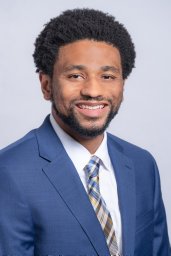 Damani Khary White-Lewis合作论文数College Pk, Univ Maryland4
 Joya Misra合作论文数University of Massachusetts;Department of Sociology;Department of Sociology, University of Massachusetts4Audrey J. Jaeger合作论文数3
 Courtney Lennartz合作论文数2Alexandra Kuvaeva合作论文数2Sarah Kilmer合作论文数2Michael A. Goodman合作论文数2
 Audrey Jaeger合作论文数Ctr Etud Biol Chize, CNRS2Blessing Enekwe合作论文数1
 Amy Ramirez合作论文数1Alessandra J. Dinin合作论文数1
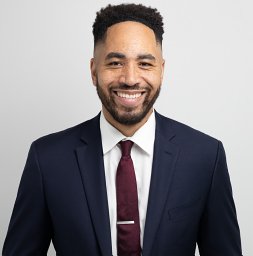 Daniel Blake合作论文数Higher Educ Div, Univ Penn1
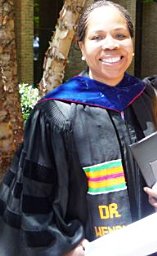 Wendy Y. Carter-Veale合作论文数1
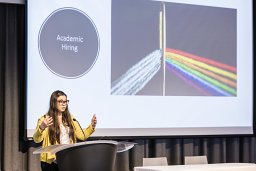 Leslie Gonzales合作论文数Dept Educ Adm, Michigan State Univ1
 Robin Herlands Cresiski合作论文数Department of Physical and Life Sciences, Nevada State College1
 Bill LaCourse合作论文数Department of Chemistry and Biochemistry, University of Maryland, Baltimore County1John M. Braxton合作论文数Higher Education Leadership and Policy Program;University;Higher Education Leadership and Policy Program, University1Elizabeth Redcay合作论文数Department of Psychology, University of California, San Diego1
 Jennifer L. Wessel合作论文数Department of Psychology, Michigan State University1




