The intelligent distributed dispatch and scheduling (iDDS) service is a versatile workflow orchestration system designed for large-scale, distributed scientific computing. iDDS extends traditional workload and data management by integrating data-aware execution, conditional logic, and programmable workflows, enabling automation of complex and dynamic processing pipelines. Originally developed for the ATLAS experiment at the large hadron collider, iDDS has evolved into an experiment-agnostic platform that supports both template-driven workflows and a Function-as-a-Task model for Python-based orchestration. This paper presents the architecture and core components of iDDS, highlighting its scalability, modular message-driven design, and integration with systems such as PanDA and Rucio. We demonstrate its versatility through real-world use cases: fine-grained tape resource optimization for ATLAS, orchestration of large Directed Acyclic Graph (DAG) workflows for the Rubin Observatory, distributed hyperparameter optimization for machine learning applications, active learning for physics analyses, and AI-assisted detector design at the electron–ion collider. By unifying workload scheduling, data movement, and adaptive decision-making, iDDS reduces operational overhead and enables reproducible, high-throughput workflows across heterogeneous infrastructures. We conclude with current challenges and future directions, including interactive, cloud-native, and serverless workflow support.
In early 2024, ATLAS undertook an architectural review to evaluate the functionalities of its current components within the workflow and workload management ecosystem. Pivotal to the review was the assessment of the Production and Distributed Analysis (PanDA) system, which plays a vital role in the overall infrastructure. The review findings indicated that while the current system shows no apparent signs of scalability limitations or critical defects, several issues still require attention. These include areas for improvement, such as cleaning the historical accumulation of code over nearly two decades of continuous operation in ATLAS, further organizing development activities, maximizing the utilization of continuous integration and testing frameworks, bolstering efforts toward cross-experimental outreach, spreading greater awareness of workflows at the core level, expanding support for complex workflows, implementing a more advanced algorithm for workload distribution, optimizing tape and network resource usage, refining interface design, enhancing transparency to showcase system dynamism, ensuring allocation of key developers to R&D projects with clear long-term visions for integration and operation, and accommodating the growing diversity of resources. In this paper, we first highlight the issues identified in the review, exploring their historical and cultural roots. Then, we outline the recommendations derived from the review, and present the solutions developed to address these challenges and pave the way to sustainably support multiple experiments.
Machine Learning (ML) has become one of the important tools for High Energy Physics analysis. As the size of the dataset increases at the Large Hadron Collider (LHC), and at the same time the search spaces become bigger and bigger in order to exploit the physics potentials, more and more computing resources are required for processing these ML tasks. In addition, complex advanced ML workflows are developed in which one task may depend on the results of previous tasks. How to make use of vast distributed CPUs/GPUs in WLCG for these big complex ML tasks has become a popular research area. In this paper, we present our efforts enabling the execution of distributed ML workflows on the Production and Distributed Analysis (PanDA) system and intelligent Data Delivery Service (iDDS). First, we describe how PanDA and iDDS deal with large-scale ML workflows, including the implementation to process workloads on diverse and geographically distributed computing resources. Next, we report real-world use cases, such as HyperParameter Optimization, Monte Carlo Toy confidence limits calculation, and Active Learning. Finally, we conclude with future plans.
The ATLAS experiment at CERN is one of the largest scientific machines built to date and will have ever growing computing needs as the Large Hadron Collider collects an increasingly larger volume of data over the next 20 years. ATLAS is conducting R&D projects on Amazon Web Services and Google Cloud as complementary resources for distributed computing, focusing on some of the key features of commercial clouds: lightweight operation, elasticity and availability of multiple chip architectures. The proof of concept phases have concluded with the cloud-native, vendoragnostic integration with the experiment’s data and workload management frameworks. Google Cloud has been used to evaluate elastic batch computing, ramping up ephemeral clusters of up to O(100k) cores to process tasks requiring quick turnaround. Amazon Web Services has been exploited for the successful physics validation of the Athena simulation software on ARM processors. We have also set up an interactive facility for physics analysis allowing endusers to spin up private, on-demand clusters for parallel computing with up to 4 000 cores, or run GPU enabled notebooks and jobs for machine learning applications. The success of the proof of concept phases has led to the extension of the Google Cloud project, where ATLAS will study the total cost of ownership of a production cloud site during 15 months with 10k cores on average, fully integrated with distributed grid computing resources and continue the R&D projects.
The Vera C. Rubin Observatory will produce an unprecedented astronomical data set for studies of the deep and dynamic universe. Its Legacy Survey of Space and Time (LSST) will image the entire southern sky every three to four days and produce tens of petabytes of raw image data and associated calibration data over the course of the experiment's run. More than 20 terabytes of data must be stored every night, and annual campaigns to reprocess the entire dataset since the beginning of the survey will be conducted over ten years. The Production and Distributed Analysis (PanDA) system was evaluated by the Rubin Observatory Data Management team and selected to serve the Observatory's needs due to its demonstrated scalability and flexibility over the years, for its Directed Acyclic Graph (DAG) support, its support for multi-site processing, and its highly scalable complex workflows via the intelligent Data Delivery Service (iDDS). PanDA is also being evaluated for prompt processing where data must be processed within 60 seconds after image capture. This paper will briefly describe the Rubin Data Management system and its Data Facilities (DFs). Finally, it will describe in depth the work performed in order to integrate the PanDA system with the Rubin Observatory to be able to run the Rubin Science Pipelines using PanDA.
In recent years, advanced and complex analysis workflows have gained increasing importance in the ATLAS experiment at CERN, one of the large scientific experiments at LHC. Support for such workflows has allowed users to exploit remote computing resources and service providers distributed worldwide, overcoming limitations on local resources and services. The spectrum of computing options keeps increasing across the Worldwide LHC Computing Grid (WLCG), volunteer computing, high-performance computing, commercial clouds, and emerging service levels like Platform-as-a-Service (PaaS), Container-as-a-Service (CaaS) and Function-as-a-Service (FaaS), each one providing new advantages and constraints. Users can significantly benefit from these providers, but at the same time, it is cumbersome to deal with multiple providers, even in a single analysis workflow with fine-grained requirements coming from their applications’ nature and characteristics. In this paper, we will first highlight issues in geographically-distributed heterogeneous computing, such as the insulation of users from the complexities of dealing with remote providers, smart workload routing, complex resource provisioning, seamless execution of advanced workflows, workflow description, pseudointeractive analysis, and integration of PaaS, CaaS, and FaaS providers. We will also outline solutions developed in ATLAS with the Production and Distributed Analysis (PanDA) system and future challenges for LHC Run4.
The Production and Distributed Analysis (PanDA) system is a data-driven workload management system engineered to operate at the LHC data processing scale. The PanDA system provides a solution for scientific experiments to fully leverage their distributed heterogeneous resources, showcasing scalability, usability, flexibility, and robustness. The system has successfully proven itself through nearly two decades of steady operation in the ATLAS experiment, addressing the intricate requirements such as diverse resources distributed worldwide at about 200 sites, thousands of scientists analyzing the data remotely, the volume of processed data beyond the exabyte scale, dozens of scientific applications to support, and data processing over several billion hours of computing usage per year. PanDA’s flexibility and scalability make it suitable for the High Energy Physics community and wider science domains at the Exascale. Beyond High Energy Physics, PanDA’s relevance extends to other big data sciences, as evidenced by its adoption in the Vera C. Rubin Observatory and the sPHENIX experiment. As the significance of advanced workflows continues to grow, PanDA has transformed into a comprehensive ecosystem, effectively tackling challenges associated with emerging workflows and evolving computing technologies. The paper discusses PanDA’s prominent role in the scientific landscape, detailing its architecture, functionality, deployment strategies, project management approaches, results, and evolution into an ecosystem.
The ATLAS experiment at CERN relies on a Worldwide Distributed Computing Grid infrastructure to support its physics program at the Large Hadron Collider. ATLAS has integrated cloud computing resources to complement its Grid infrastructure and conducted an R&D program on Google Cloud Platform. These initiatives leverage key features of commercial cloud providers: lightweight configuration and operation, elasticity and availability of diverse infrastructures. This paper examines the seamless integration of cloud computing services as a conventional Grid site within the ATLAS workflow management and data management systems, while also offering new setups for interactive, parallel analysis. It underscores pivotal results that enhance the on-site computing model and outlines several R&D projects that have benefited from large-scale, elastic resource provisioning models. Furthermore, this study discusses the impact of cloud-enabled R&D projects in three domains: accelerators and AI/ML, ARM CPUs and columnar data analysis techniques.
A primary goal of the upcoming Deep Underground Neutrino Experiment (DUNE) is to measure the $\mathcal{O}(10)$ MeV neutrinos produced by a Galactic core-collapse supernova if one should occur during the lifetime of the experiment. The liquid-argon-based detectors planned for DUNE are expected to be uniquely sensitive to the $\nu_e$ component of the supernova flux, enabling a wide variety of physics and astrophysics measurements. A key requirement for a correct interpretation of these measurements is a good understanding of the energy-dependent total cross section $\sigma(E_\nu)$ for charged-current $\nu_e$ absorption on argon. In the context of a simulated extraction of supernova $\nu_e$ spectral parameters from a toy analysis, we investigate the impact of $\sigma(E_\nu)$ modeling uncertainties on DUNE's supernova neutrino physics sensitivity for the first time. We find that the currently large theoretical uncertainties on $\sigma(E_\nu)$ must be substantially reduced before the $\nu_e$ flux parameters can be extracted reliably: in the absence of external constraints, a measurement of the integrated neutrino luminosity with less than 10\% bias with DUNE requires $\sigma(E_\nu)$ to be known to about 5%. The neutrino spectral shape parameters can be known to better than 10% for a 20% uncertainty on the cross-section scale, although they will be sensitive to uncertainties on the shape of $\sigma(E_\nu)$. A direct measurement of low-energy $\nu_e$-argon scattering would be invaluable for improving the theoretical precision to the needed level.
Observing a supernova explosion shortly after it occurs can reveal important information about the physics of stellar explosions and the nature of the progenitor stars of supernovae (SNe). When a star with a well-defined edge explodes in vacuum, the first photons to escape from its surface appear as a brief shock-breakout flare. The duration of this flare can extend to at most a few hours even for nonspherical breakouts from supergiant stars, after which the explosion ejecta should expand and cool. Alternatively, for stars exploding within a distribution of sufficiently dense optically thick circumstellar material, the first photons escape from the material beyond the stellar edge, and the duration of the initial flare can extend to several days, during which the escaping emission indicates photospheric heating. The difficulty in detecting SN explosions promptly after the event has so far limited data regarding supergiant stellar explosions mostly to serendipitous observations that, owing to the lack of ultraviolet (UV) data, were unable to determine whether the early emission is heating or cooling, and hence the nature of the early explosion event. Here, we report observations of SN 2023ixf in the nearby galaxy M101, covering the early days of the event. Using UV spectroscopy from the Hubble Space Telescope (HST) as well as a comprehensive set of additional multiwavelength observations, we trace the photometric and spectroscopic evolution of the event and are able to temporally resolve the emergence and evolution of the SN emission.
A bstract A search for the exclusive decays of the Higgs and Z bosons to a ϕ or ρ meson and a photon is performed with a pp collision data sample corresponding to an integrated luminosity of up to 35 . 6 fb −1 collected at $$ \sqrt{s}=13 $$ s = 13 TeV with the ATLAS detector at the CERN Large Hadron Collider. These decays have been suggested as a probe of the Higgs boson couplings to light quarks. No significant excess of events is observed above the background, as expected from the Standard Model. Upper limits at 95% confidence level were obtained on the branching fractions of the Higgs boson decays to ϕ γ and ρ γ of 4 . 8 × 10 −4 and 8 . 8 × 10 −4 , respectively. The corresponding 95% confidence level upper limits for the Z boson decays are 0 . 9 × 10 −6 and 25 × 10 −6 for ϕ γ and ρ γ, respectively.
A search for leptoquarks decaying into the bτ final state is performed using Run 2 proton-proton collision data from the Large Hadron Collider, corresponding to an integrated luminosity of 139 fb−1 at √(s) = 13 TeV recorded by the ATLAS detector. The benchmark models considered in this search are vector leptoquarks with electric charge of 2/3e and scalar leptoquarks with an electric charge of 4/3e. No significant excess above the Standard Model prediction is observed, and 95
We present analysis of the light curves (LCs) of 77 hydrogen-poor superluminous supernovae (SLSNe-I) discovered during the Zwicky Transient Facility Phase-I operation. We find that the majority (67\%) of the sample can be fit equally well by both magnetar and ejecta-circumstellar medium (CSM) interaction plus $^{56}$Ni decay models. This implies that LCs alone can not unambiguously constrain the physical power sources for a SLSN-I. However, 23\% of the sample show inverted V-shape, steep declining LCs or features of long rise and fast post-peak decay, which are better described by the CSM+Ni model. The remaining 10\% of the sample favor the magnetar model. Moreover, our analysis shows that the LC undulations are quite common, with a fraction of $18-44\% $ in our gold sample. Among those strongly undulating events, about 62\% of them are found to be CSM-favored, implying that the undulations tend to occur in the CSM-favored events. Undulations show a wide range in energy and duration, with median values (and 1$\sigma$ errors) being as $1.7\%^{+1.5\%}_{-0.7\%}\,\rm E_{\rm rad,total}$ and $28.8^{+14.4}_{-9.1}$\,days, respectively. Our analysis of the undulation time scales suggests that intrinsic temporal variations of the central engine can explain half of the undulating events, while CSM interaction can account for the majority of the sample. Finally, all of the well-observed He-rich SLSNe-Ib have either strongly undulating LCs or the LCs are much better fit by the CSM+Ni model. These observations imply that their progenitor stars have not had enough time to lose all of the He-envelopes before supernova explosions, and H-poor CSM are likely to present in these events.
The total and differential Higgs boson production cross-sections are measured through a combined statistical analysis of the H → ZZ* → 4ℓ and H → γγ decay channels. The results are based on a dataset of 139 fb−1 of proton–proton collisions at a centre-of-mass energy of 13 TeV, recorded by the ATLAS detector at the Large Hadron Collider. The measured total Higgs boson production cross-section is 55.5_-3.8^+4.0 pb, consistent with the Standard Model prediction of 55.6 ± 2.5 pb. All results from the two decay channels are compatible with each other, and their combination agrees with the Standard Model predictions. A combined statistical interpretation of the measured fiducial cross-sections as a function of the Higgs boson transverse momentum is performed in order to probe the Yukawa couplings to the bottom and charm quarks. A similar interpretation is performed by including also the constraints from the measurements of Higgs boson production in association with a W or Z boson in the H → bb and cc decay channels.
Z. H. Chen, Lin Yan, T. Kangas, R. Lunnan, S. Schulze, J. Sollerman, D. A. Perley, T.-W. Chen, A. Gal-Yam, X. F. Wang, 8 I. Andreoni, E. Bellm, J. S. Bloom, 12 K. Burdge, A. Burgos, D. Cook, A. Dahiwale, K. De, R. Dekany, A. Dugas, S. Frederik, C. Fremling, M. Graham, M. Hankins, A. Ho, J. Jencson, V. Karambelkar, M. Kasliwal, S. Kulkarni, R. Laher, B. Rusholme, Y. Sharma, F. Taddia, K. Taggart, L. Tartaglia, A. Tzanidakis, J. Van Roestel, R. Walter, Y. Yang, Y. H. Yao, and O. Yaron
The final fate of massive stars, and the nature of the compact remnants they leave behind (black holes and neutron stars), are open questions in astrophysics. Many massive stars are stripped of their outer hydrogen envelopes as they evolve. Such Wolf-Rayet stars(1) emit strong and rapidly expanding winds with speeds greater than 1,000 kilometres per second. A fraction of this population is also helium-depleted, with spectra dominated by highly ionized emission lines of carbon and oxygen (types WC/WO). Evidence indicates that the most commonly observed supernova explosions that lack hydrogen and helium (types Ib/Ic) cannot result from massive WC/WO stars(2,3), leading some to suggest that most such stars collapse directly into black holes without a visible supernova explosion(4). Here we report observations of SN 2019hgp, beginning about a day after the explosion. Its short rise time and rapid decline place it among an emerging population of rapidly evolving transients(5-8). Spectroscopy reveals a rich set of emission lines indicating that the explosion occurred within a nebula composed of carbon, oxygen and neon. Narrow absorption features show that this material is expanding at high velocities (greater than 1,500 kilometres per second), requiring a compact progenitor. Our observations are consistent with an explosion of a massive WC/WO star, and suggest that massive Wolf-Rayet stars may be the progenitors of some rapidly evolving transients.
The Deep Underground Neutrino Experiment (DUNE) is a next-generation long-baseline neutrino oscillation experiment with a primary physics goal of observing neutrino and antineutrino oscillation patterns to precisely measure the parameters governing long-baseline neutrino oscillation in a single experiment, and to test the three-flavor paradigm. DUNE's design has been developed by a large, international collaboration of scientists and engineers to have unique capability to measure neutrino oscillation as a function of energy in a broadband beam, to resolve degeneracy among oscillation parameters, and to control systematic uncertainty using the exquisite imaging capability of massive LArTPC far detector modules and an argon-based near detector. DUNE's neutrino oscillation measurements will unambiguously resolve the neutrino mass ordering and provide the sensitivity to discover CP violation in neutrinos for a wide range of possible values of $\delta_{CP}$. DUNE is also uniquely sensitive to electron neutrinos from a galactic supernova burst, and to a broad range of physics beyond the Standard Model (BSM), including nucleon decays. DUNE is anticipated to begin collecting physics data with Phase I, an initial experiment configuration consisting of two far detector modules and a minimal suite of near detector components, with a 1.2 MW proton beam. To realize its extensive, world-leading physics potential requires the full scope of DUNE be completed in Phase II. The three Phase II upgrades are all necessary to achieve DUNE's physics goals: (1) addition of far detector modules three and four for a total FD fiducial mass of at least 40 kt, (2) upgrade of the proton beam power from 1.2 MW to 2.4 MW, and (3) replacement of the near detector's temporary muon spectrometer with a magnetized, high-pressure gaseous argon TPC and calorimeter.
We present observations of SN 2020fqv, a Virgo-cluster Type II core-collapse supernova (CCSN) with a high temporal resolution light curve from the Transiting Exoplanet Survey Satellite (TESS) covering the time of explosion; ultraviolet (UV) spectroscopy from the Hubble Space Telescope (HST) starting 3.3 days post-explosion; ground-based spectroscopic observations starting 1.1~days post-explosion; along with extensive photometric observations. Massive stars have complicated mass-loss histories leading up to their death as CCSNe, creating circumstellar medium (CSM) with which the SNe interact. Observations during the first few days post-explosion can provide important information about the mass-loss rate during the late stages of stellar evolution. Model fits to the quasi-bolometric light curve of SN 2020fqv reveal ~0.23 $M_{\odot}$ of CSM confined within ~1450 $R_{\odot}$ ($10^{14}$ cm) from its progenitor star. Early spectra (<4 days post-explosion), both from HST and ground-based observatories, show emission features from high-ionization metal species from the outer, optically thin part of this CSM. We find that the CSM is consistent with an eruption caused by the injection of $\sim$$5\times 10^{46}$ erg into the stellar envelope $\sim$300 days pre-explosion, potentially from a nuclear burning instability at the onset of oxygen burning. Light-curve fitting, nebular spectroscopy, and pre-explosion \textit{HST} imaging consistently point to a red supergiant (RSG) progenitor with $M_{\rm ZAMS}$$\approx$$13.5$--$15 \, M_{\odot}$, typical for SN~II progenitor stars. This finding demonstrates that a typical RSG, like the progenitor of SN 2020fqv, has a complicated mass-loss history immediately before core collapse.
Liquid argon time projection chamber detector technology provides high spatial and calorimetric resolutions on the charged particles traversing liquid argon. As a result, the technology has been used in a number of recent neutrino experiments, and is the technology of choice for the Deep Underground Neutrino Experiment (DUNE). In order to perform high precision measurements of neutrinos in the detector, final state particles need to be effectively identified, and their energy accurately reconstructed. This article proposes an algorithm based on a convolutional neural network to perform the classification of energy deposits and reconstructed particles as track-like or arising from electromagnetic cascades. Results from testing the algorithm on experimental data from ProtoDUNE-SP, a prototype of the DUNE far detector, are presented. The network identifies track- and shower-like particles, as well as Michel electrons, with high efficiency. The performance of the algorithm is consistent between experimental data and simulation.
We present a detailed analysis of SN 2020qmp, a nearby type IIP core-collapse supernova (CCSN), discovered by the Palomar Gattini-IR (PGIR) survey in the galaxy UGC07125. We illustrate how the multiwavelength study of this event helps our general understanding of stellar progenitors and circumstellar medium (CSM) interactions in CCSNe. We also highlight the importance of near-infrared (NIR) surveys for early detections of SNe in dusty environments. SN 2020qmp displays characteristic hydrogen lines in its optical spectra, as well as a plateau in its optical LC, hallmarks of a type IIP SN. We do not detect linear polarization during the plateau phase, with a 3 sigma upper limit of 0.78 Through hydrodynamical LC modeling and an analysis of its nebular spectra, we estimate a progenitor mass of around 11 solar masses, and an explosion energy of around 0.8e51 erg. We find that the spectral energy distribution cannot be explained by a simple CSM interaction model, assuming a constant shock velocity and steady mass-loss rate, and the excess X-ray luminosity compared with the synchrotron radio luminosity suggests deviations from equipartition. Finally, we demonstrate the advantages of NIR surveys over optical surveys for the detection of dust-obscured CCSNe in the local universe. Specifically, our simulations show that the Wide-Field Infrared Transient Explorer will detect about 14 more CCSNe out of 75 expected in its footprint within 40 Mpc, over five years than an optical survey equivalent to the Zwicky Transient Facility would detect. We have determined or constrained the main properties of SN 2020qmp and of its progenitor, highlighting the value of multiwavelength follow-up observations of nearby CCSNe. We have also shown that forthcoming NIR surveys will finally enable us to do a nearly complete census of CCSNe in the local universe.
 Andrew Brandt合作论文数Department of Physics, College of Science, The University of Texas at Arlington704
 Dhiman Chakraborty合作论文数Department of Physics, Northern Illinois University700
 Brad Abbott合作论文数Homer L. Dodge Department of Physics and Astronomy, Dodge Family College of Arts and Sciences, The University of Oklahoma687
 Sergiy Denysov合作论文数Department of Computer Science, Faculty of Technology, Art and Design, Oslo Metropolitan University640
 Anna Goussiou合作论文数Department of Physics, University of Washington611
 James T Linnemann合作论文数Department of Physics and Astronomy, College of Natural Science, Michigan State University606
 B. S. Acharya合作论文数Department of High Energy Physics, Natural Sciences Faculty, Tata Institute of Fundamental Research603
 Elizaveta K. Shabalina合作论文数University of Gottingen582
 Gerald C. Blazey合作论文数Department of Physics, College of Liberal Arts and Sciences, Northern Illinois University582
 Daniel Edmunds合作论文数Department of Physics and Astronomy, Michigan State University577V. Bezzubov合作论文数572Michael Begel合作论文数Department of Physics, Brookhaven National Laboratory570P. Gutierrez合作论文数570L. Dudko合作论文数Skobeltsyn Inst Nucl Phys, Lomonosov Moscow State Univ567
 John Ellison合作论文数Department of Physics and Astronomy, University of California, Riverside565H. Thomas Diehl合作论文数Fermilab565
 Stuart Fuess合作论文数Scientific Computing Division, Fermi National Accelerator Laboratory564S. Snyder合作论文数564
 Dmitri Denisov合作论文数Brookhaven National Laboratory564
 Serban Protopopescu合作论文数Physics Department, Brookhaven National Laboratory563H. Eugene Fisk合作论文数Fermilab562
 Michael Diesburg合作论文数Fermi National Accelerator Laboratory560
 David Hedin合作论文数Department of Physics, College of Liberal Arts and Sciences, Northern Illinois University558
 F. Filthaut (Frank)合作论文数Department of Experimental High Energy Physics, Radboud University555
 Greg Landsberg合作论文数Department of Physics, Brown University555H. Evans合作论文数554R. Piegaia合作论文数551
 Harald Fox合作论文数Department of Physics, Lancaster University548Boris Yu Baldin合作论文数547A. Ito合作论文数547
 Gustaaf Brooijmans合作论文数Department of Physics, Columbia University546J. Kohli合作论文数546
 a ross合作论文数Fermi National Accelerator Laboratory543
 Aurelio Juste合作论文数Institut de Física d'Altes Energies, The Barcelona Institute of Science and Technology542
 Susan K Blessing合作论文数Department of Physics, College of Arts & Sciences, Florida State University539Gelio A. Alves合作论文数Centro Brasileiro de Pesquisas Fisicas, Rio de Janeiro, Brazil538
 Vipin Bhatnagar合作论文数Department of Physics, Panjab University536
 Nirmalya Parua合作论文数Bank of America536T. Ferbel合作论文数535
 Marcel W Demarteau合作论文数Physics Division, Oak Ridge National Laboratory534Herbert B. Greenlee合作论文数Fermilab529
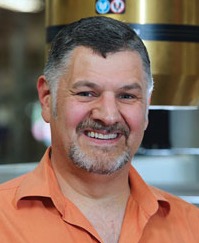 Iain Bertram合作论文数Physics Department, Lancaster University527
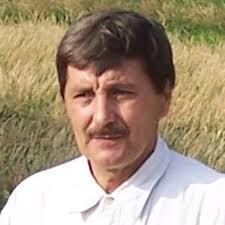 Valery N Evdokimov合作论文数Institute for High Energy Physics524
 Maris Arvids Abolins合作论文数College of Natural Science, Michigan State University519
 Alexander Kupčo合作论文数Institute of Physics, Czech Academy of Sciences517
 Bob Hirosky合作论文数Department of Physics, University of Virginia517
 John Hauptman合作论文数Department of Physics and Astronomy, College of Liberal Arts and Sciences, Iowa State University515Ann Heinson合作论文数University of California, Riverside513
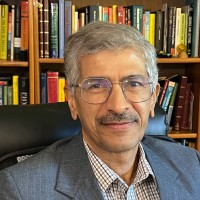 Chandrashekhara M. Bhat合作论文数Fermi National Accelerator Laboratory513




